This description has been translated and may not be completely accurate. Click here to see the original
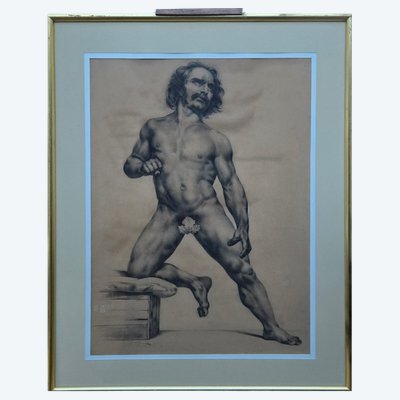
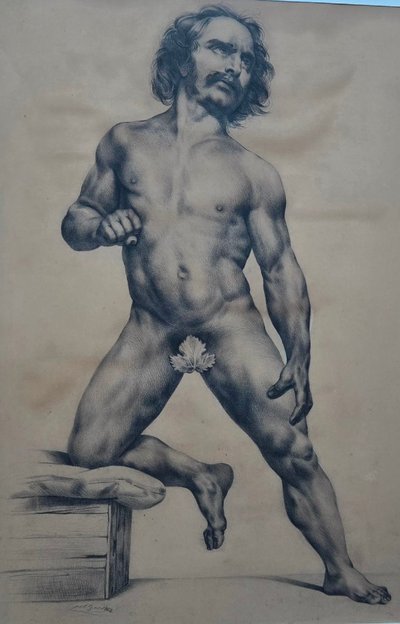
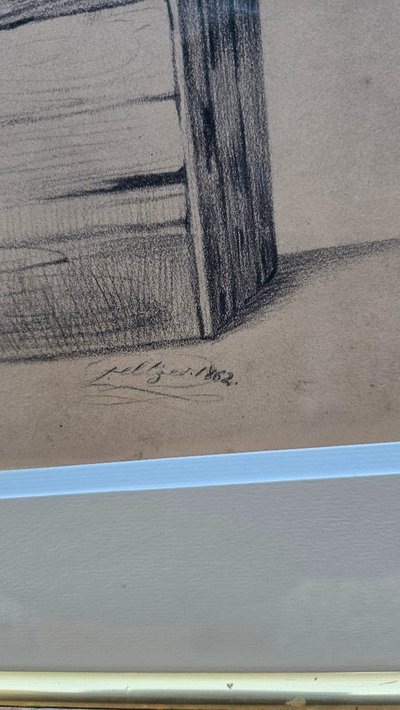
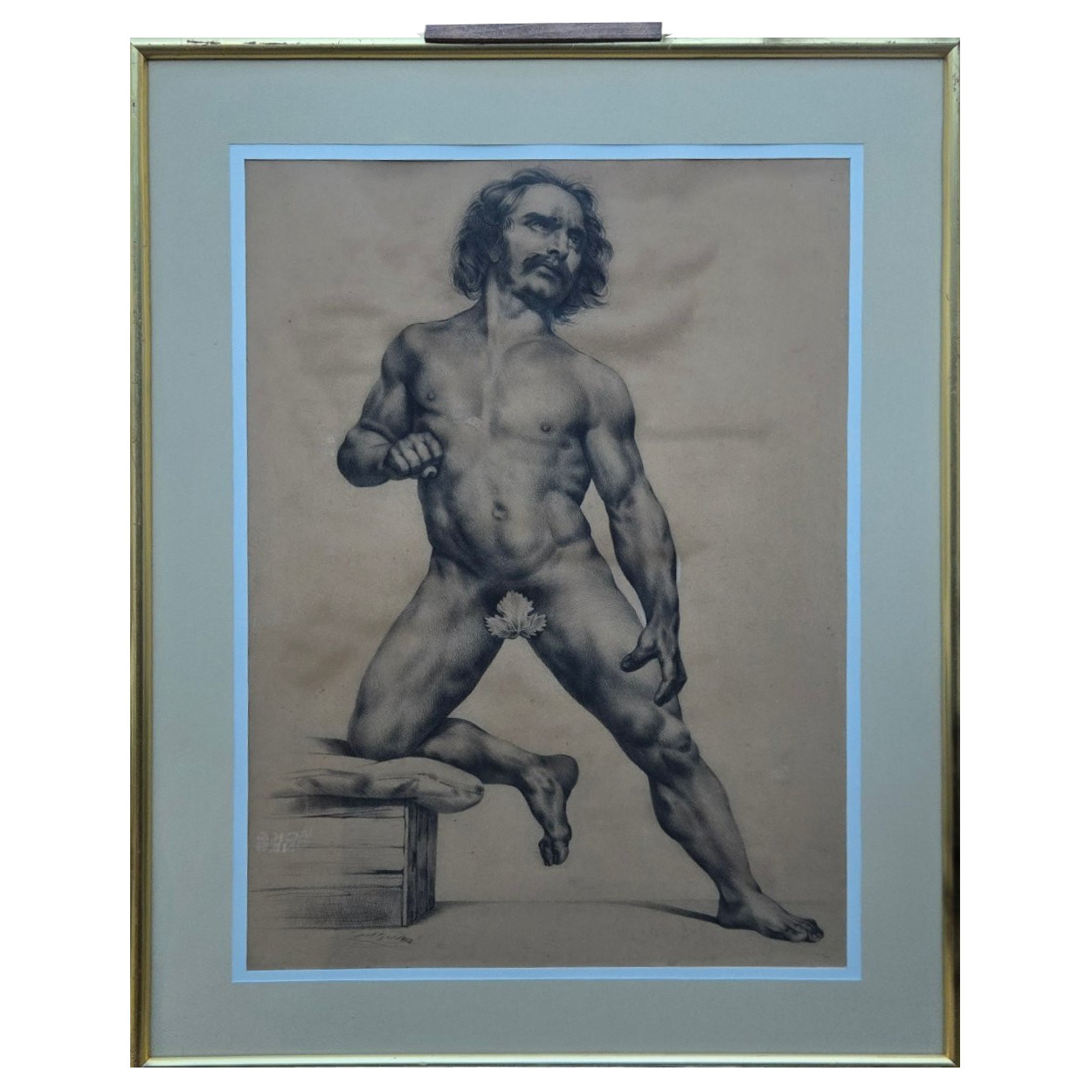
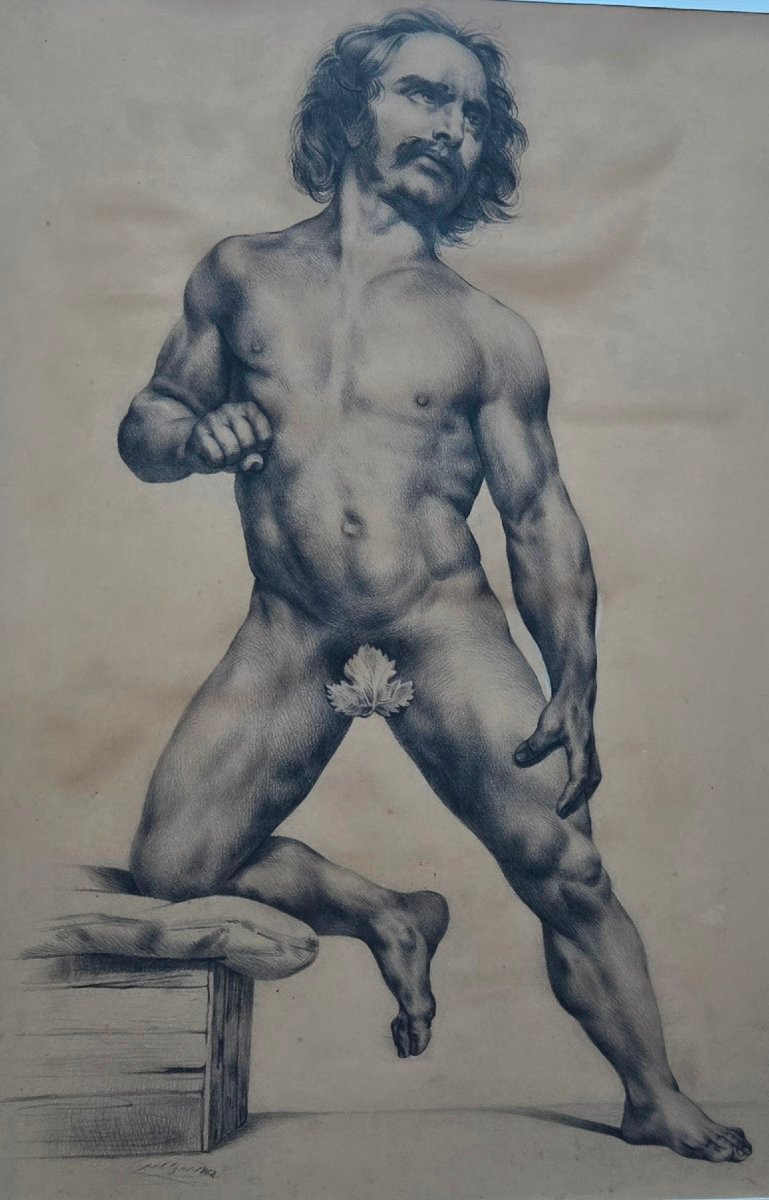
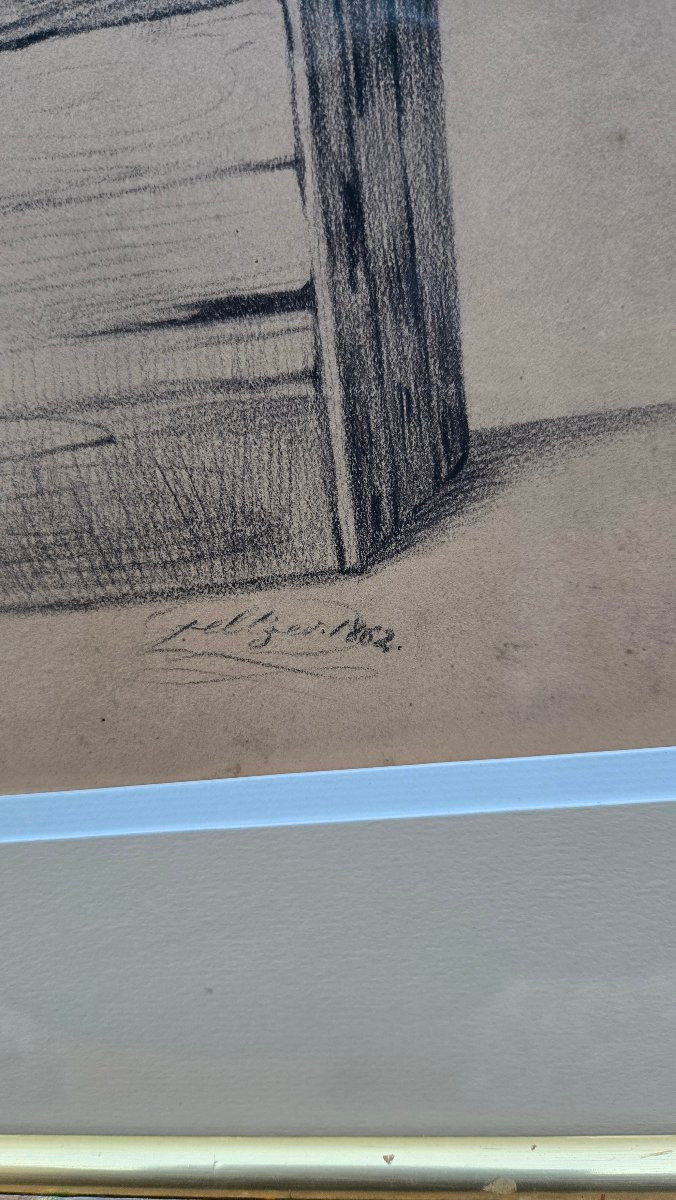
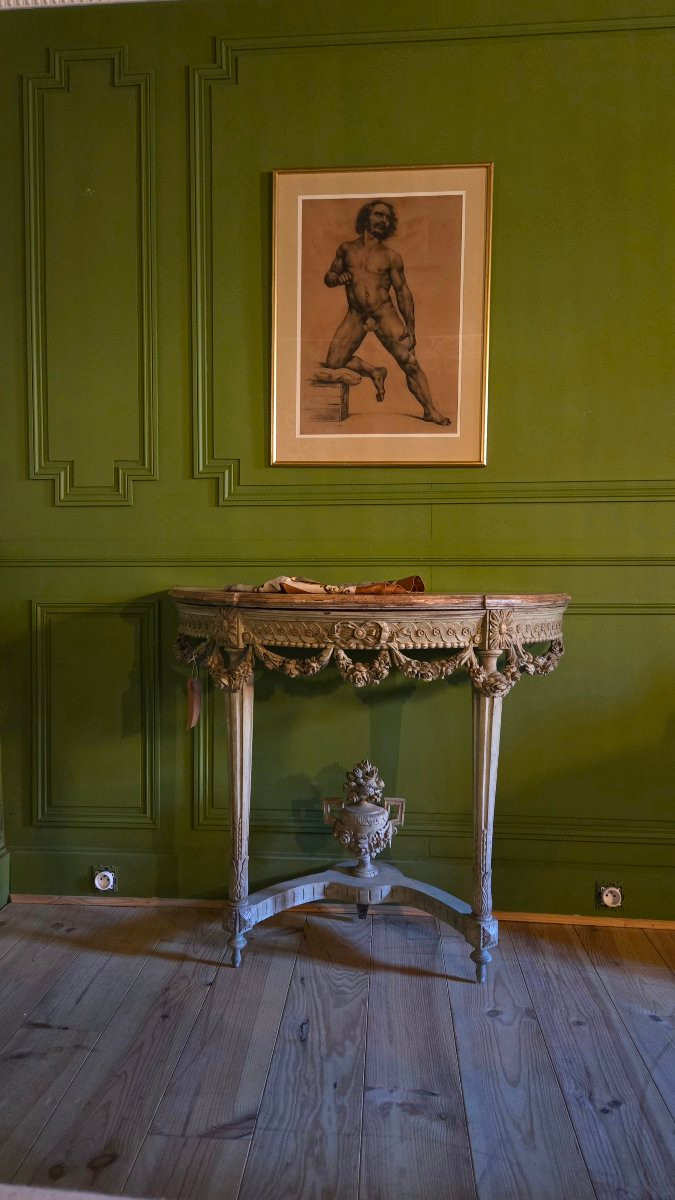
A 19th-century academic drawing, signed “Geltzer” and dated 1863, depicting a nude man in a dynamic pose, executed in black pencil or black chalk on paper.
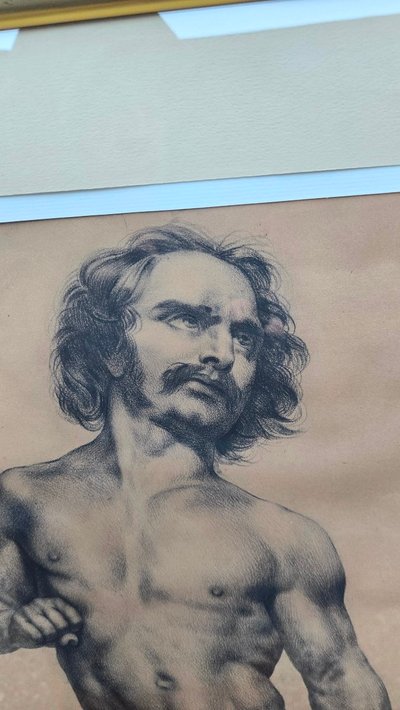
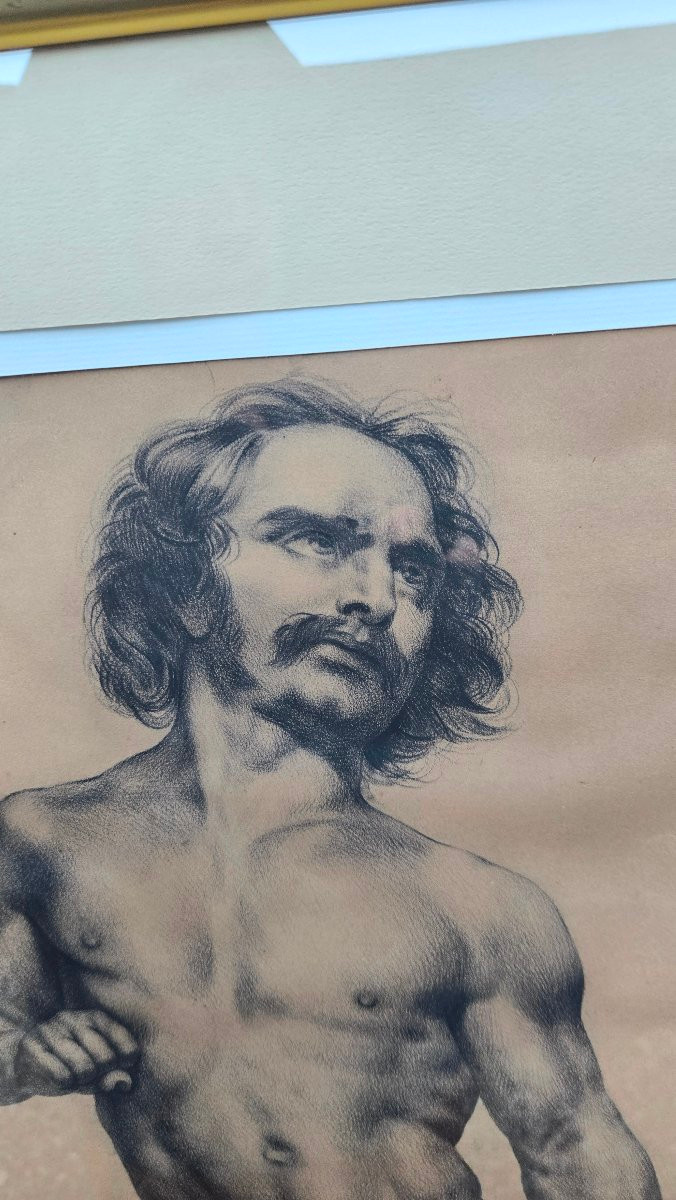
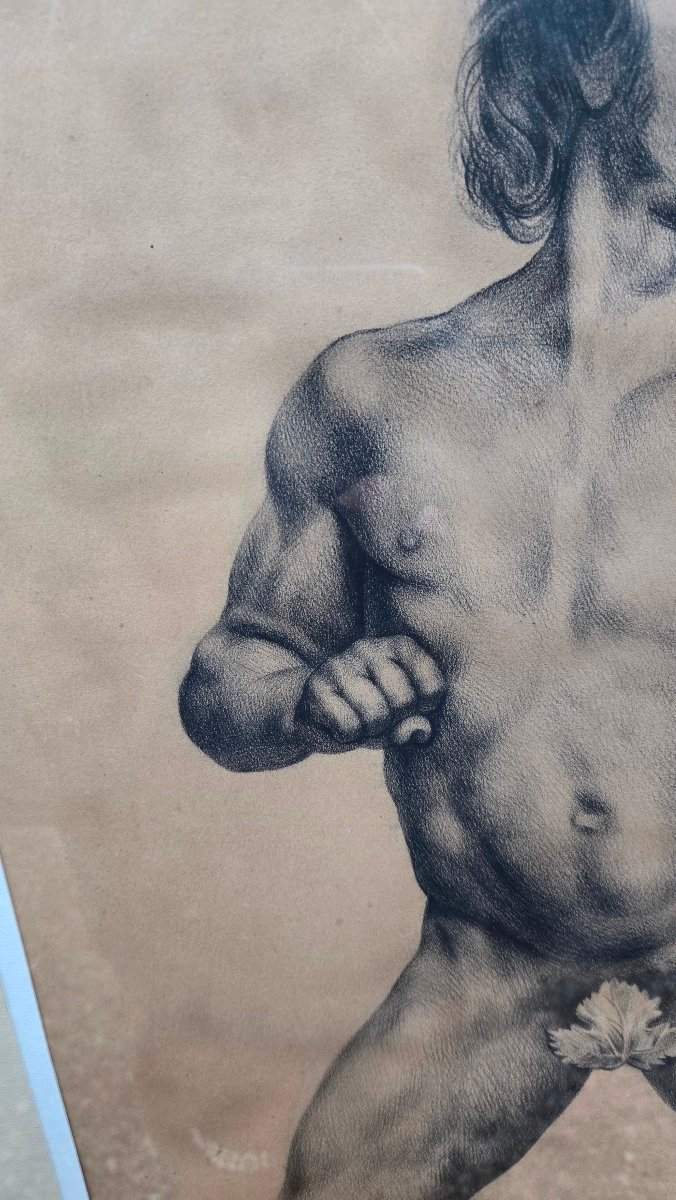
The model, a man with medium-length hair and a prominent mustache, is depicted in a complex pose, combining a twist of the torso with an asymmetrical arrangement of the limbs.
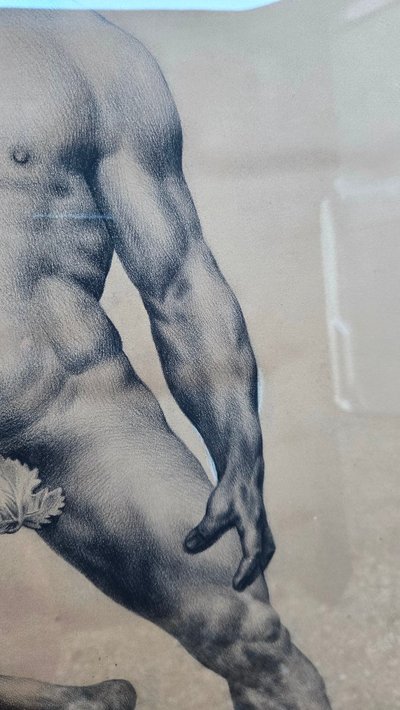
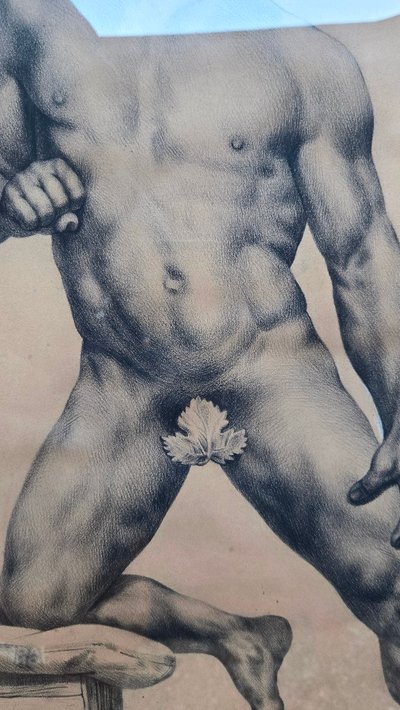
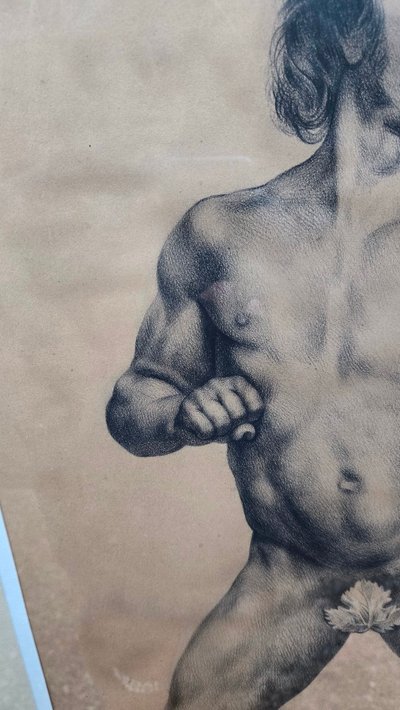
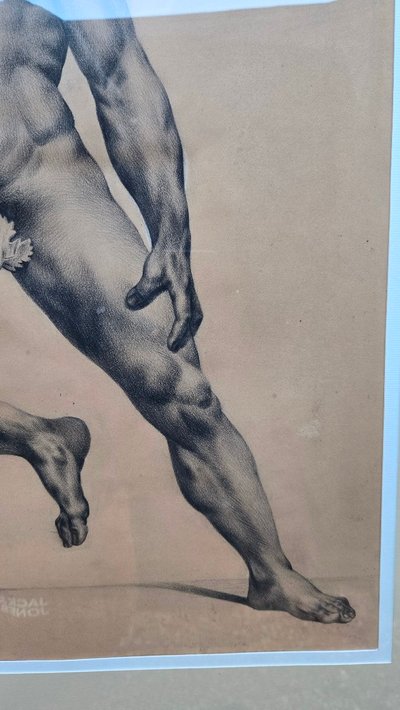
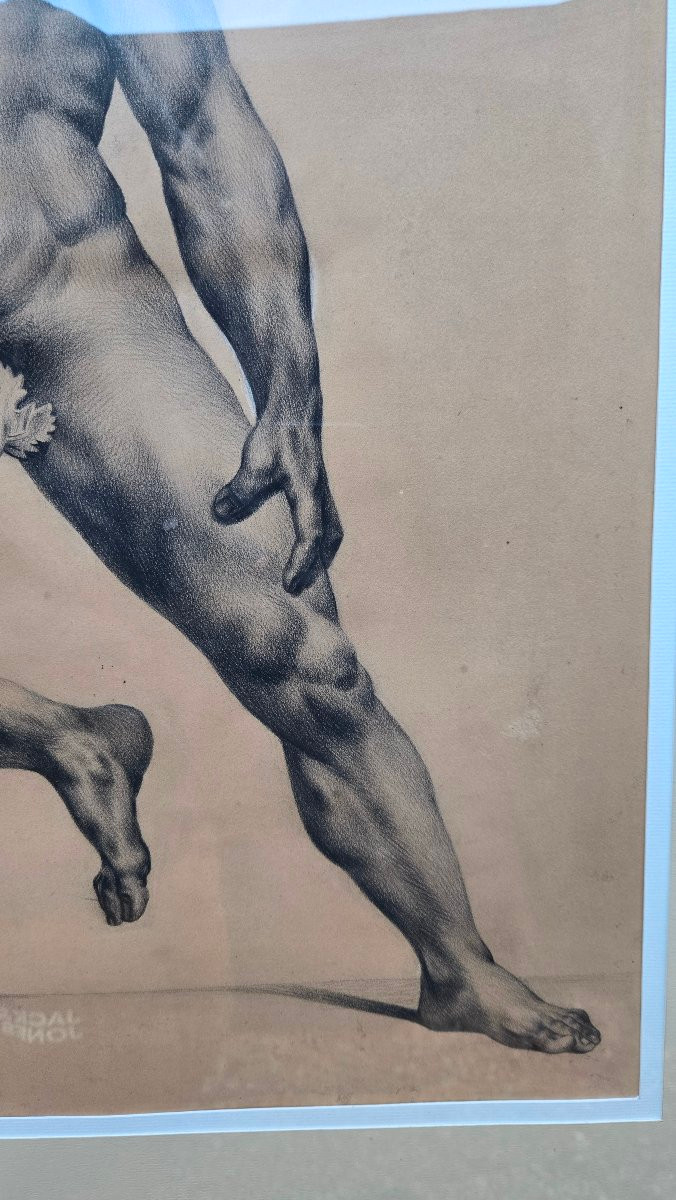
His right leg is extended and planted firmly on the floor, while his left leg, bent, rests on a studio bench cushioned with a pillow. His right arm is bent, with his fist drawn in front of his torso, while his left arm hangs down alongside his body, his open hand near his thigh. His head is raised and turned to the side, his gaze directed upward.
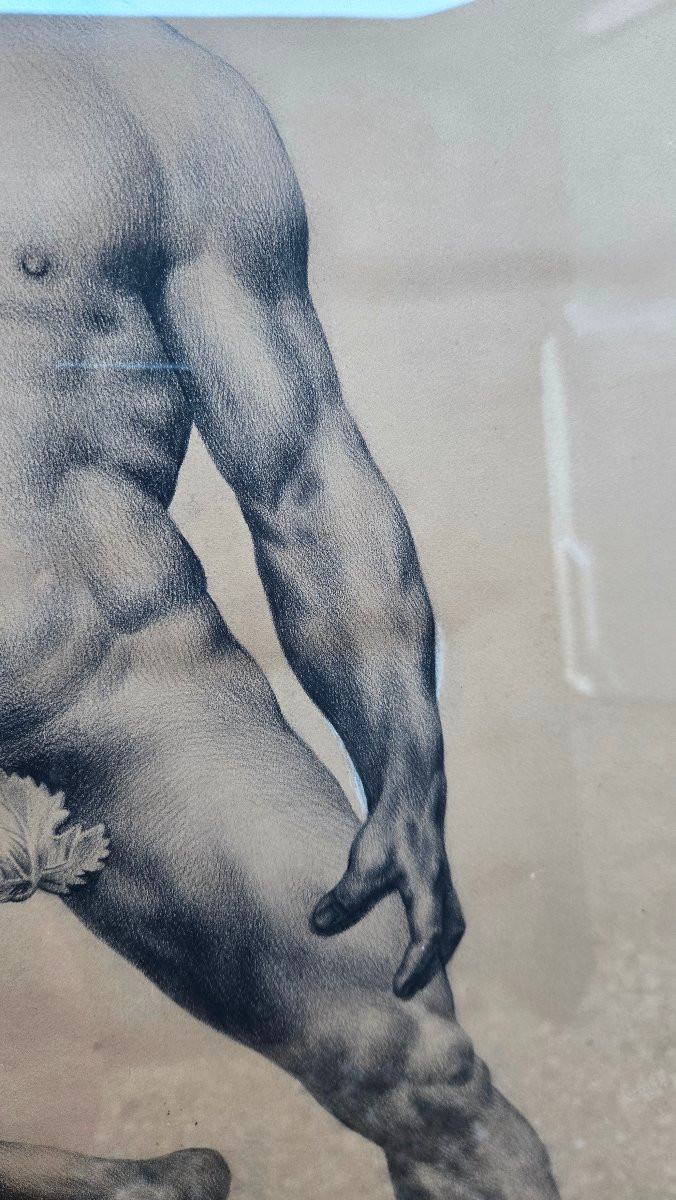
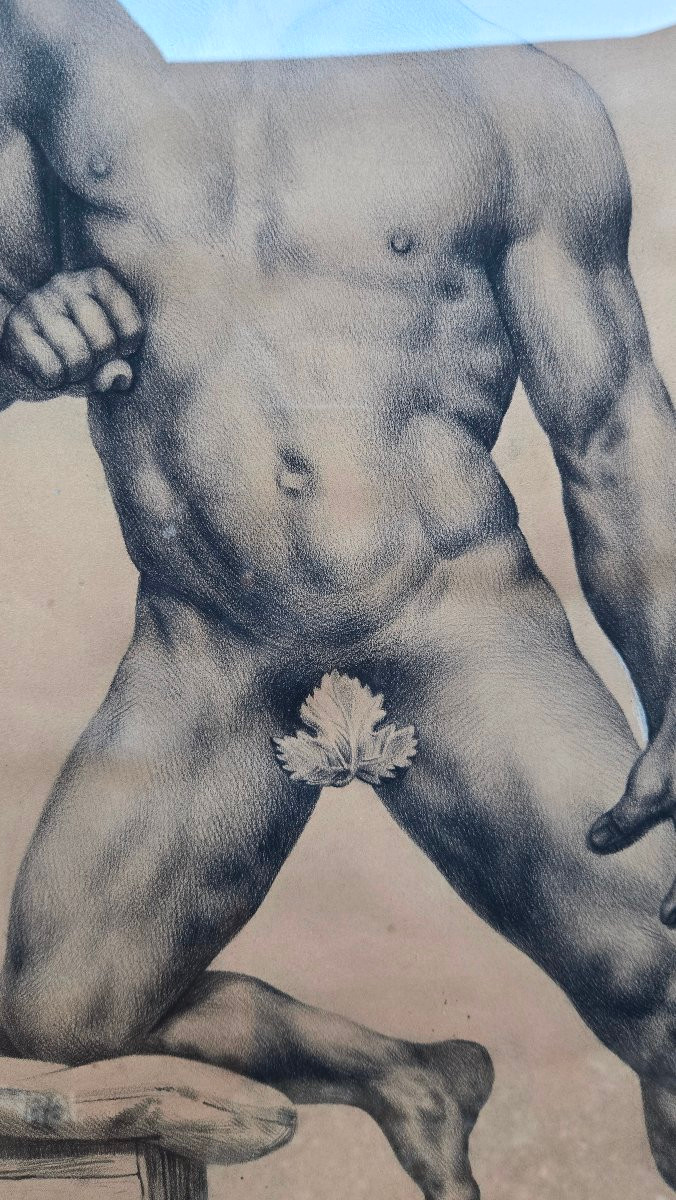
This composition allows the artist to explore the muscular tensions created by the posture, which are particularly evident in the rendering of the shoulders, pectorals, abdomen, and legs.
The anatomical modeling is built up through a network of fine hatching—sometimes crossed—whose density varies according to areas of light and shadow. Gradually fading transitions help render the muscular contours, while more pronounced outlines emphasize the joints and changes in planes.
Particular attention is paid to the facial expression, the rendering of the hair, and the hands and feet. The simply depicted wooden bench places the figure in a studio setting.
A fig leaf conceals the model’s genitals, in accordance with a convention of modesty found in certain academic depictions. It cannot be confirmed whether this was added at a later date.
Historical Context and Academic Instruction
This drawing is part of the tradition of male nude studies practiced in academies and fine arts schools during the 19th century.
The study of the human figure played a central role in artists’ training at that time. Instruction generally followed a progression from copying prints to studying plaster sculptures, and then to drawing from a live model.
Male-only academies, in particular, allowed students to deepen their understanding of anatomy, the proportions of the body, foreshortening, and the modeling of form through light and shadow.
The pose depicted here—with one leg bent and resting on a support and the torso twisted—reflects this pursuit of anatomical mastery and the construction of volume.
To date, no engraved model corresponding precisely to this composition has been identified. It could therefore be a study based on a live model or a copy of an academic print that has not yet been found.
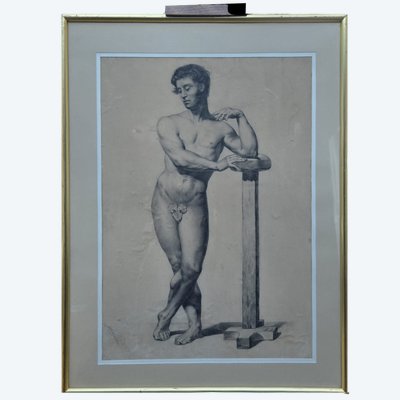
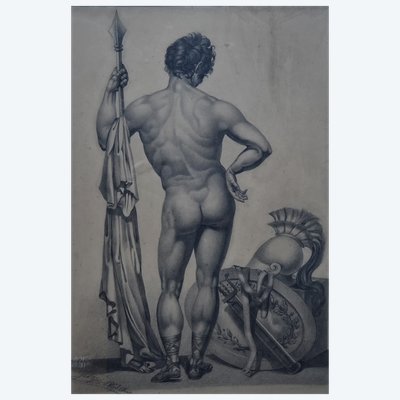
This drawing is part of a set of three male figure studies of the same dimensions, bearing the signature “Geltzer” and dated 1862 and 1863.
One of these three studies, titled *The Soldier at Rest*, reproduces a composition by Marc Antoine Hervier engraved by Alexis-François Girard, whose use in the curriculum of the Bruges Academy of Fine Arts is historically documented.
The museums in Bruges hold, in particular, two drawings based on this model, executed by students of the Academy in 1833 and 1838.
This connection suggests that Geltzer may have trained at the Bruges Academy, although it is currently impossible to confirm this hypothesis with archival documents.
Signature and Date
The drawing bears, in the lower left corner, the handwritten signature “Geltzer,” accompanied by the date 1863.
The identity and career of this artist remain to be documented.
Research has been conducted with museums in Bruges to verify whether this artist appears in the Academy’s historical records.
Condition and Framing
The drawing is in good overall condition, with a few slight creases, minor historical paper deterioration, and signs of age, visible in the photographs.
The lines, hatching, and tonal variations remain well preserved.
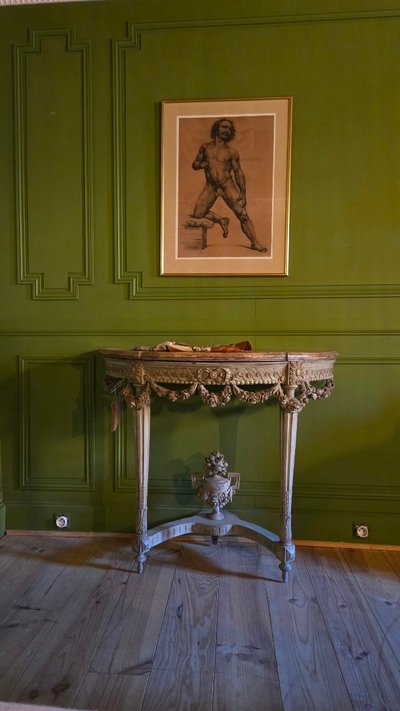
It is presented in a gilded frame with a marquise, added at a later date, and protected under glass.
Dimensions
Height including frame: 77 cm
Width including frame: 57 cm
Height of the visible drawing: 61 cm
Width of the visible drawing: 42 cm
Ref: A5TEKYK9D7

 English
 Français
 Italiano
 Deutsch
 Crow pouch
800 € EUR