This description has been translated and may not be completely accurate. Click here to see the original
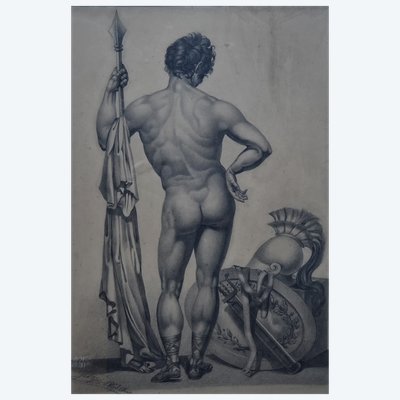
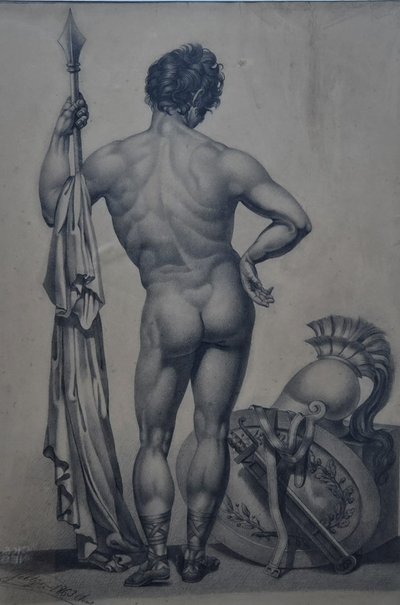
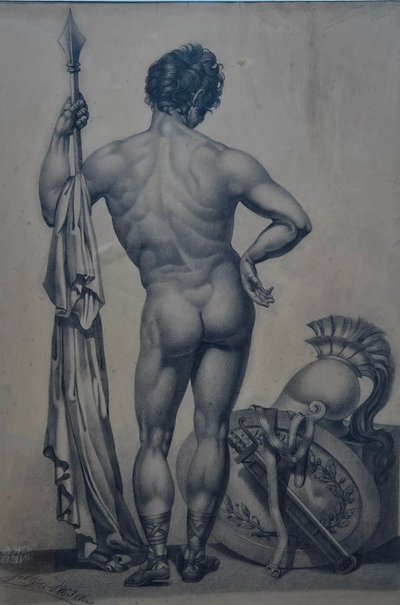
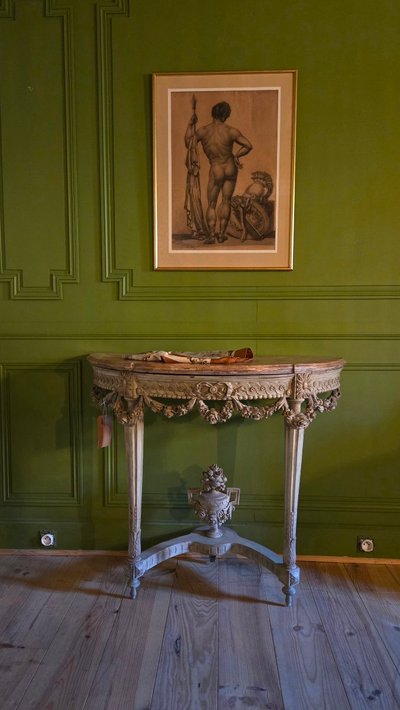
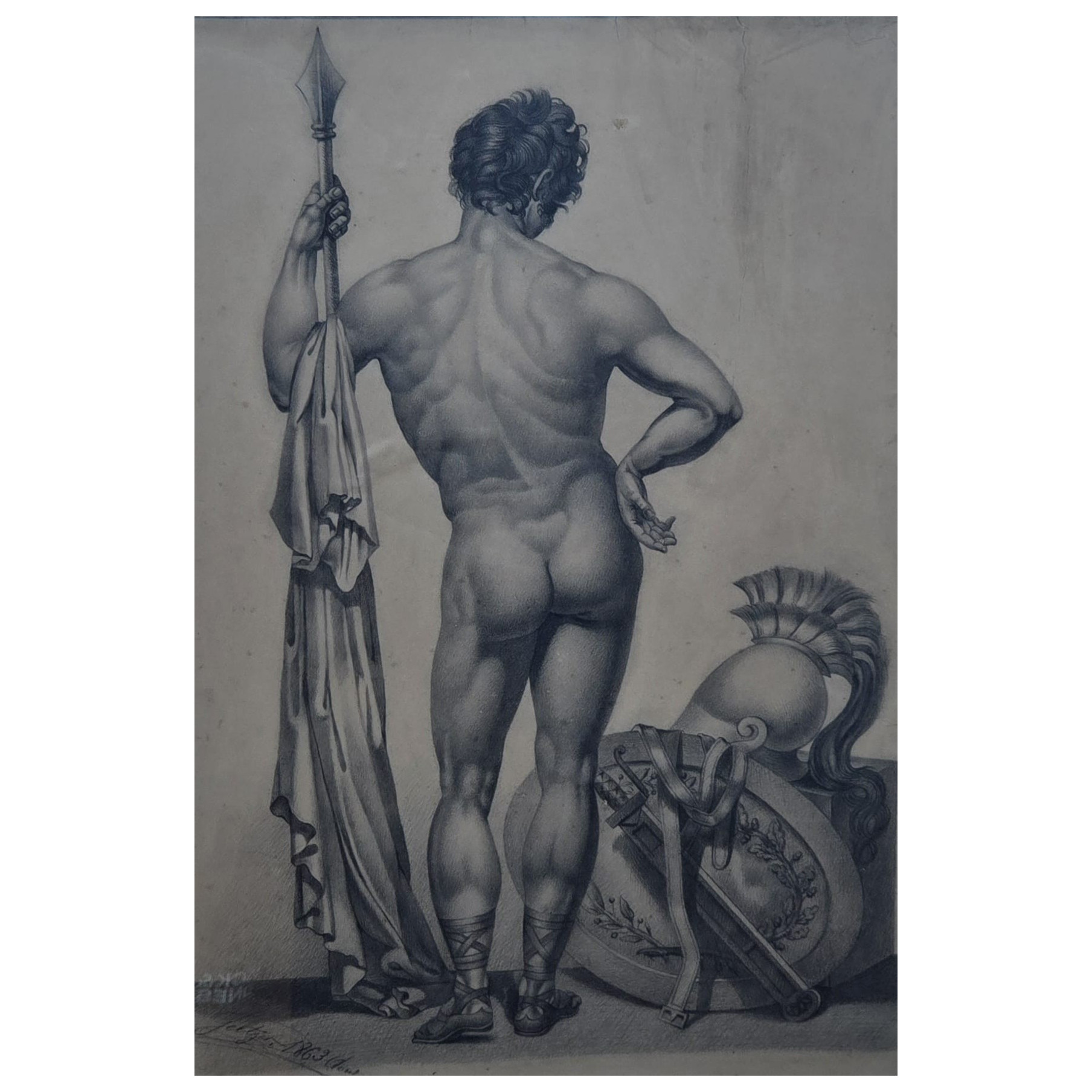
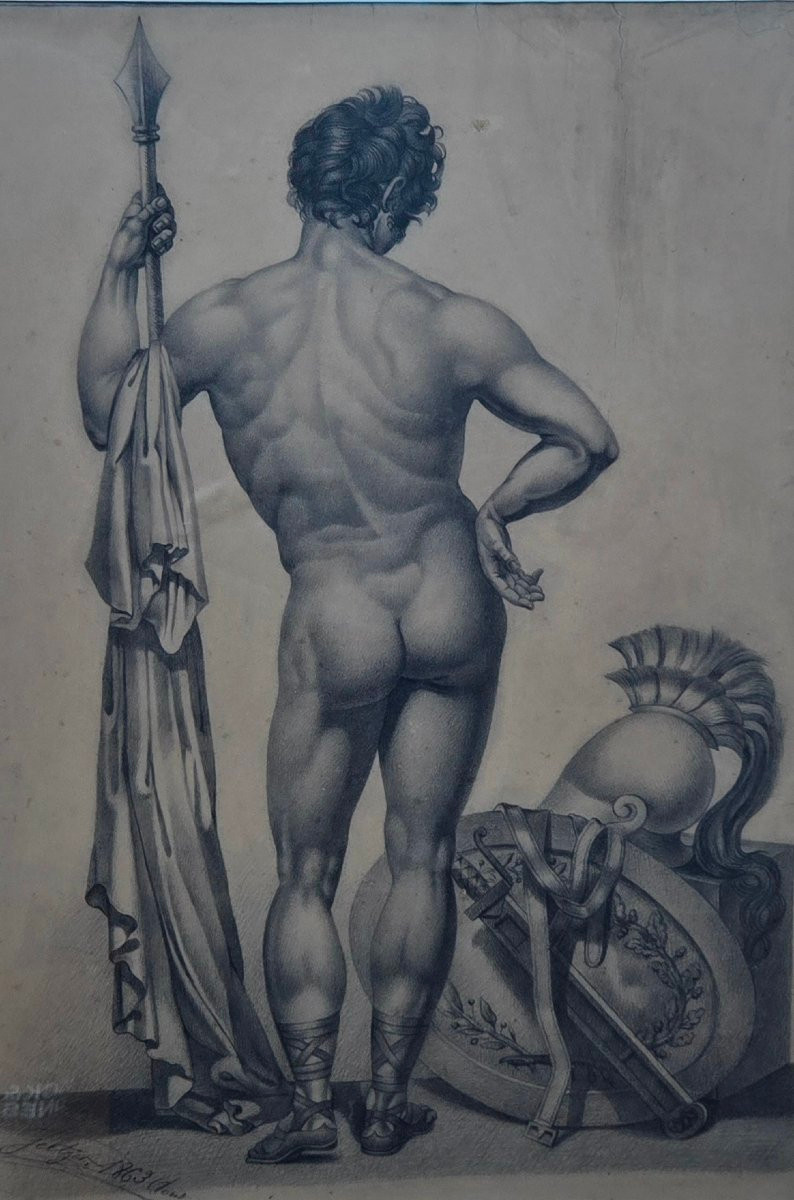
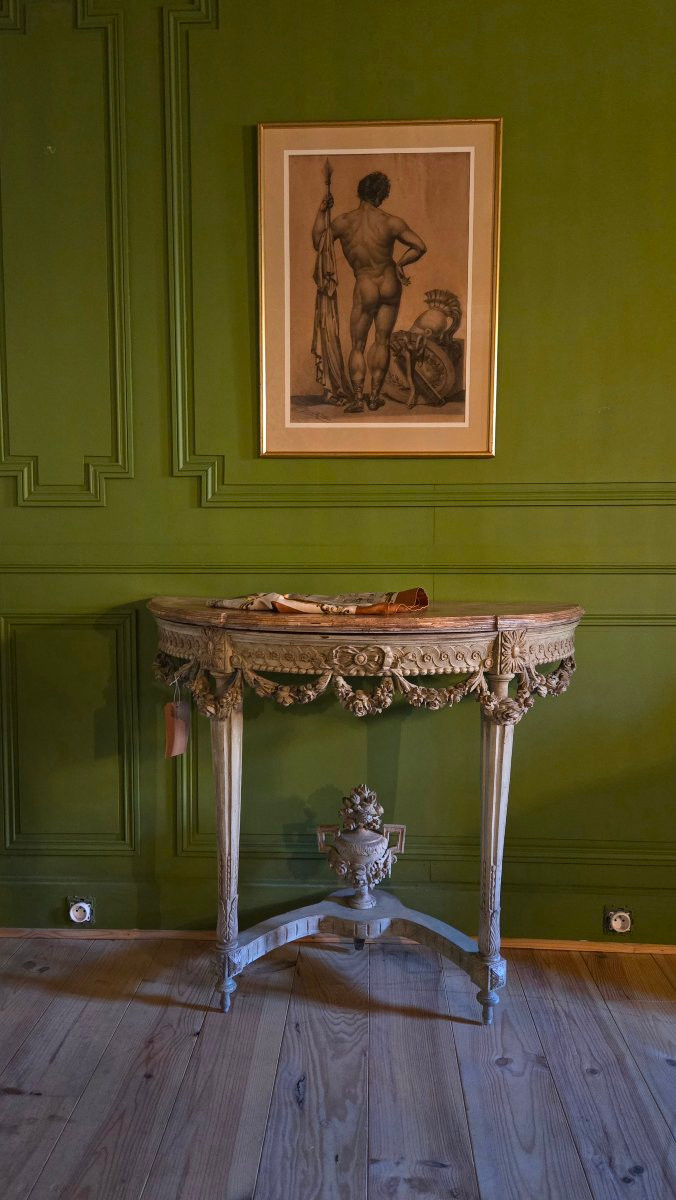
A 19th-century academic drawing, signed by Geltzer and dated 1863, depicting a soldier in classical attire seen from the back, based on a composition by Marc Antoine Hervier, engraved by Alexis-François Girard in the early 19th century.
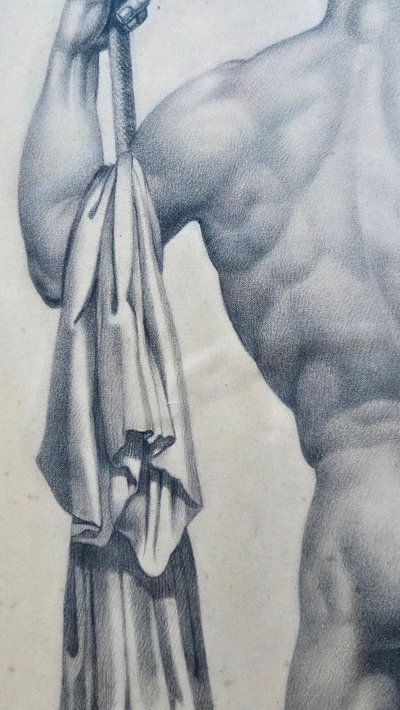
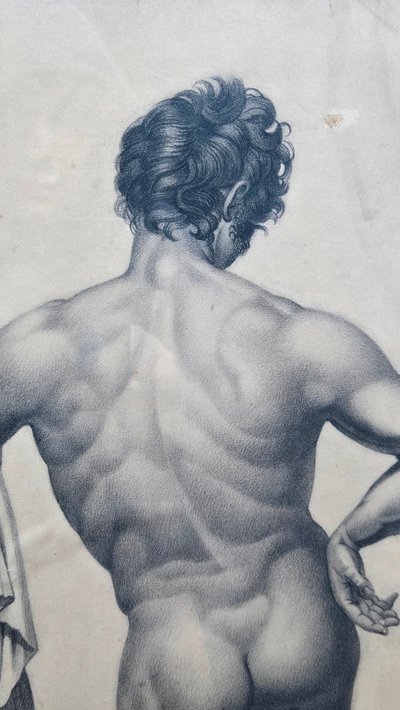
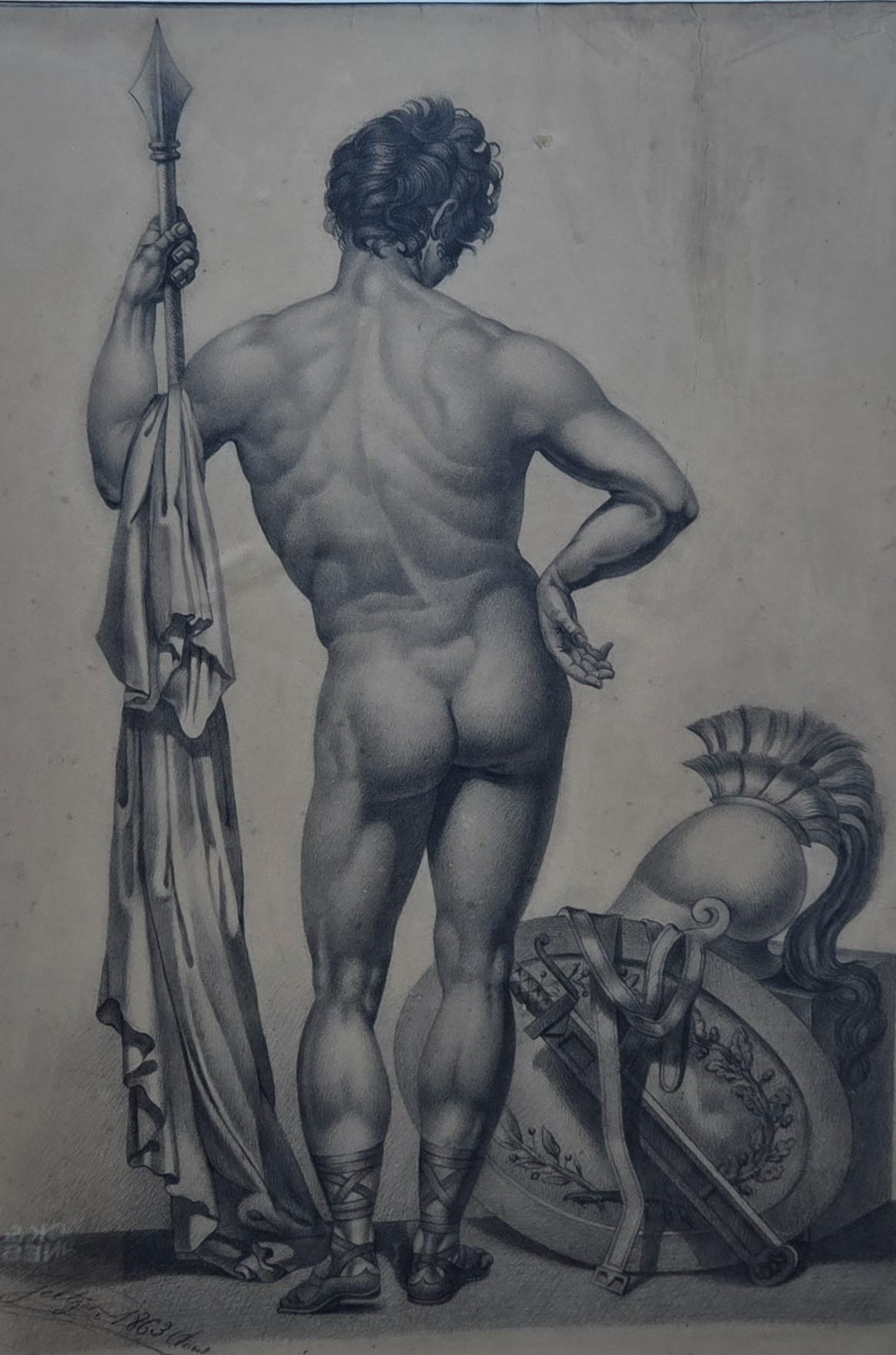
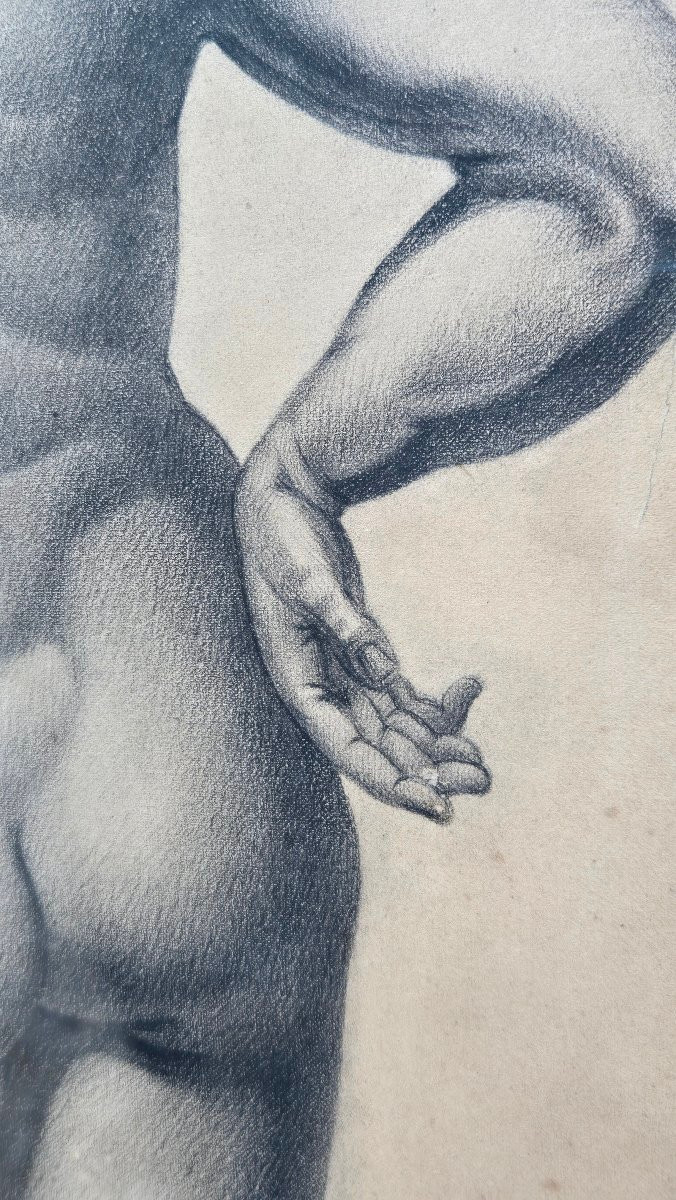
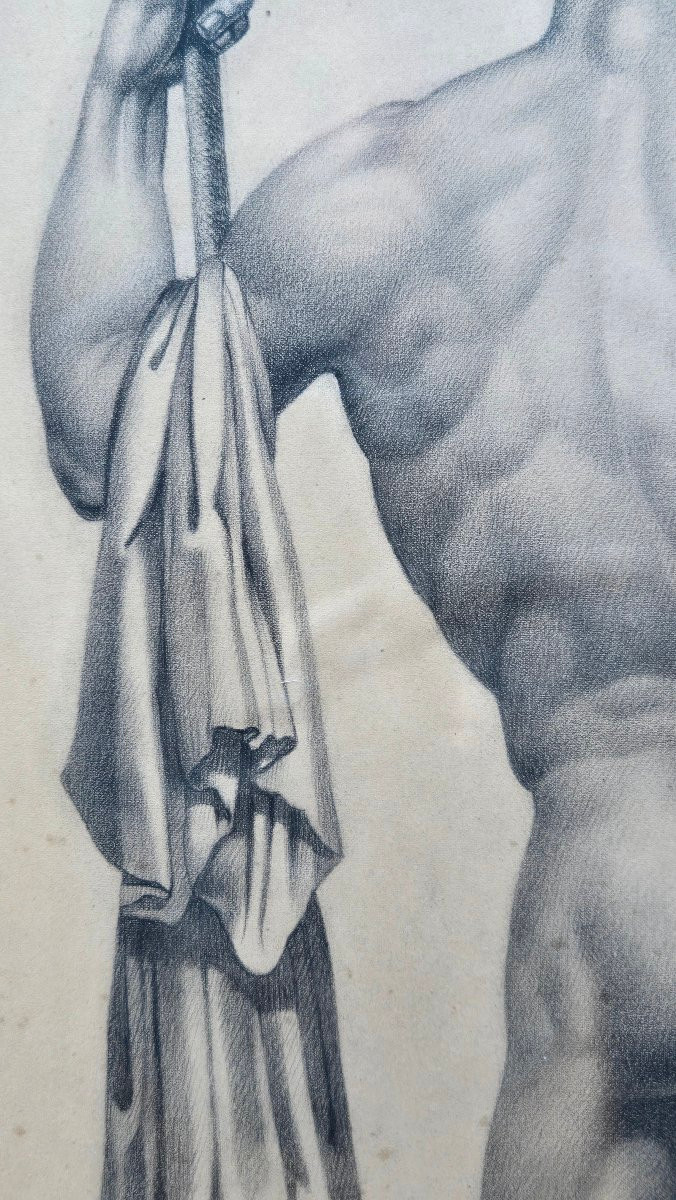
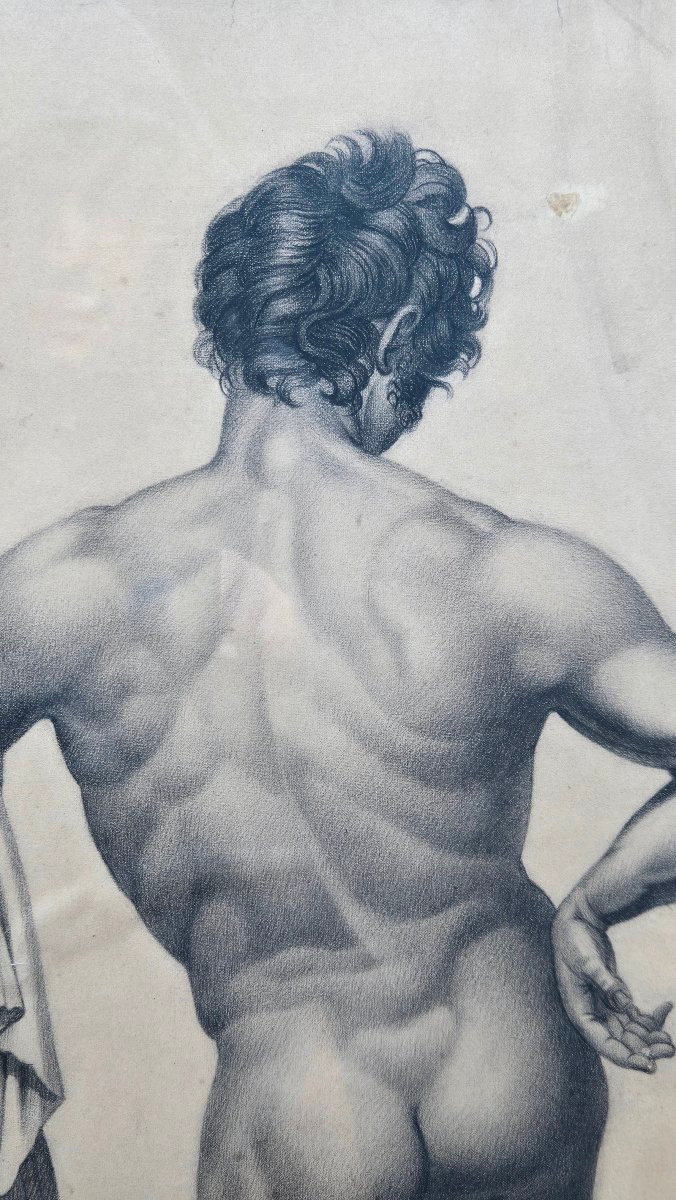
The figure is depicted standing in a contrapposto pose, with his weight resting primarily on one leg, while the other is slightly bent. His head is turned to the right, and his right arm is bent, with his hand placed behind his hip. In his left hand, he holds a long spear around which a piece of drapery is wrapped, falling all the way to the ground.
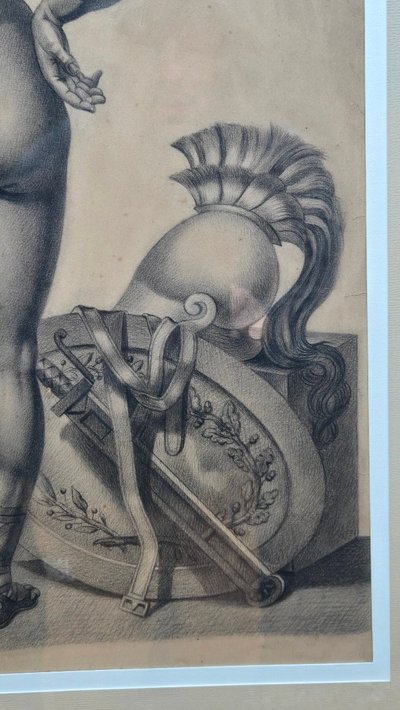
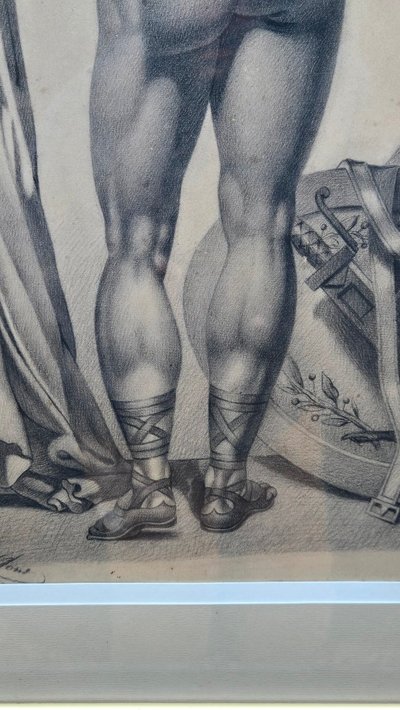
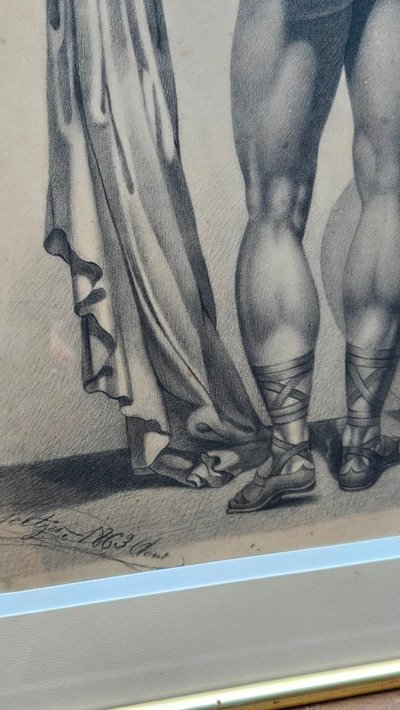
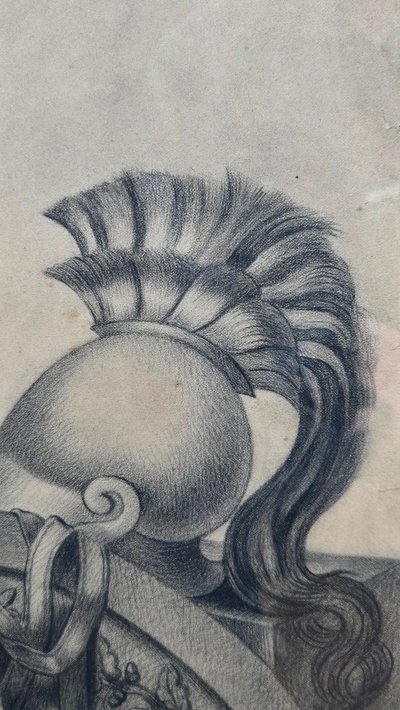
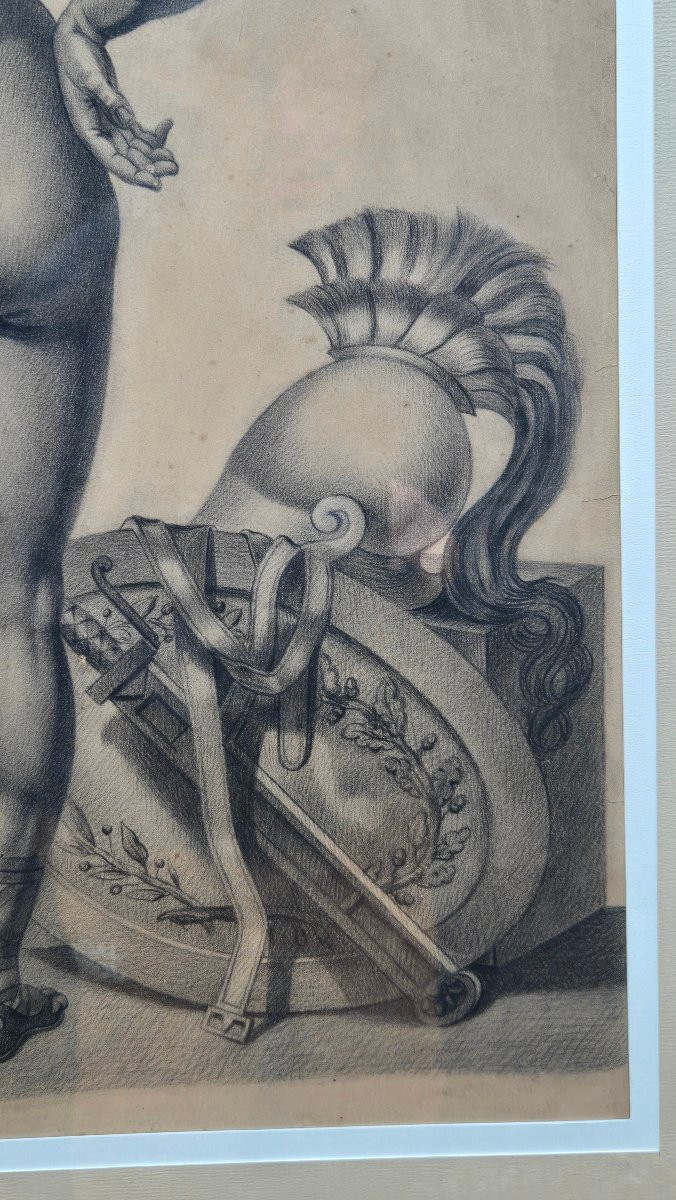
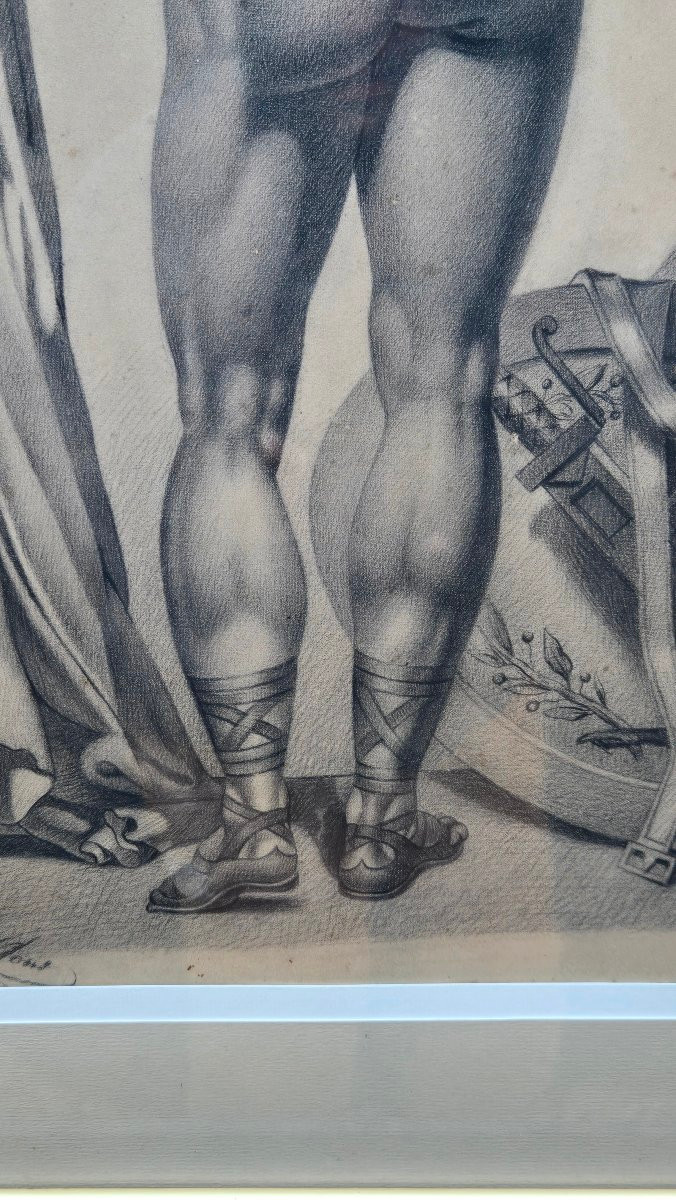
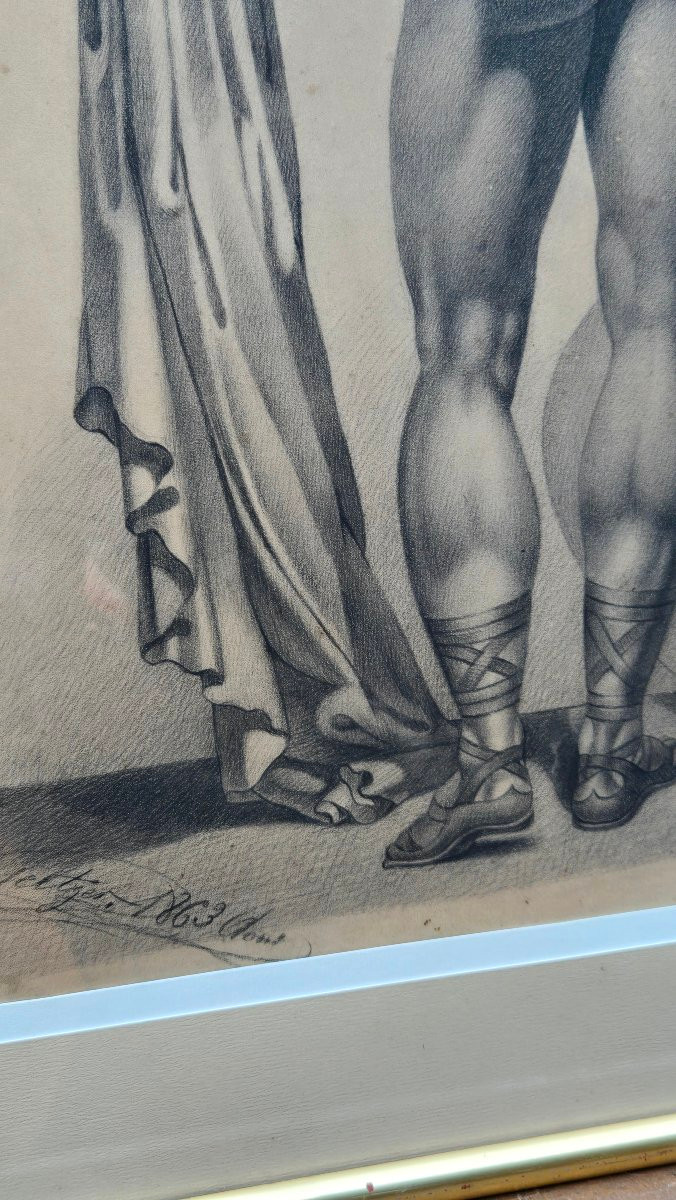
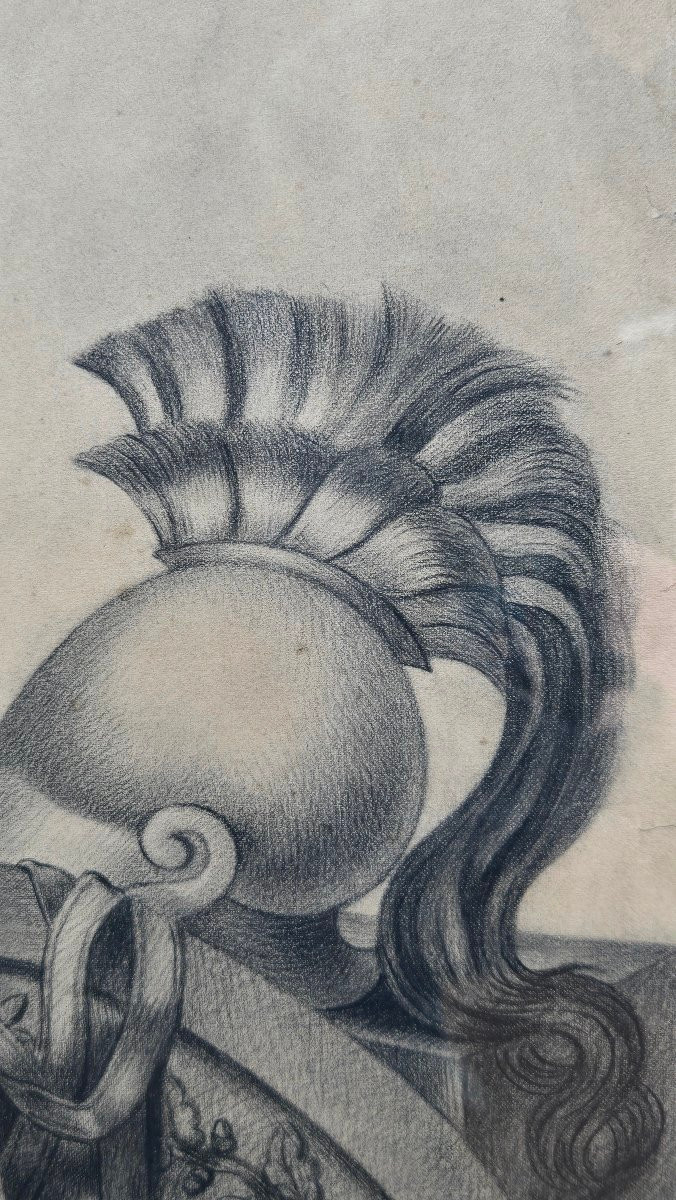
At his feet lie several military attributes inspired by antiquity: a helmet with a high crest, a circular shield adorned with plant motifs, and a sword in its scabbard, along with its straps. The soldier wears sandals with crisscrossed straps that extend up to his calves.
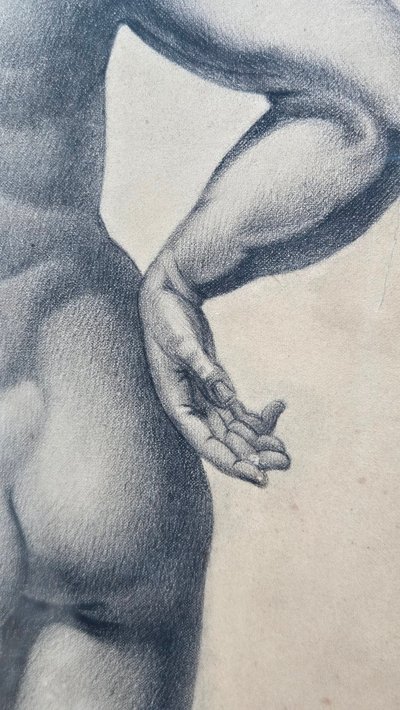
Anatomical study plays a central role in this composition. The rendering of the back, shoulders, shoulder blades, and legs reflects a careful observation of muscular forms. The modeling is achieved through a network of fine hatching—sometimes crossed—and through gradual shading that renders the effects of light and shadow. The drawing also pays particular attention to the folds of the drapery, the military accessories, and the various materials depicted.
Origin of the Model and Academic Context
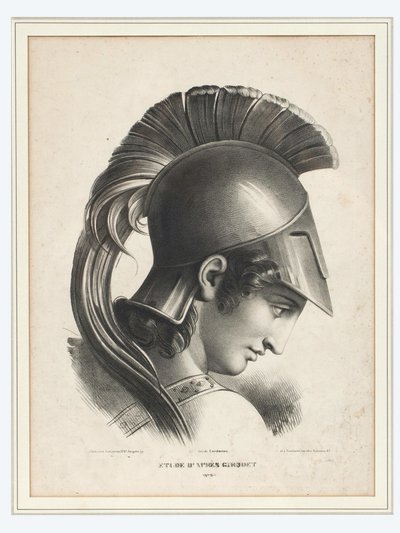
This composition is based on the model titled *The Soldier at Rest*, drawn by Marc Antoine Hervier and engraved by Alexis-François Girard in the early 19th century.
This print was used for teaching academic drawing, particularly at the Academy of Fine Arts in Bruges, where its use is historically documented.
The collections of the museums in Bruges preserve two studies based on this same model by students of the Academy: one executed in 1833 by Joseph van Biesbrouck, the other in 1838 by Pierre Denis. Both of these drawings were created as part of academic competitions and attest to the use of this composition in the study of figure drawing.
Academic instruction at the time followed a progression from copying prints to studying sculptures, and then to working from live models. Reproducing engraved figures allowed students to master proportions, anatomical modeling, drapery, and the play of light and shadow.
Our drawing, signed by Geltzer and dated 1863, reprises this same composition thirty years after the first documented studies in Bruges.
The documented presence of this model in the curriculum of the Bruges Academy suggests that Geltzer may also have attended that institution. However, this hypothesis remains to be confirmed, as no inscription or archival document currently allows us to establish with certainty where he received his training.
Signature and Date
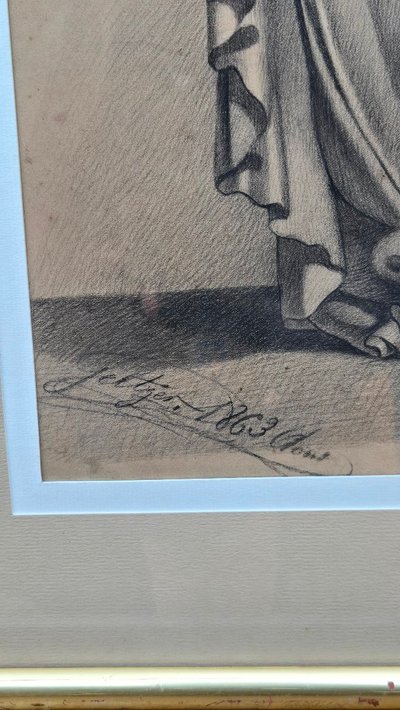
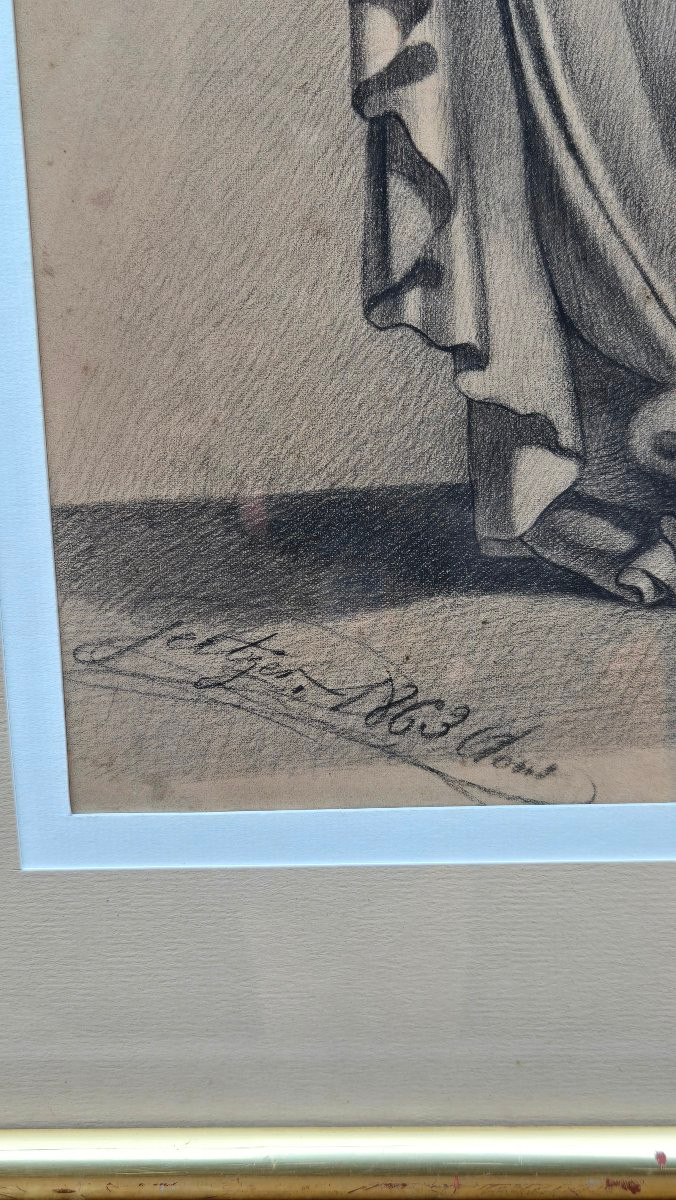
The drawing bears, in its lower left corner, the handwritten signature “Geltzer,” accompanied by the date 1863.
Despite research conducted in 19th-century art sources and exhibition catalogs, the identity and career of this artist have not yet been established.
Further research has been initiated with museums in Bruges to verify whether this artist appears in the Academy’s historical records.
Condition and Framing
The drawing is in good overall condition.
There are a few slight creases, small tears, and various age-related marks on the paper, none of which significantly affect the viewing of the composition. These features are visible in the photographs.
The lines, hatching, and tonal variations remain well preserved.
The work is presented in a gilded frame with a drop front, added at a later date, and protected by glass.
Dimensions
Height including frame: 77 cm
Width including frame: 57 cm
Height of visible drawing: 61 cm
Width of visible drawing: 42 cm
Ref: 9W2DHXHU0D

 English
 Français
 Italiano
 Deutsch
 Louis XVI secretary
5.800 € EUR