


Would you like more images?

Georges Rohner (1913-2000)
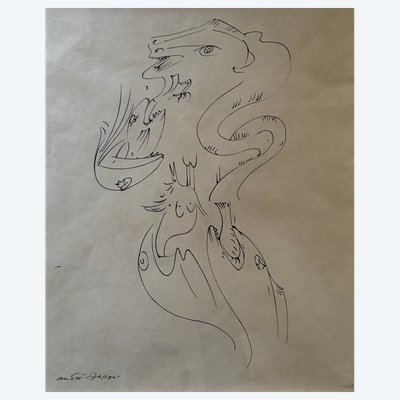
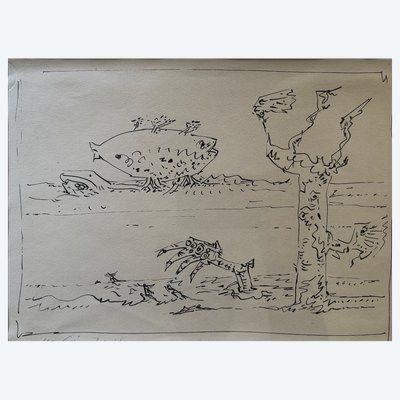
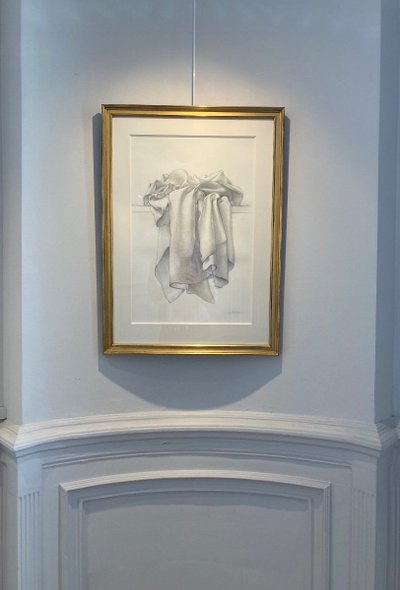
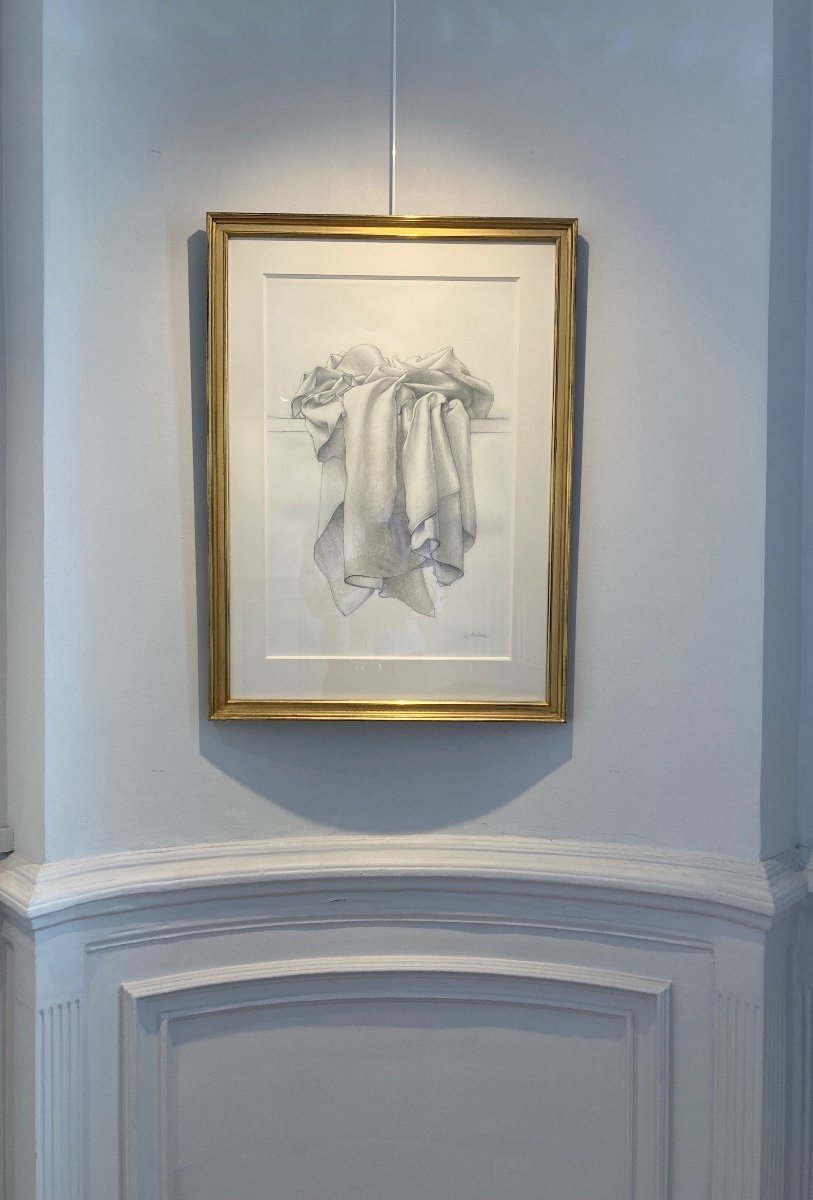
Study for The Crumpled Tablecloth, 1971
Graphic pencil on paper
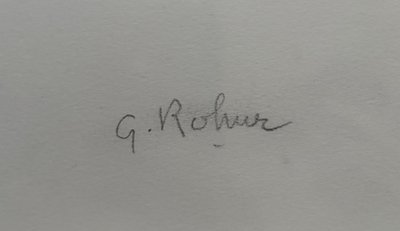
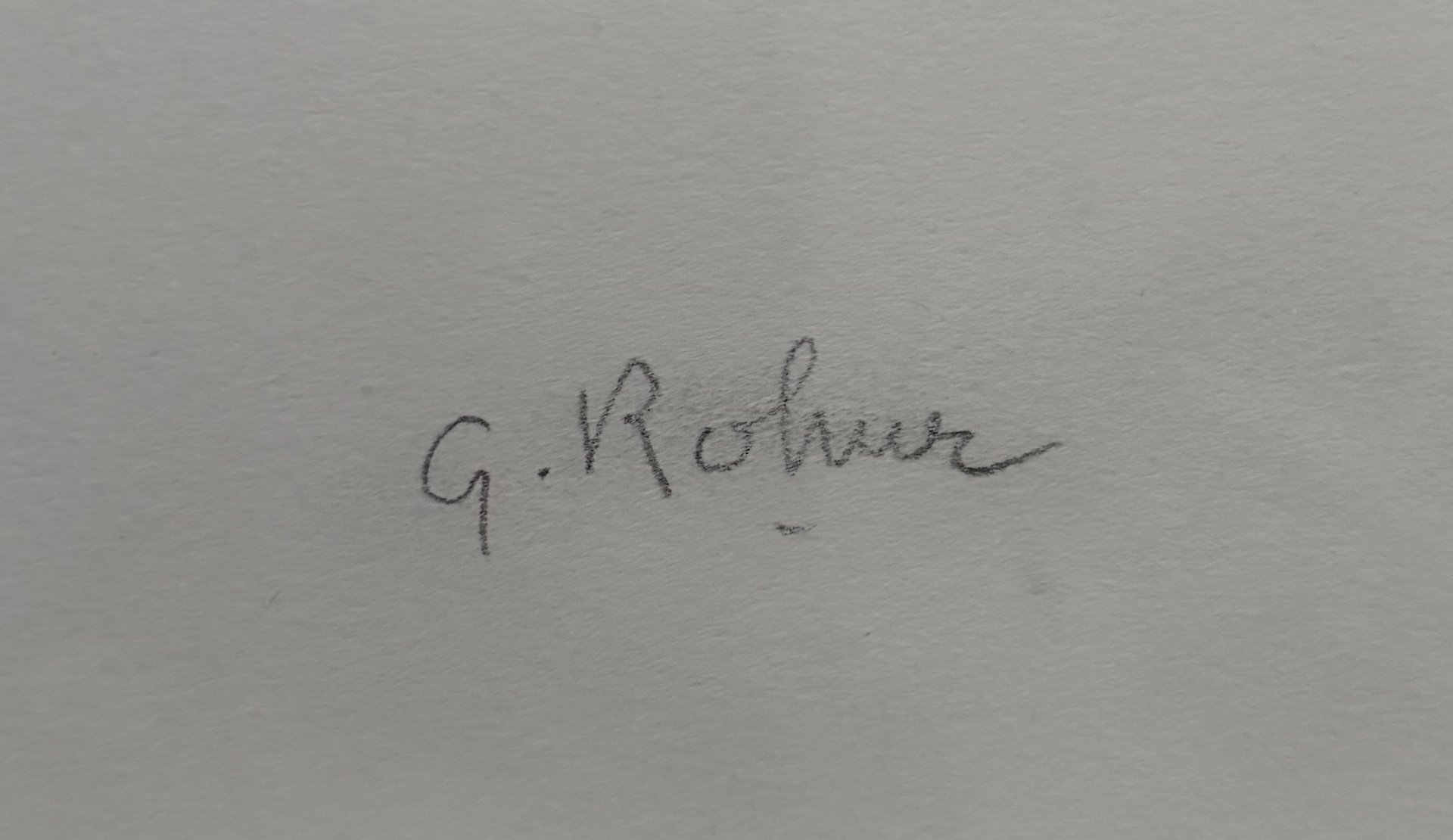
Signed lower right
55 x 36 cm
Bibliography: Pierre Cabanne, Georges Rohner, Les éditions de l’amateur, 1989, reproduced on page 77
Georges Rohner, who learned to draw alongside an uncle, interrupted his studies at the Lycée Janson de Sailly and successfully applied to the École des Beaux-Arts in Paris. He drew from classical models and admired the works of Uccello, Mantegna, Chardin, Corot, Champaigne, and particularly Georges de La Tour, David, and Ingres at the Louvre, whose "classical aesthetic stemming from the return to antiquity advocated by Winckelmann at the end of the 18th century" he appreciated, according to Lydia Harambourg. Among modern artists, only Mondrian held his attention.
In 1930, Rohner was admitted to Lucien Simon's studio, where he met Humblot and Despierre, with whom he forged a strong and lasting friendship. Both would be admitted to the Académie des Beaux-Arts 40 years later. He made his debut at the Salon d'Automne, where he exhibited regularly, and later participated in the Salon des Indépendants and the Tuileries. His conviction that the salvation of painting lay in a return to subject matter was stimulated by the exhibitions "The Painters of Reality in 18th-Century France" and "The Le Nain Family," which impressed him. In 1935, he joined the Forces Nouvelles group with Humblot, Jannot, Lasne, Pellan, and Tel Coat. The group was placed under the patronage of David and Ingres. During his military service, he went to Guadeloupe, where he decorated the Basse-Terre City Hall.
Rohner participated in the first Salon de la Nouvelle Génération, and his first solo exhibition was held in 1936. Mobilized for military service, he was taken prisoner at Stala XII in Trier, where he decorated the chapel. Returning in 1942, he settled on Rue Bonaparte, where his friend Despierre would later join him a few doors down.
Having reached the maturity of his art, Rohner devoted his work to landscapes, portraits, and still lifes. By renewing his vision, Rohner, according to Lydia Harambourg, “created new subjects that owe nothing to history or mythology. Having always rejected abstraction, he drew from a concrete repertoire of real objects and beings, which appear purified, stripped of all cultural references and surrealist allusions, in order to give this visible reality a greater intensity.”
Rohner exhibited at the Framond Gallery from 1951 to 1953. He received critical acclaim, notably from Pierre Descargues, Pierre du Colombier, Claude Roger-Marx, and André Warnod. His exhibitions continued throughout the 1960s, particularly at the Galerie de Paris. He exhibited at the Wildenstein Gallery in London in 1973 and in New York in 1974 before permanently joining the Framond Gallery in 1983.
His works are held in numerous museums, including the Centre Pompidou, the Musée d’Art Moderne de Paris, the Metropolitan Museum of Art in New York, and museums in Angers, Brest, Caen, Beauvais, Menton, Nancy, Rodez, and Rouen.
Ref: OLM1WRLBI9
| Condition | Very good |
| Style | Other style (Drawings of Other style Style) |
| Period | 20th century (Drawings 20th century) |
| Country of origin | France |
| Artist | Georges Rohner (1913-2000) |
| Shipping Time | Ready to ship in 4-7 Business Days |
| Location | 75008, Paris, France |
4 commitments to buy with confidence

 English
 Français
 Italiano
 Deutsch