



Would you like more images?

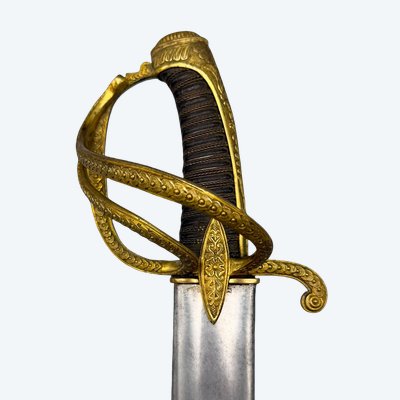
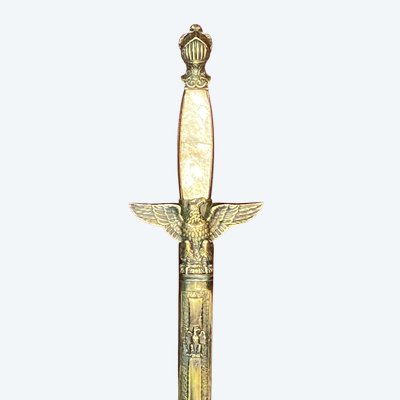
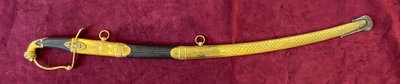
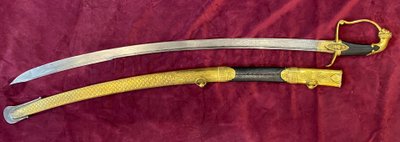
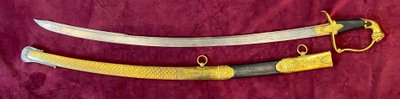
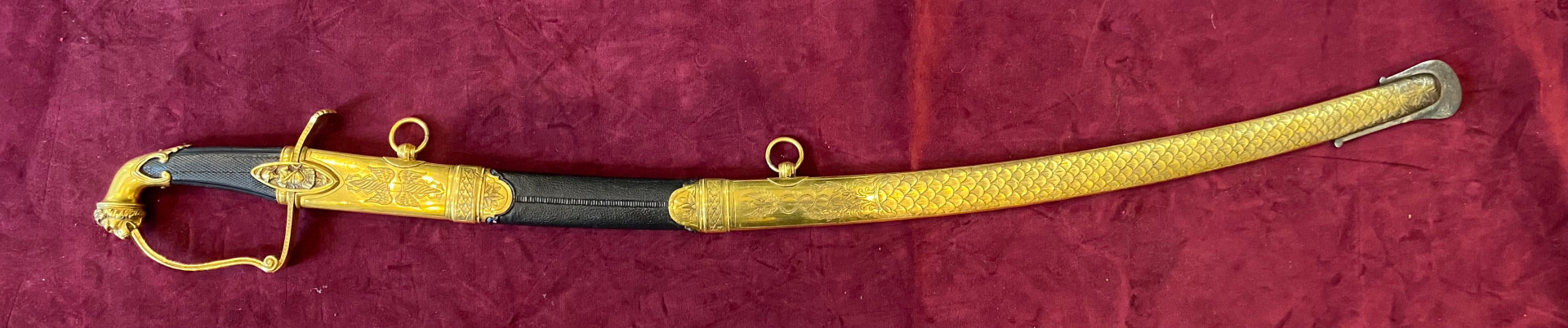
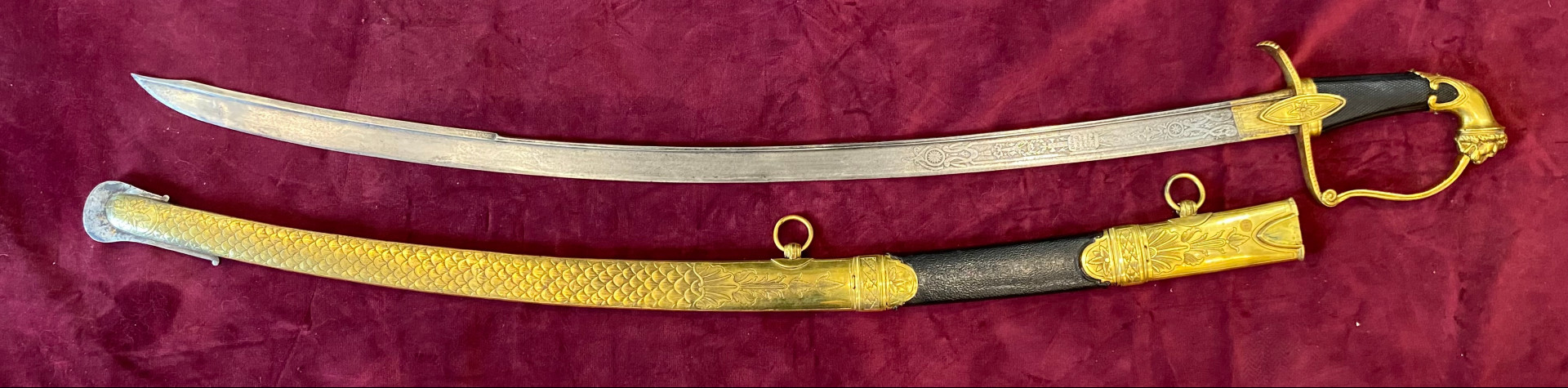
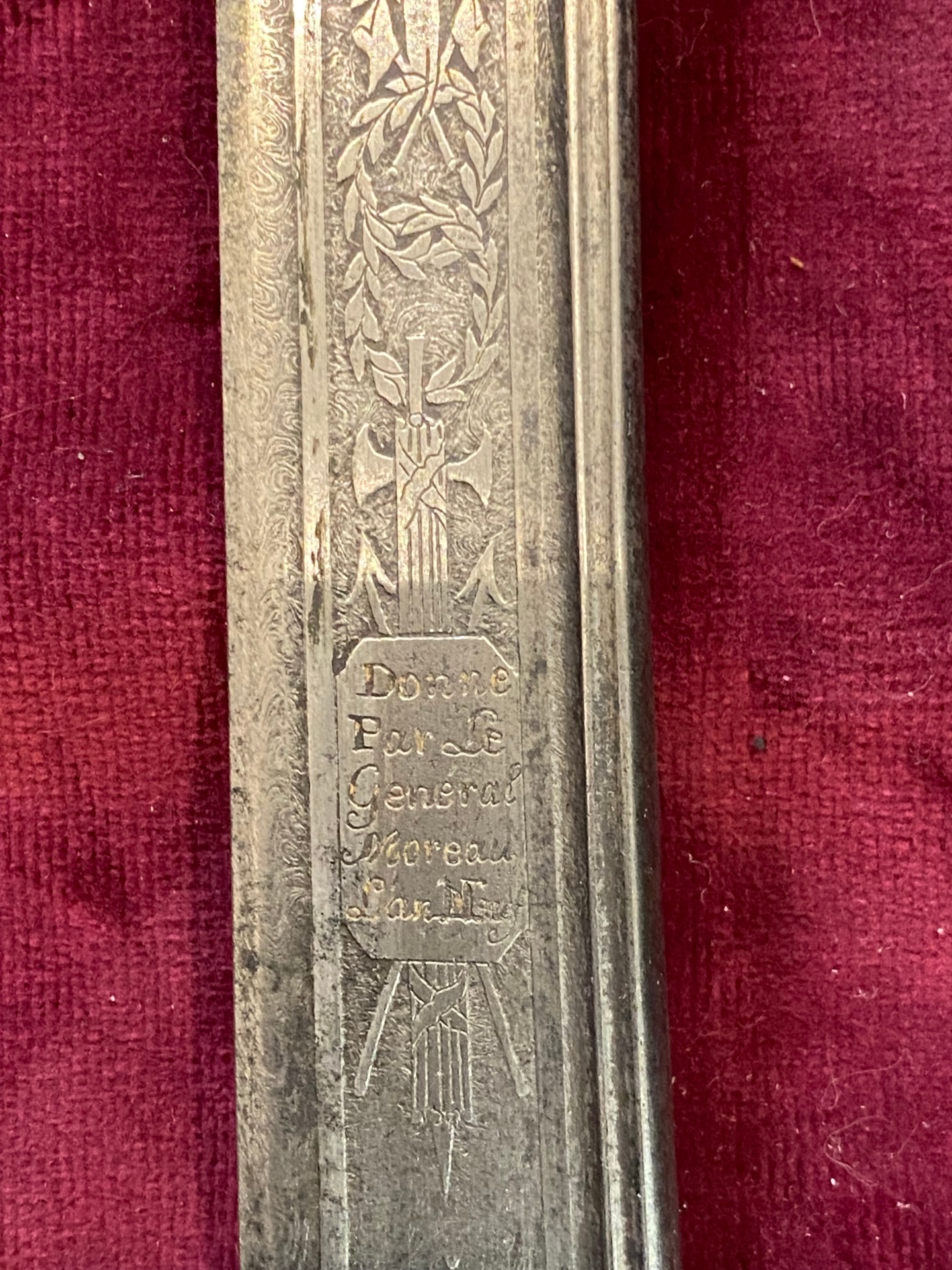
Award sword presented by General MOREAU (1763–1813) in Year IX.
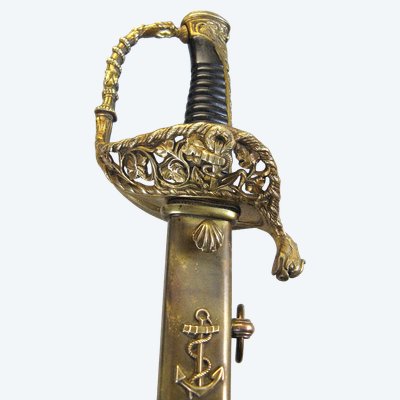
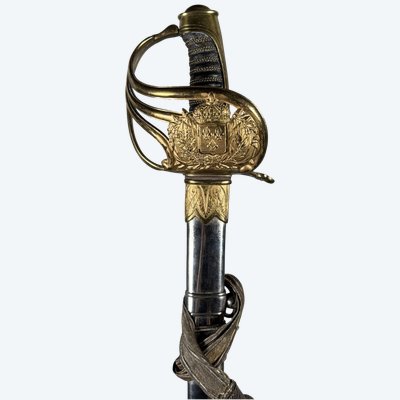
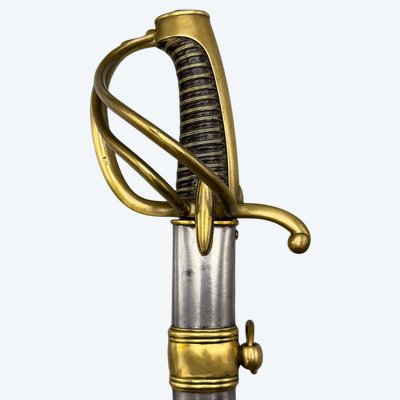
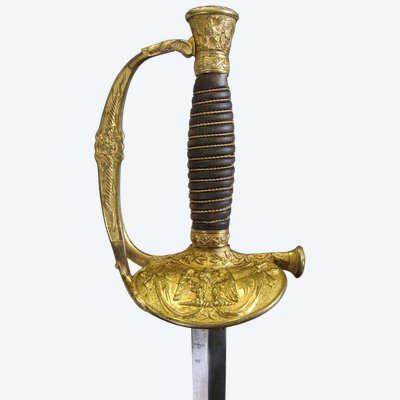
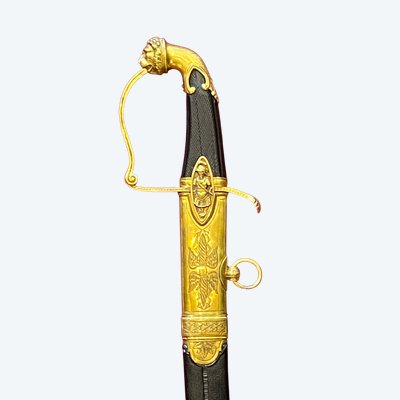
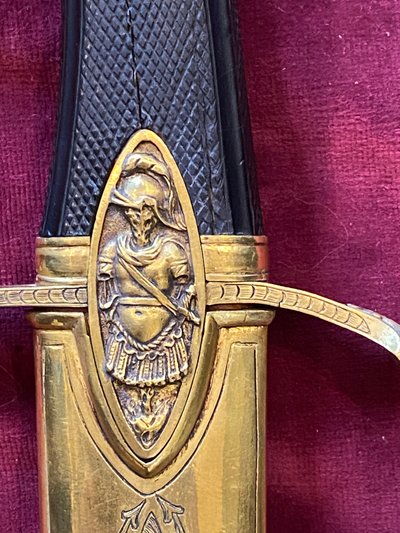
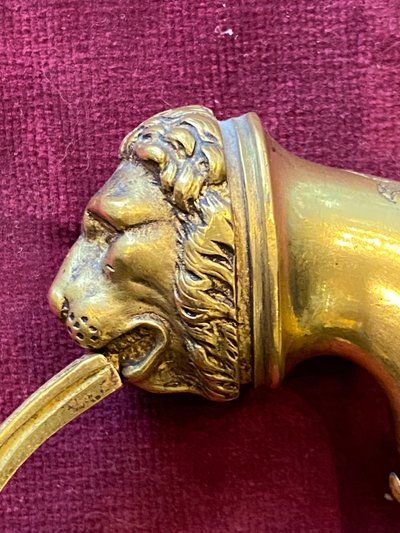
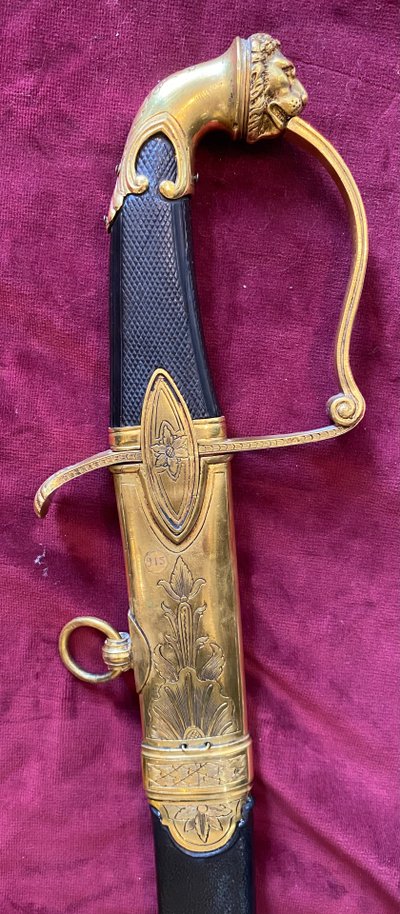
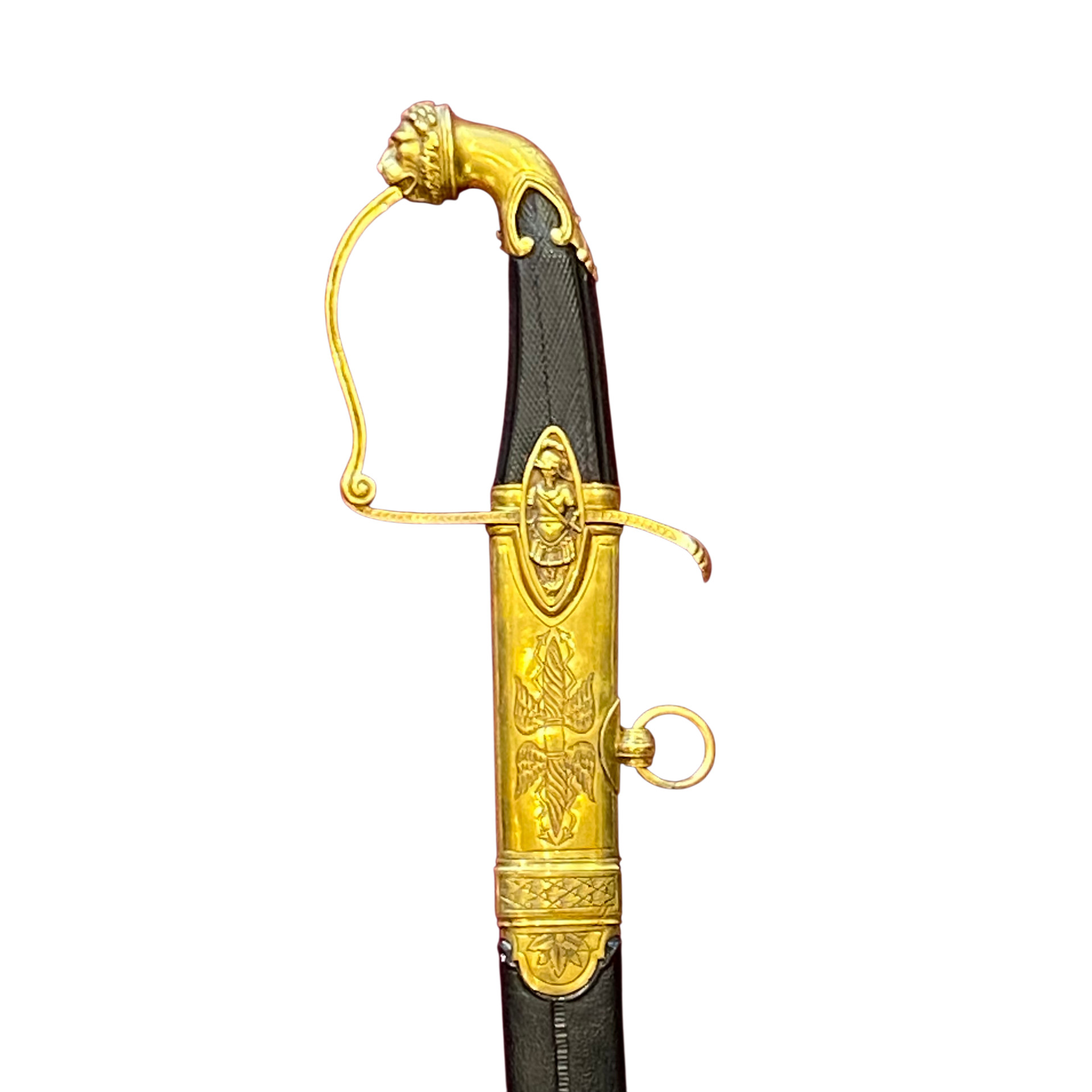
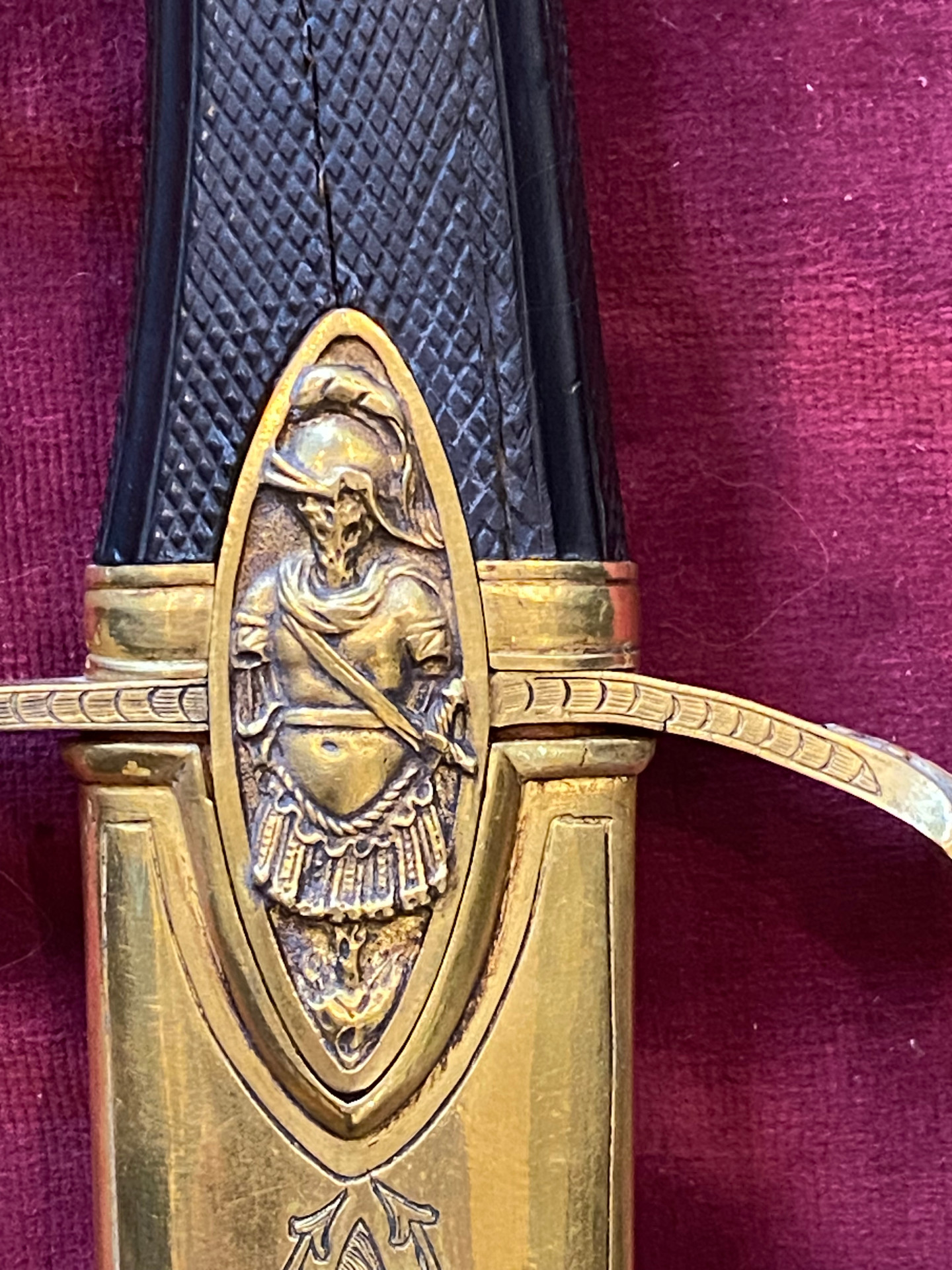
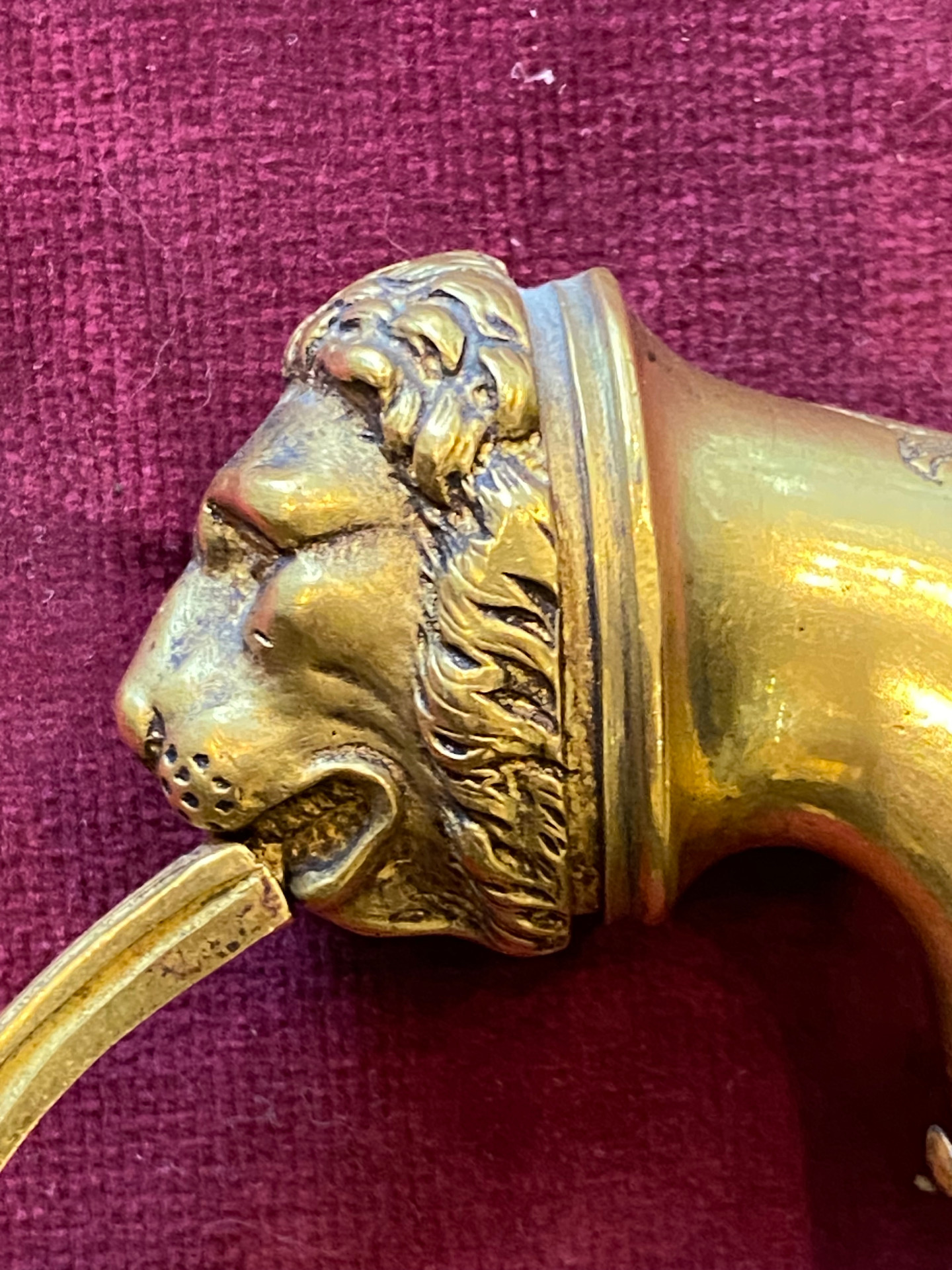
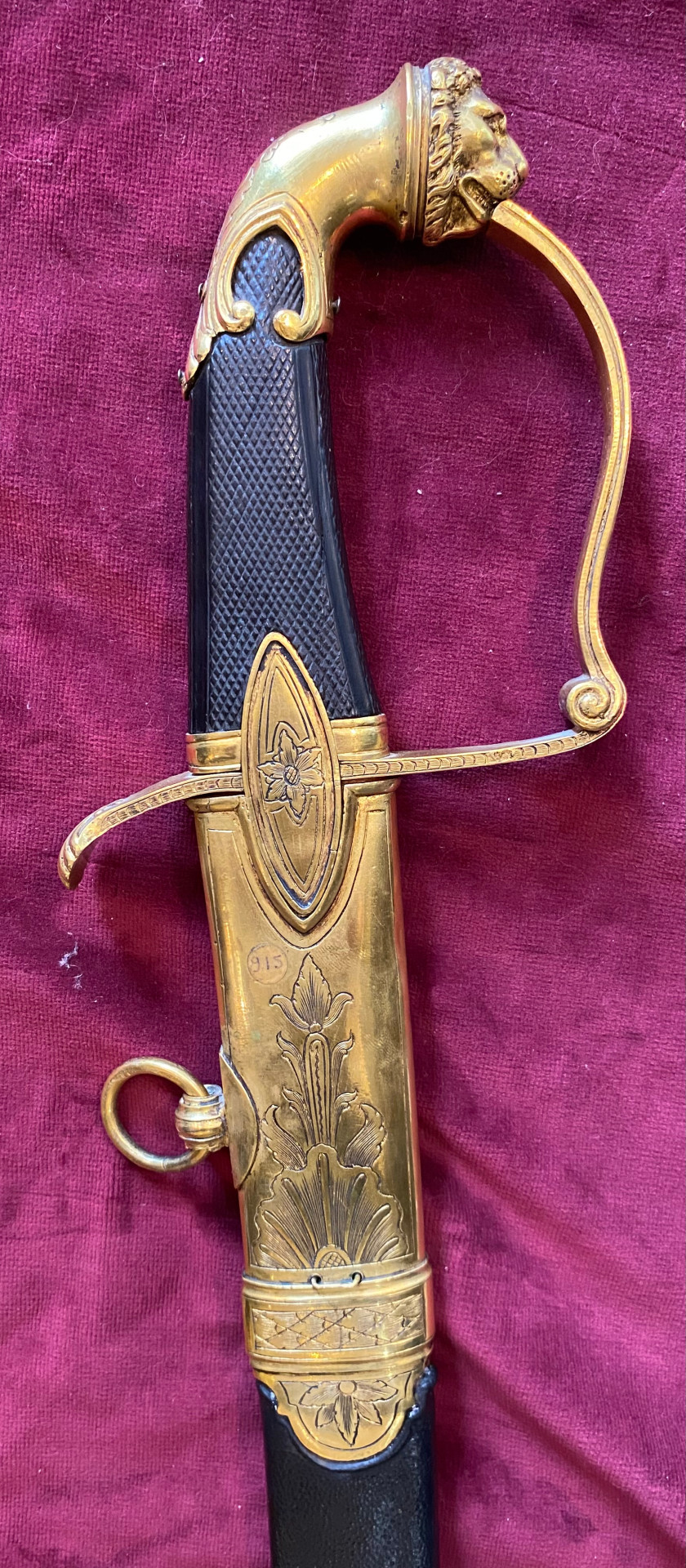
The guard’s tang is made of checkered ebony. The pommel depicts a lion’s head. On one side, one of the oval lugs that fits into the upper part of the scabbard depicts a warrior in ancient style.
All the guard components are made of brass or gilded bronze.
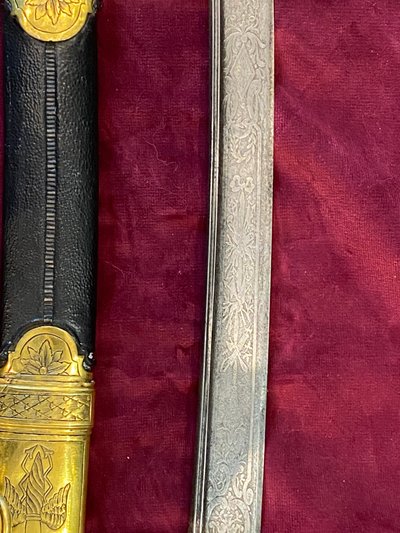
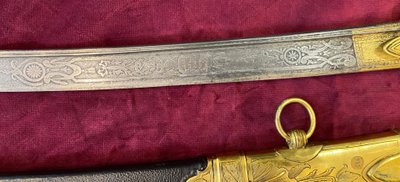
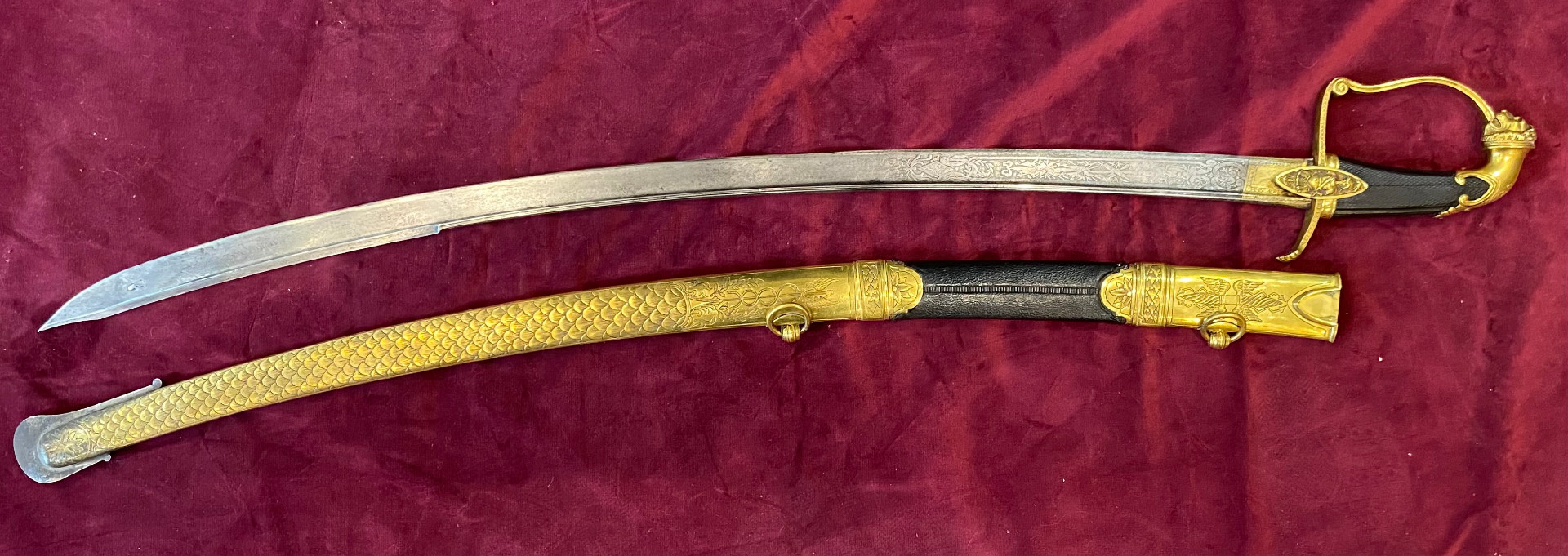
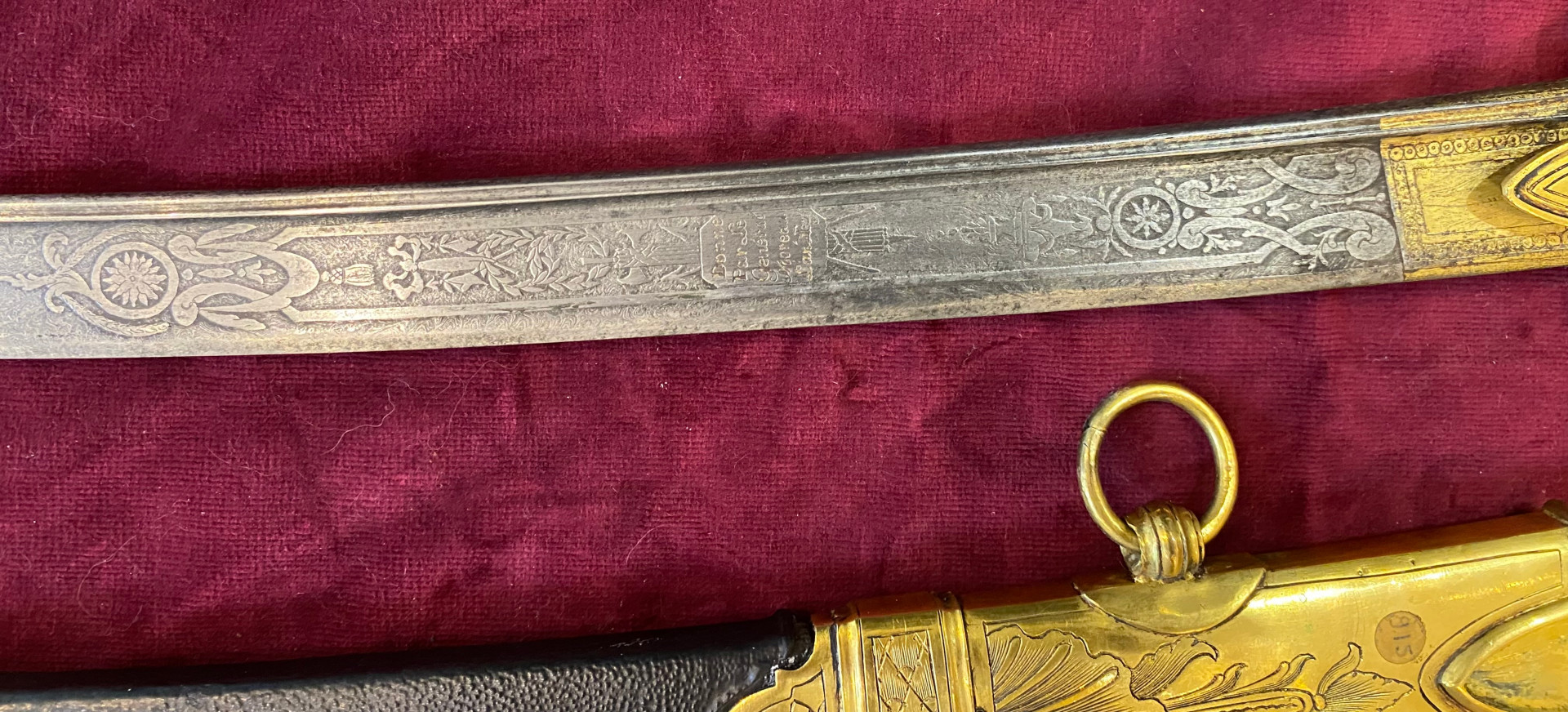
The blade is a 870 mm long carp-tongue blade, gilded over a 45 mm section at the top; both sides feature a curly Damascus pattern extending to the tip, with the edge marked “Kligenthal.”
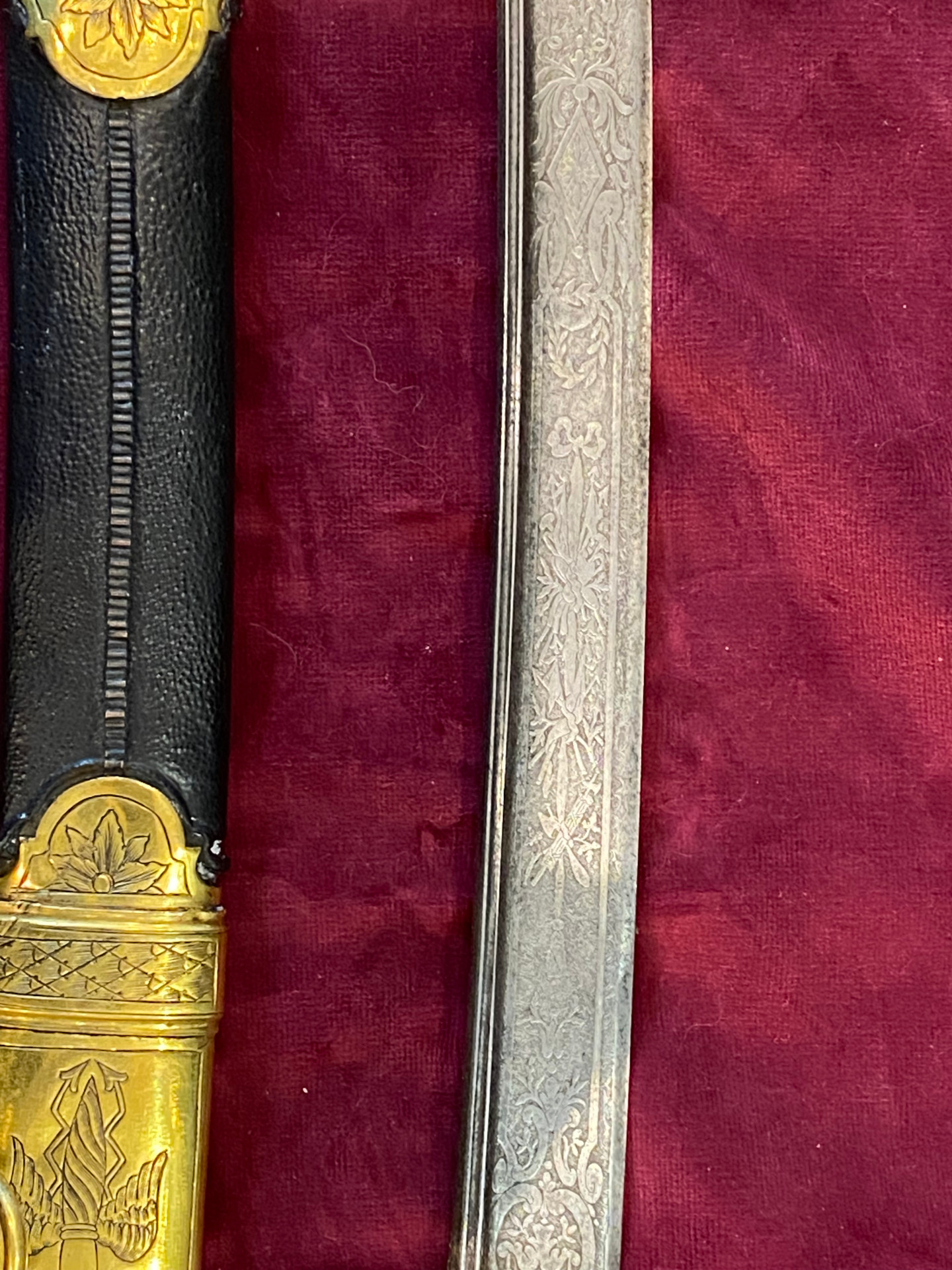
Engraved on one side with scenes of armor, flags, spears, axes, and a laurel wreath.
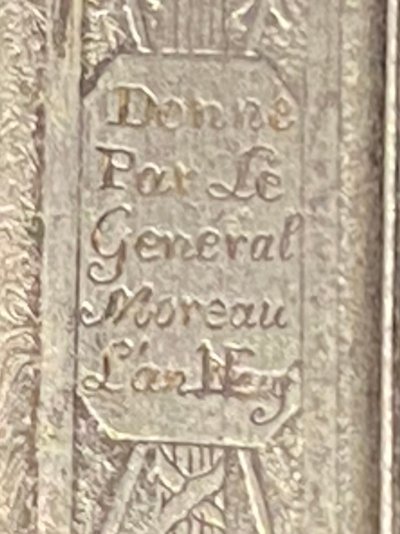
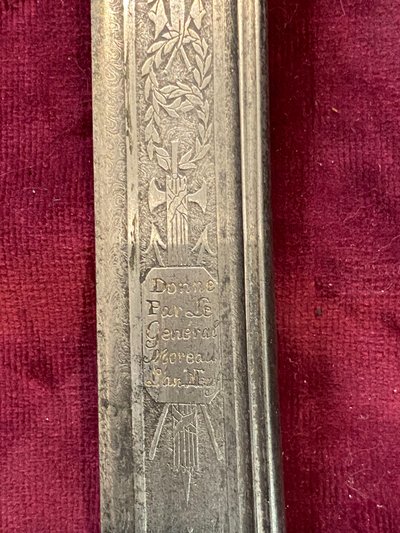
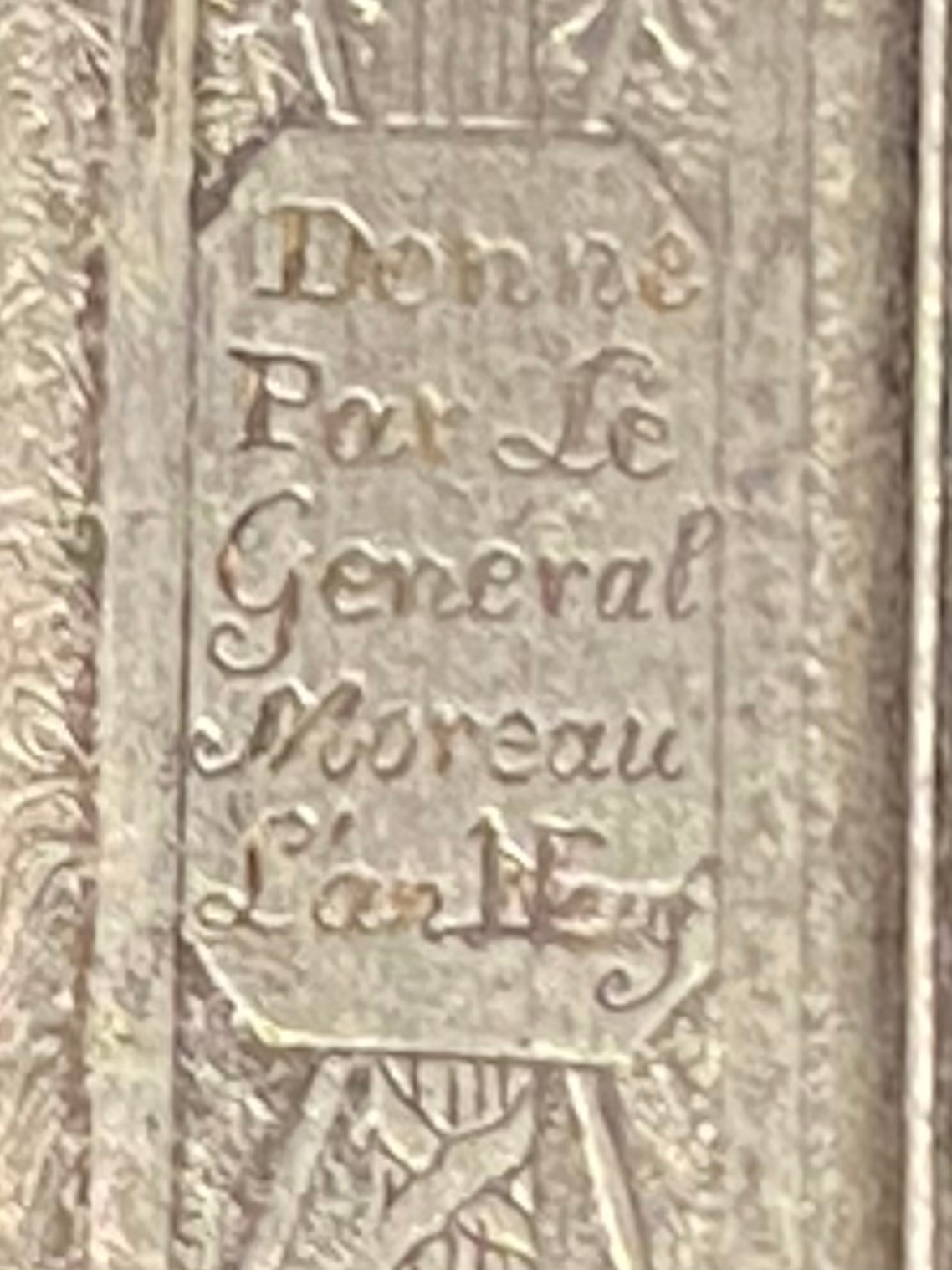
On the other side, a design featuring two crossed flags connected by two intertwined laurel wreaths, above a composition consisting of a francisca and two crossed lances, surmounted by a cartouche inscribed: “Donated by General Moreau, Year Nine.”
The scabbard is 900 mm long with two gilded brass fittings separated by a 160 mm section of black leather, which features on one side, copper filigree strips, each 4 mm wide, set into the leather to a height of approximately 150 mm, one above the other.
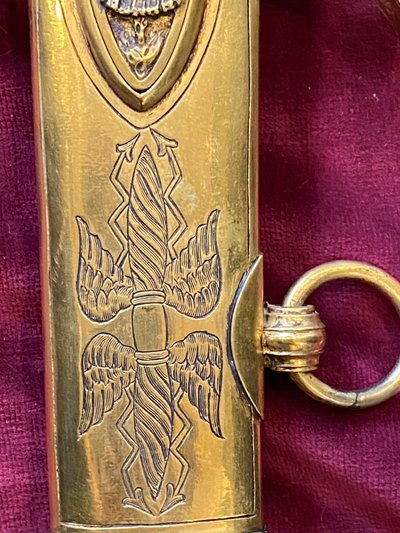
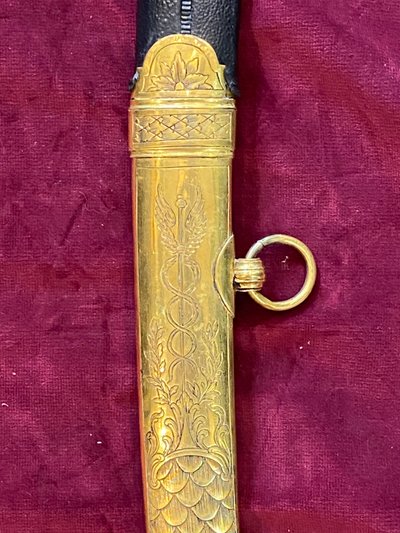
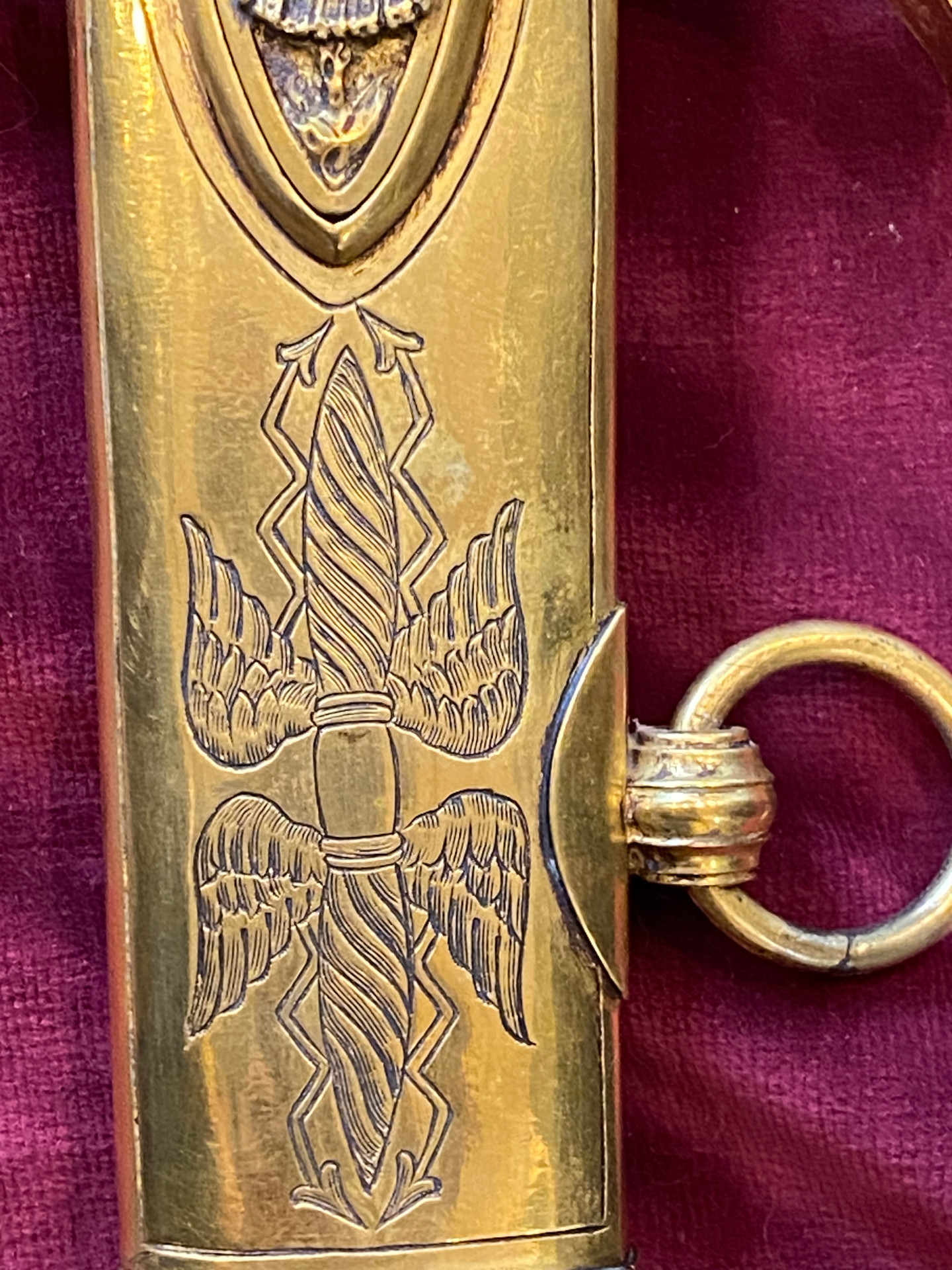
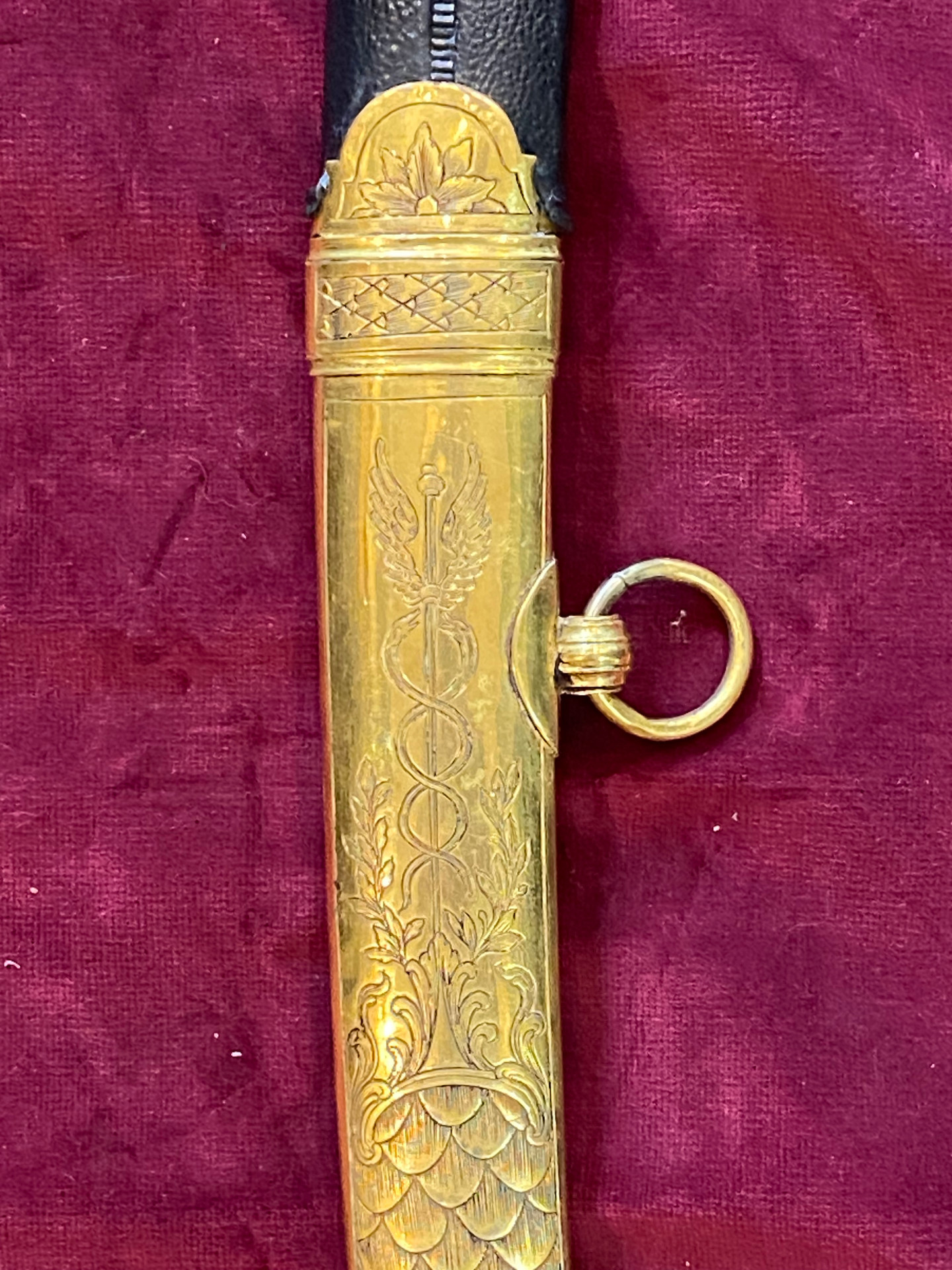
The upper gilded fitting, 160 mm high, is engraved on one side with a shell surmounted by foliage (or flames) and on the other side with a staff bearing four wings and four thunderbolts, indicating that this saber was presented to a senior officer.
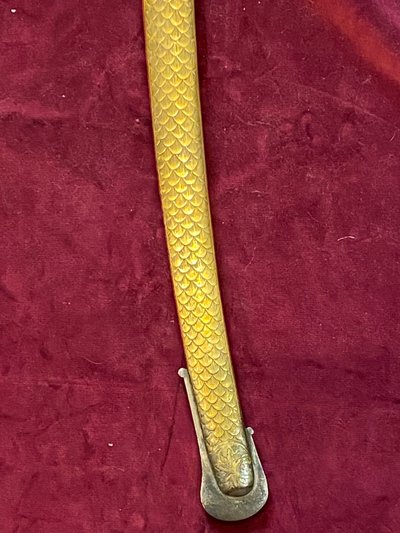
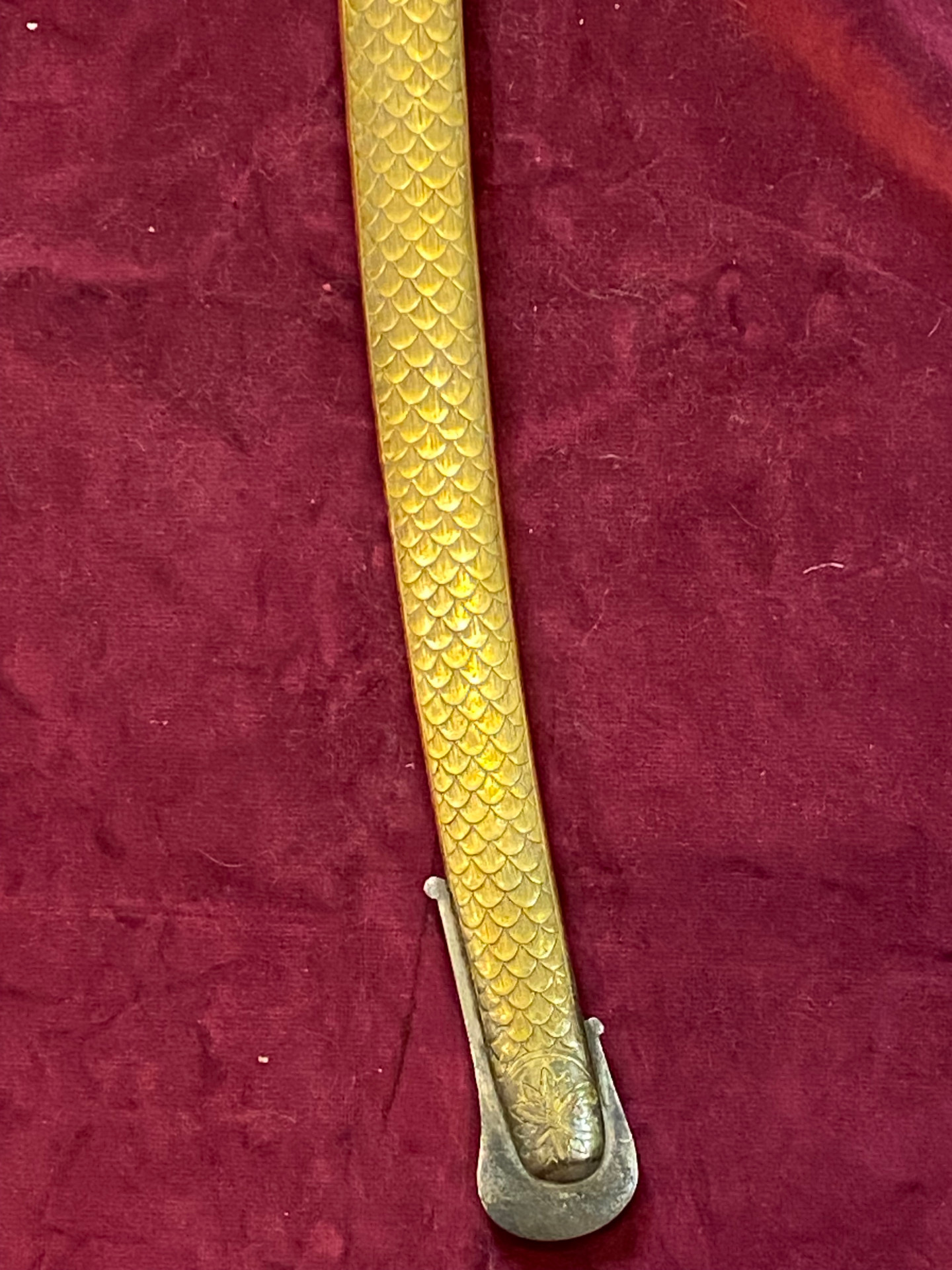
The lower hilt, 625 mm high, is engraved with foliage and scales over three-quarters of its length on both sides. The caduceus appears on one side.
Total length with scabbard: 1050 mm
Military Career:
The First Consul did not appreciate these displays of independence and began to view them with suspicion.
He always conducted himself very modestly, receiving only former military officers.
Placed at the head of the French Army of the Rhine in 1800—with Charles Malenfant as his deputy on the General Staff, at his request—he crossed the Rhine on April 25. He began by defeating Kray’s Austrian forces in early May at the Battle of Engen. At the same time, General Lecourbe, his deputy, achieved a complete victory over an Austrian corps at the Battle of Stockach. Two days later, Moreau fought another bloody battle at Moëskirch and once again succeeded in defeating Kray’s Austrians. An uninterrupted series of successes followed for the French Army of the Rhine. Moreau and Lecourbe notably succeeded in forcing a crossing of the Danube after another victory at Höchstadt. The Austrian General Kray then signed an armistice at Parsdorf on July 15. Riding this momentum, the French Army of the Rhine established itself in Bavaria.
A few months later, the armistice was broken. The Austrian army, now commanded by Archduke John, launched an offensive toward Moreau to drive him back to the Rhine. The French general prepared his counterattack. He evacuated his headquarters from Haag, just outside the Hohenlinden Forest, east of Munich, and feigned a retreat. He positioned his army corps on the northern edge of the forest to set an ambush in a large clearing he had scouted out
On December 3, 1800, amid falling snow, the Battle of Hohenlinden began. The overconfident Austrian commander, believing the French were collapsing, ordered his army to advance toward them. Three Austrian columns advanced along the only existing roads, only one of which was paved with cobblestones. It was then that the French counteroffensive began. Grouchy, Ney, and Richepanse attacked the central Austrian column from the flank, head-on, and from the rear. The 48th, 57th, 76th, and 46th demi-brigades charged forward with bayonets fixed, sweeping aside everything in their path. The Austrian and Bavarian battalions were piled on top of one another, and thousands of enemy soldiers were captured in a short time, as the Austrian column in the center was crushed. At the same time, Grenier and Decaen, for their part, repelled the other two Austrian columns and also took a large number of prisoners. The French victory was decisive and therefore strategic. The French generals Richepanse and Lecourbe immediately set out in pursuit of the Austrians, taking many more prisoners.
Vienna, the capital of the Austrian Empire, was soon under threat. The Austrians surrendered and asked for peace. This marked the end of the war, which Moreau’s French forces had brought to a victorious conclusion. It was also the final battle of the French Revolutionary Wars. The Treaty of Lunéville, signed shortly thereafter, confirmed Austria’s defeat.
Moreau then returned to France to enjoy the fortune he had amassed during his campaigns, although he had never taken any foreign property for himself. He became the owner of a mansion on Rue d’Anjou (now 20 Rue de la Chaussée-d’Antin) in Paris, to which he gave his name, and lived there from 1799 to 1801[21],[22].
He renovated the Hôtel d’Anjou and also purchased, for 200,000 francs in 1801, a property in Pau
Ref: J2NV4I0F6X
| Condition | Very good |
| Style | Empire Style, Consulat (Swords, Bladed weapons of Empire Style, Consulat Style) |
| Period | 20th century (Swords, Bladed weapons 20th century) |
| Country of origin | France |
| Length (cm) | 105 |
| Materials | Ebony, Bronze |
| Shipping Time | Ready to ship in 8-15 Business Days |
| Location | 75007, PARIS, France |
4 commitments to buy with confidence

 English
 Français
 Italiano
 Deutsch