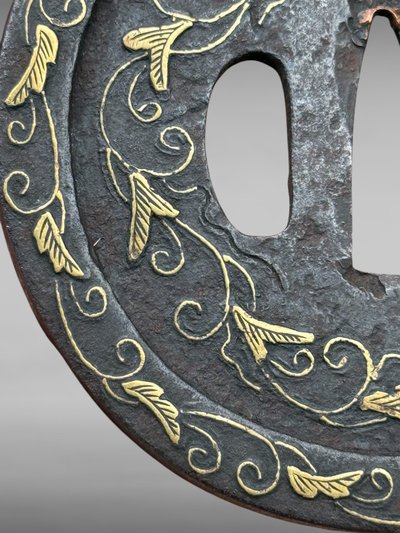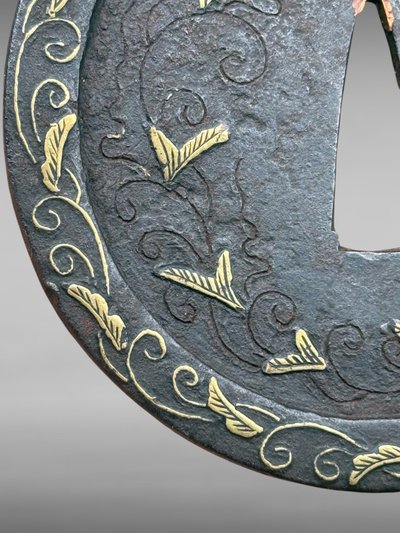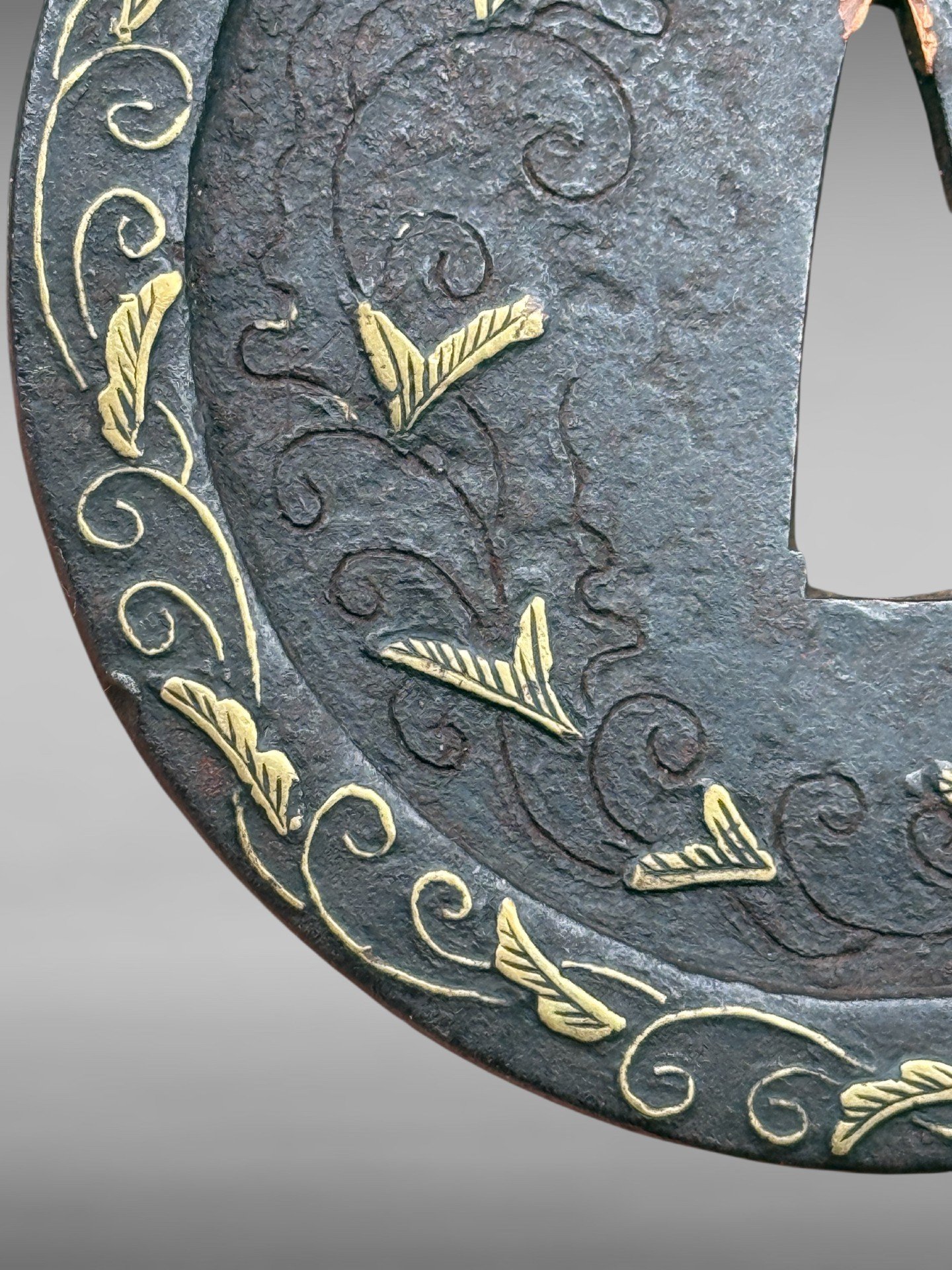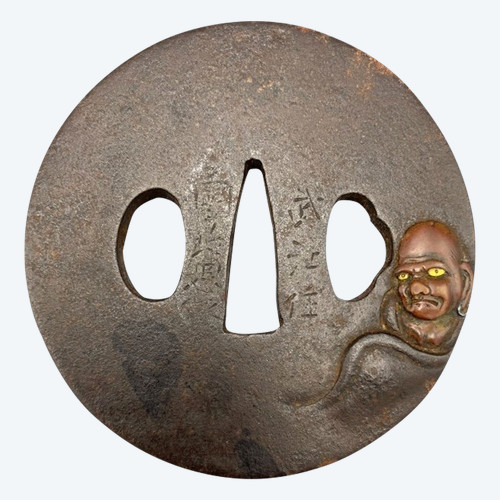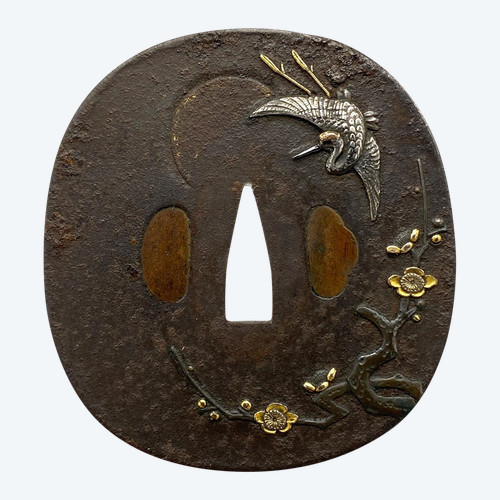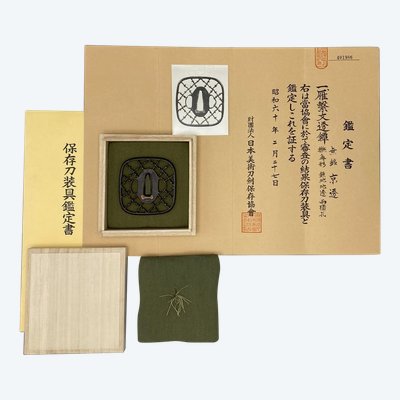
Important iron tsuba maru gata decorated with vegetal scrolls - Edo period
slider-bg
more images

Would you like more images?

Important iron tsuba maru gata decorated with vegetal scrolls - Edo period

480
19th century
Asian Arts
DELIVERY
From: 93400, saint ouen , France

Change your address to get an accurate estimate of shipping costs.

    Item offered for sale by

    See the gallery
    This description has been translated and may not be completely accurate. Click here to see the original

    Type: Tsuba (鍔)
    Diameter: 88 mm
    Weight: 191 g
    Main material: Iron (tetsu), dark patina

    Ornamentation: Gold inlays (probably in nunome zōgan, a gold leaf inlay technique)

    Motif: Stylized arabesques and leaves (kikyō or karakusa, a very common plant motif during the Edo period)
    Shape: Maru-gata (round)
    Openings: Nakago-ana (central hole): for the blade's tang Kozuka-ana and kogai-ana (side holes): for the small knife
    The karakusa (唐草) motif—vine scroll or arabesque—is common in decorative tsuba from the Edo period (1603–1868).
    The finely hammered gold inlays and raised borders are reminiscent of the Edo Kinko (金工) or Higo style, depending on the region of production.
    More specifically, this very delicate goldwork may evoke the Mito or Nara schools, active in the 18th–19th centuries.

    Ref: SY6H7J0DKI

    Condition Good
    Style Asian Arts (Swords, Bladed weapons of Asian Arts Style)
    Period 19th century (Swords, Bladed weapons 19th century)
    Country of origin Japan
    Diameter (cm) 8.8
    Weight (Kg) 0.191
    Shipping Time Ready to ship in 2-3 Business Days
    Location 93400, saint ouen , France
    Shipping Information Careful and insured shipping, fast shipping
    Antikeo Buyer Guarantee

    4 commitments to buy with confidence