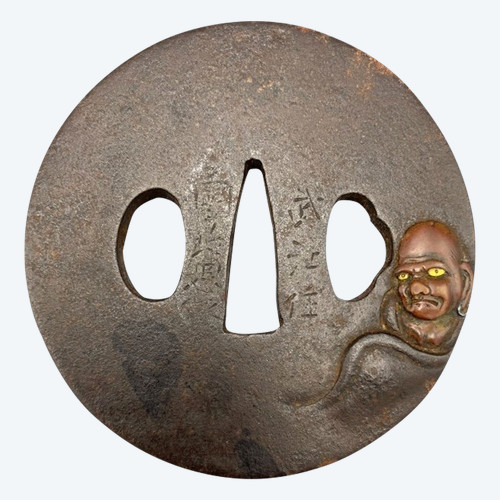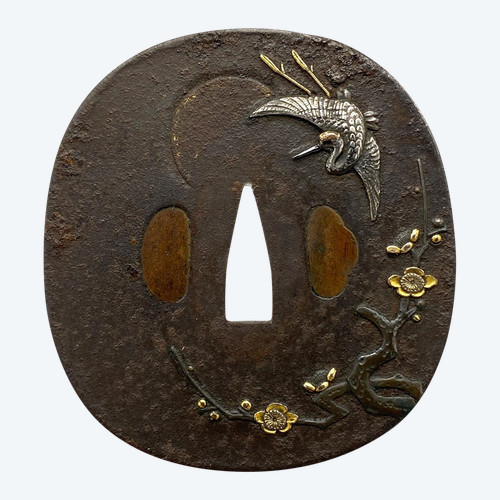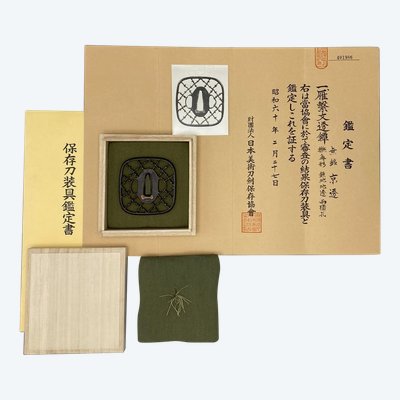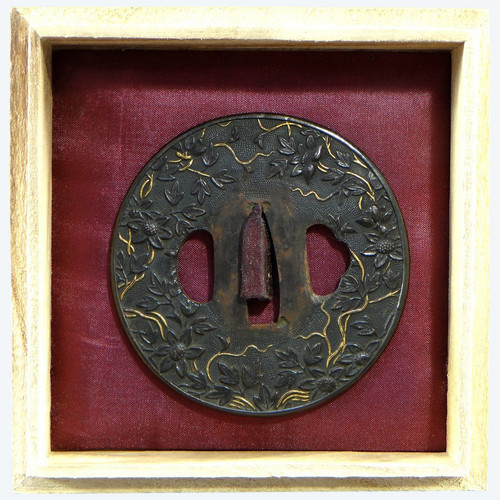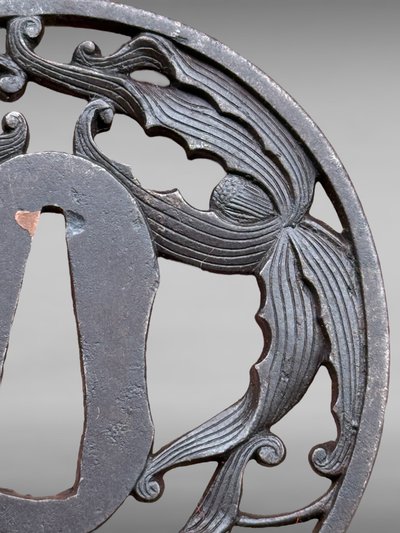
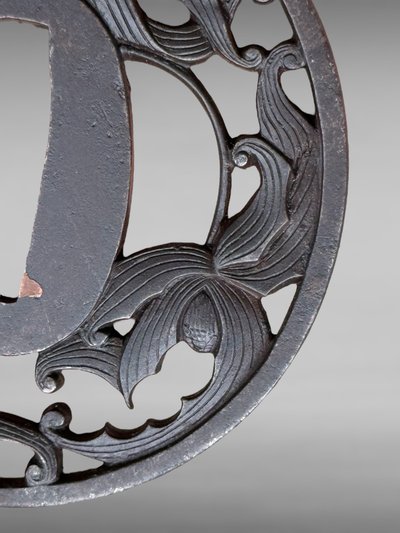

Tsuba maru gata in openwork iron with plant motifs, signed and located - Edo period - D. 7 cm.
slider-bg
more images

Would you like more images?
Tsuba maru gata in openwork iron with plant motifs, signed and located - Edo period - D. 7 cm.

380
19th century
Asian Arts
DELIVERY
From: 93400, saint ouen , France

Change your address to get an accurate estimate of shipping costs.

    Item offered for sale by

    See the gallery
    This description has been translated and may not be completely accurate. Click here to see the original

    Type: Openwork tsuba (sukashi)-
    Signature: Bushū jū Masayoshi (武州住正義)-
    Schoolprobable: Bushū-Itō or related-
    Period: Late Edo (ca. 1800-1860)-
    Material: Carved patinated iron-
    Design: Iris or paulownia (kiri) foliage

    Inscription (mei 銘): visible on the faceplate near the nakago-ana (opening for the blade tang).
    The characters are:武州住 正義」(Bushūjū Masayoshi)this translates as "Masayoshi, resident of Bushū (Musashi province)".
    Bushū (武州) corresponds to the present-day Tokyo/Saitama region.
    Several blacksmiths and tsuba craftsmen worked here between the XVIIᵉ and XIXᵉ centuries, including members of the Bushū-Itōand Bushū-Masayoshi schools.

    The openwork plant motif style, with its careful relief and dense iron, corresponds well to the late Edo period (circa 1800-1860).
    diameter 7 cm
    weight 78 grs

    Ref: H512KOOBQP

    Condition Very good
    Style Asian Arts (Swords, Bladed weapons of Asian Arts Style)
    Period 19th century (Swords, Bladed weapons 19th century)
    Country of origin Japan
    Shipping Time Ready to ship in 2-3 Business Days
    Location 93400, saint ouen , France
    Shipping Information Careful and insured shipping, fast shipping
    Antikeo Buyer Guarantee

    4 commitments to buy with confidence