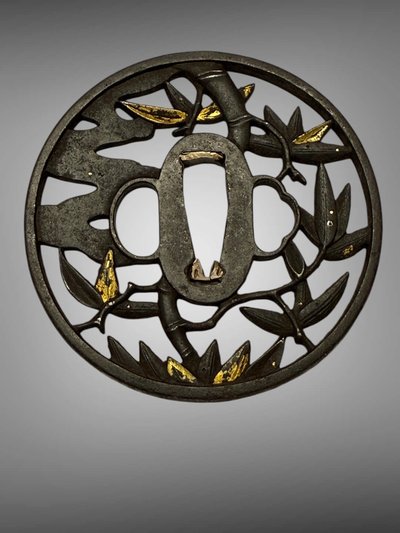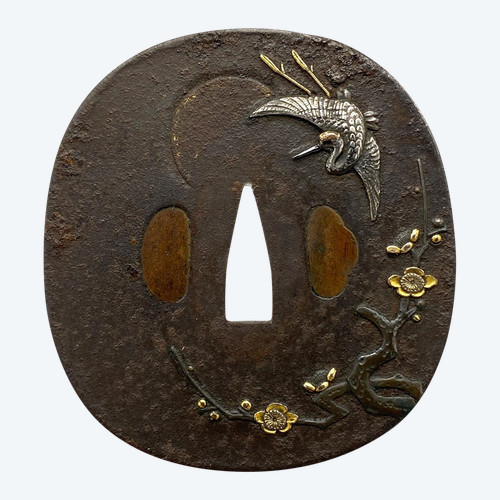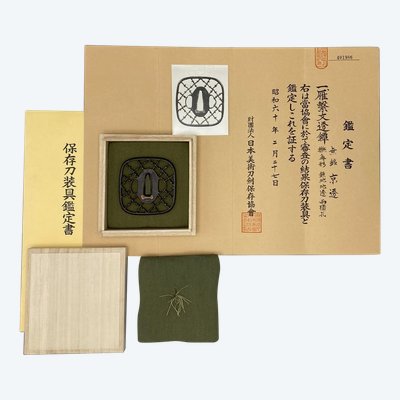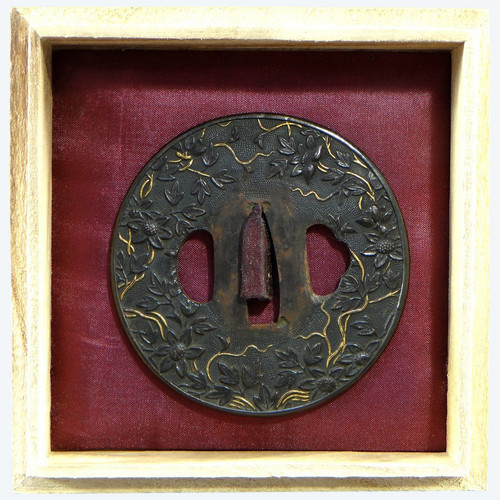
Iron tsuba maru gata with bamboo decoration - Edo period - D. 8.5 cm.
slider-bg
more images

Would you like more images?

Iron tsuba maru gata with bamboo decoration - Edo period - D. 8.5 cm.

450
19th century
Asian Arts
DELIVERY
From: 93400, saint ouen , France

Change your address to get an accurate estimate of shipping costs.

    Item offered for sale by

    See the gallery
    This description has been translated and may not be completely accurate. Click here to see the original

    type: Openwork iron tsuba (sukashi tsuba)-
    School: Higo (Jakushi or Jingo)-
    Period: Late Edo (circa 1800-1860)-
    Technique: Patinated iron, gilded inlays (nunome-zōgan) and sukashi (openwork) + gilded inlays on the relief.
    Symbolism: Suppleness, uprightness, loyalty-
    Shape: round (maru-gata)
    Material: iron (tetsu), partially gold-inlaid decoration (nunome-zōgan)

    Design: bamboo branches (竹 take), with golden leaves.
    Bamboo is a classic theme in Japanese silversmithing and metalwork.
    It symbolizes the uprightness, suppleness and resilience of the samurai: it bends without breaking.
    Associated with longevity and fidelity, it is a frequent protective theme on katana mounts.

    Bamboo work in openwork relief with gold filleting strongly evokes :
    Higo school (肥後), Higo province (Kyūshū, Kumamoto).
    Or, more precisely, an artisan of the Jakushi (若芝派) or Higo Jingo style, active between XVIIᵉ and XIXᵉ centuries.

    These workshops are distinguished by:
    Dense, highly patinated iron,
    Natural decorations (bamboo, plum, pine),
    Sober gold inlays, sometimes slightly worn over time.- -
    These schools produced elegant, uncluttered tsuba, highlighting the texture of the iron and light gold inlays.- - The quality of the relief and the presence of gold on the leaves are entirely consistent with work from the first half of the XIXᵉ century.
    diameter 8.5 cm
    weight 80 grs

    Ref: WJHPZG6JGC

    Condition Good
    Style Asian Arts (Swords, Bladed weapons of Asian Arts Style)
    Period 19th century (Swords, Bladed weapons 19th century)
    Country of origin Japan
    Width (cm) 8.5
    Weight (Kg) 0.80
    Shipping Time Ready to ship in 2-3 Business Days
    Location 93400, saint ouen , France
    Shipping Information Careful and insured shipping, fast shipping
    Antikeo Buyer Guarantee

    4 commitments to buy with confidence