



Would you like more images?
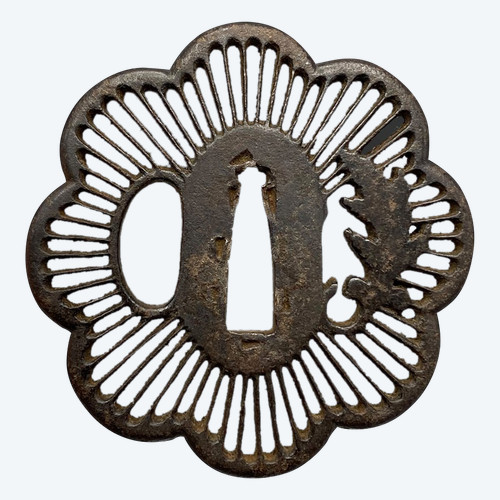
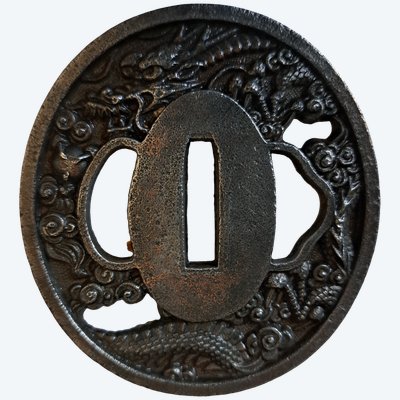
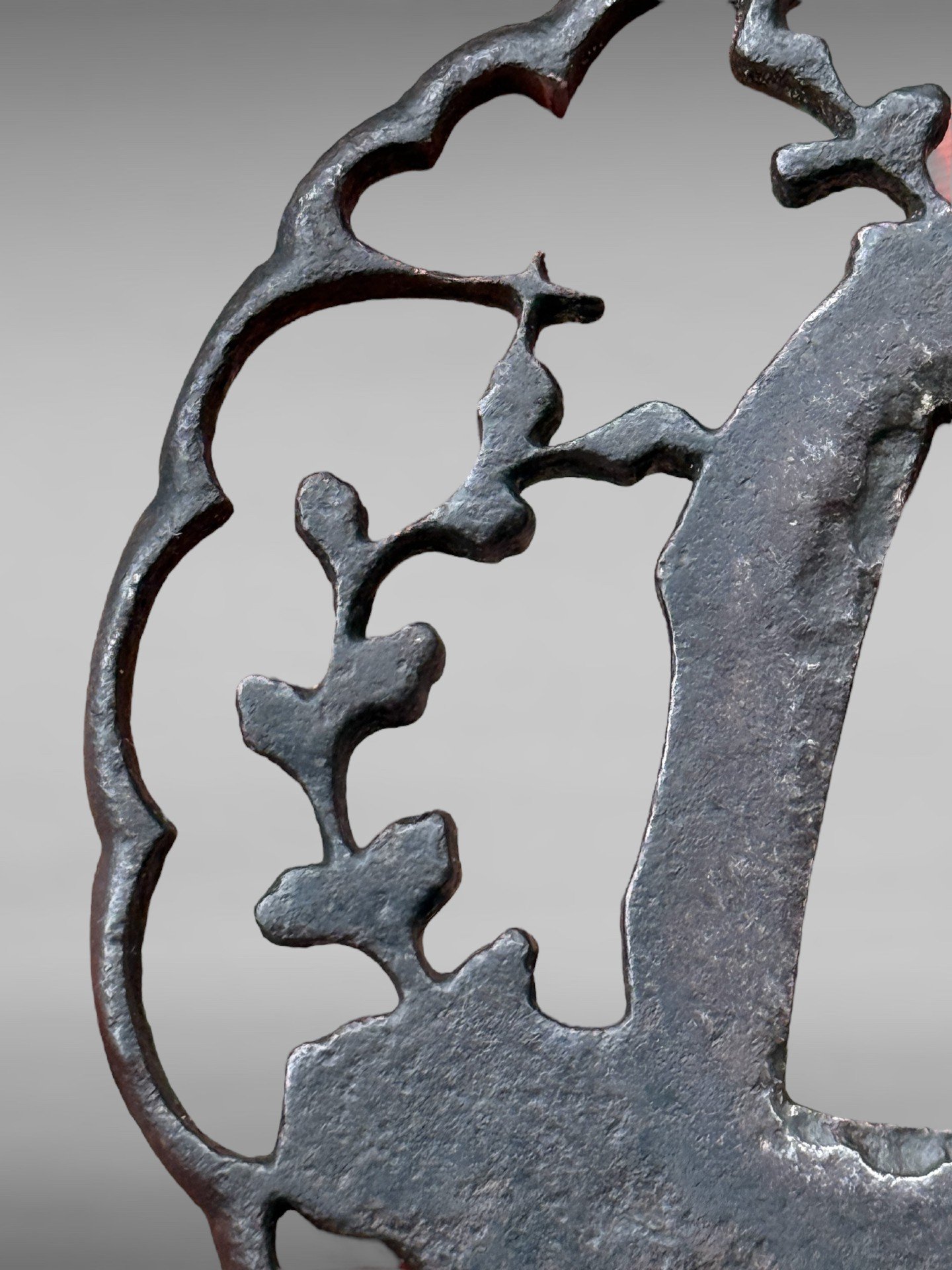
Openwork iron tsuba (鍔)
Sukashi type (透かし)
Mokko-gata shape (scalloped oval)
Pine and stylized landscape motif
Owari school (尾張)
Late Muromachi – Early Edo period (c. 1600–1700)
Condition: Very good, antique patina
The openwork depicts a stylized landscape:
On the left: a stylized pine branch (松 matsu), a symbol of longevity and perseverance.
On the right: a bridge or geometric structure evoking a barrier or building.
The outer edge forms a cloud border (kikumonou mokko-gata), inspired by the chrysanthemum.
These elements are typical of tsubade from the Owari school or sometimes Kanayama, two schools from the Mino region (present-day Gifu Prefecture), known for their simple yet powerful openwork natural motifs. The dense and finely openwork ironwork is characteristic of Japanese workshops active between the late Muromachi and early Edo periods.
The openwork design, simple yet balanced, highlights the mastery of the metal without the use of inlays. The overall effect expresses an aesthetic of sobriety and solidity, in keeping with the spirit of bushido.
Ref: OLSLYH6TTO
| Condition | Good |
| Style | Asian Arts (Swords, Bladed weapons of Asian Arts Style) |
| Period | 17th century (Swords, Bladed weapons 17th century) |
| Country of origin | Japan |
| Diameter (cm) | 7 |
| Weight (Kg) | 0.046 |
| Shipping Time | Ready to ship in 2-3 Business Days |
| Location | 93400, saint ouen , France |
| Shipping Information | Careful and insured shipping, fast shipping |
4 commitments to buy with confidence

 English
 Français
  Italiano
  Deutsch