This description has been translated and may not be completely accurate. Click here to see the original
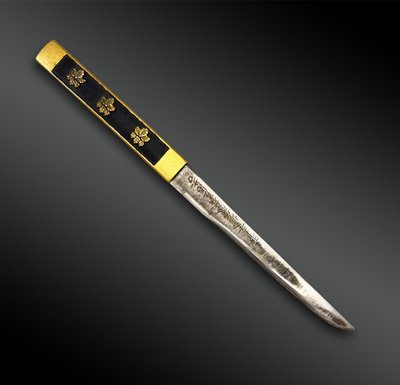
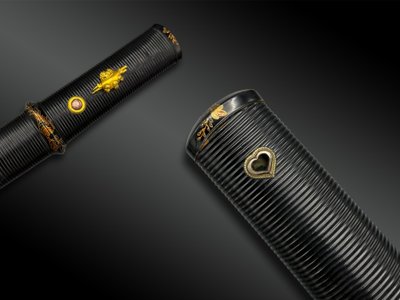
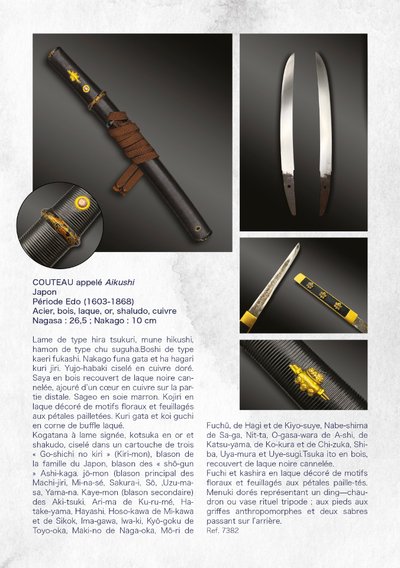
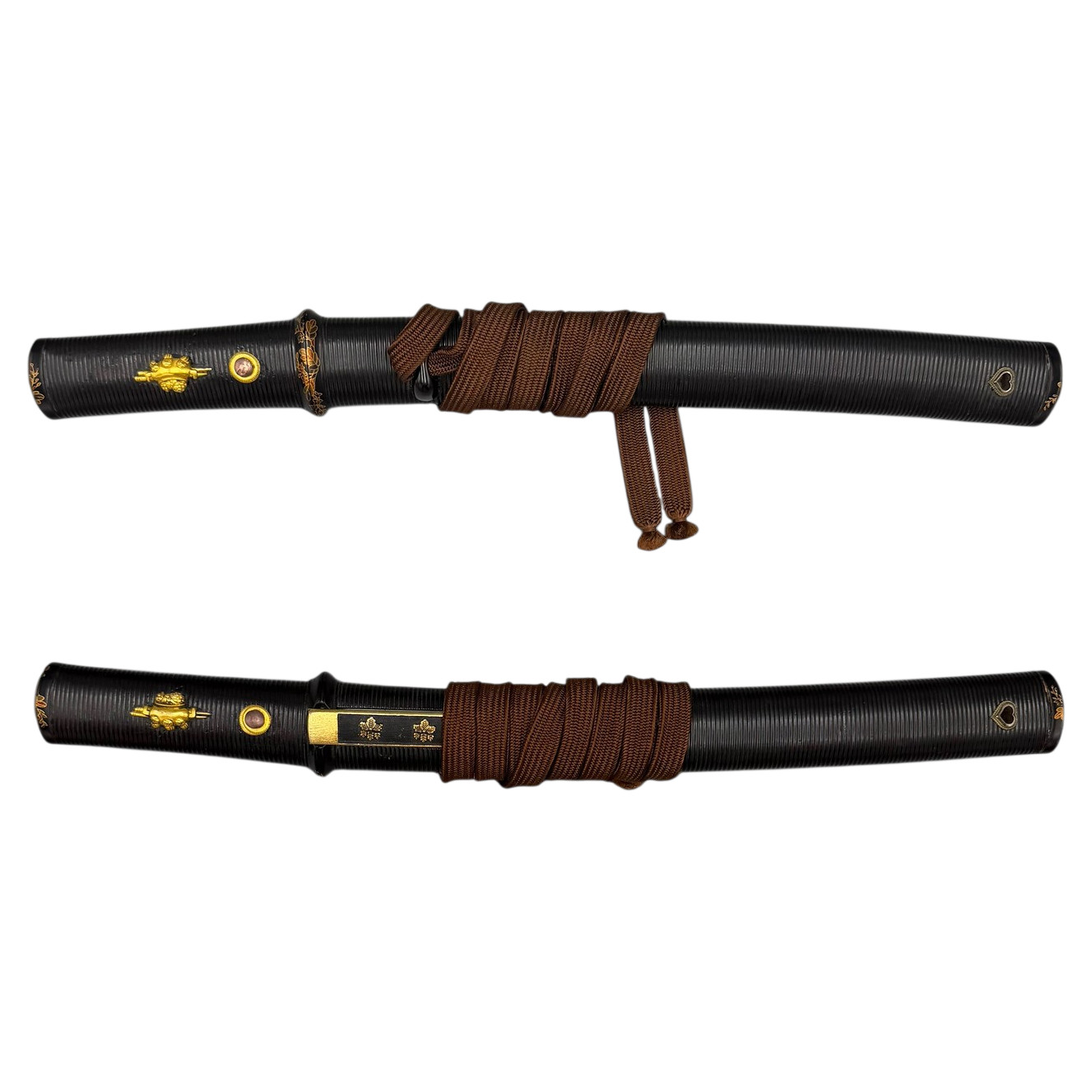
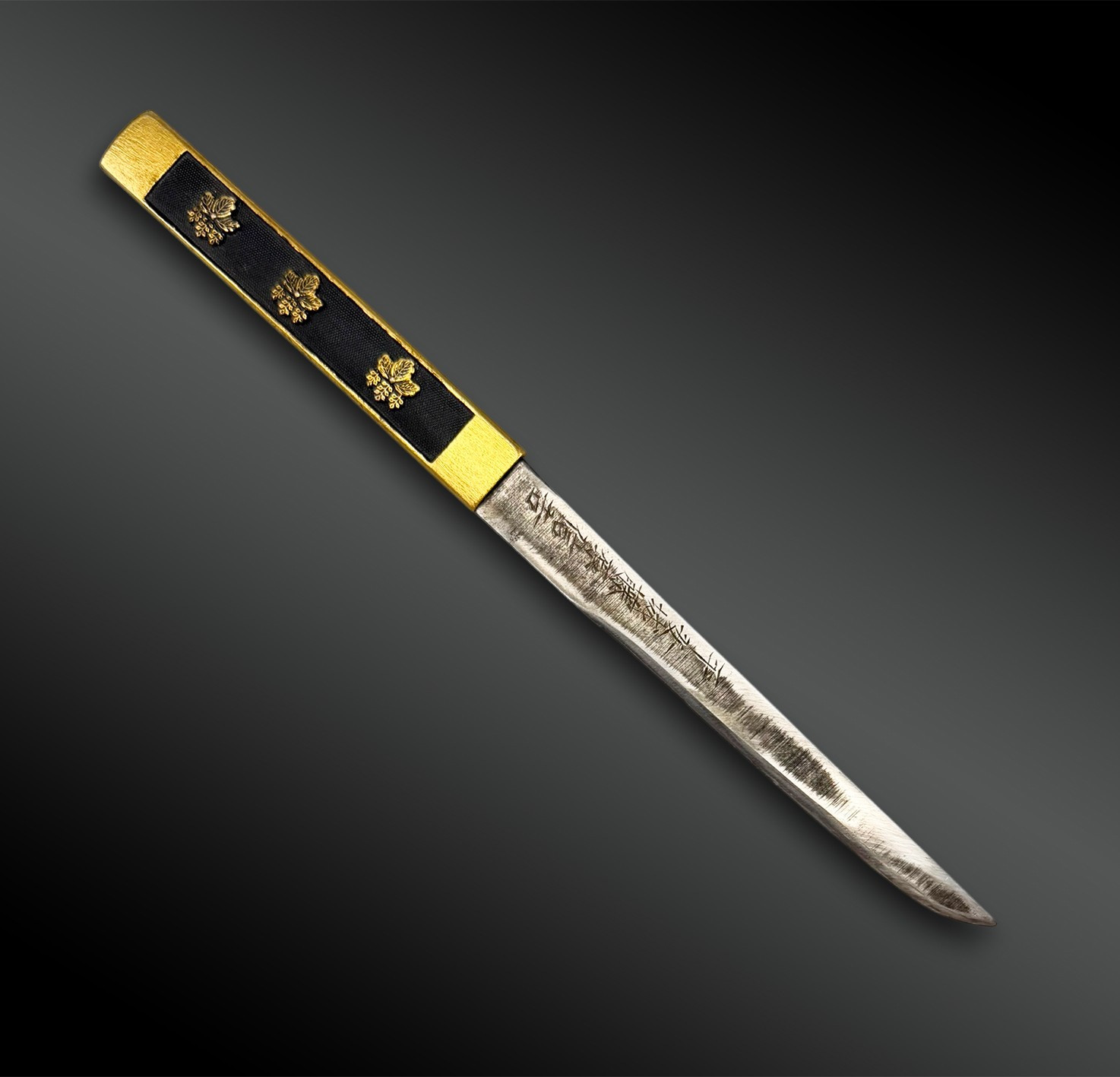
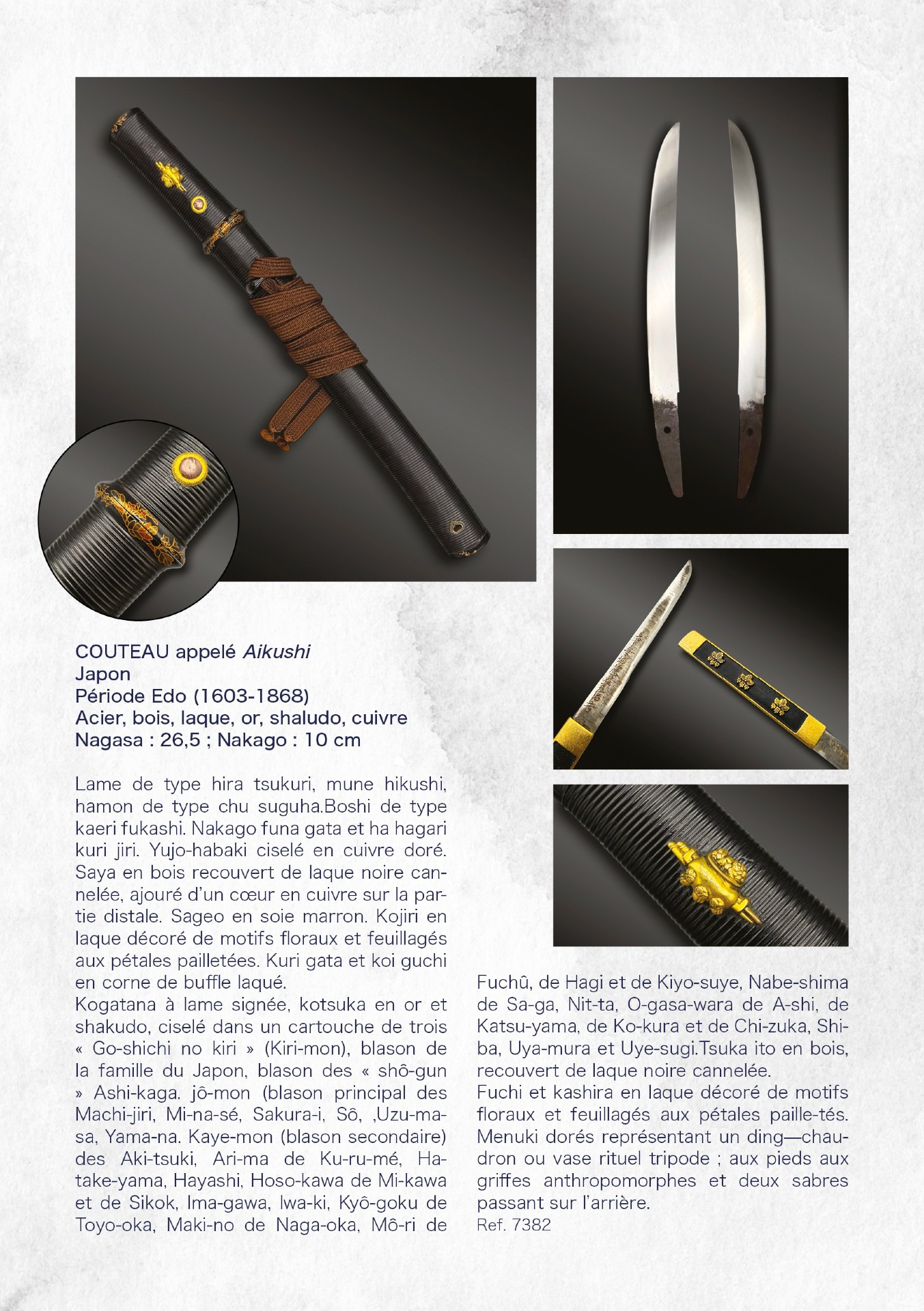
KNIFE known as Aikushi
Japan
Edo Period (1603–1868)
Steel, wood, lacquer, gold, shakudo, copper
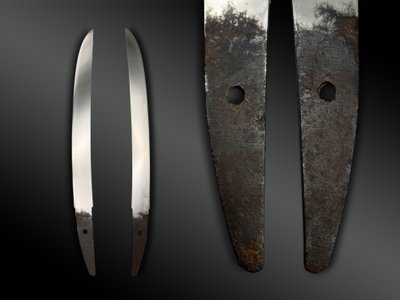
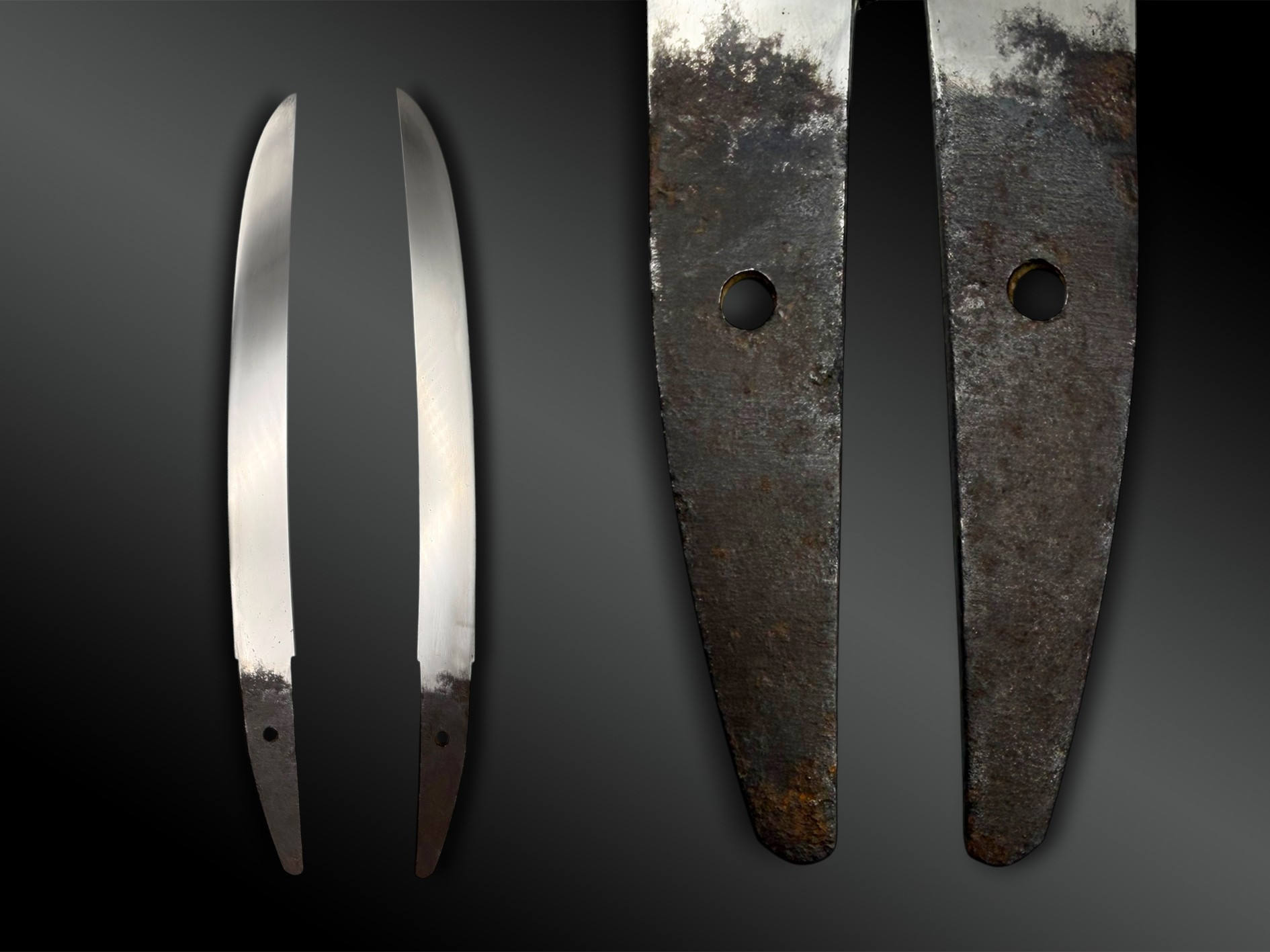
Nagasa: 26.5; Nakago: 10 cm
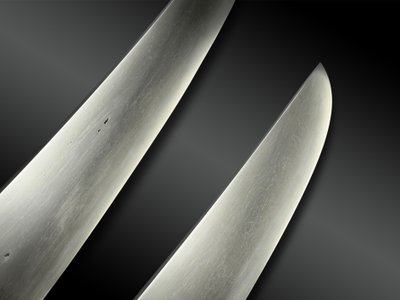
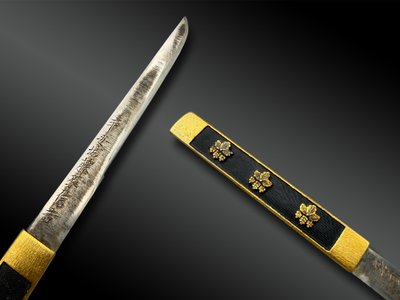
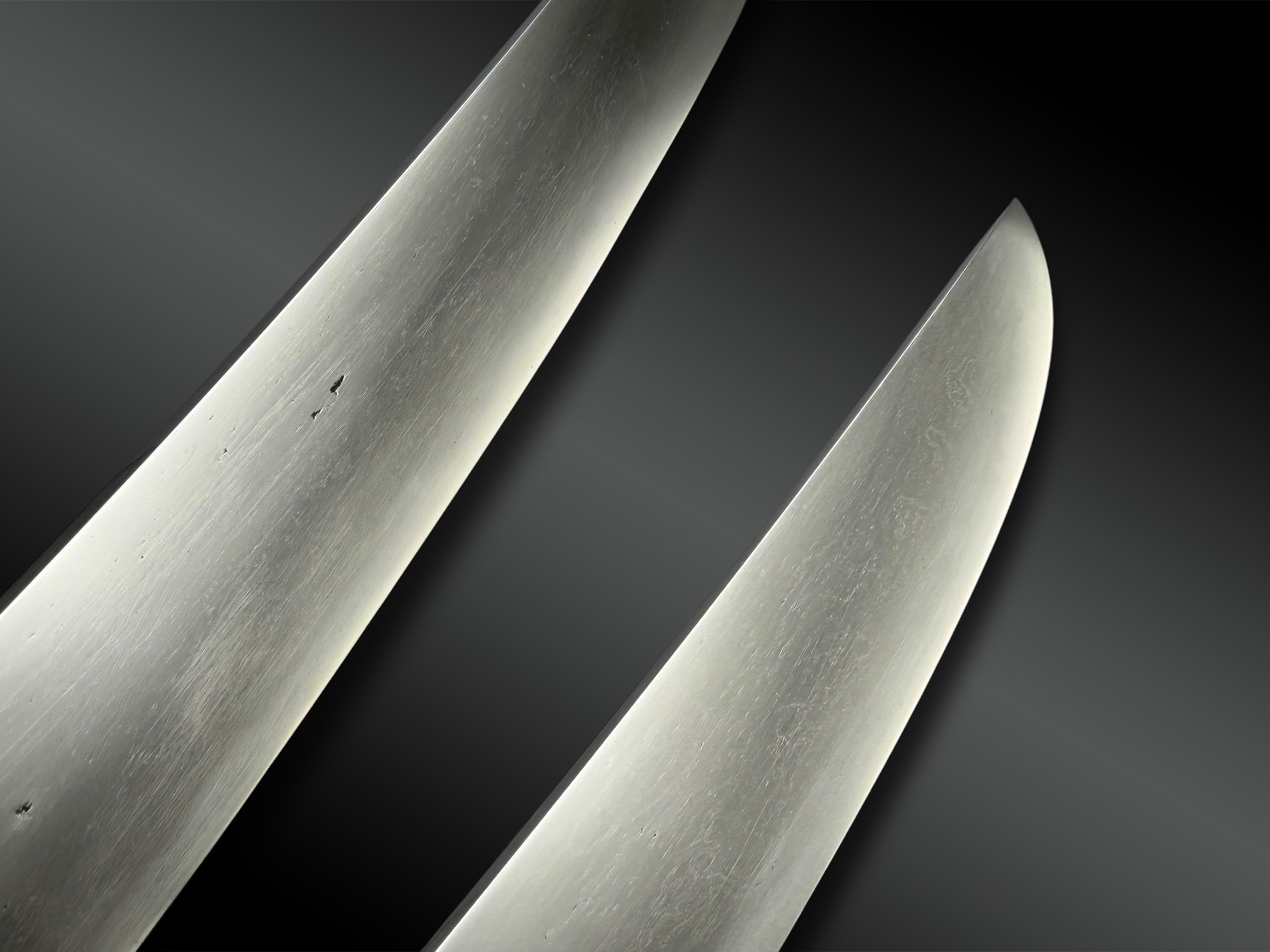
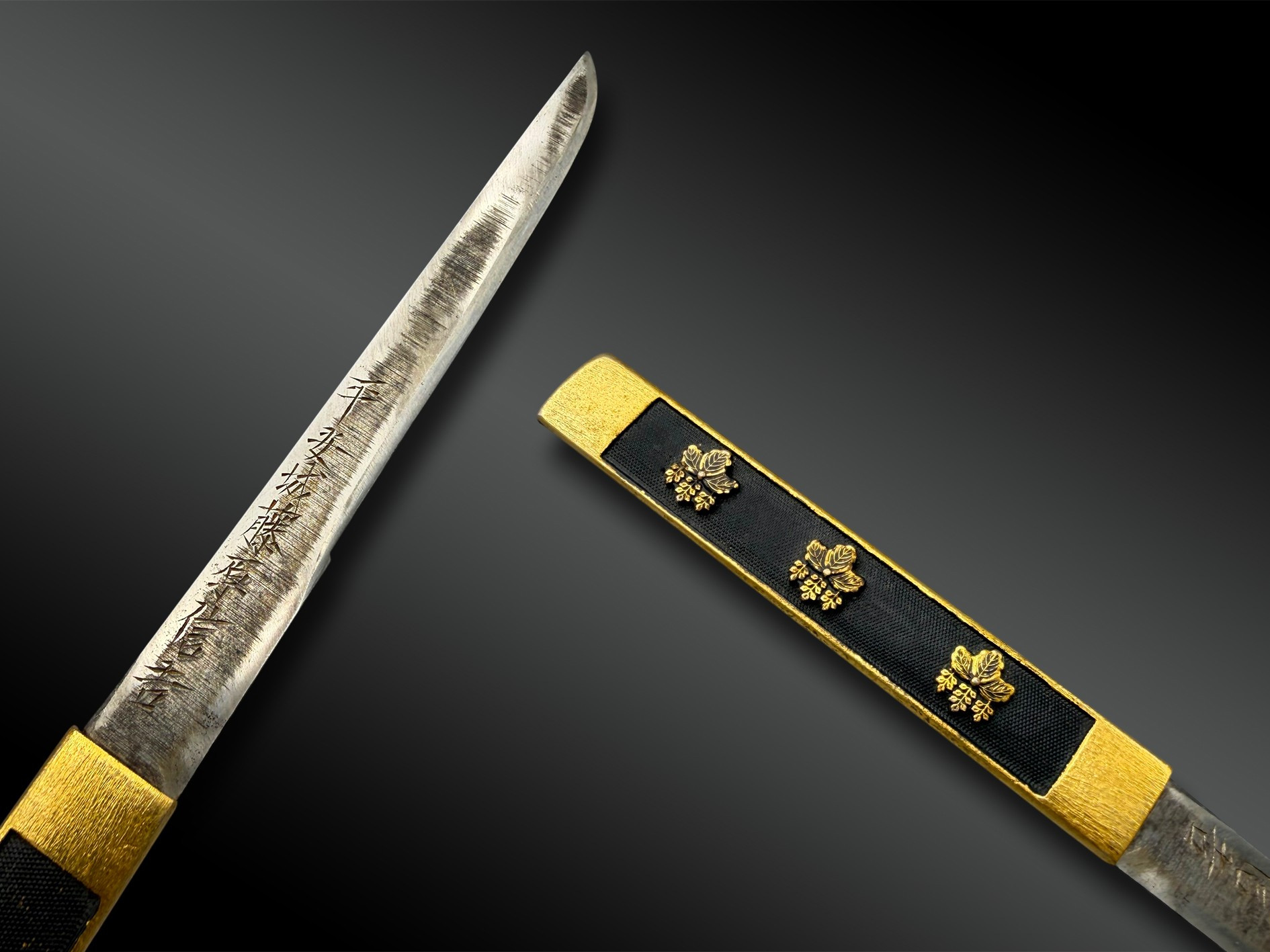
Hira tsukuri-style blade, mune hikushi, chu suguha-style hamon.
Kaeri fukashi-style boshi.
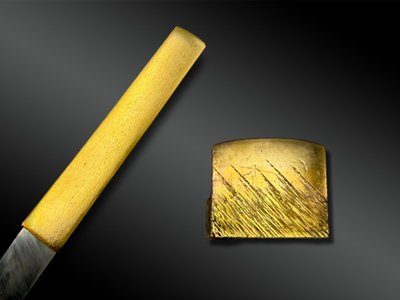
Funa gata nakago with ha hagari kuri jiri.
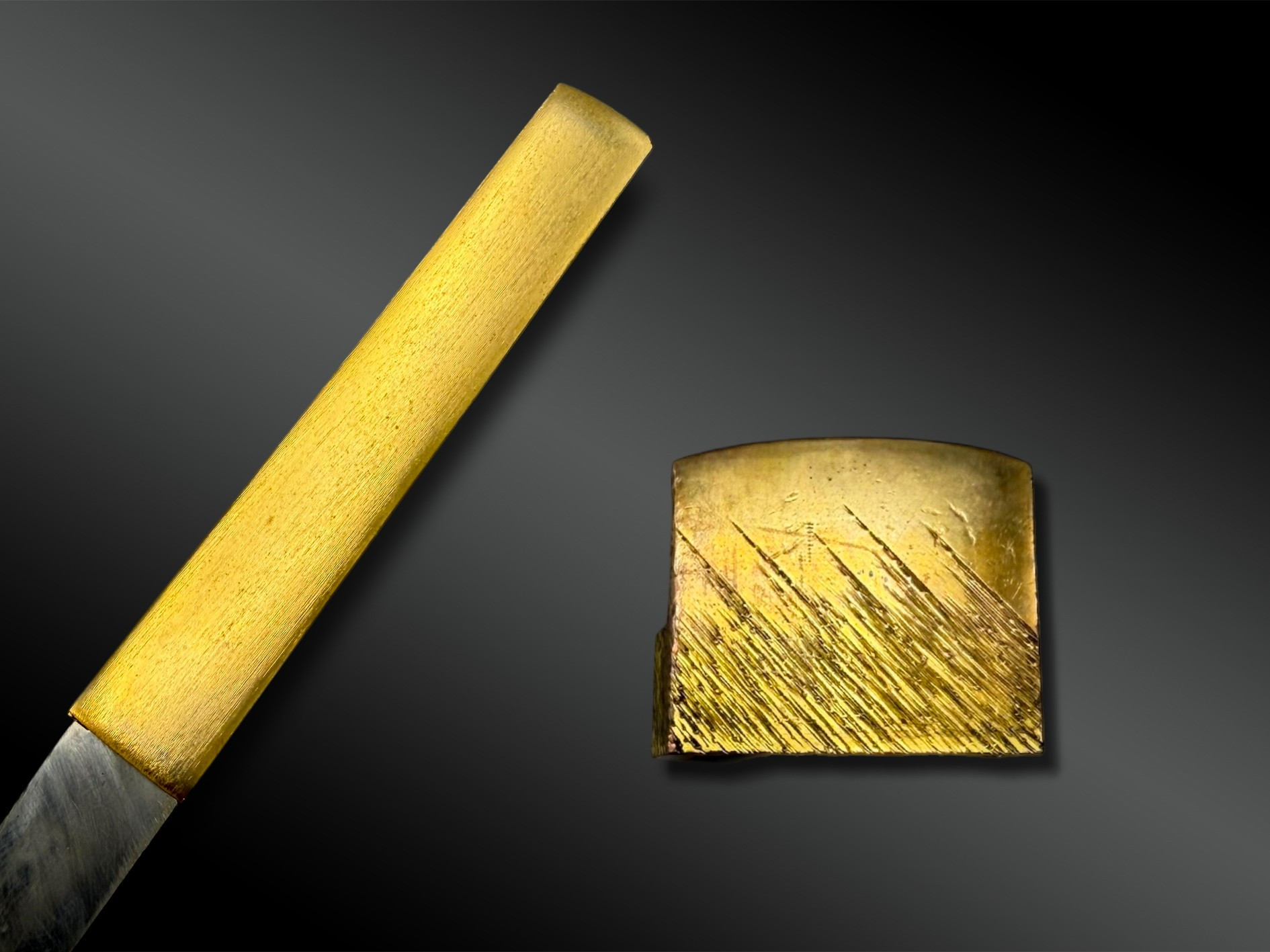
Chiseled yujo-habaki made of gilded copper.
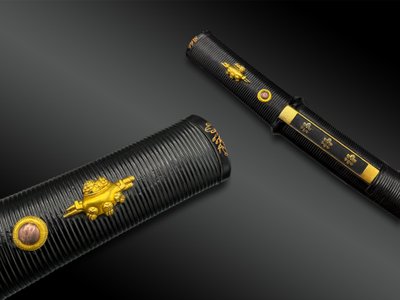
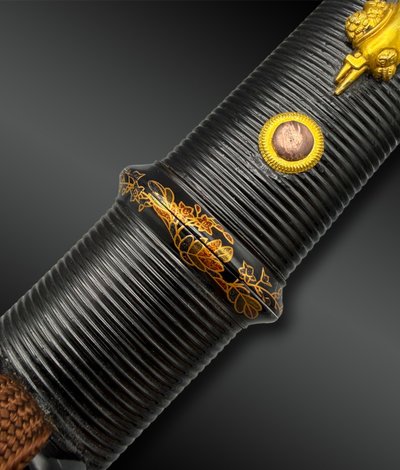
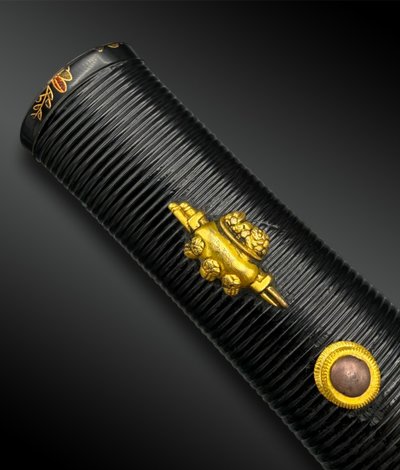
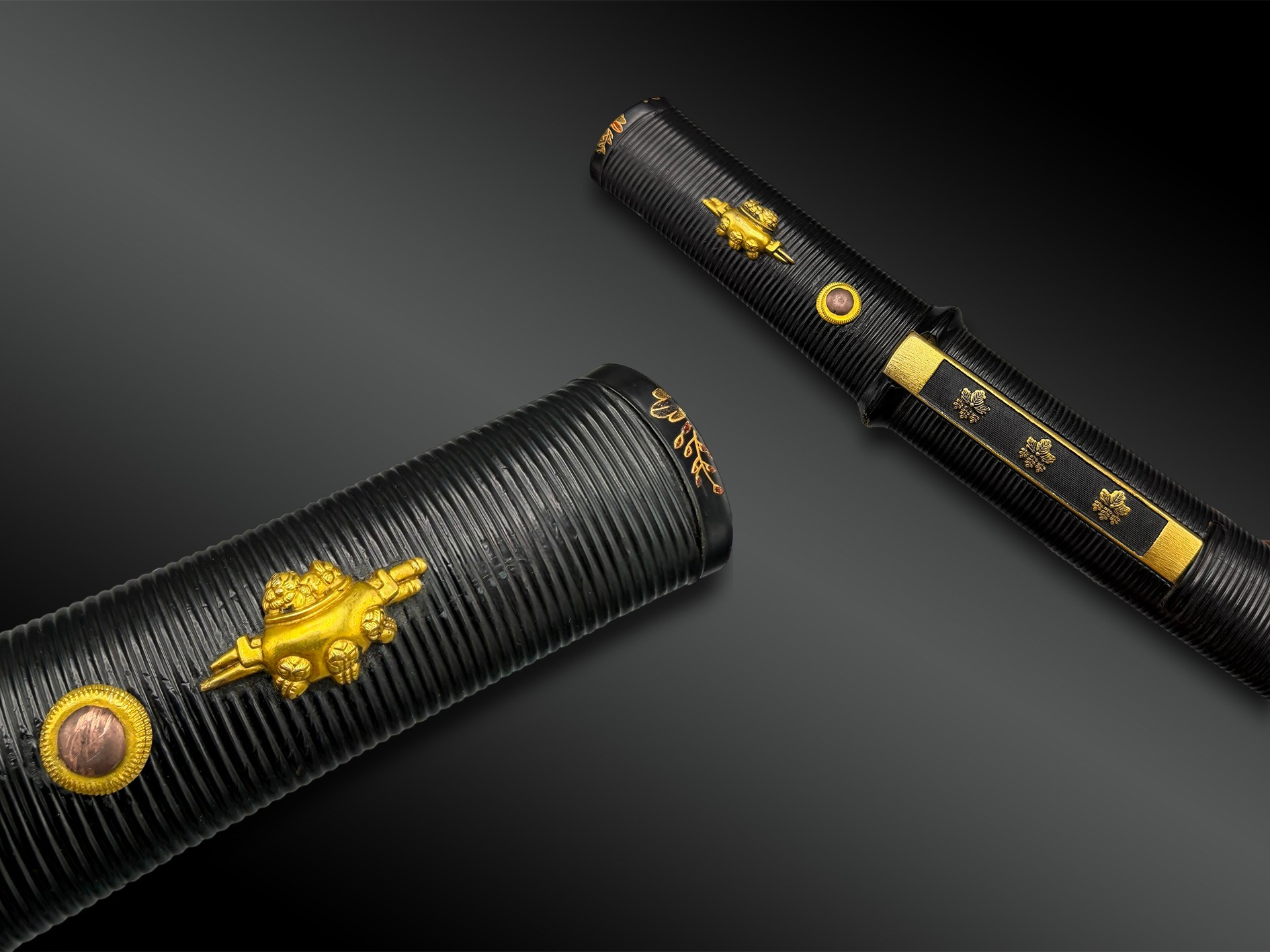
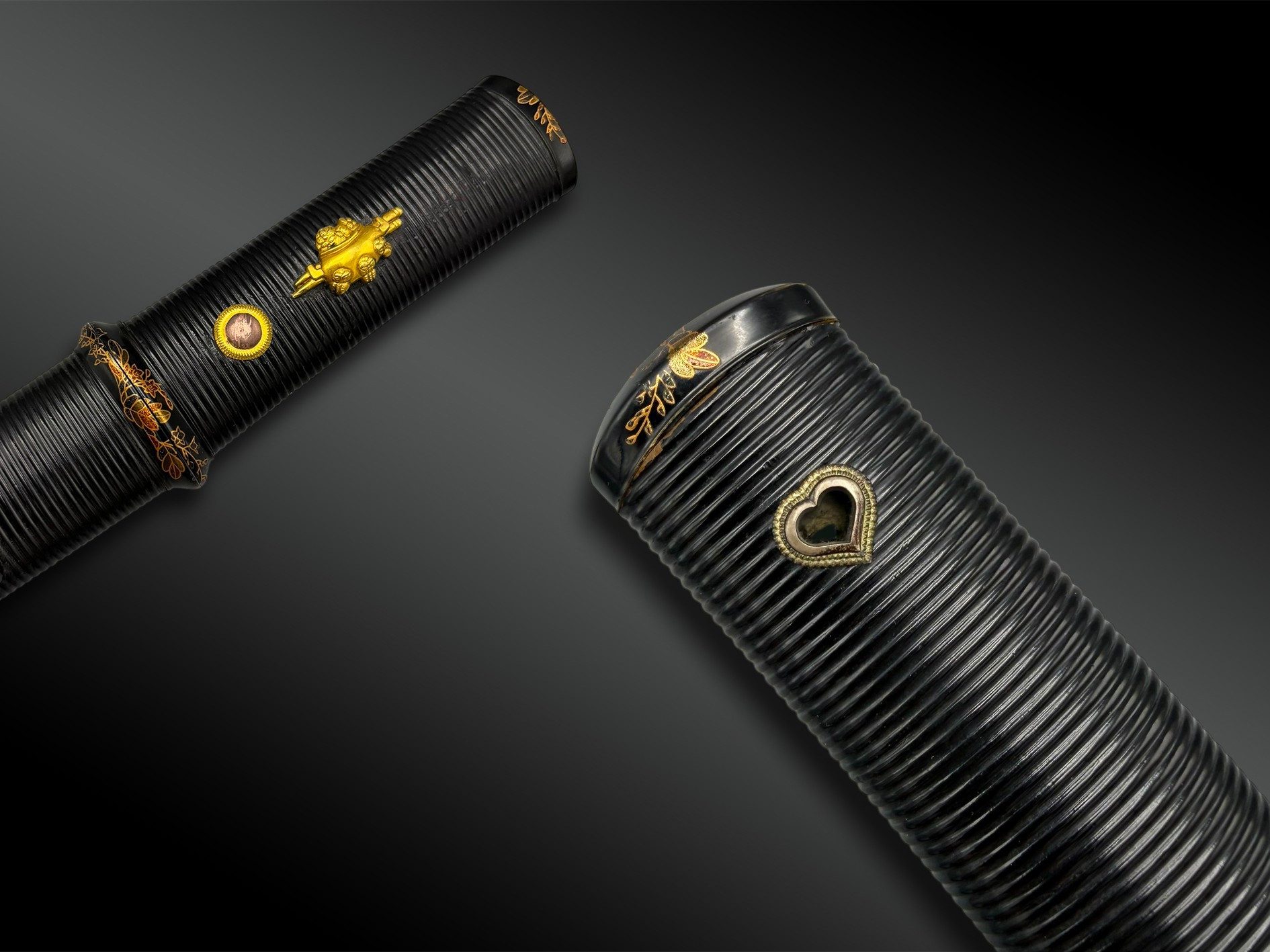
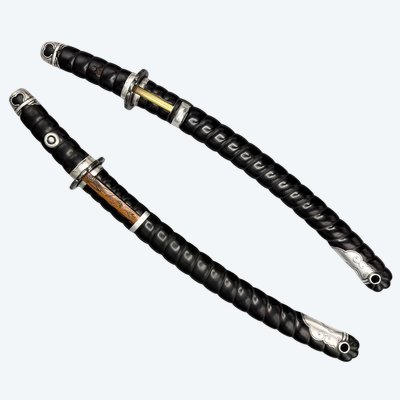
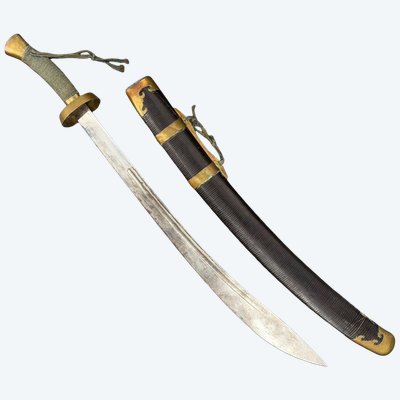
Wooden saya covered in black, fluted lacquer, openworked with a copper heart at the distal end.
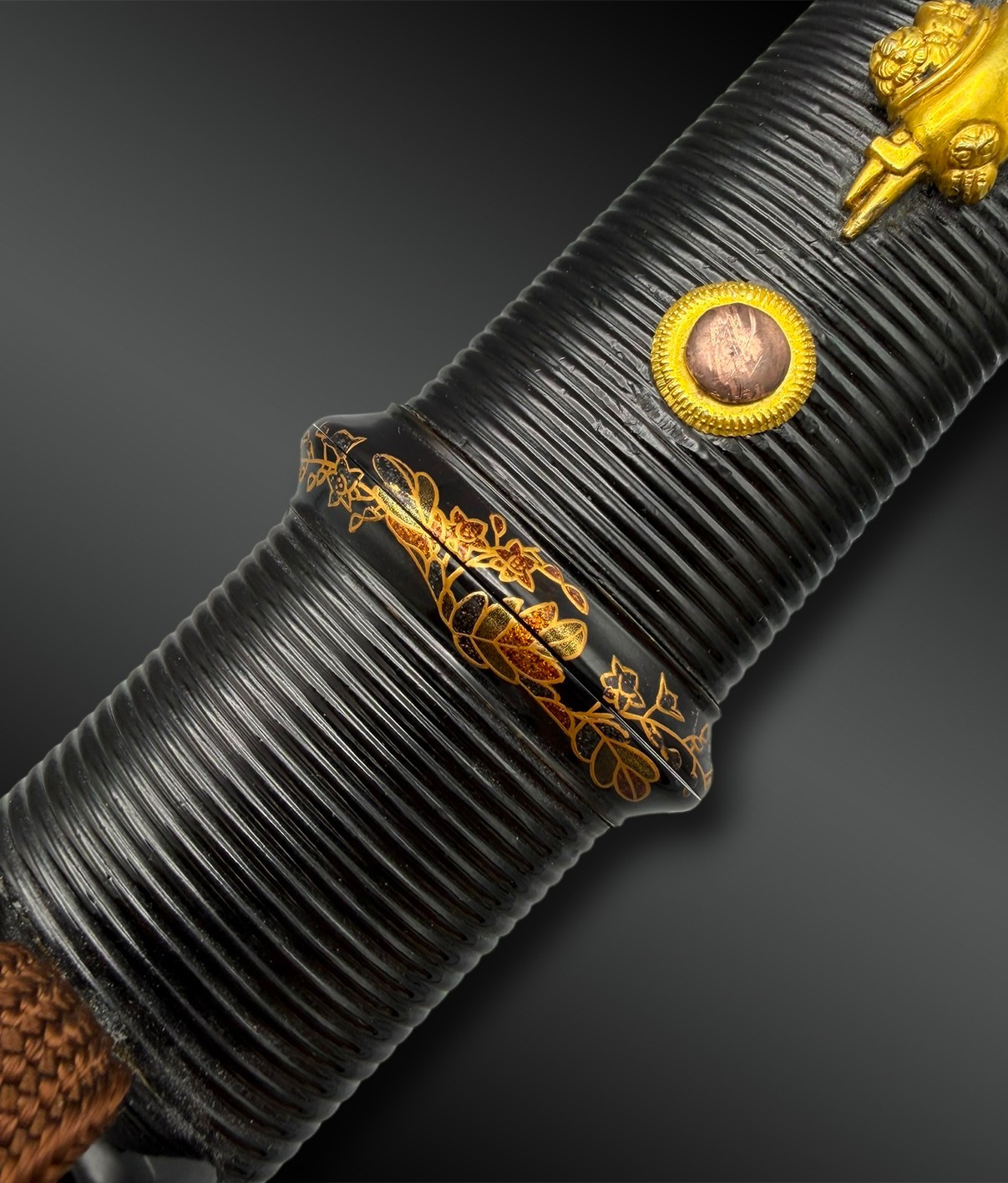
Brown silk sageo.
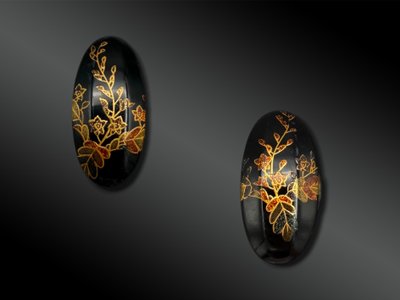
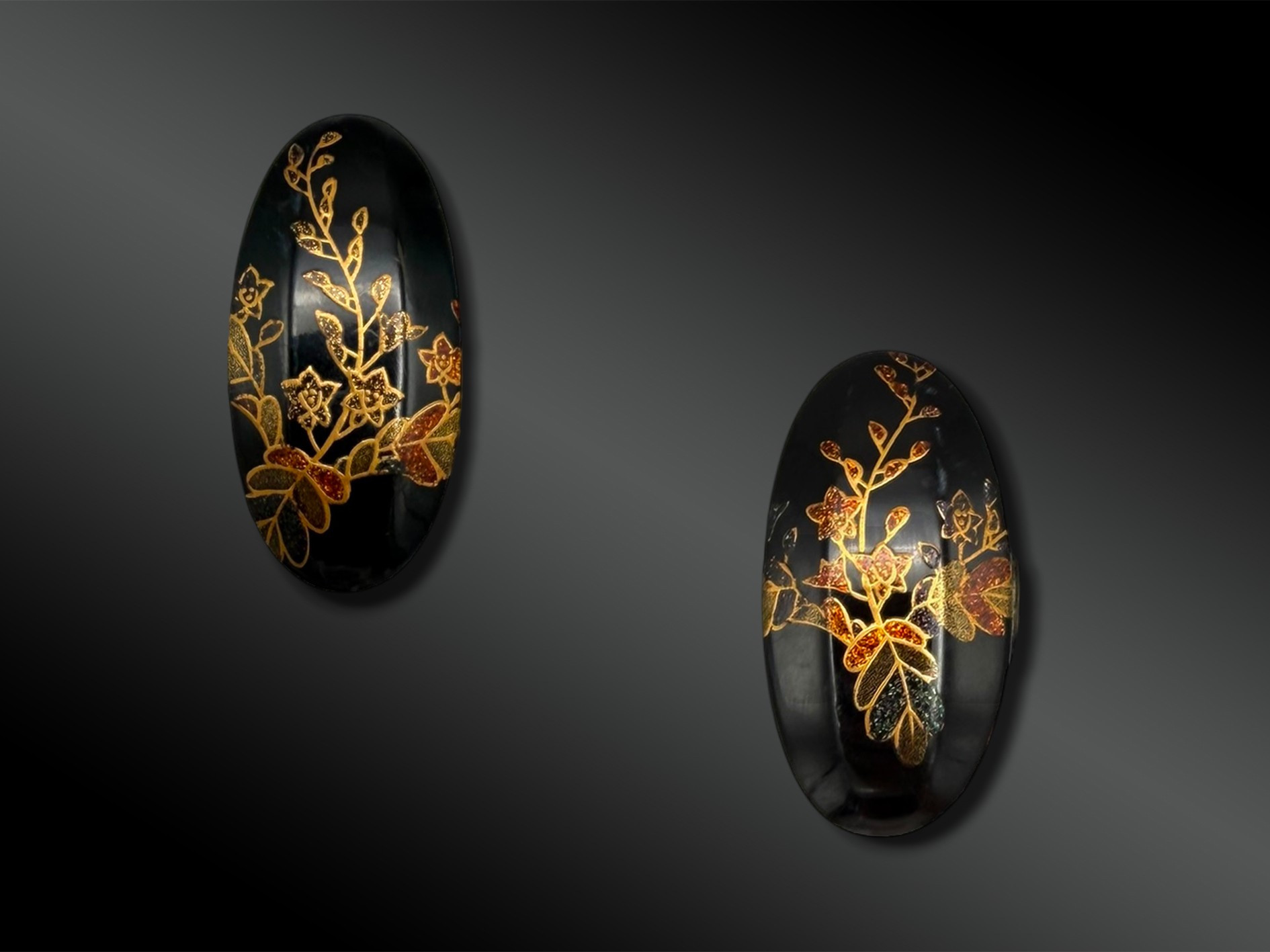
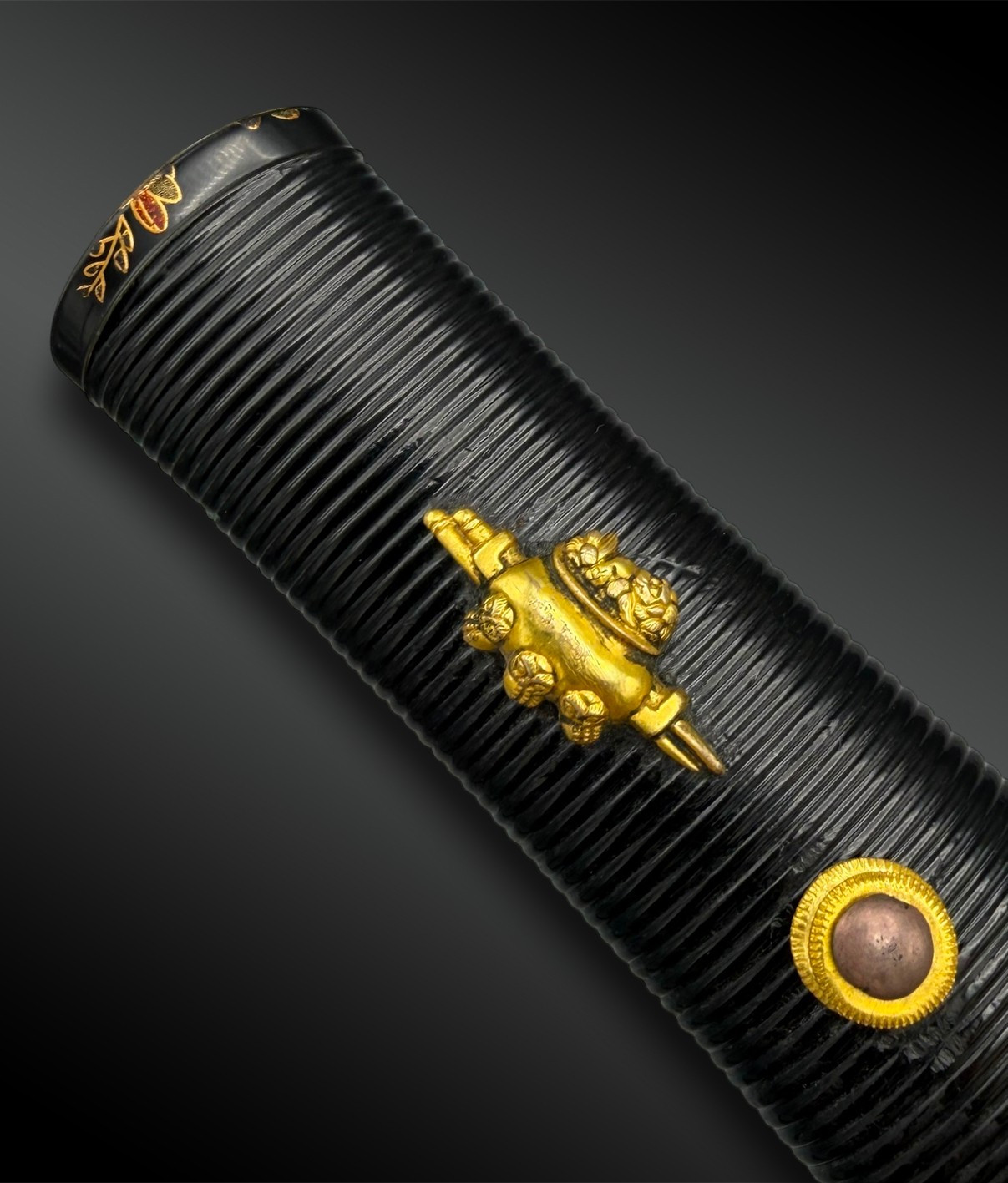
Lacquered kojiri decorated with floral and foliage motifs featuring glittering petals.
Kuri-gata and koi-guchi made of lacquered buffalo horn.
Kogatana with a signed blade; kotsuka made of gold and shakudo, engraved within a cartouche featuring three “Go-shichi no kiri ” (Kiri-mon), the family crest of Japan, and the crest of the Ashikaga shoguns. Jō-mon (the primary crest of the Machi-jiri, Mi-na-sé, Sakura-i, Sō, ,Uzu-ma-sa, Yama-na. Kaye-mon (secondary crest) of the Aki-tsuki, Ari-ma of Ku-ru-mé, Ha-take-yama, Hayashi, Hoso-kawa of Mi-kawa and Sikok, Ima-gawa, Iwa-ki, Kyô-goku of Toyo-oka, Maki-no of Naga-oka, Mô-ri of Fuchû, Hagi, and Kiyo-suye, Nabe-shima of Sa-ga, Nit-ta, O-gasa-wara from A-shi, Katsu-yama, Ko-kura, and Chi-zuka, Shi-ba, Uya-mura, and Uye-sugi. Wooden tsuka-ito, covered with fluted black lacquer.
Fuchi and kashira in lacquer decorated with floral and foliage motifs featuring straw-colored petals.
Gilded menuki depicting a ding-chaudron or ritual tripod vase; with anthropomorphic clawed feet and two swords crossing at the back.
Ref. 7382
Text and photos © FCP CORIDON
Ref: PRPYXUD36Y