This description has been translated and may not be completely accurate. Click here to see the original
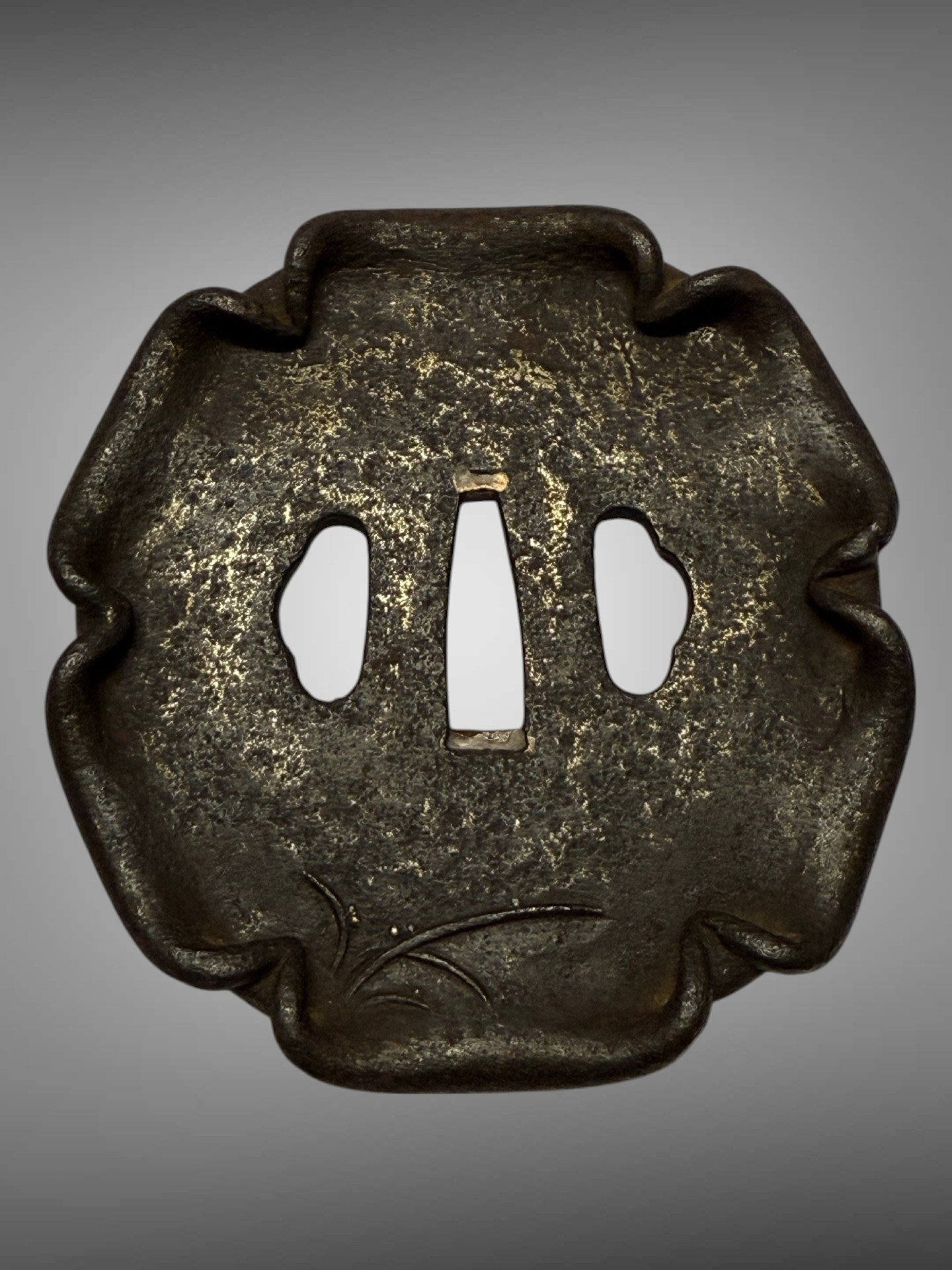
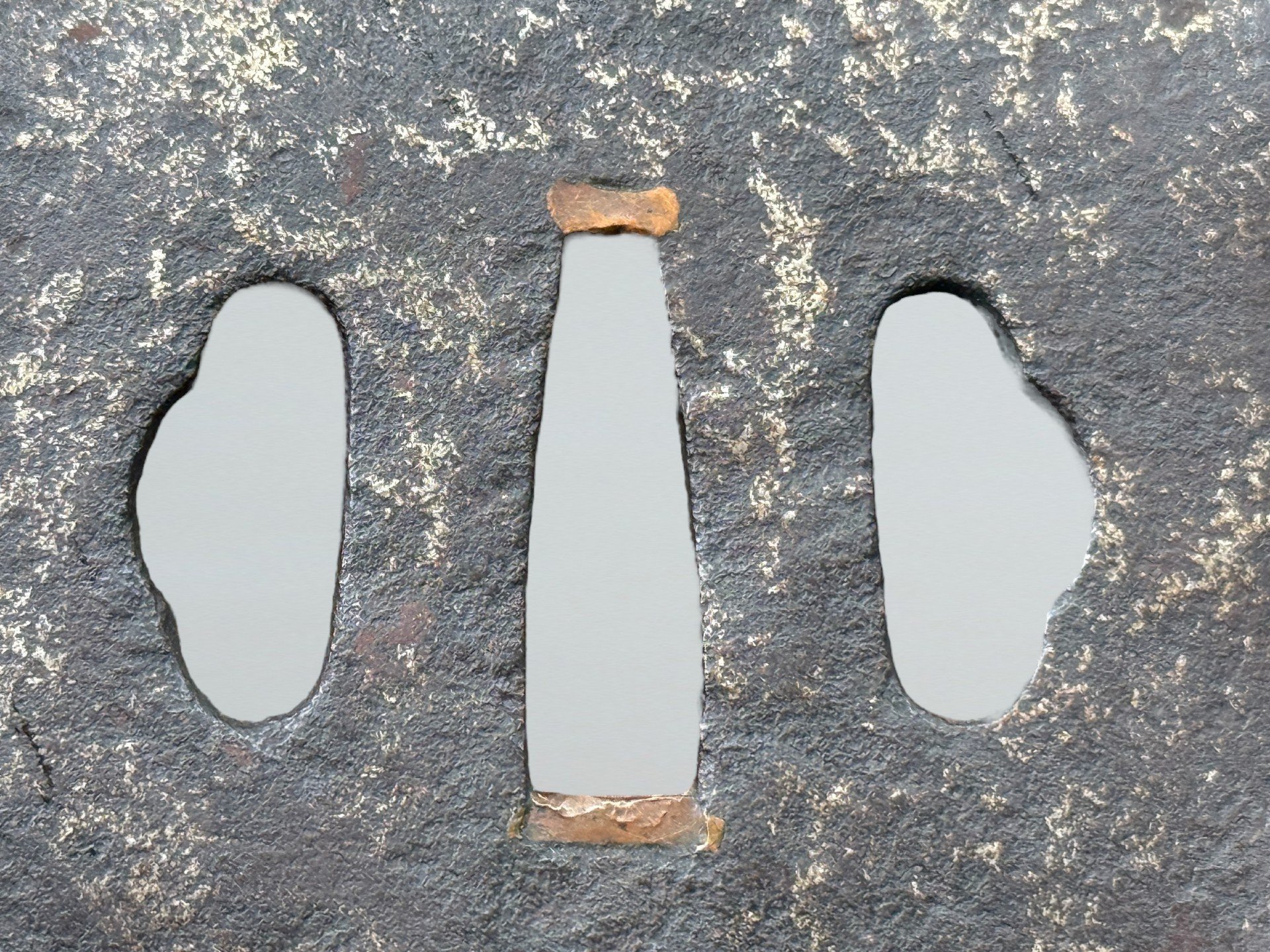
Wrought-iron tsuba (tetsu nikubori tsuba).
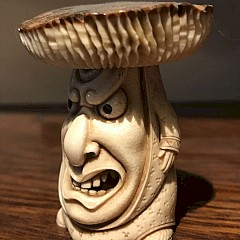
Design: Death's head (dokuro), grass and bird.
Symbolism: Impermanence, Zen meditation on death and nature.
School: Shoami (Edo) or independent craftsman influenced by Zen style.
Period: Edomoyan/late (c. 1750-1850).
The theme of the dokuro (skull) in tsuba estrare but charged with meaning:
It represents the transience of life (mujō, 無常) - the Buddhist idea that all things are impermanent.
Associated with the withered grass (susuki) and the bird, it symbolizes the cycle of life, death and rebirth.
This motif appears in certain pieces influenced by Zen philosophy and the aesthetic current of wabi-sabi (beauty in imperfection and transience).
The skull is sculpted in high relief (nikubori), not inlaid: the material is hollowed out and modeled directly in the iron. The orbits and nasal cavities are deeply and irregularly carved.
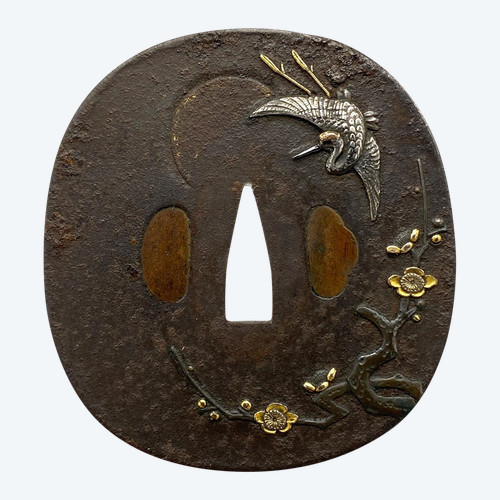
The small metal beads around (notably near the grasses) are brass inlay dots (zōgan), used to evoke dew or accentuate the scene.
The brownish-black patina is stable and natural, with traces of ancient oxidation, not artificial.
Stylistic elements (thick form, simple engravings, macabre symbolism) suggest a provenance:
Most likely Bushū school (武州) or Shoami school (正阿弥) from the middle to late Edo period (c. 1750-1850).
These workshops, notably in Edo and Kyoto, produced tsuba on the theme of death or the passage of time, sometimes inspired by prints (ukiyo-e) or Zen poetry.
The rustic, expressive aspect of the iron is also reminiscent of certain works in the Yagyū (柳生派) style, but the figurative (rather than purely abstract) decoration points more towards Shoami.
Dimensions: 9 x 8.5 cm.
weight 102 grs
Ref: GU782J1X0I