





Would you like more images?
JAPAN - Late Momoyama/Early Edo Period (1603-1868).
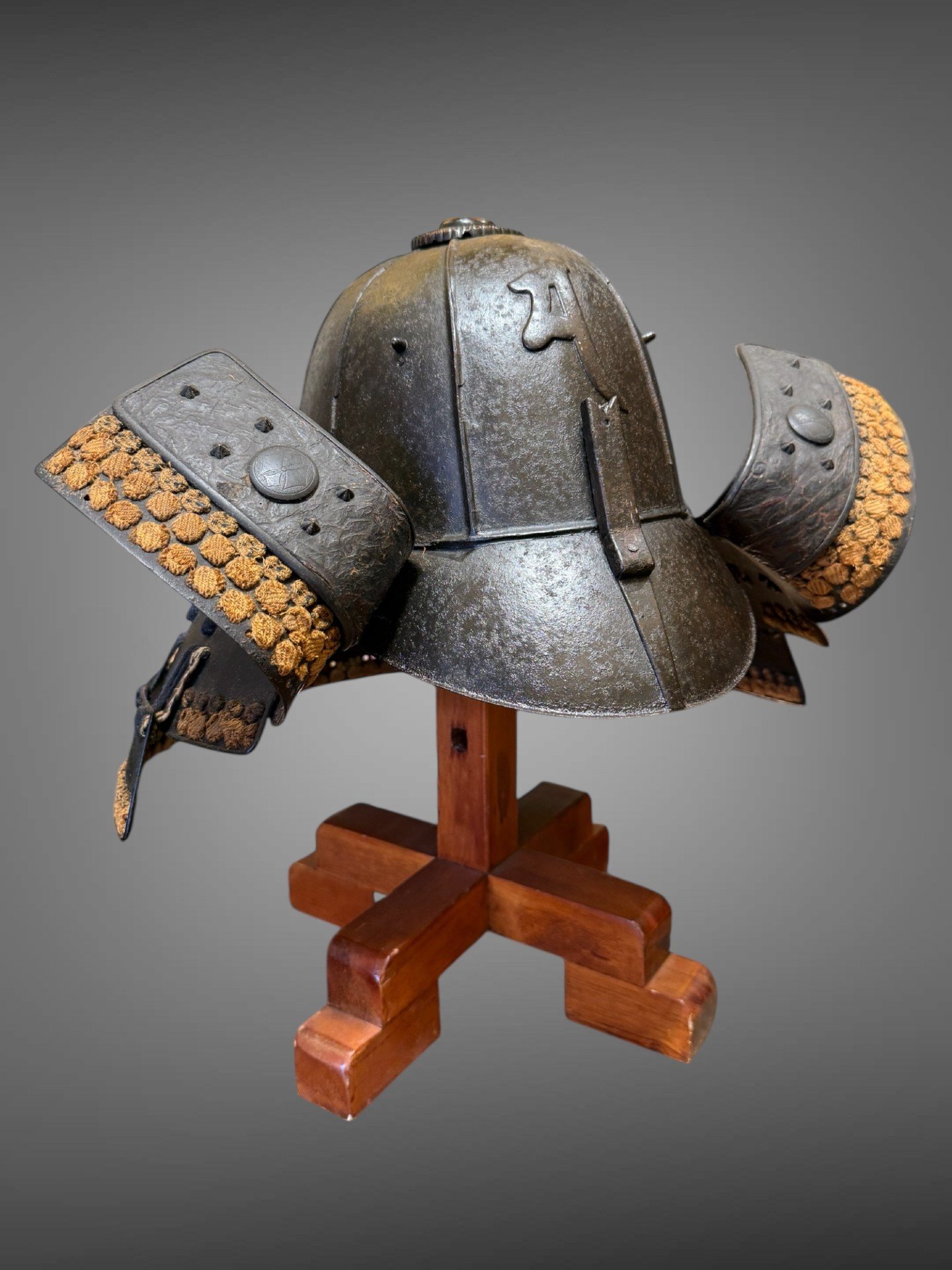
In the Zunari-bachi (three-plate) style, it was very popular during the late Muromachi and Azuchi-Momoyama periods (late 16th and early 17th centuries).
Its design is characteristic of tosei-gusoku (modern armor), built for practical protection during the Sengoku period (Warring States period).
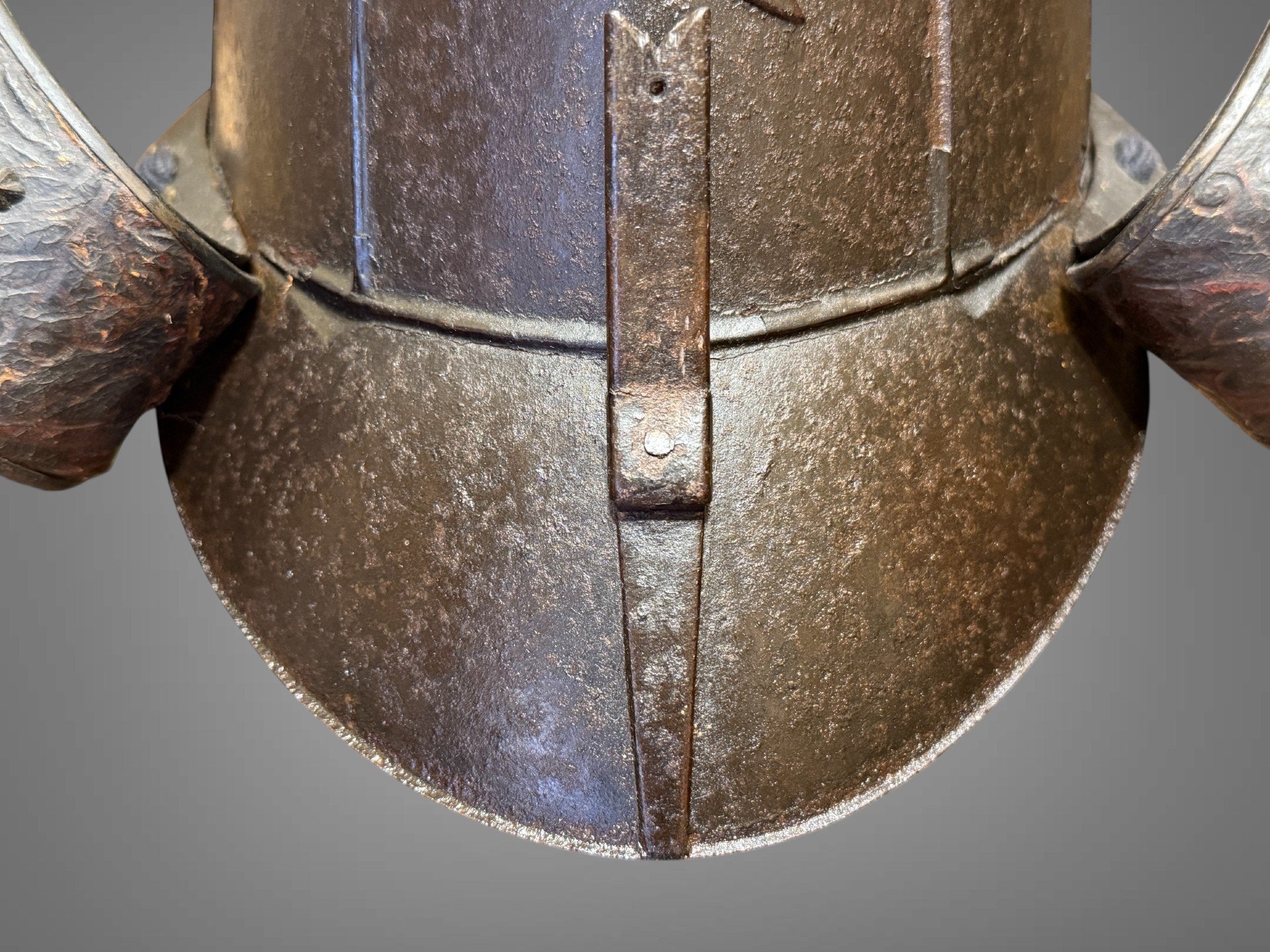
KABUTO composed of eight wrought iron plates, the front plate adorned with a Chinese character representing DAIKOKUTEN, the Japanese deity of wealth, commerce, and trade.
These bonji often represented Buddhist deities (such as Fudo Myoo or Hachiman) and were worn as a form of spiritual protection and to demonstrate the warrior's devotion. THEHEN NO ANA (opening at the top) made of copper and patinated copper with three tiers.
This decorative metal fitting at the very top of the helmet, surrounding the tehen (opening), is intended for ventilation or for the wearer's hair tie.
SHIKORO (neck guard) with three tiers, made of black lacquered iron and blue and orange silk braid (minor losses).
FUKIGAESHI (wings) made of wrought iron covered in leather and orange silk braid, they are decorated with a clan mon.
MABI SA SHI (visor) made of wrought iron.
Helmets like this were often used by high-ranking samurai or ashigaru (low-ranking soldiers), depending on the quality of the craftsmanship. The presence of the Bonji crest suggests that it belonged to someone who valued the protective intervention of Buddhist iconography on the battlefield.
Dimensions: 25 x 40 x 35 cm.
Sold with stand.
s
Ref: IMPU7RVZZH
| Condition | Good |
| Style | Asian Arts (Uniforms, armor of Asian Arts Style) |
| Period | 17th century (Uniforms, armor 17th century) |
| Country of origin | Japan |
| Shipping Time | Ready to ship in 2-3 Business Days |
| Location | 93400, saint ouen , France |
| Shipping Information | Careful and insured shipping, fast shipping |
4 commitments to buy with confidence

 English
 Français
 Italiano
 Deutsch