This description has been translated and may not be completely accurate. Click here to see the original
Lucien Ott (Paris, 1872 – Villeneuve-Saint-Georges, 1927)
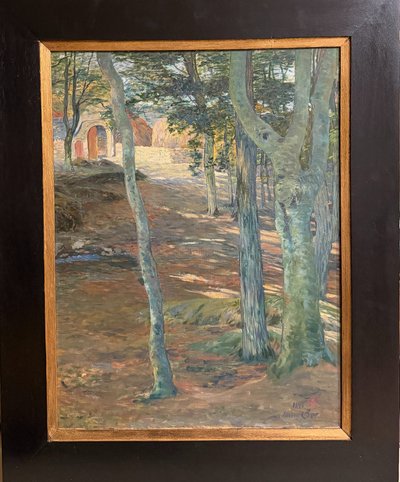
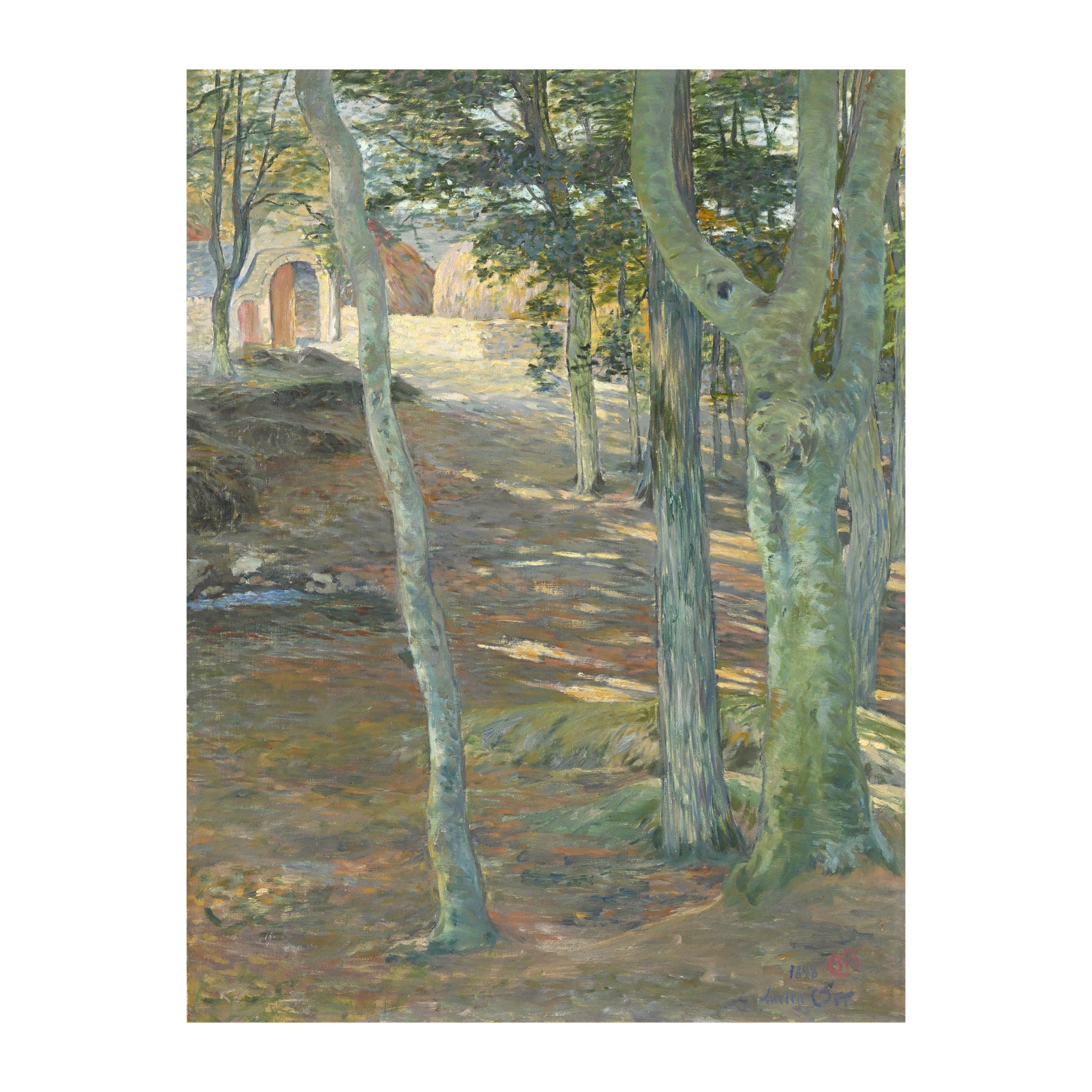
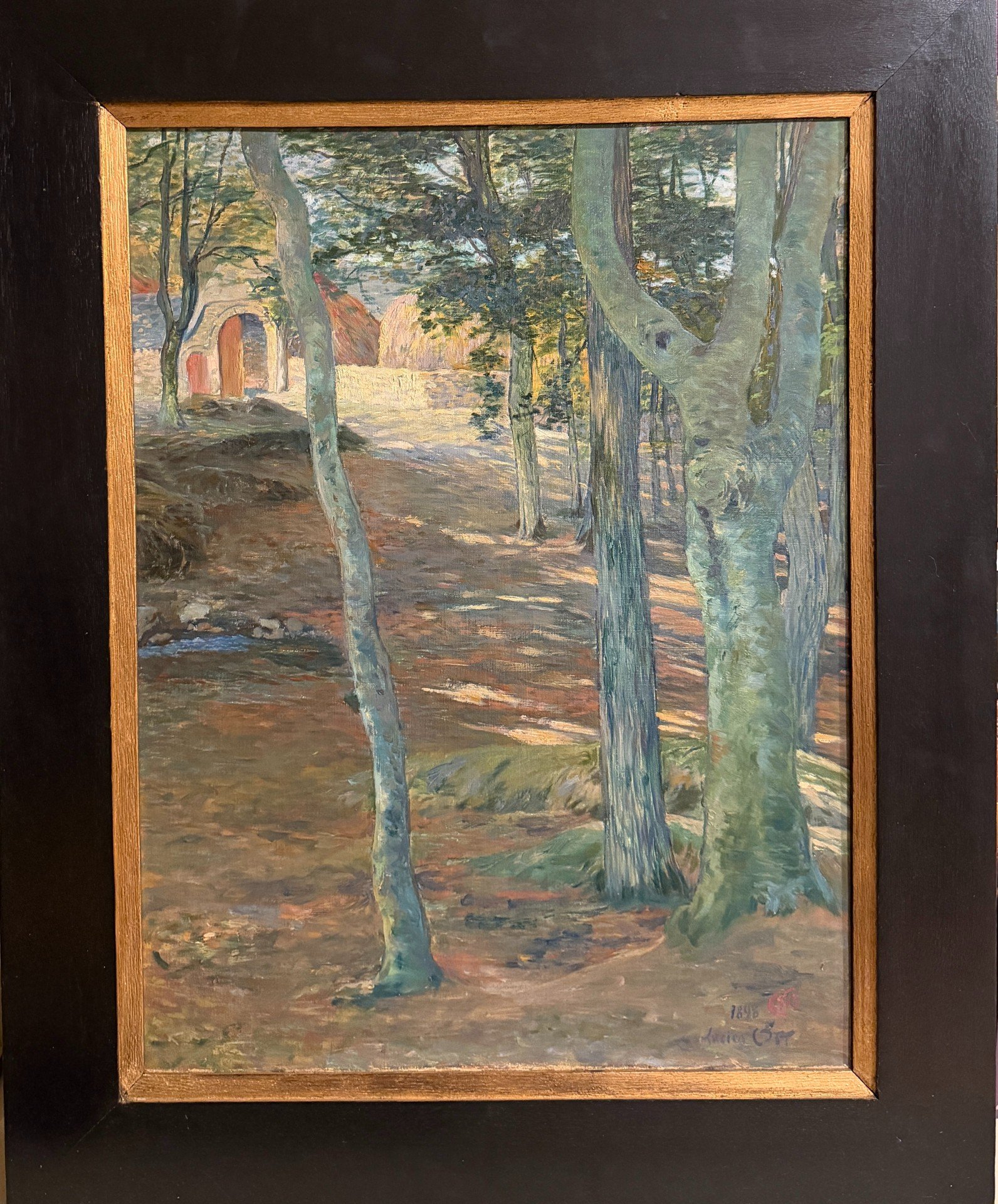
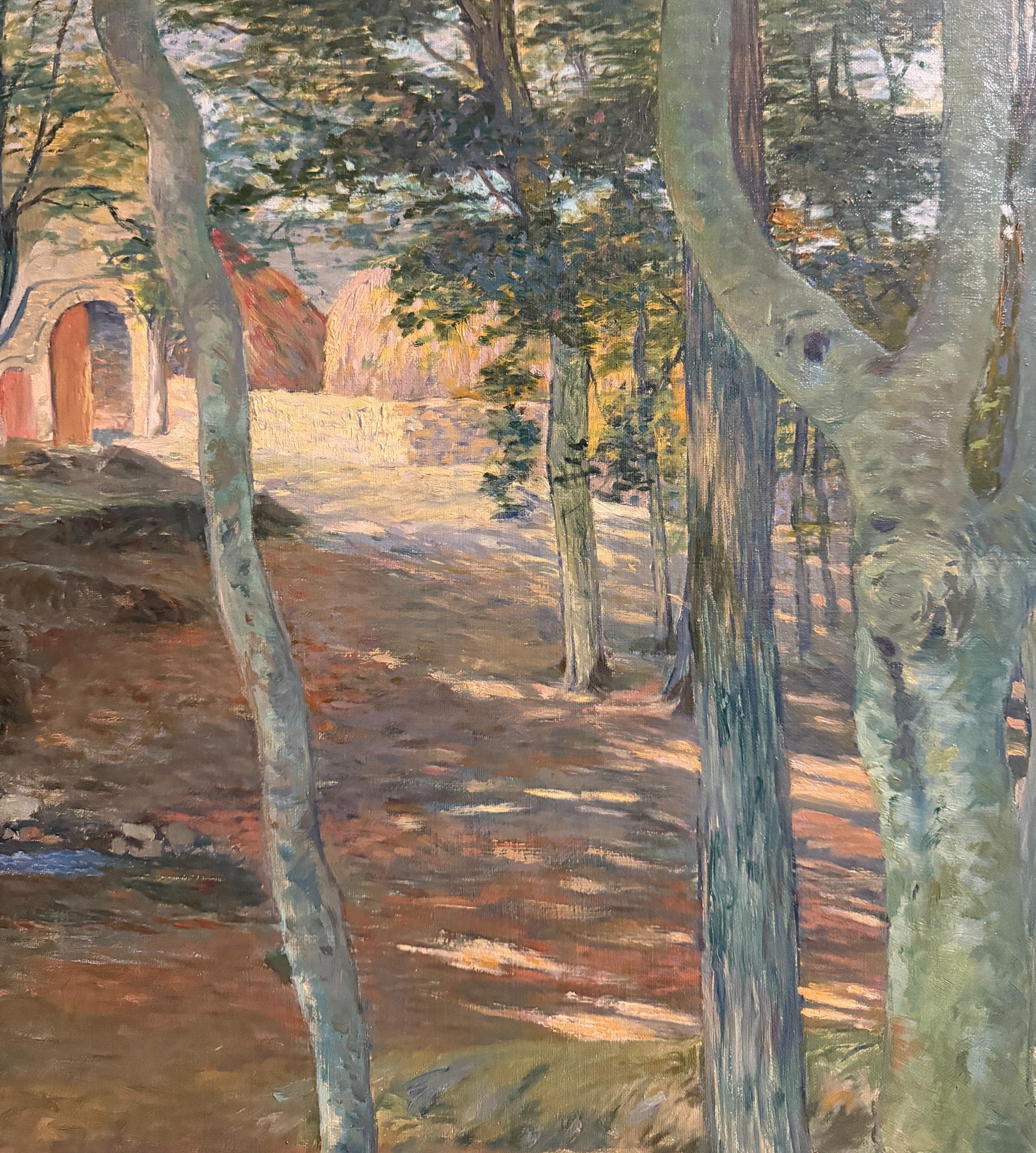
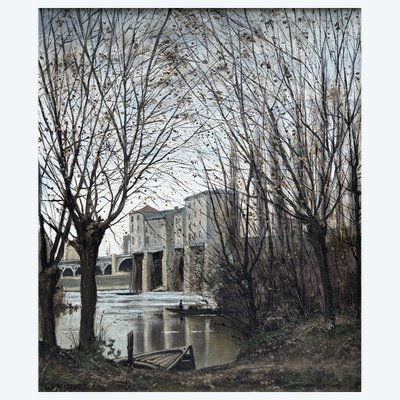
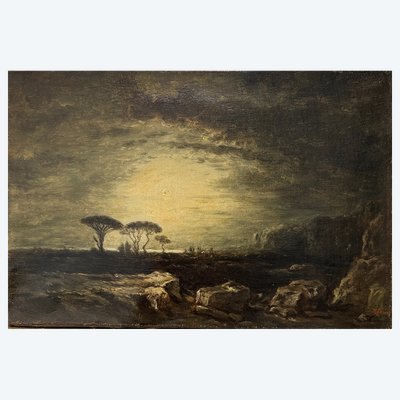
Breton Landscape, 1898
Oil on canvas
61 x 46 cm
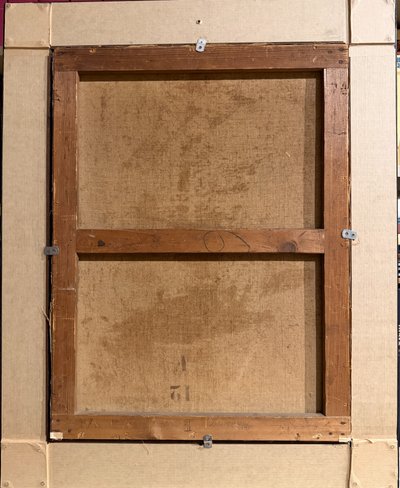
78 x 63 cm with frame
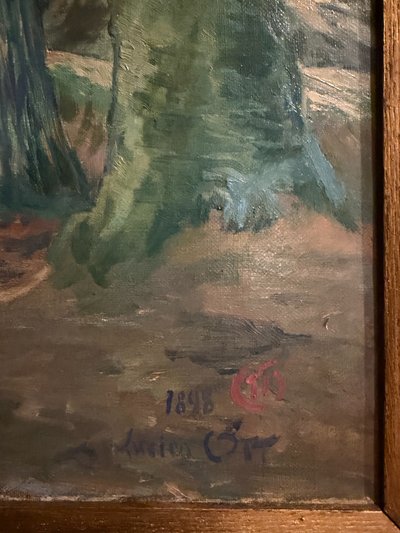
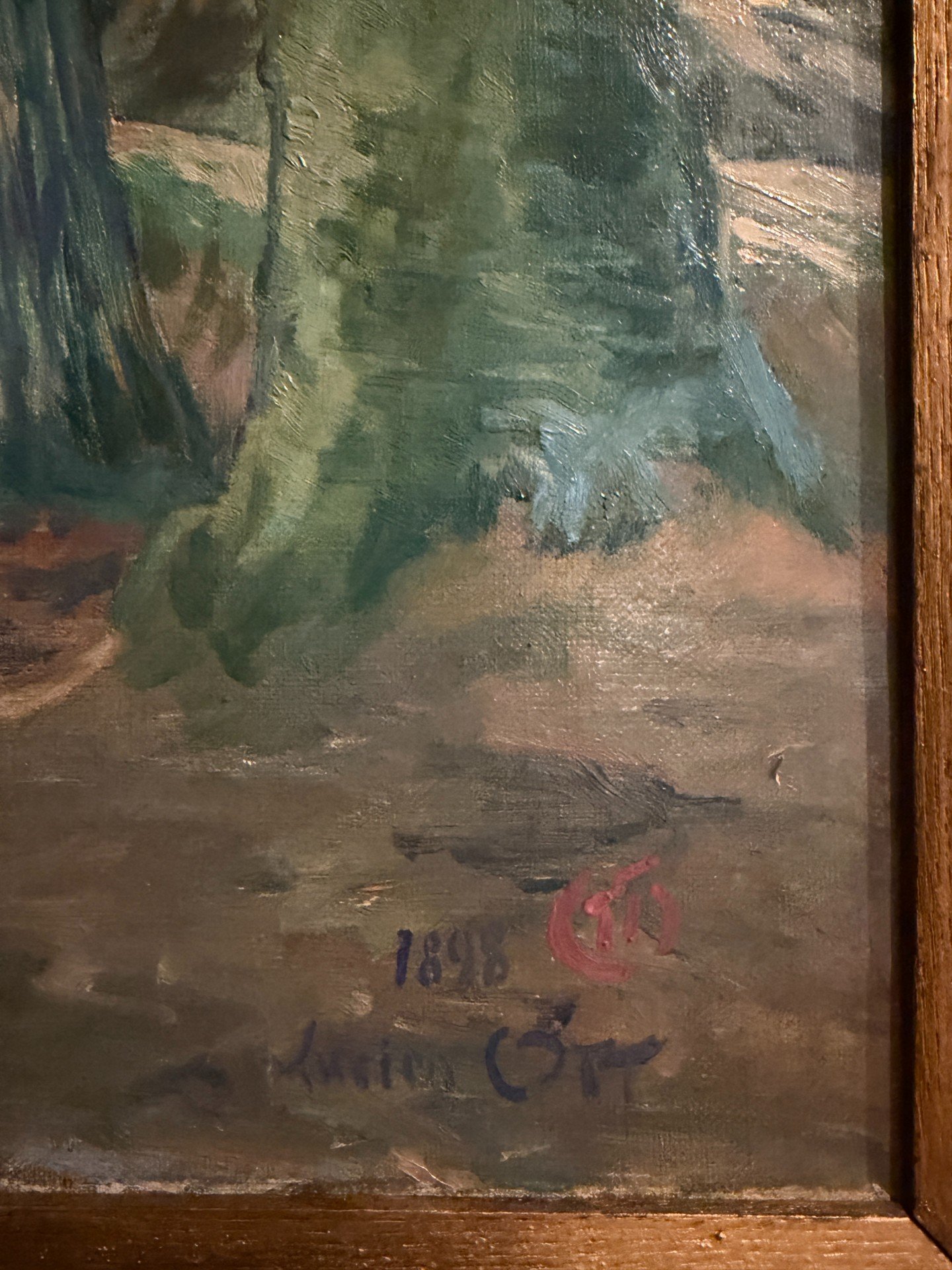
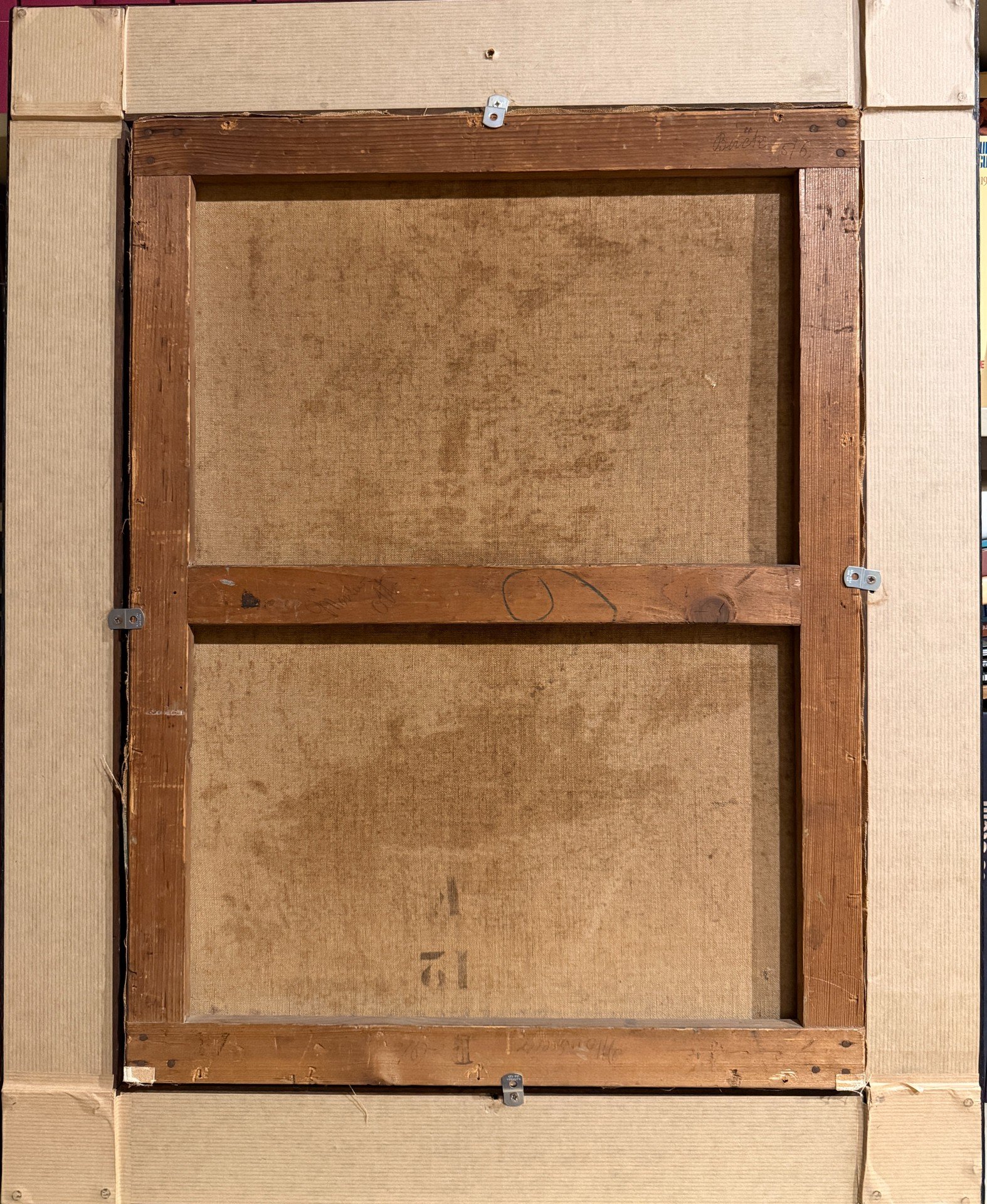
Monogrammed in red, dated and signed ‘Lucien Ott’ lower right
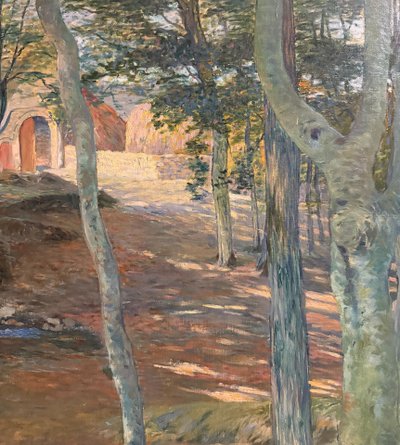
Lucien Ott was born in Paris in 1872 into a family of Alsatian artisans who had moved to the capital after the annexation of their region by Prussia. Encouraged by his shoemaker father, he showed a real talent for drawing from a very young age and attended the Germain Pilon school, then the Bernard Palissy school, where he trained as a decorator. He developed an early interest in Brittany, first visiting Pont-Aven in 1889, where Paul Gauguin and Émile Bernard had been revitalizing modern art since 1886. After his year of military service in 1892, he was employed by the Krieger factory as a furniture designer. Becoming a workshop foreman, he met the engraver Loys Delteil, who offered him advice and gradually became his friend. Dreaming of dedicating himself more fully to painting, Lucien Ott returned to Brittany, staying in Loguivy-de-la-Mer, between 1898 and 1901. There he met Henri Rivière, with whom he shared a taste for landscape painting as well as a certain attraction to the synthetic style of Japanese prints. Back in Paris, he exhibited at the Salon des Indépendants from 1901 and then at the Salon de la Société Nationale des Beaux-Arts from 1903. His paintings, pastels, and watercolors achieved considerable success there, combining typically Parisian landscapes with the then-fashionable "Breton" motifs. Also devoting himself to still life and portraiture, his palette gradually darkened, and his brushwork became more synthetic, in the manner of Bonnard or Vuillard, to whom he strongly claimed kinship. Mobilized in August 1914, at the age of 42, the artist was assigned to guard the railways in Essonnes before joining the 79th Infantry Regiment on the Belgian front in 1916. There, he tirelessly filled his sketchbooks with sketches drawn from life, capturing the ruined landscapes and the soldiers in their shelters, subjected to the violence of the bombardments. Recalled to Paris in 1917, he put his painting talents to use by joining the camouflage workshop at Buttes-Chaumont. With the cessation of hostilities, deeply marked by the conflict, Lucien Ott further developed his work as a decorator, creating numerous "modern" furniture designs for the Paul Malhou workshops. Dated 1898, our oil on canvas is directly linked to Lucien Ott's time in Brittany and thus offers a vibrant pictorial testimony to his early artistic ambitions. Using a vertical composition directly borrowed from Hiroshige's prints, the painter has finely composed a wooded landscape, likely painted en plein air between Loguivy and Paimpol before being reworked in his studio. A keen observer of Impressionist painting, he partly absorbed its lessons through broad brushstrokes of bold colors, a certain fragmentation of the brushstroke, and a particular attention to the effects of light. The earthy ground, partially covered in moss, is thus subtly punctuated by a few rays of sunlight that occasionally pierce the shadows of the branches, before bathing the stone wall and haystacks visible in the background in more full light. Finally, the tree trunks, conspicuously striations across the canvas, seem to provide a pretext for describing the different types of wood, further betraying Lucien Ott's initial training as a designer.
Ref: 2NPWUPX4ML

 English
 Français
  Italiano
  Deutsch
  Napoleon marble inkwell, 19th century
450 € EUR
Napoleon marble inkwell, 19th century
450 € EUR