This description has been translated and may not be completely accurate. Click here to see the original
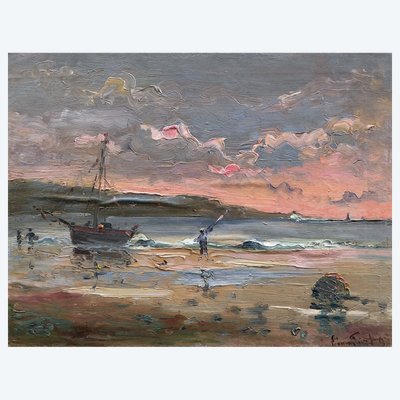
Pierre Forest was a marine, landscape, and still-life painter, born in 1881 in Nice and died in 1971 in Paris. He exhibited early in his career in various Parisian galleries, then, from 1931 to 1943, at the Salon des Indépendants in Paris. He subsequently participated in exhibitions in South America, Switzerland, and Morocco. The city of Nice organized a retrospective of his work in 1981.
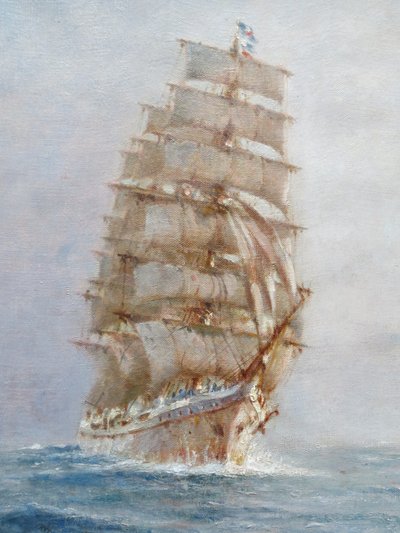
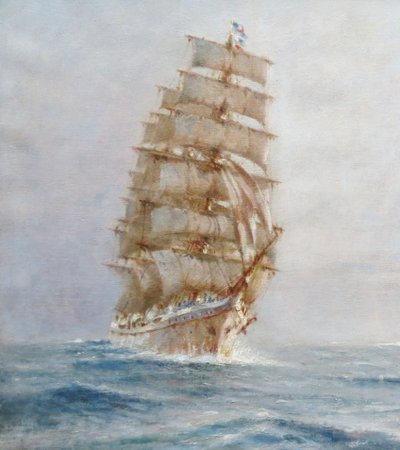
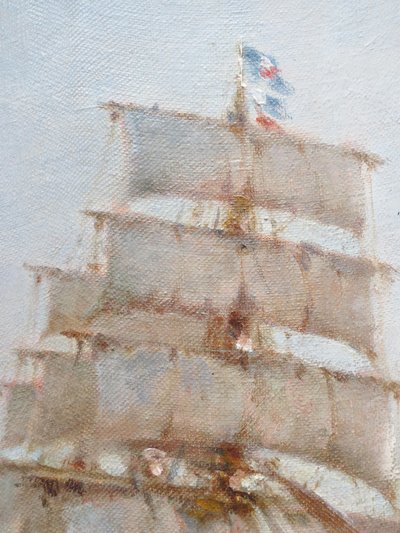
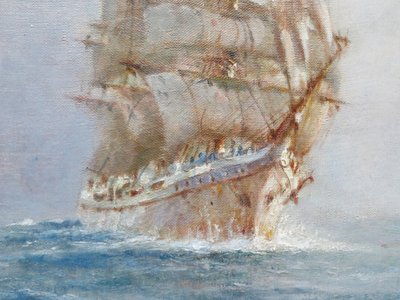
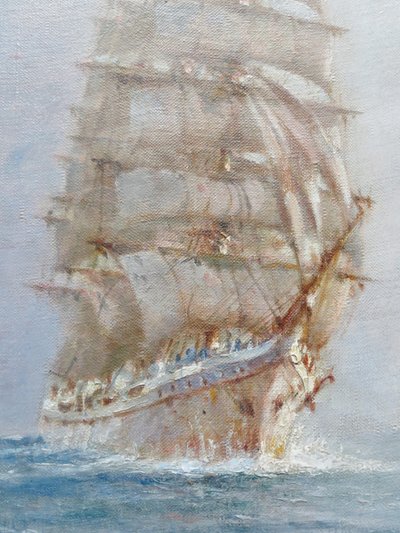
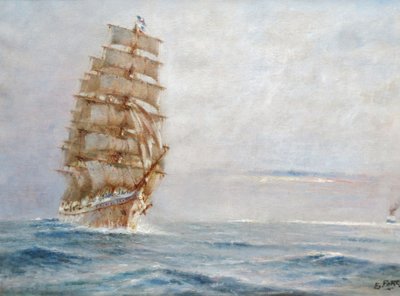
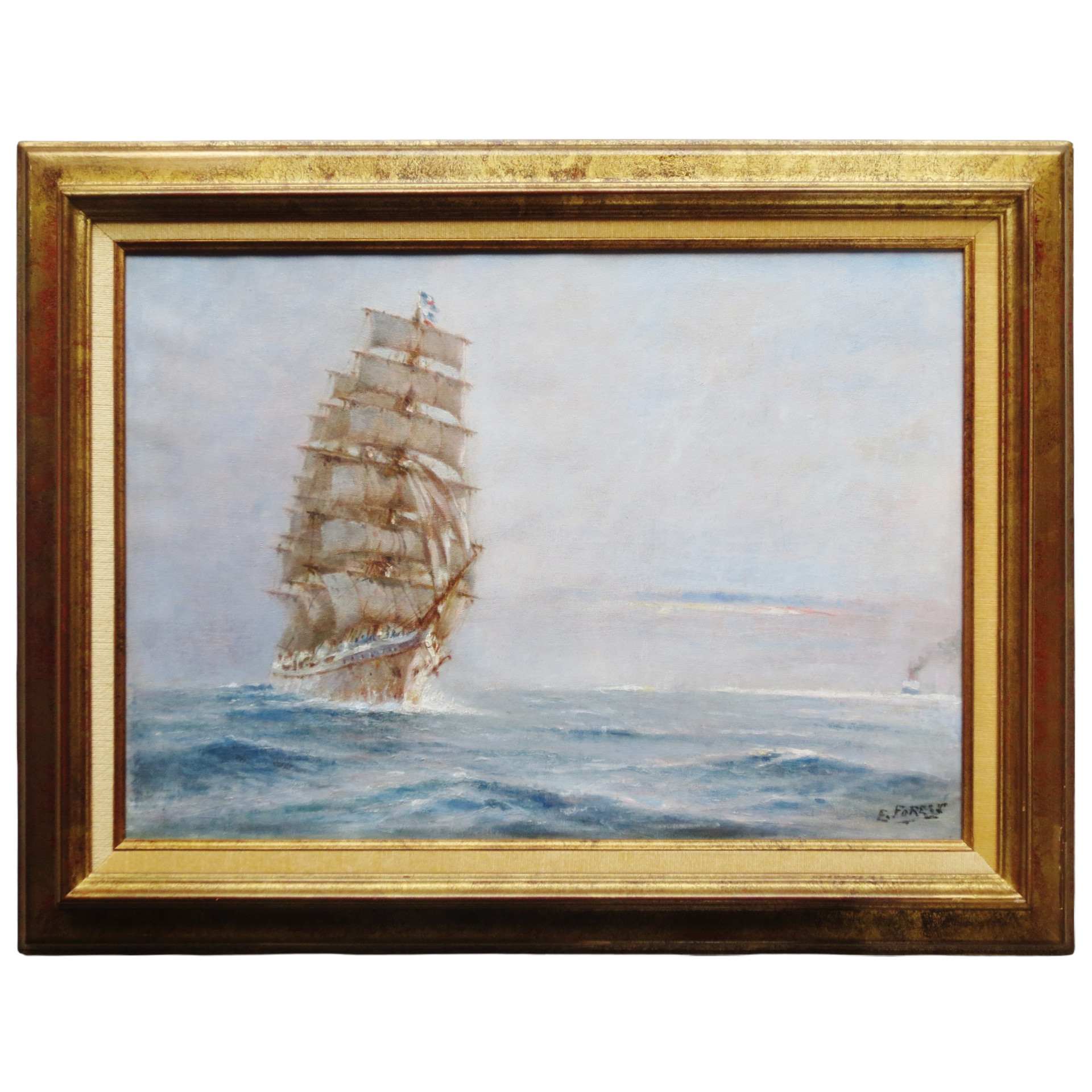
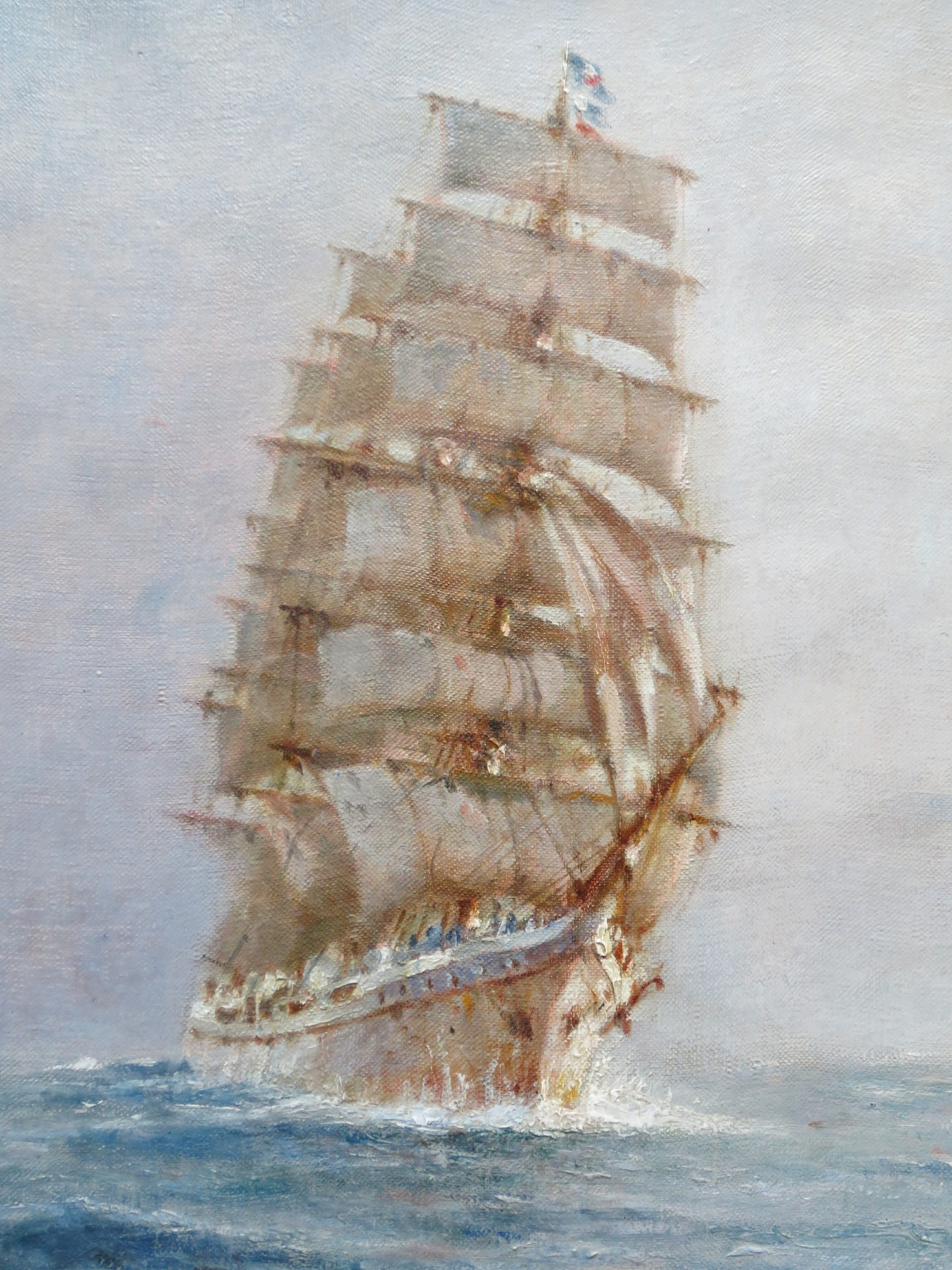
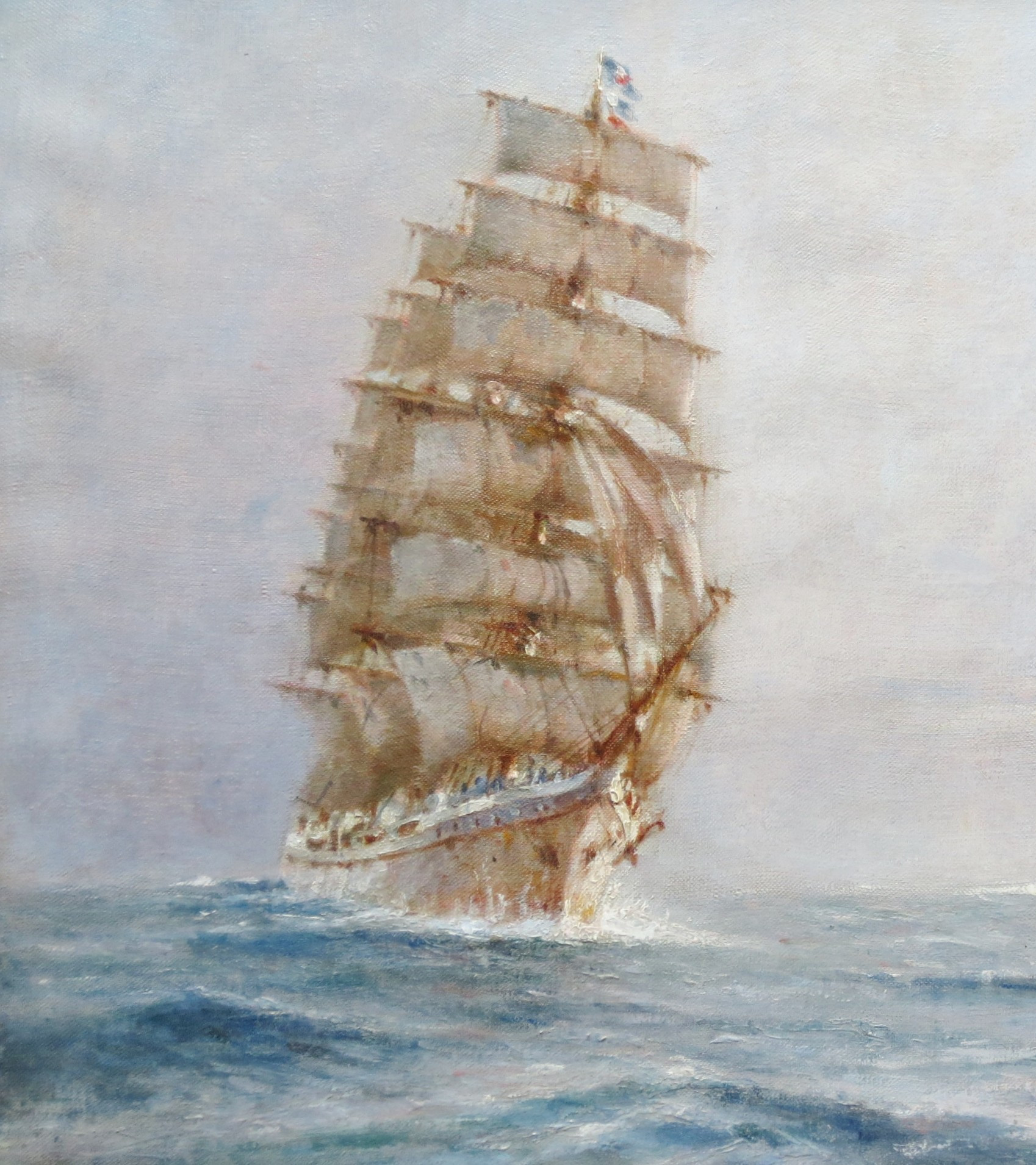
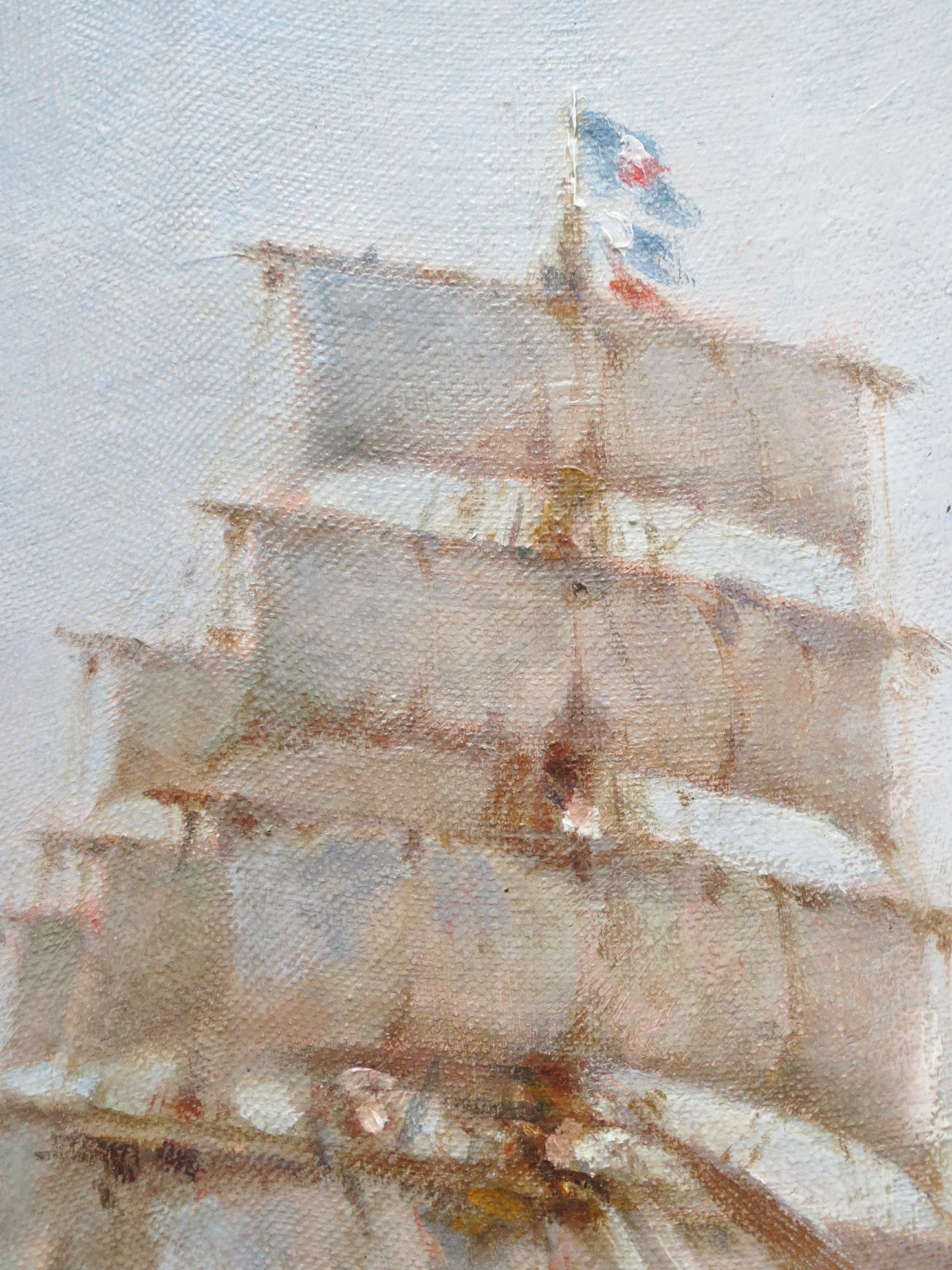
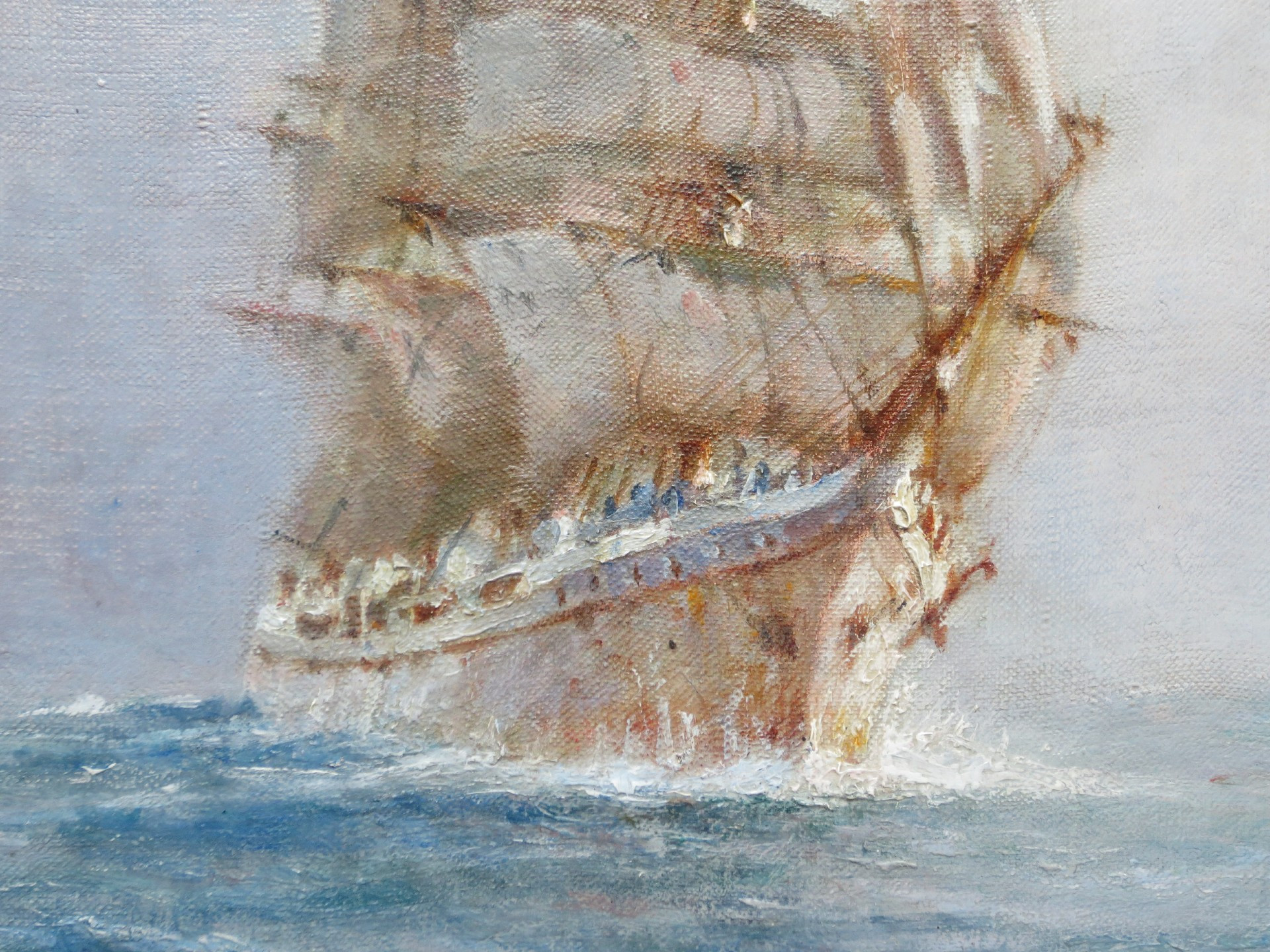
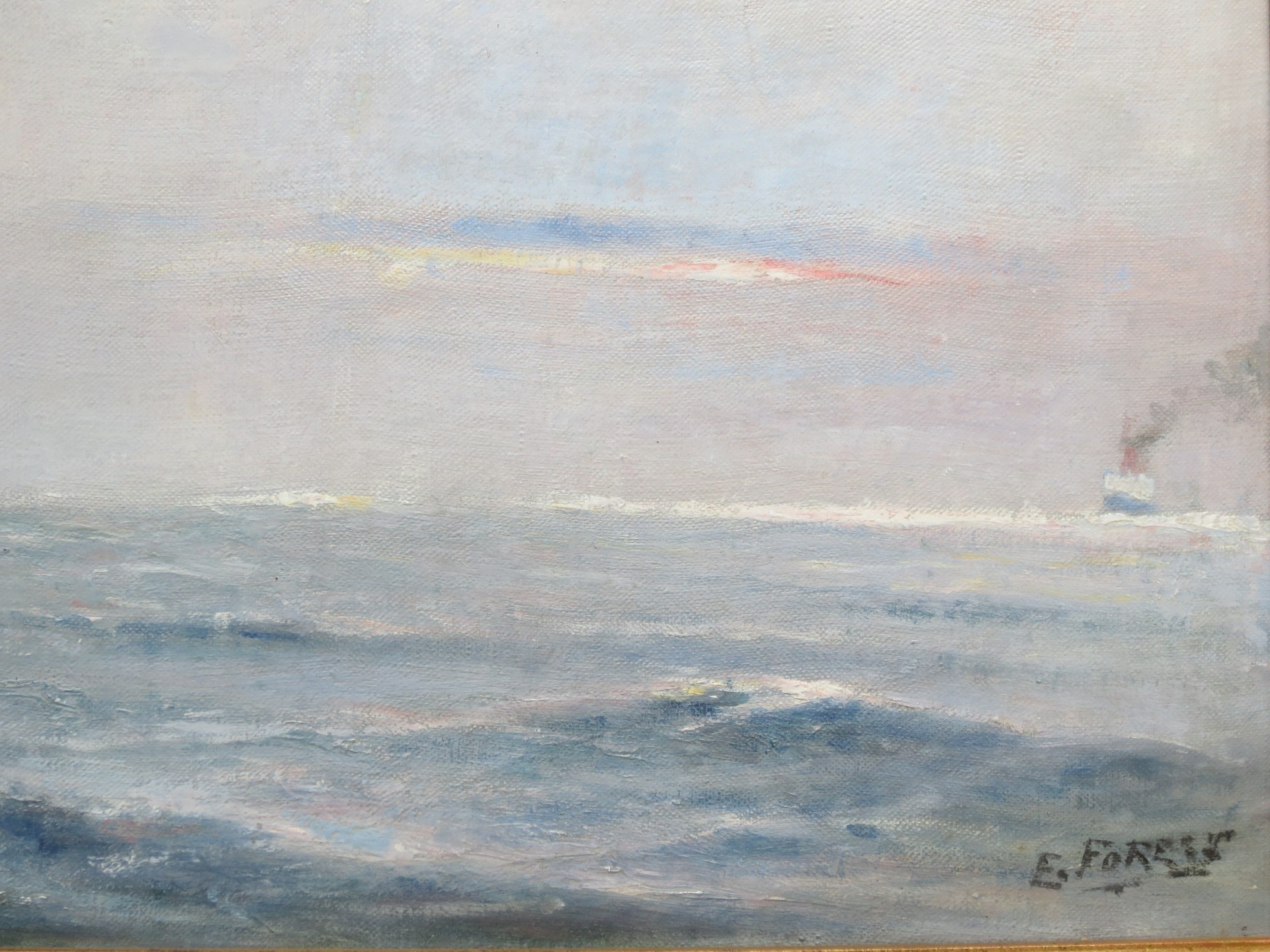
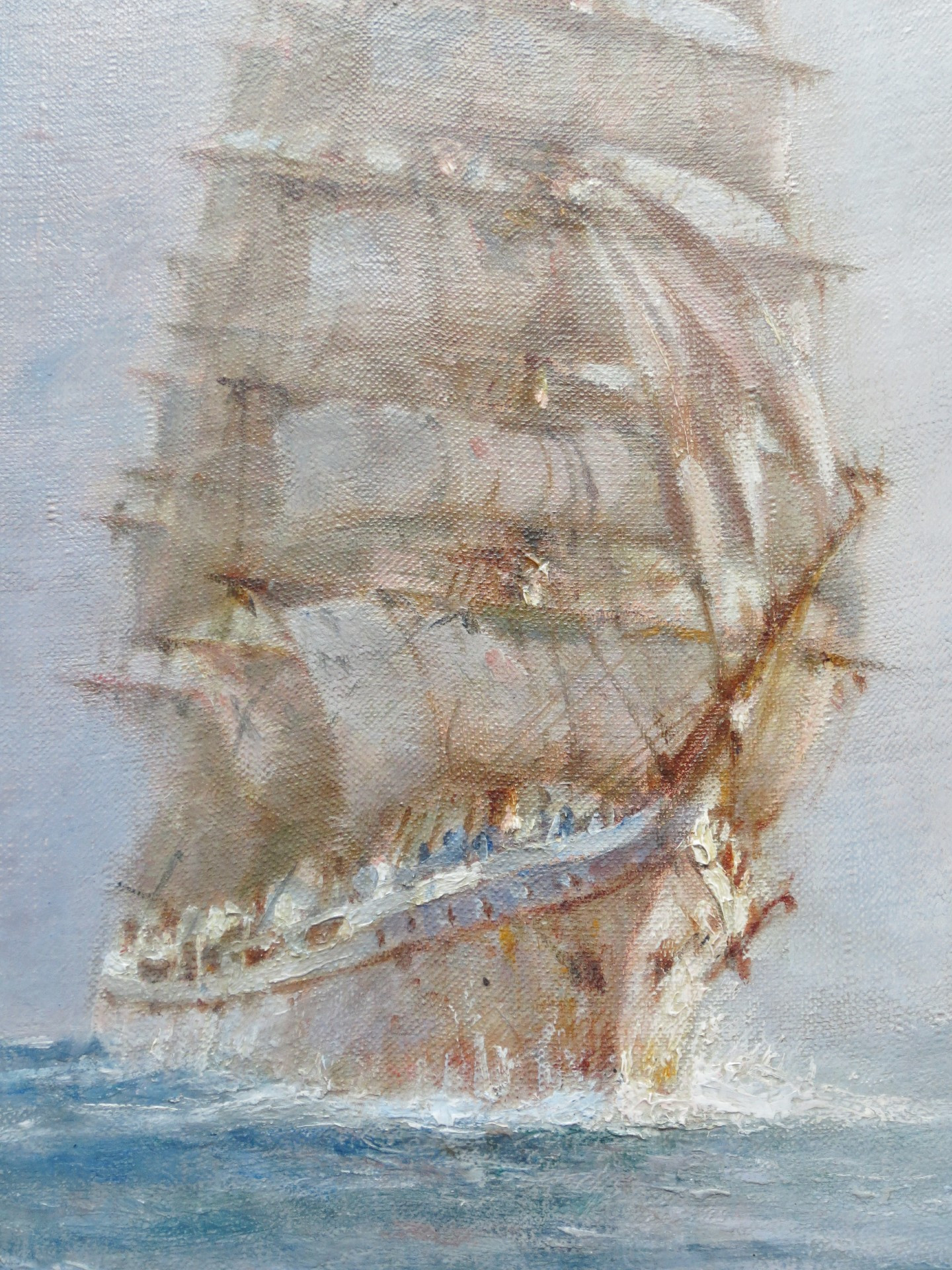
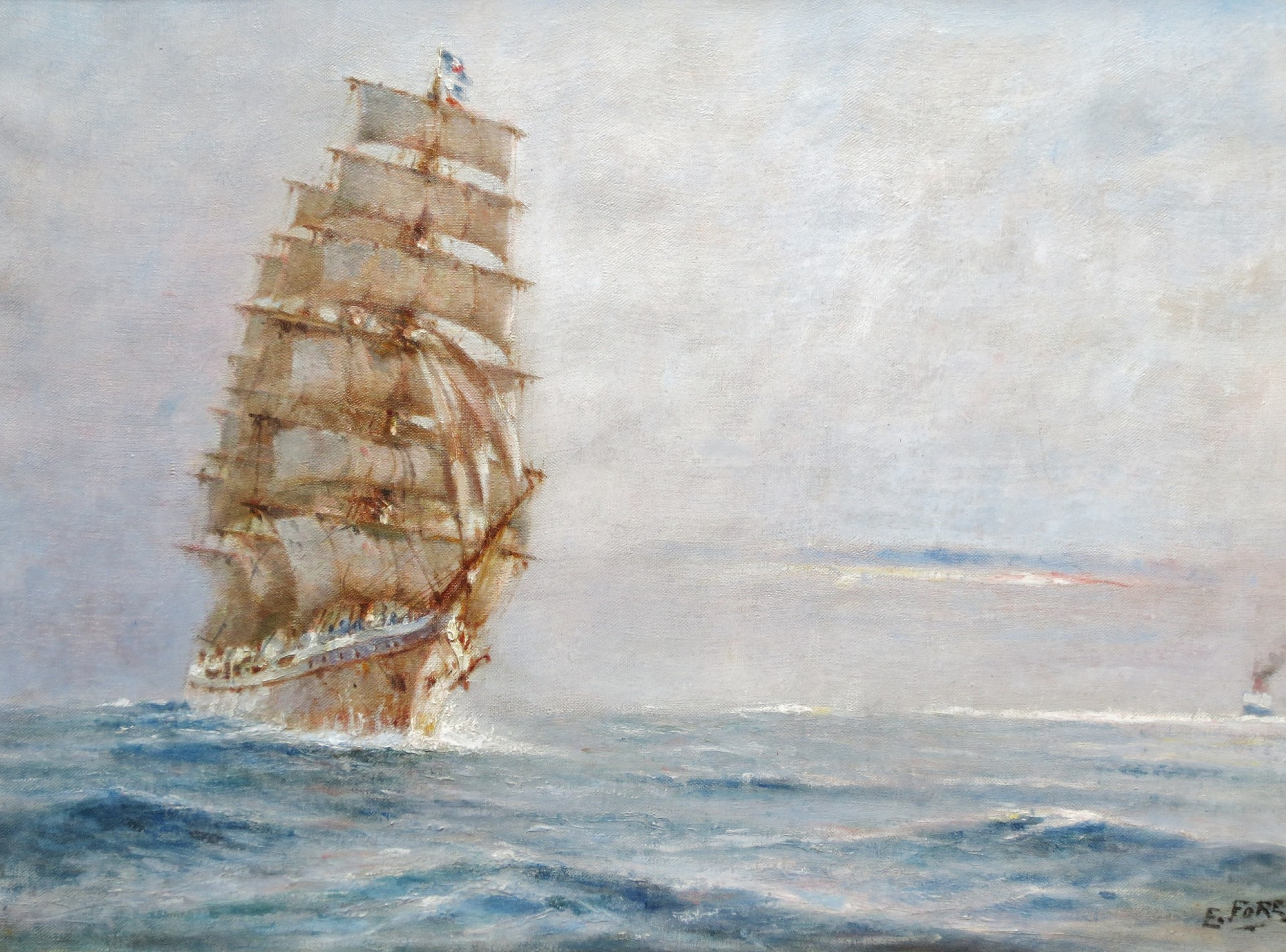
This oil on canvas depicts a ship sailing on a sea with a gentle swell. It is approaching us, with all sails set, and its colors are displayed at the top of the foremast: blue, white, and red—perhaps the French flag, or perhaps the Union Jack. It is likely a Cape Horner, a legendary vessel that sailed the seas and whose epic journey continued into the 20th century.
I have included with this description some excerpts from Wikipedia concerning these ships:
"Cape Horners were large cargo sailing ships which, from the mid-19th century until the first quarter of the 20th century, for more than half a century, sailed around the world via Cape Horn despite the dangers. They were also said to have 'rounded the three capes' because they sailed around the Horn, the Cape of Good Hope (South Africa), and Cape Leeuwin (Australia)."
"These were steel ships, three-masted (usually square-rigged or barque-rigged) or four-masted, which could reach 100 meters in length and carry 4,000 square meters of sail (or even more for five-masted ships)." “Roland Paringaux, grandson of Cape Horner Pierre Stéphan, describes the conditions faced by these sailors in his *Cape Horn Notebooks*: “The confrontation with Cape Horn, what John Mansfield calls ‘the disordered play of the powers of the abyss,’ was a full-scale battle for everyone. It meant nights of anguish and endless maneuvers in a rigging buffeted by the wind, the roll, and the pitching. It meant exhausting hours spent wrestling with the sails, feet resting on a single rope: an acrobatic situation where any false move could be fatal, with the deck fifty meters below and, at the end of the yards, the black sea like a wide-open tomb.” It was the giant waves crashing over the deck, the ship weighed down, sucked towards the bottom, and that suspended, interminable time it took to rise before plunging again, with the men risking being thrown overboard with each wave.
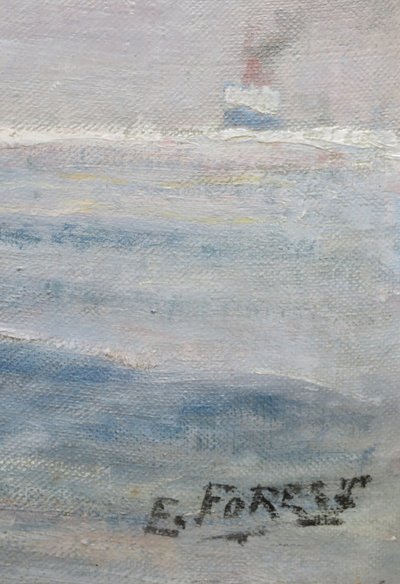
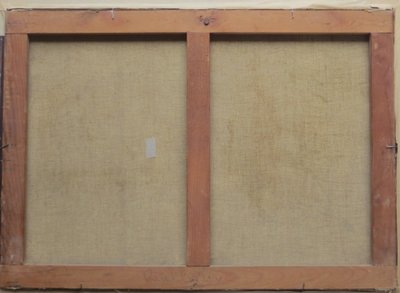
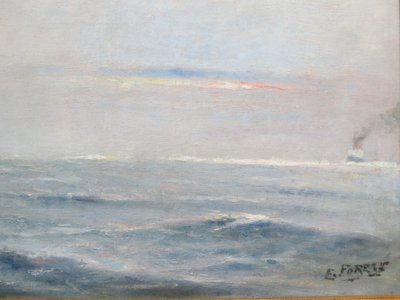
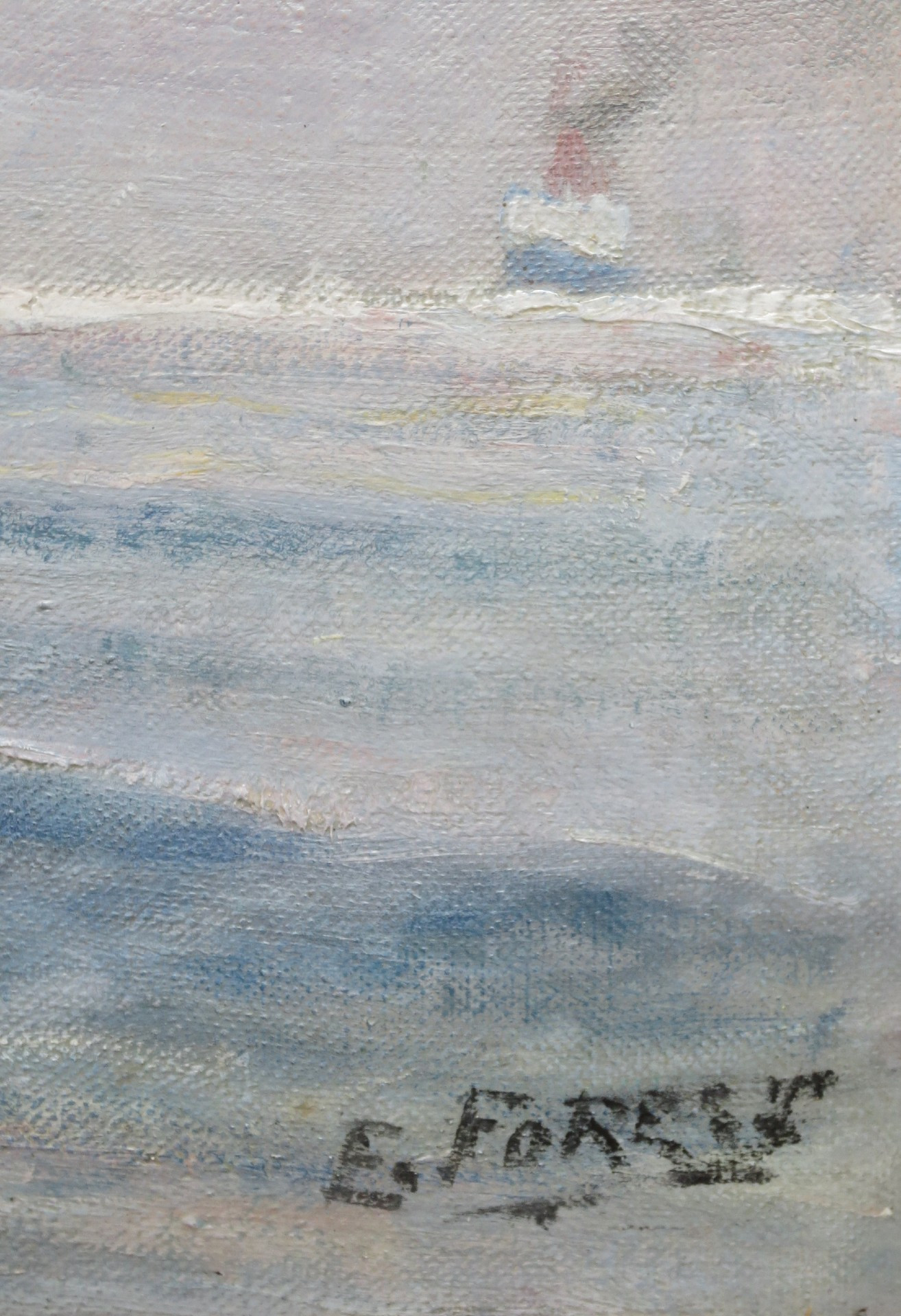
Oil on canvas, signed lower right P. Forest, 46 cm x 62 cm.
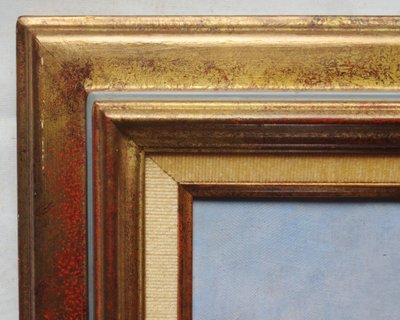
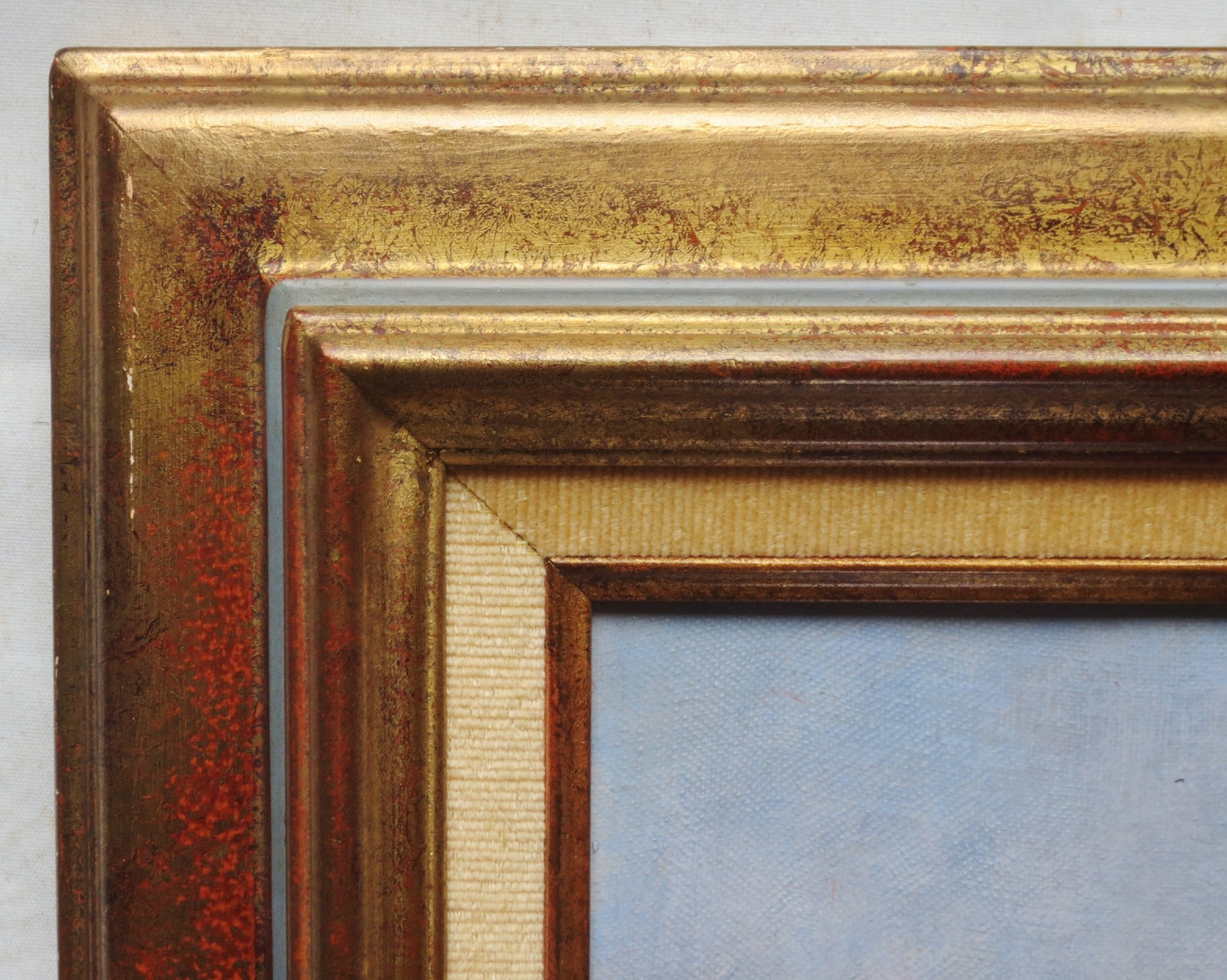
Gilt frame with a blue border, 63 cm x 82 cm.
Ref: 95DBNECMQI

 English
 Français
 Italiano
 Deutsch
 Crow pouch
800 € EUR