


Would you like more images?
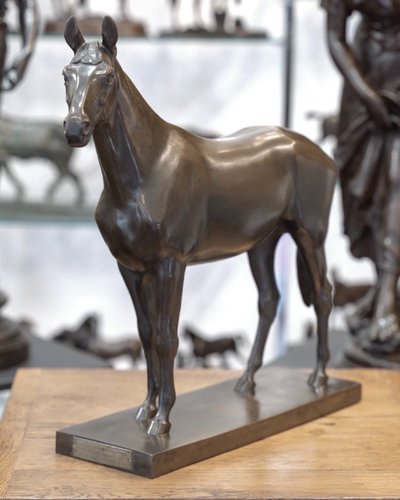
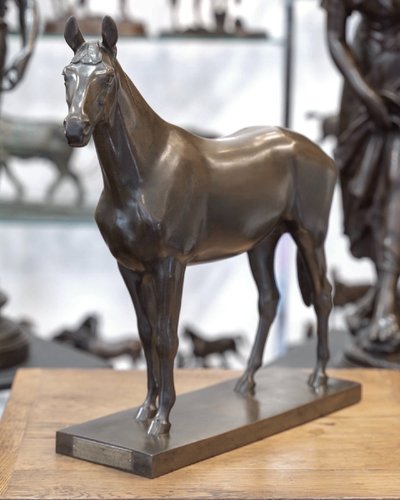
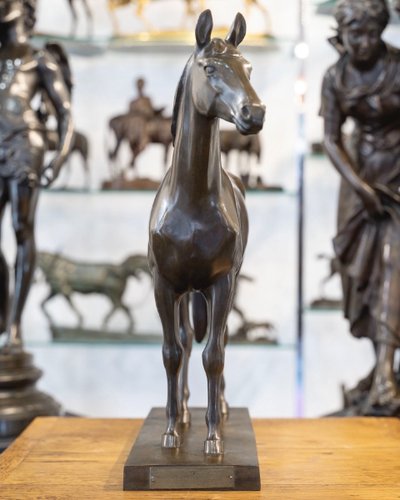
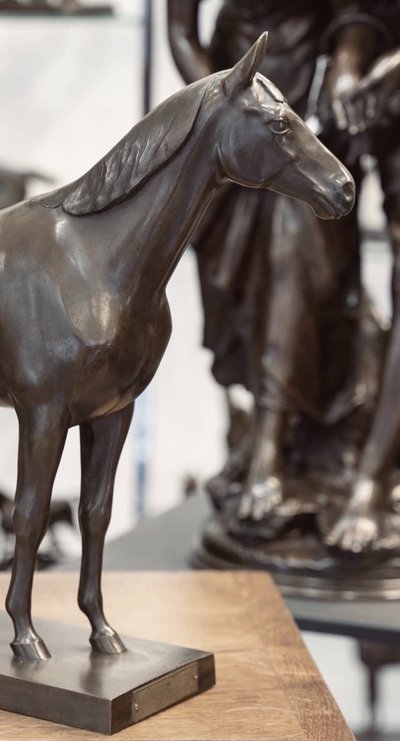
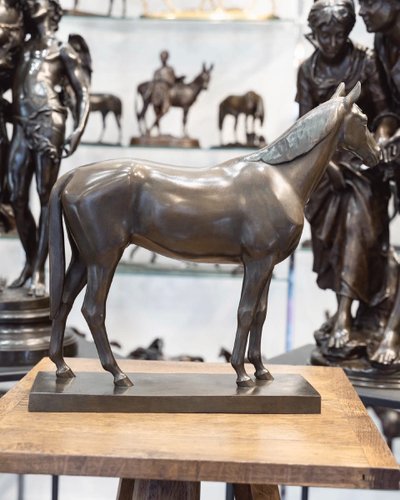
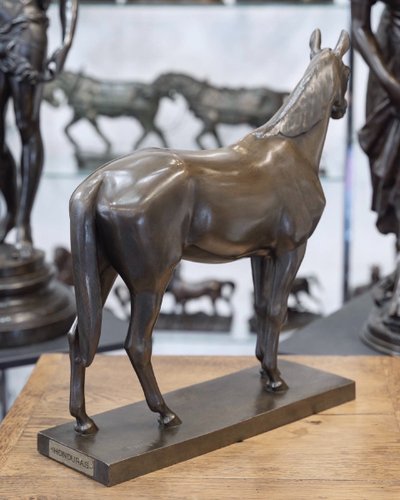
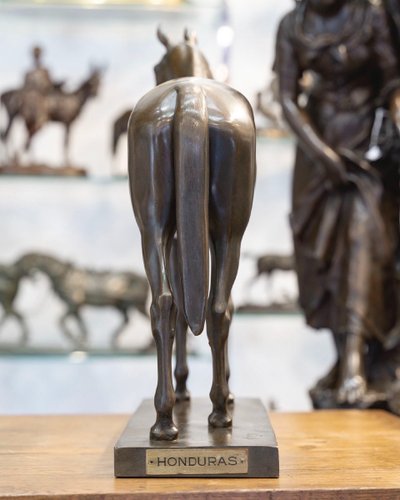
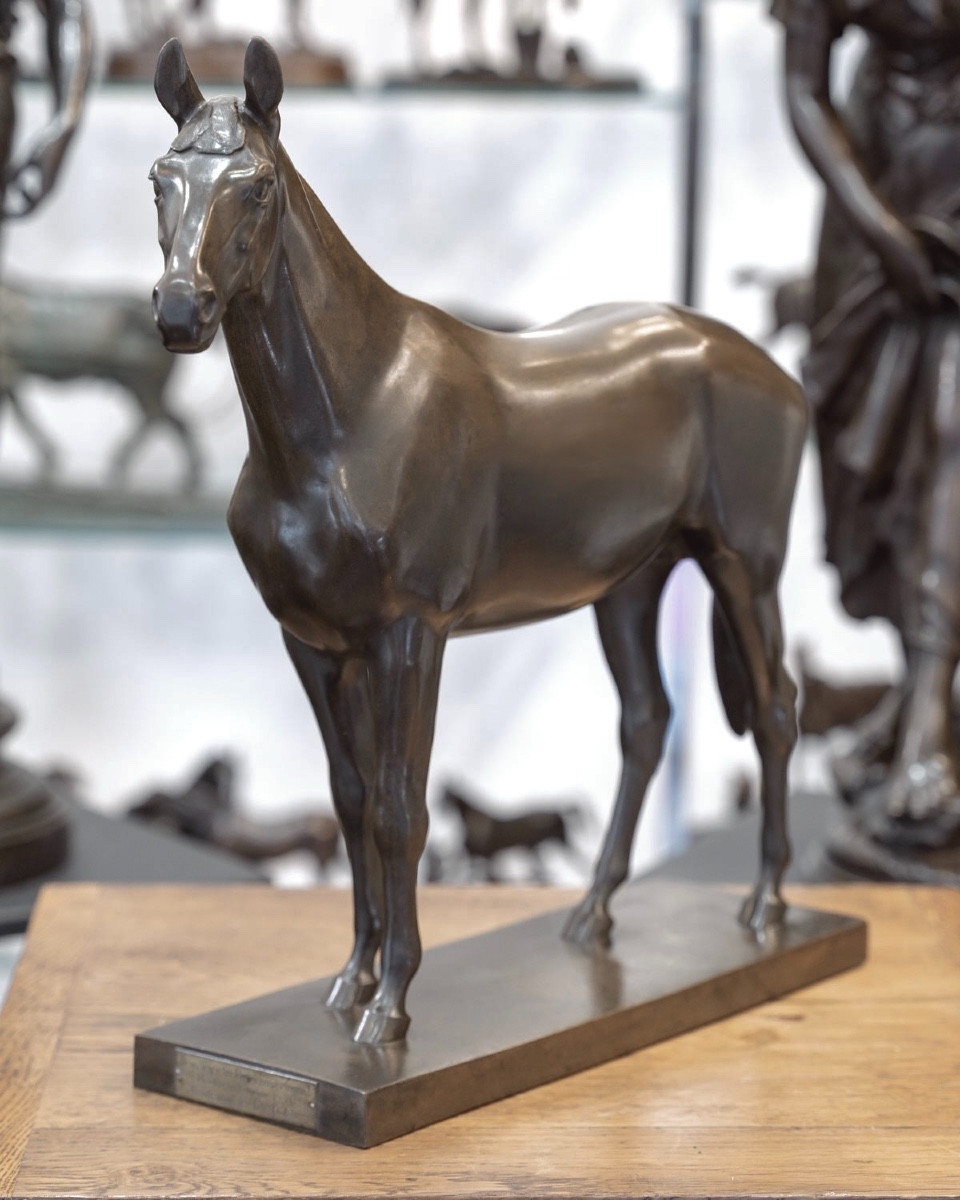
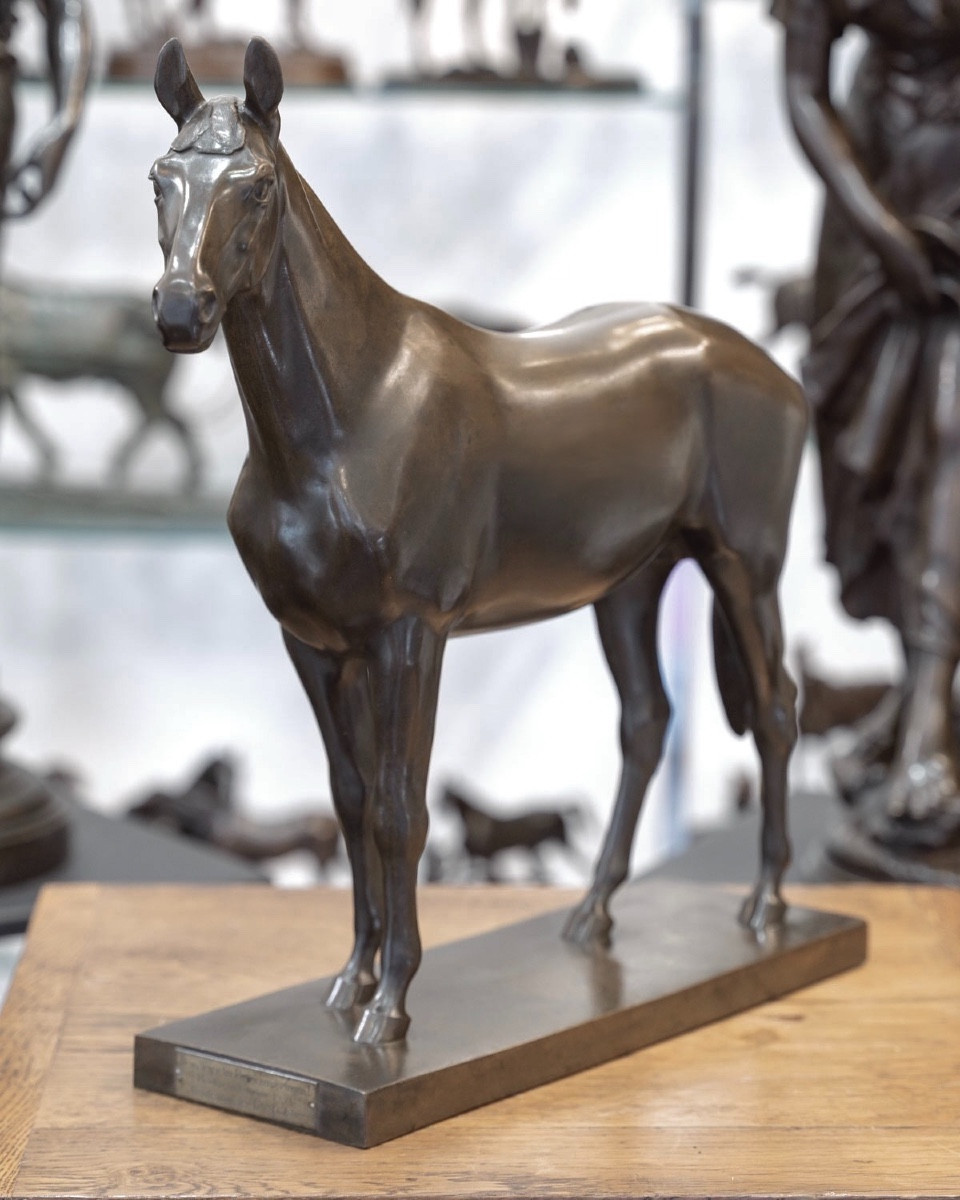
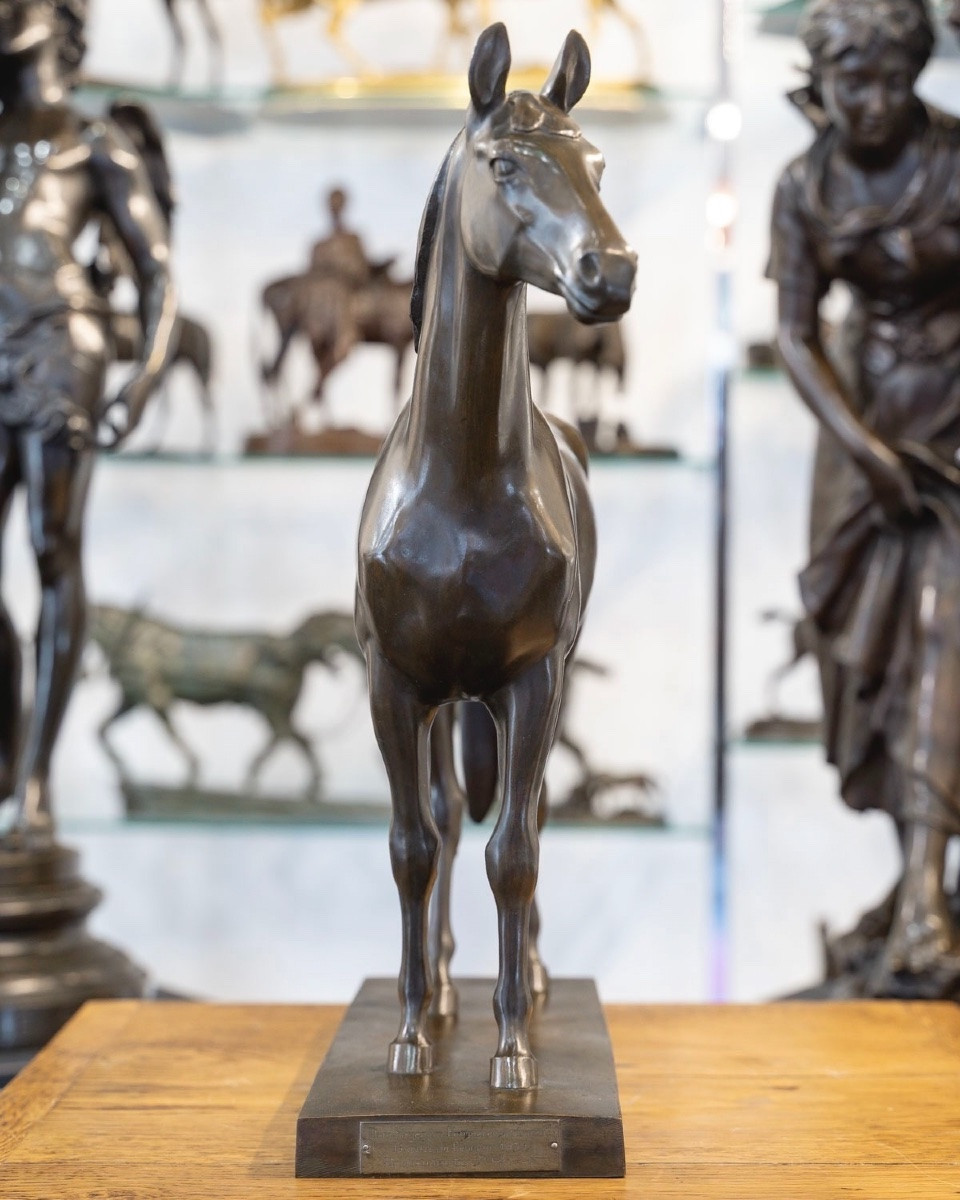
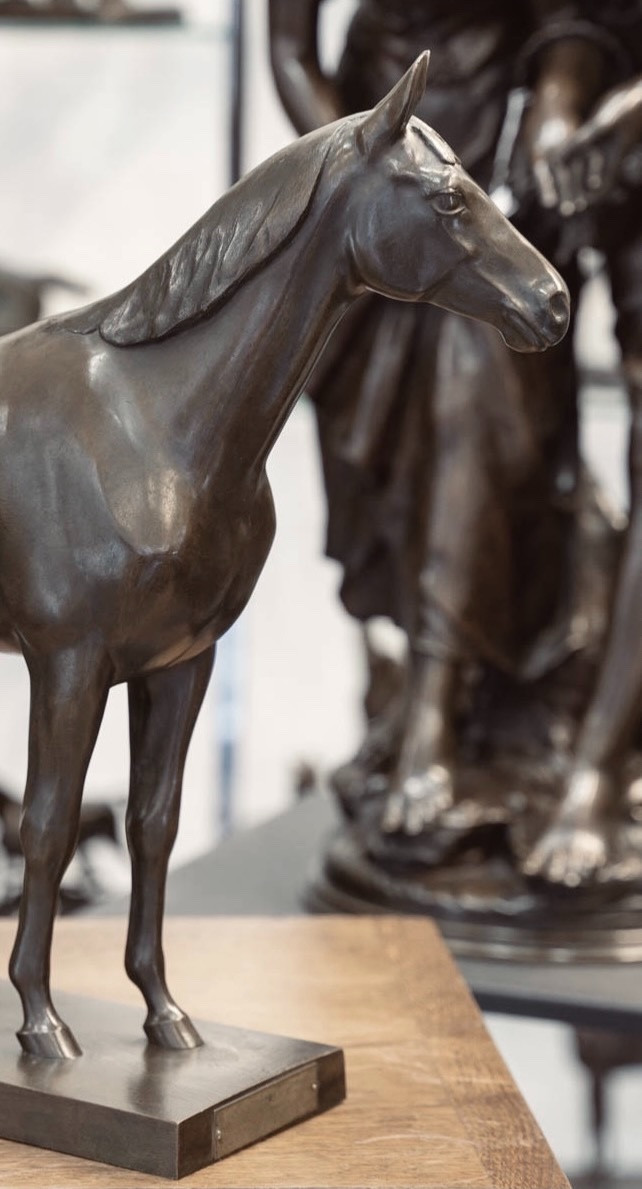
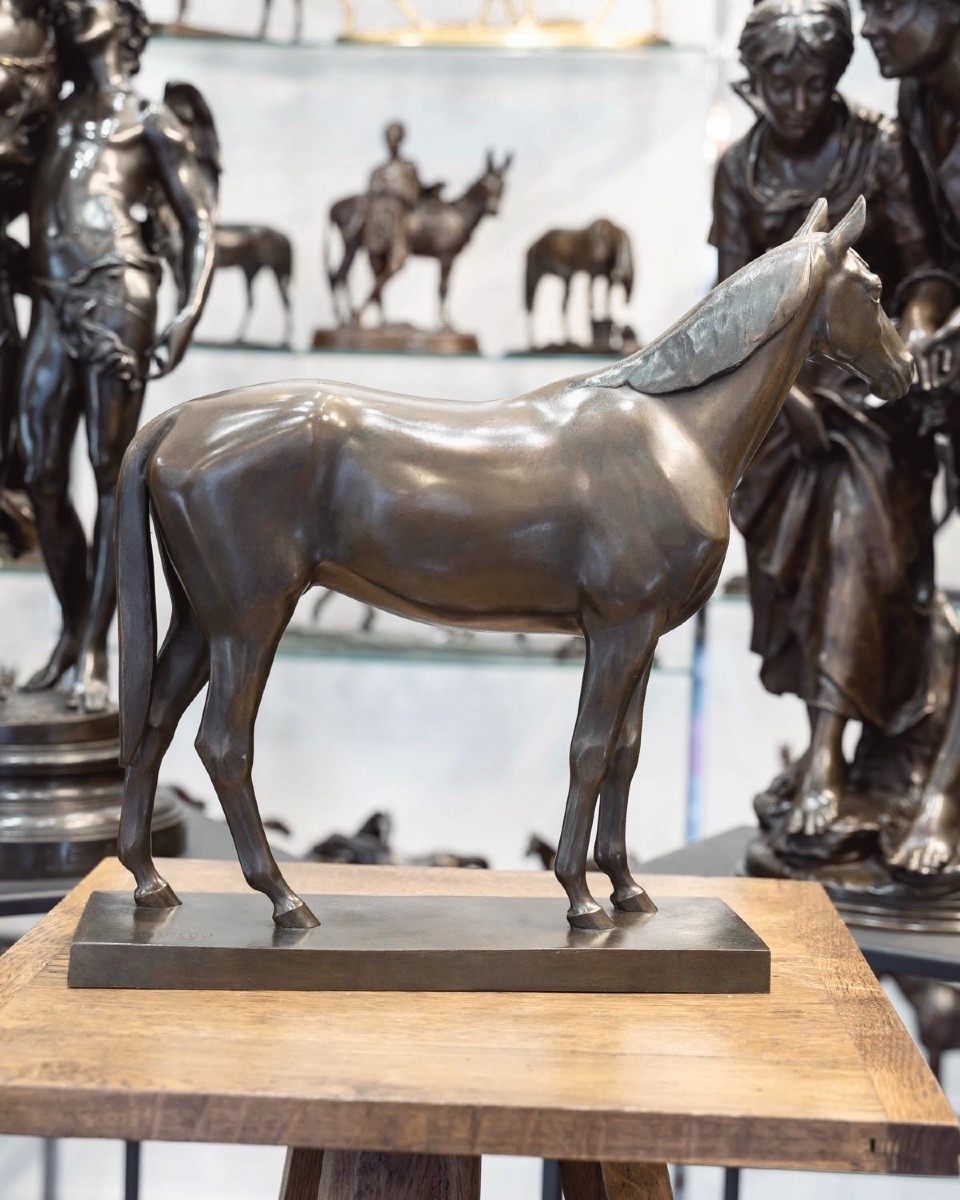
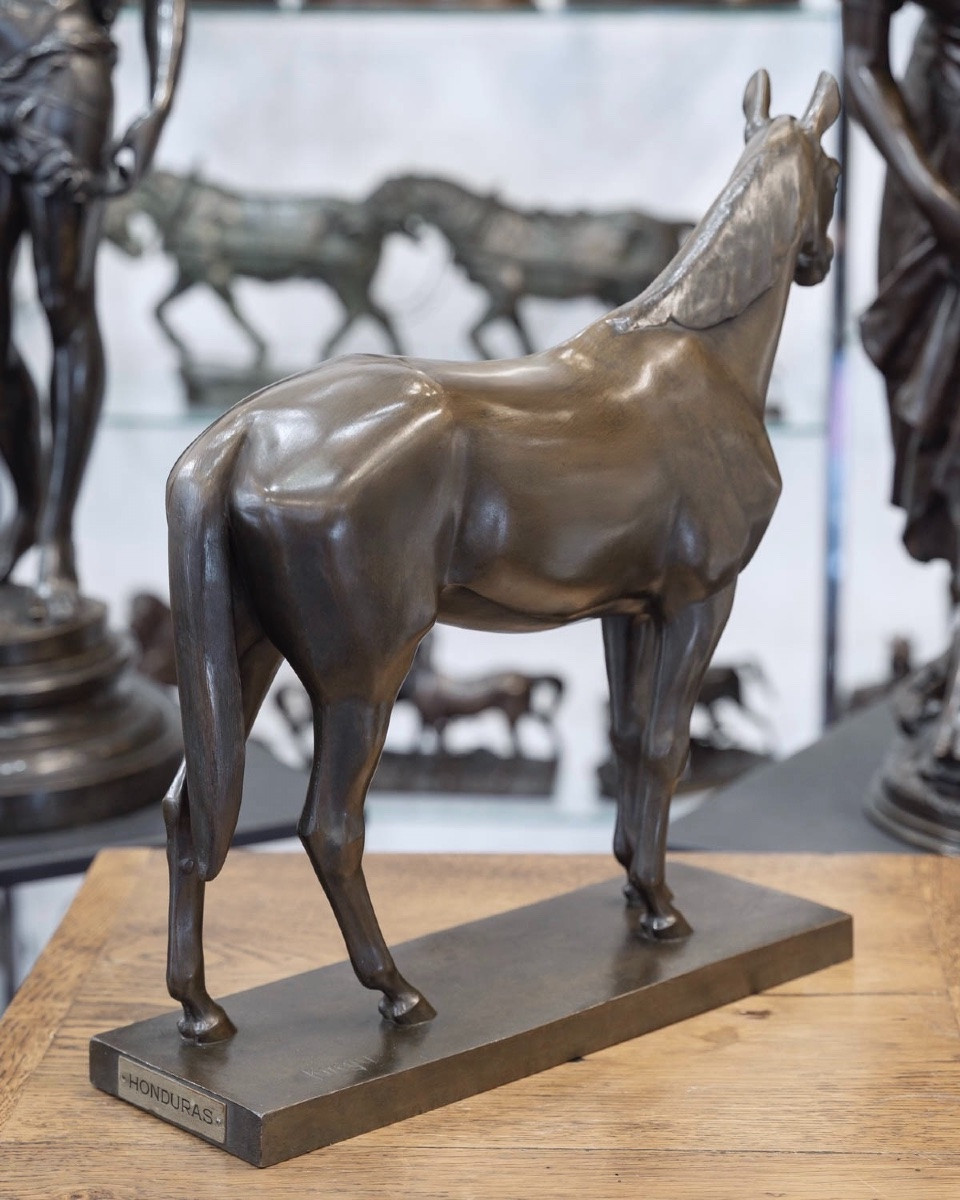
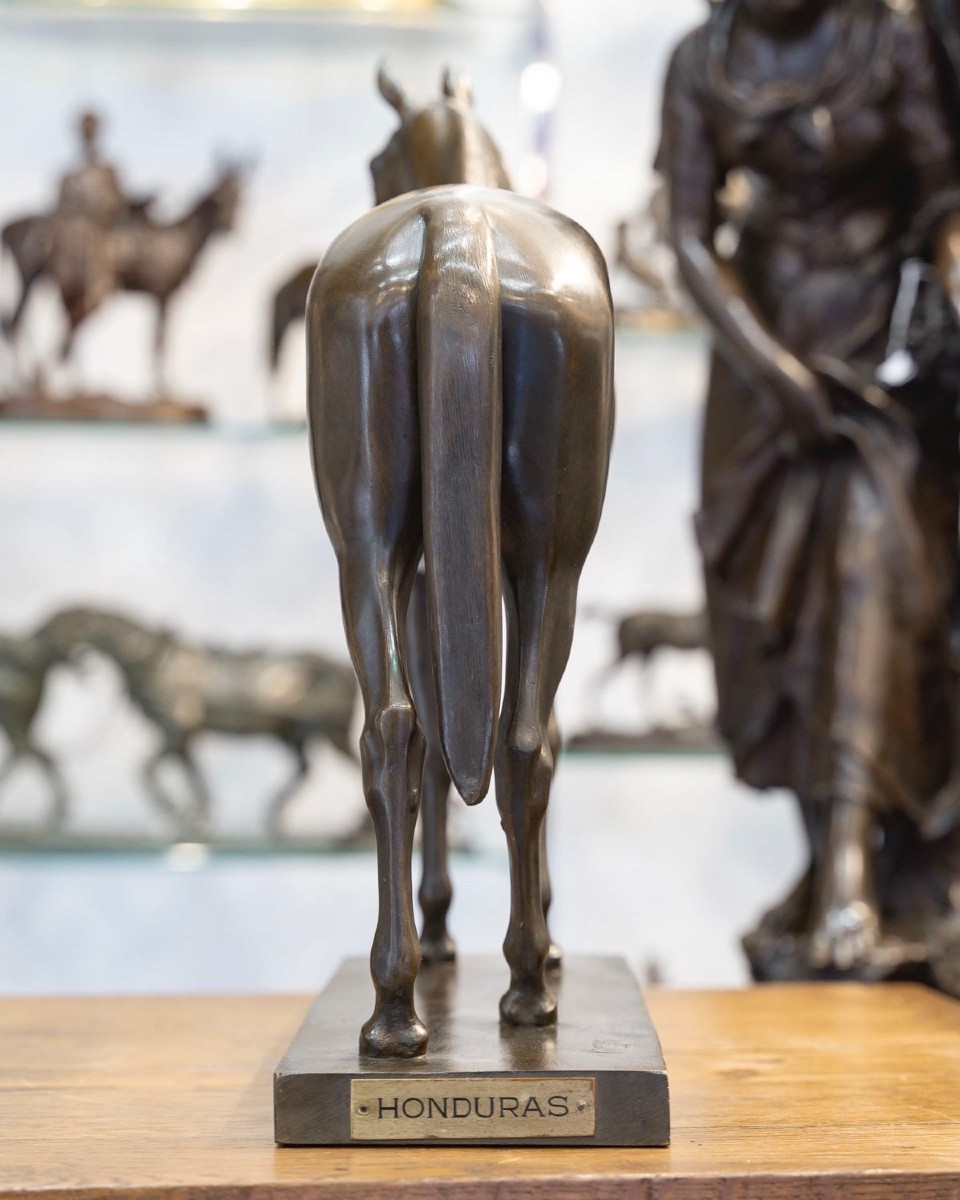
A large and majestic bronze sculpture depicting a portrait of the famous racehorse "HONDURAS", by the german animal sculptor , Willem Krieger (1877–1945).
The work attests to the sculptor’s deep commitment to depicting animal subjects, particularly those from the equestrian world .
It not only captures the horse’s physical power and grace but also transcends mere realistic representation to attain an almost symbolic dimension .
Willem Krieger , known for his artistic mastery and keen sense of movement , succeeds in infusing "Honduras" with a fascinating dynamism .
The meticulous details of the horse’s musculature and its fluid forms depict energy poised for action , thus embodying the beauty and temperament of this noble animal .
"Honduras" determined and alert expression illustrates the competitive nature of horse racing , while paying homage to the intrepid spirit that animates these creatures .
This portrait of the racehorse "Honduras" is not limited to the sporting aspect .
It also prompts reflection on the relationship between humans and animals in the context of equestrian competitions , highlighting themes of passion , beauty , and discipline .
In short, Willem Krieger’s sculpture remains an iconic work that celebrates not only the horse but also the art of sculpture as a whole .
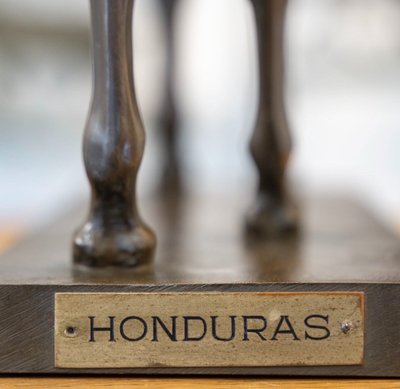
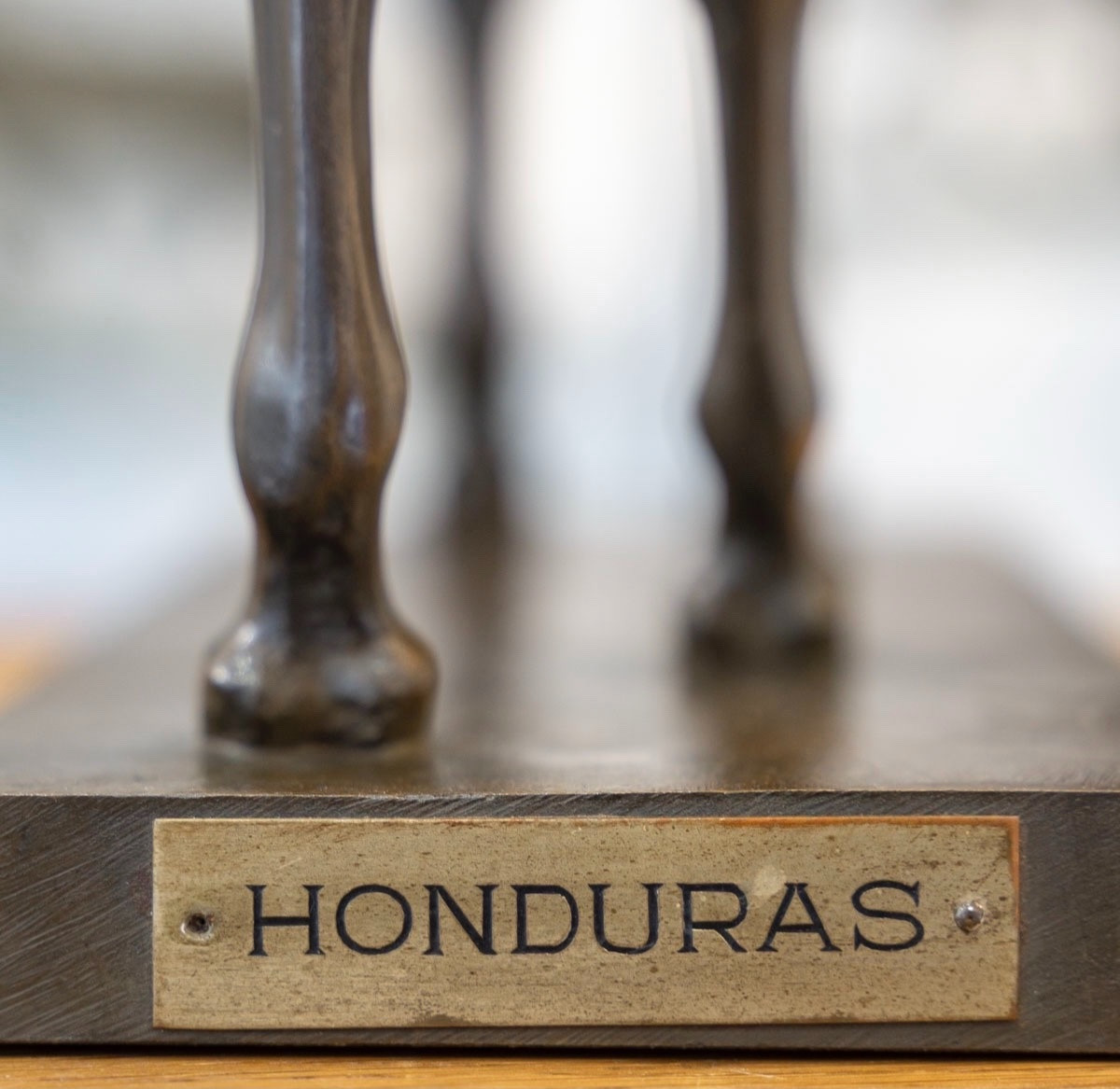
The sculpture is titled after the horse "HONDURAS" in a cartouche on the edge of the terrace .
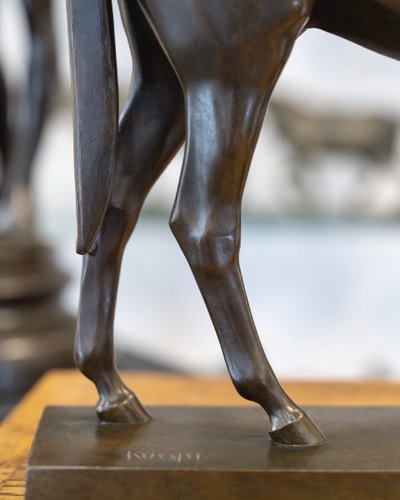
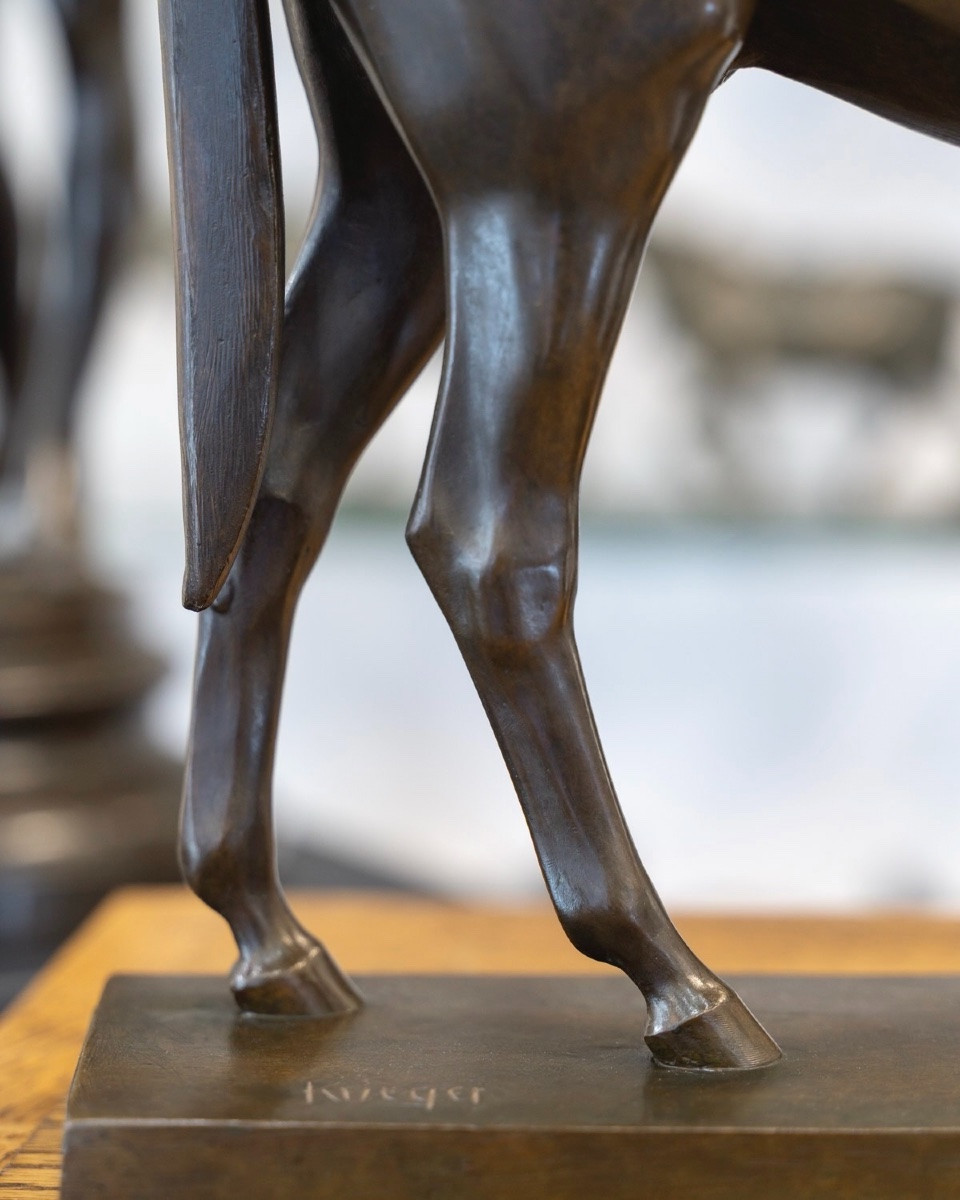
The sculptor’s signature "KRIEGER" is incised on the rectangular terrace .
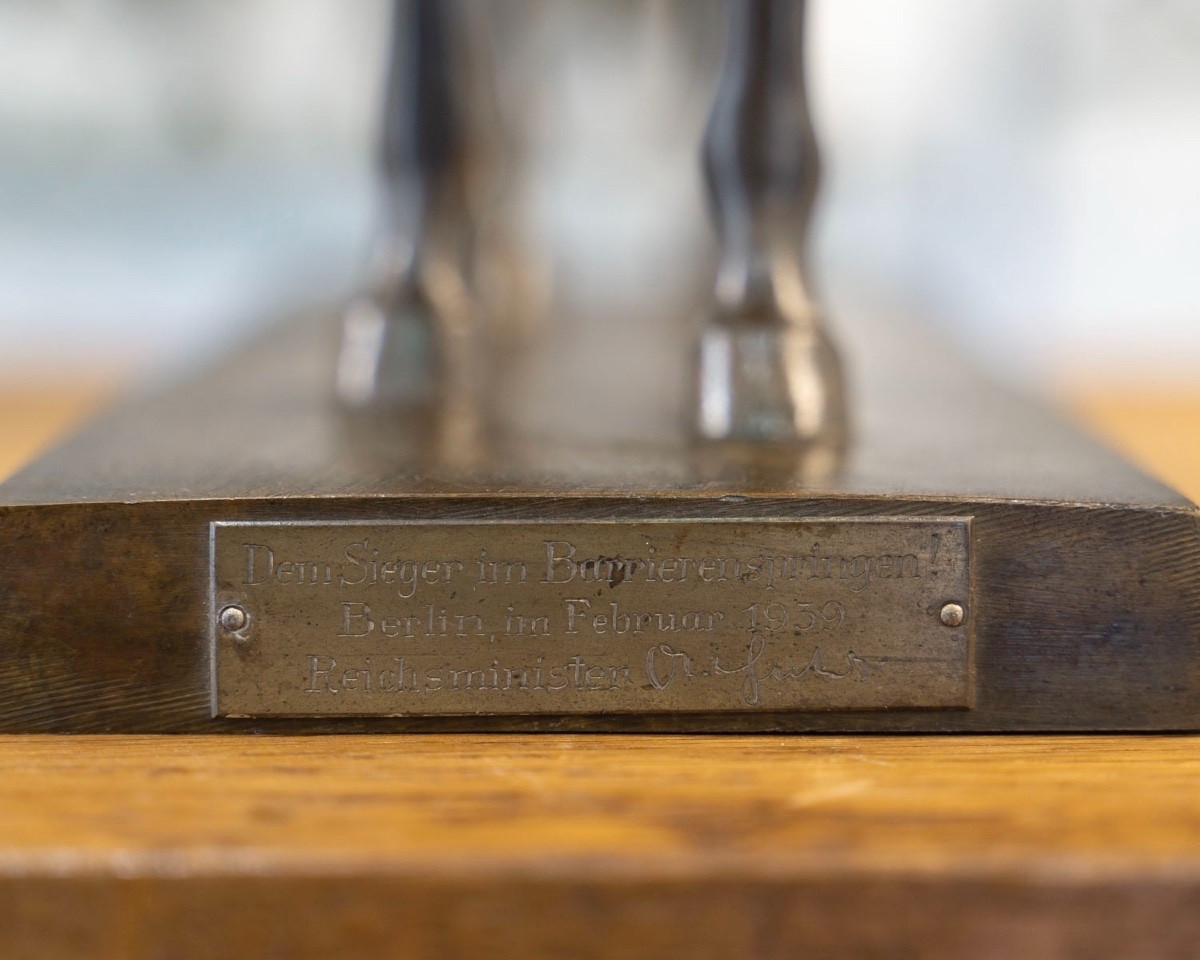
A second cartouche on the other edge of the terrace , inscribed in German "Show jumping horse, winner of a show jumping competition in Berlin in February 1939, presented to the Minister".
Antique bronze dating from the 20th century , Art Deco period , circa 1939 .
In perfect condition with excellent patina .
Dimensions : 40 cm x 42.5 cm x 12 cm
Willem KRIEGER (1877–1945)
Wilhelm Krieger is a famous German sculptor who specialized in animal sculpture .
He was the son of the painter Eduard Theodor Krieger .
After an apprenticeship as a decorative painter , W. Krieger briefly studied at the Munich School of Applied Arts .
He subsequently taught himself sculpture .
W. Krieger participated in several exhibitions , including the “Munich Secession” and the “Great Exhibition of German Art” at the Haus der Kunst .
He created animal sculptures in various materials such as bronze , stone, and porcelain .
W. Krieger , who had been hard of hearing since childhood , relied on the power of his pictorial abilities .
It was not speech or writing , but sculpture that allowed him to express himself .
His sculptures are characterized by their pure form and his ability to strongly stylize animals while capturing their naturalism .
W. Krieger , a self-taught sculptor , created highly individual works of art that reflect his unique personal vision .
He was interested in modeling animals without imbuing them with any symbolic meaning .
W. Krieger did not study under or receive influence from other animal sculptors .
Through stylization and simplification , Willem Krieger has created sculptures that are full of life , although they are very different , their softness , smoothness , and austerity sometimes give them an intensity somewhat similar to that found in the work of the French sculptor François Pompon .
Ref: KTPEIJ8PJD
| Condition | As new |
| Style | Art Deco (Animal sculptures bronzes of Art Deco Style) |
| Period | 20th century (Animal sculptures bronzes 20th century) |
| Country of origin | Germany |
| Artist | WILLEM KRIEGER (1877-1945) |
| Length (cm) | 42.5 |
| Height (cm) | 40 |
| Depth (cm) | 12 |
| Materials | Bronze, Patinated Bronze |
| Shipping Time | Ready to ship in 2-3 Business Days |
| Location | 93400, Saint-Ouen-sur-Seine, France |
4 commitments to buy with confidence

 English
 Français
  Italiano
  Deutsch