“Phryné,” circa 1920, Ernst Seger (1868–1939)
slider-bg
more images

Would you like more images?

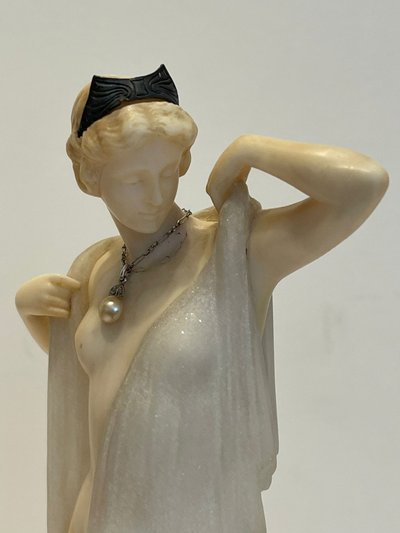
“Phryné,” circa 1920, Ernst Seger (1868–1939)

20th century
Art Deco
DELIVERY
From: 75008, Paris, France

Change your address to get an accurate estimate of shipping costs.

    Item offered for sale by

    See the gallery
    This description has been translated and may not be completely accurate. Click here to see the original

    Ernst Seger (1868–1939)
    A sculptor of Polish origin, trained at the Academy of Fine Arts in Breslau under Christian Behrens, he completed his training in 1893 in Paris in Auguste Rodin’s studio, an artist of Polish origin and a student of Christian Behrens at the Academy of Fine Arts in Breslau, who, before settling in Berlin in 1894, completed his artistic training in Paris in 1893 in Auguste Rodin’s studio. He then settled in Berlin and became one of the leading exponents of chryselephantine sculpture, a technique revived during the Art Deco era that combined gilded bronze or marble with ivory—a trend that declined after World War II, in part due to mass production.
    “Phryné” Circa 1920:
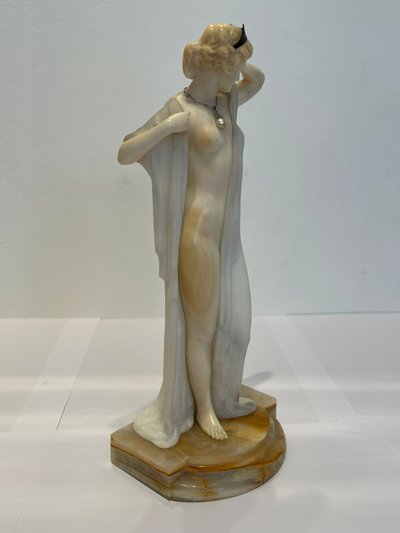
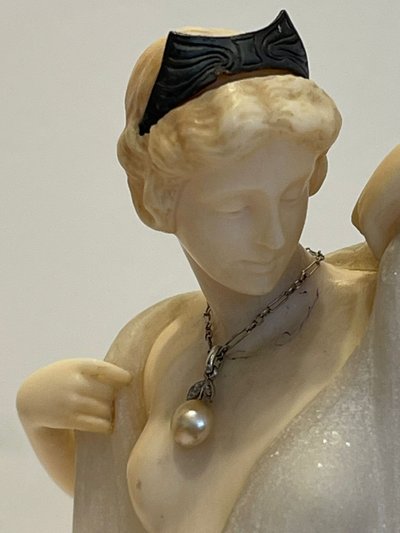
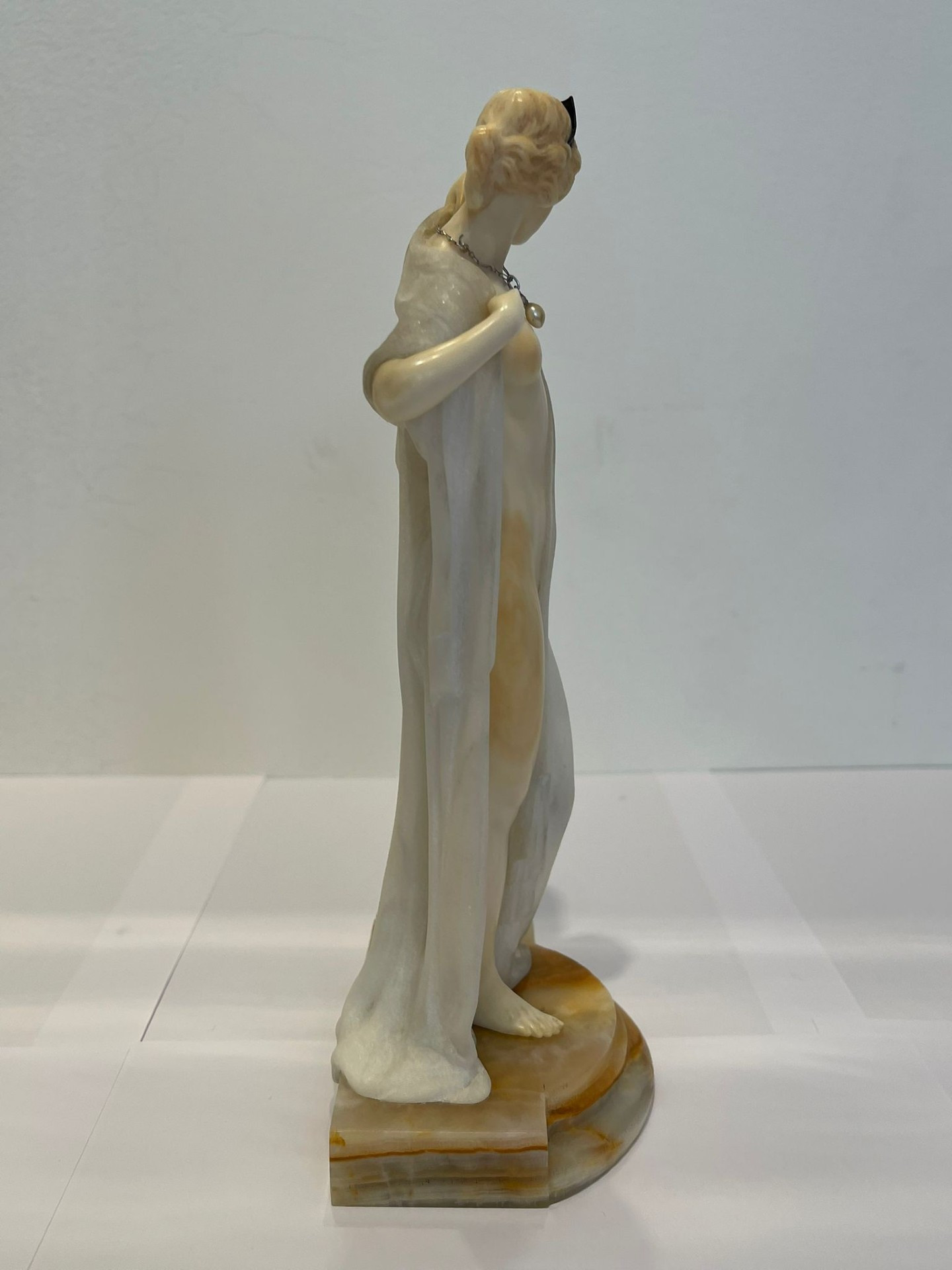
    An ivory sculpture symbolizing a courtesan dressed in a long, draped marble peplos, revealing her chest and part of her body. She wears a necklace adorned with a pearl and a tiara; the base is a stepped onyx marble pedestal. Signed “E. Seger” along the edge of the base. In its original case from the Wegelin boutique in Lyon, made of cognas leather and padded with green velvet on the inside.
    Dimensions: H: 22 cm, H: 8 5/8 in
     

    Ernst Seger (1868–1939)
    A sculptor of Polish origin, trained at the Breslau Academy of Fine Arts under Christian Behrens, he completed his training in 1893 in Paris in the studio of Auguste Rodin. He then settled in Berlin in 1894 and became one of the leading exponents of chryselephantine sculpture, a technique revived during the Art Deco period that combines gilded bronze or marble with ivory—a trend that declined after World War II, partly due to mass production.
    “Phryné” Circa 1920.
    Ivory sculpture depicting a courtesan wearing a long, draped marble peplos, revealing her breast and part of her body. She wears a necklace adorned with a pearl and a diadem; tiered base in onyx marble. Signed along the edge of the base “E. Seger.” In its original case from the Wegelin shop in Lyon, lined inside with green velvet padding.
    Dimensions: H: 22 cm, H: 8 5/8 in

    Ref: AHOZQCV0MO

    Condition Good
    Style Art Deco (Ivory Sculptures, Bones of Art Deco Style)
    Period 20th century (Ivory Sculptures, Bones 20th century)
    Country of origin France
    Artist Ernst Seger
    Height (cm) 22
    Materials Ivory, Marble, Velour, Wood
    Shipping Time Ready to ship in 4-7 Business Days
    Location 75008, Paris, France
    Antikeo Buyer Guarantee

    4 commitments to buy with confidence