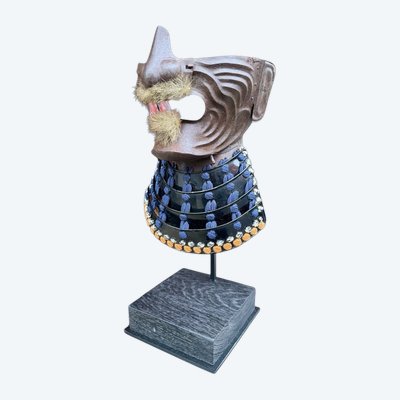
Kagura mask, demon type, carved from monoxide wood - Edo period (1603–1868). -
slider-bg
more images

Would you like more images?

Kagura mask, demon type, carved from monoxide wood - Edo period (1603–1868). -

680
20th century
Asian Arts
DELIVERY
From: 93400, saint ouen , France

Change your address to get an accurate estimate of shipping costs.

    Item offered for sale by

    See the gallery
    This description has been translated and may not be completely accurate. Click here to see the original

    JAPAN - Edo Period (1603–1868).
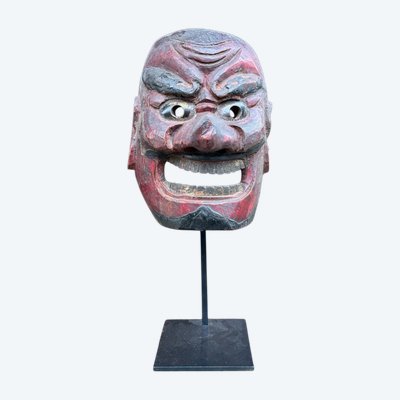
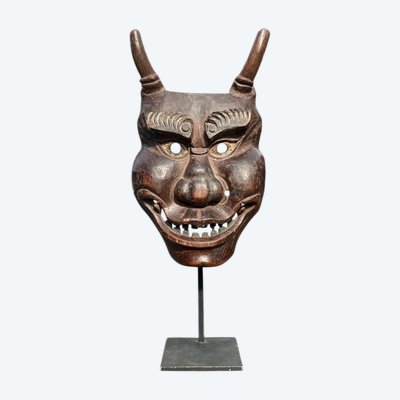
    Kagura mask, demon type with a hooked nose, carved from monoxide wood, with pierced eyes and nostrils, red and black lacquer on the front, the wood left unfinished on the back, black horsehair for the hair, and painted eyebrows.
    Slight wear and some damage.
    Dimensions: 18 x 13 x 6 cm.

    Sold with its stand.
    Dimensions with stand: 27.5 x 13 x 10 cm.
    Notes: A kagura mask depicting an unidentified local demon. Kagura (literally, “Divine Entertainment”) refers to a specific type of Shinto theatrical dance whose roots predate those of Noh theater.
    Originally a strictly ceremonial art form derived from kami'gakari (literally, “oracular divination”), kagura has evolved in many directions over more than a millennium.
    Today, it is a very vibrant tradition, whose rituals are tied to the rhythms of the agricultural calendar. Kagura masks are worn by dancers to represent gods, spirits, demons, or animals; they are characterized by their unique style and powerful expressiveness.

    Ref: QIDTTEWRUT

    Condition Good
    Style Asian Arts (Wood carvings of Asian Arts Style)
    Period 20th century (Wood carvings 20th century)
    Country of origin Japan
    Shipping Time Ready to ship in 2-3 Business Days
    Location 93400, saint ouen , France
    Shipping Information Careful and insured shipping, fast shipping
    Antikeo Buyer Guarantee

    4 commitments to buy with confidence