This description has been translated and may not be completely accurate. Click here to see the original
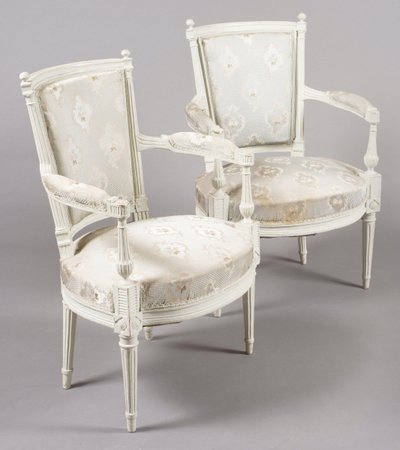
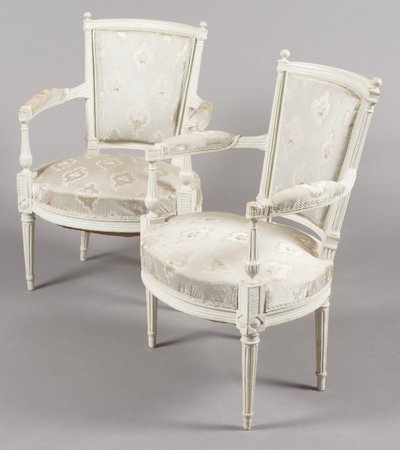
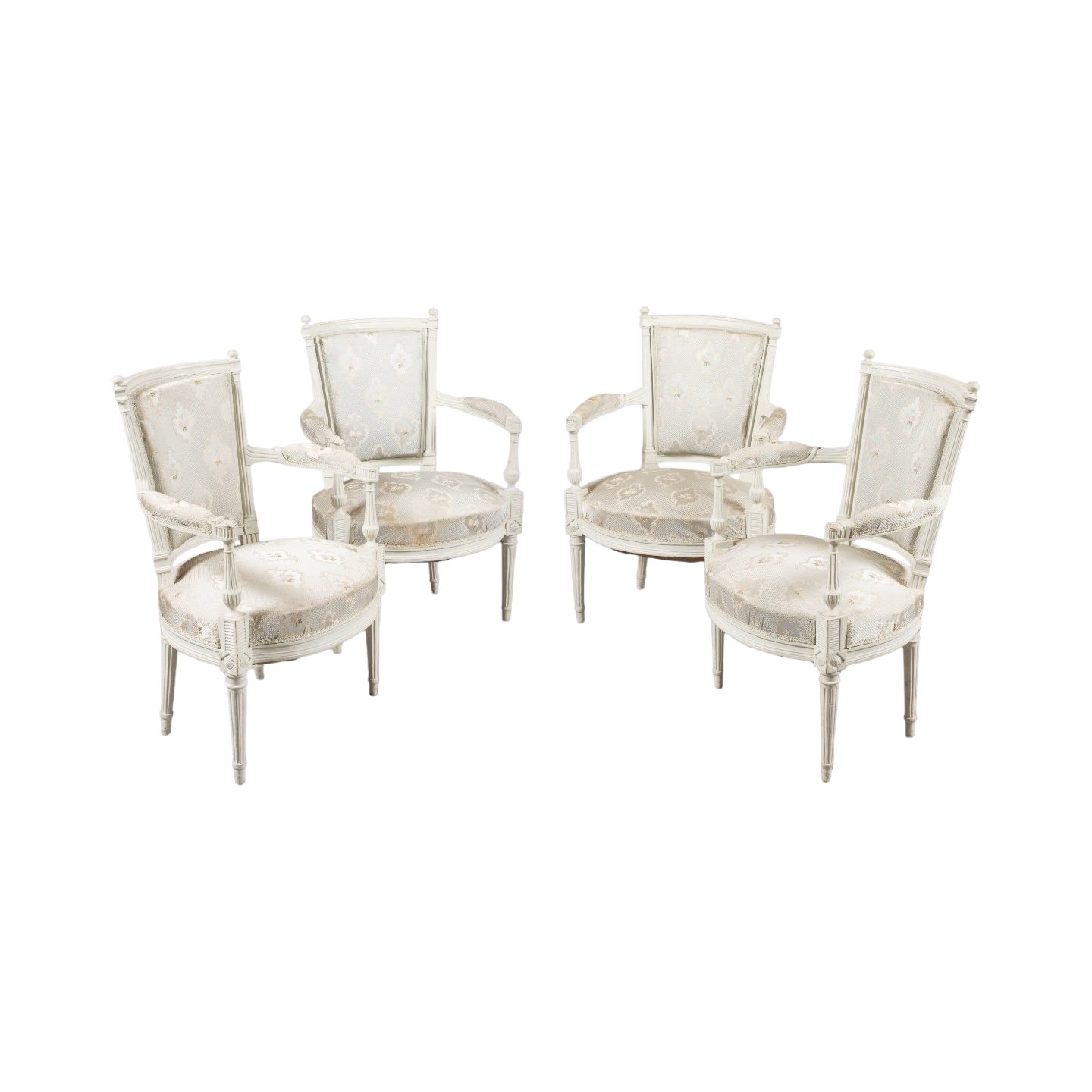
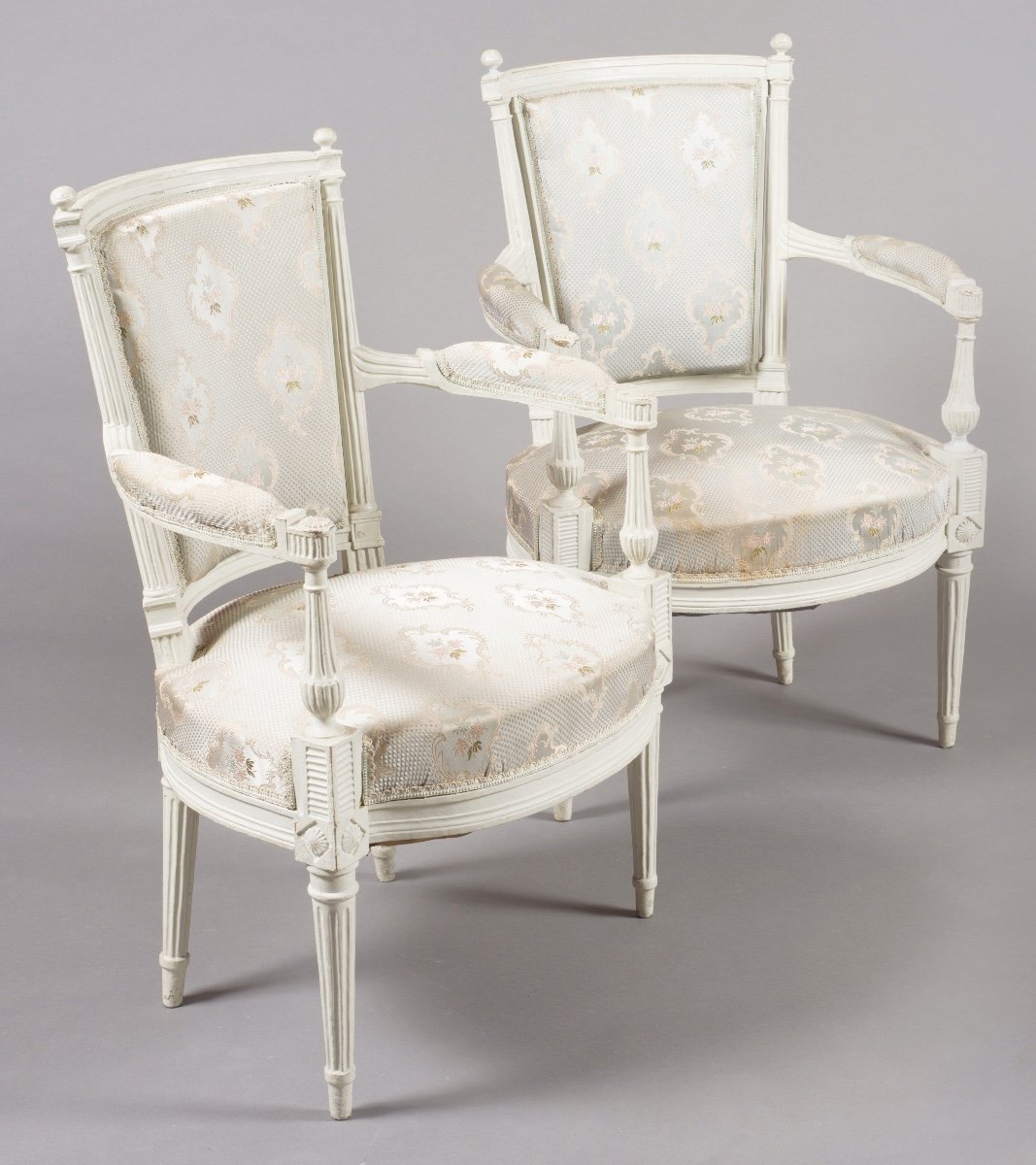
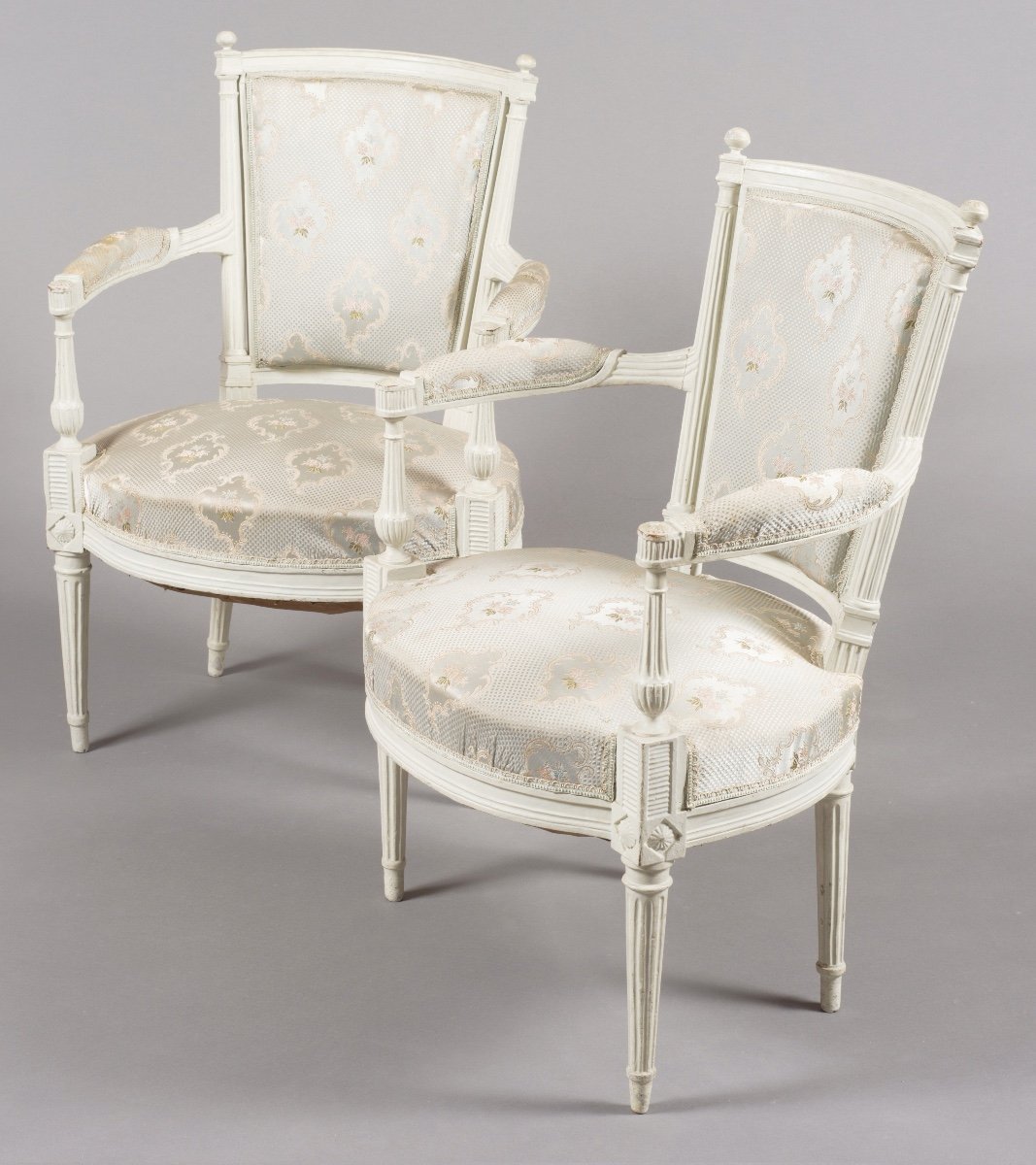
Beautiful suite of four cabriolet chairs from the Directoire period.
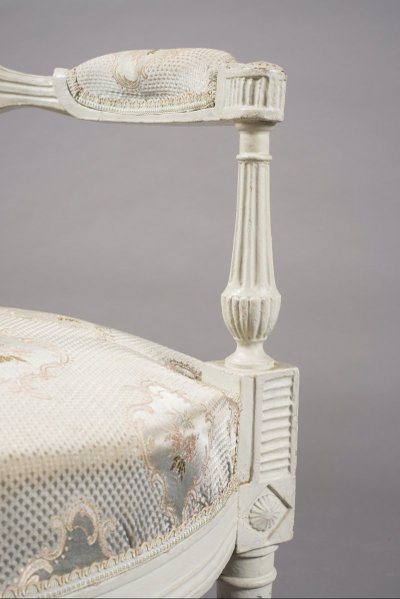
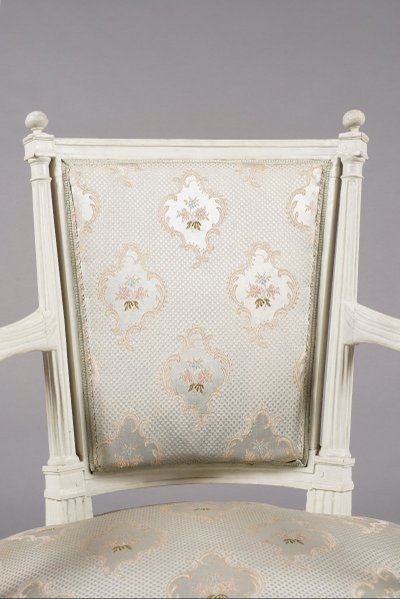
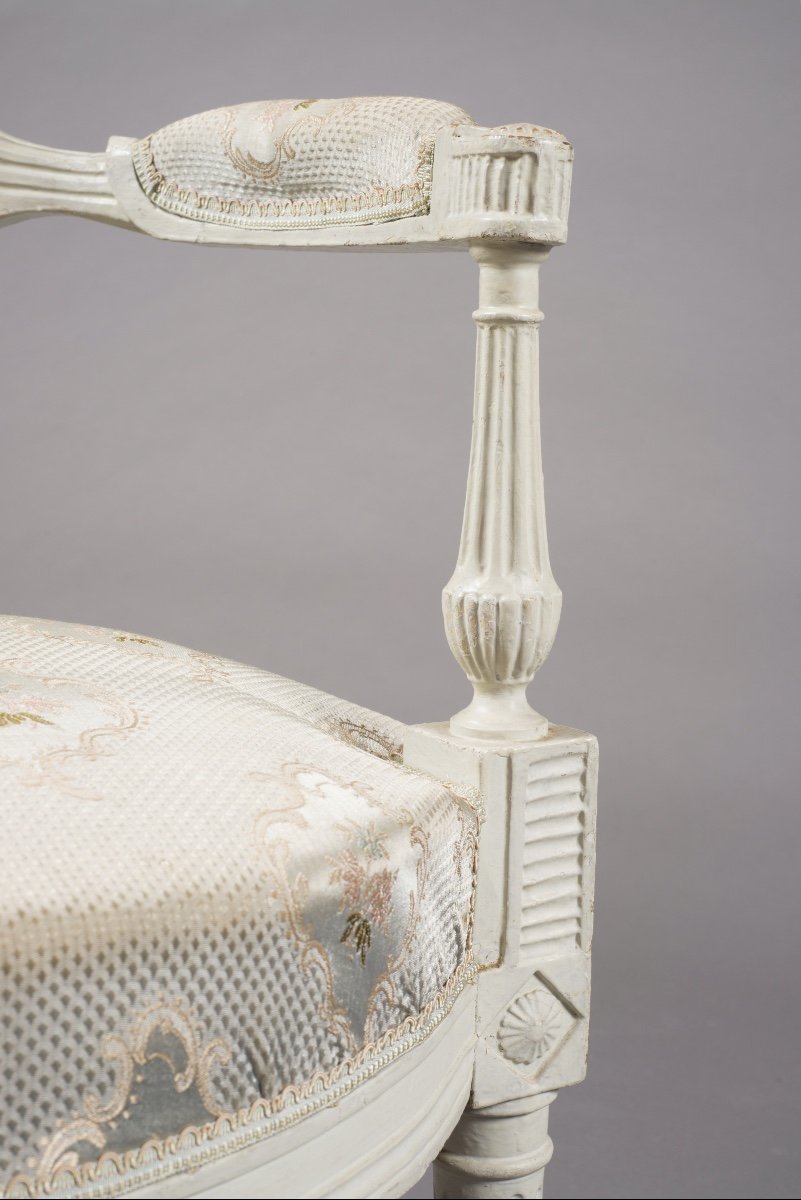
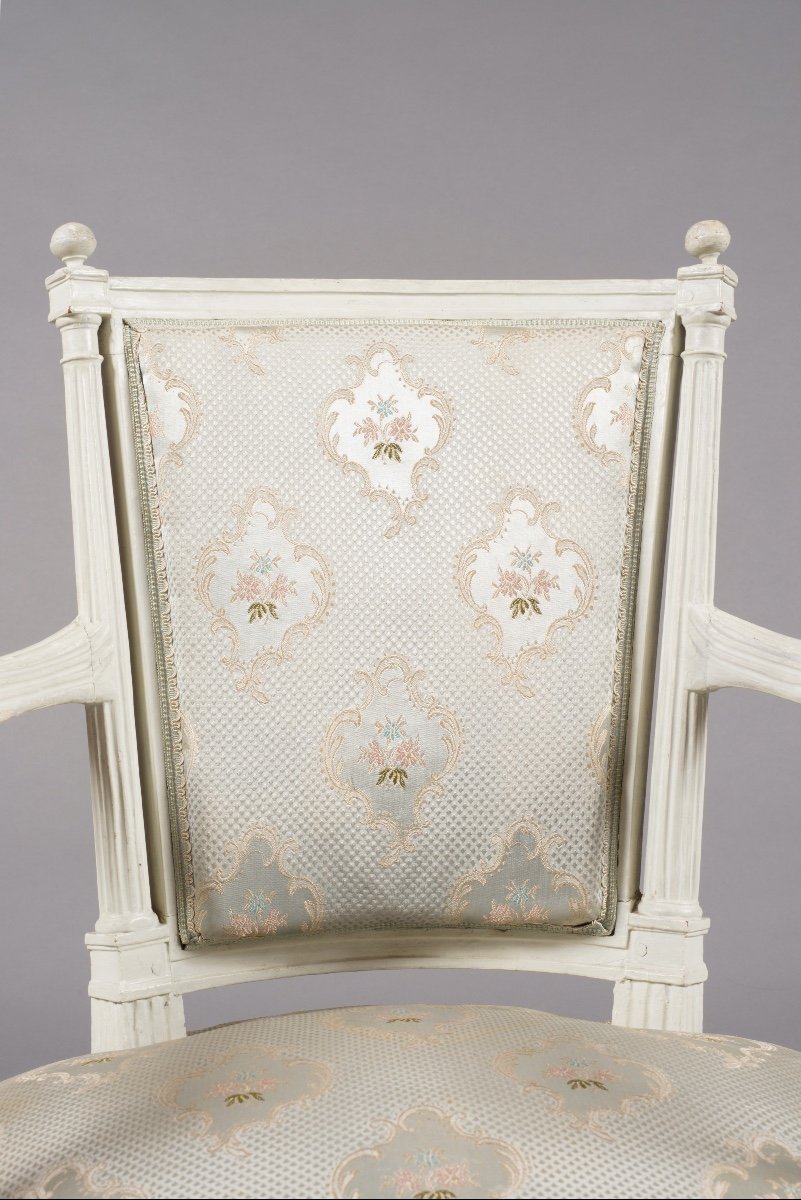
The backs of the armchairs feature finely fluted detached columns, while the fluted baluster armrests rest on uprights with fretted plates, and are joined to tapered, fluted legs by a connecting thimble adorned with a fleur-de-lys within a lozenge.
Late 18th century.
Dimensions
- Width : 59 cm.
- Height : 84 cm.
- Depth : 50 cm.
Covered with a blue fabric embroidered with flowers in foliage reserves (stains).
This very elegant model of seating with detached column uprights was very popular in the late 18th century.
These chairs are similar to a lacquered beech armchair from the Château de Fontainebleau, attributed to Georges JACOB (C. 1790, Paris, Mobilier national, GME 1637) and a set consisting of a sofa, a bergère and three armchairs found in 1856 in the Emperor's bedroom at the Château de Lamotte-Beuvron, then at the Palais de l'Élysée (C. 1795, Mobilier national, GMT 7796, 7797, 7798/1,2,3).
Upholstery service possible if you wish to change the upholstery and fabric.
THE CABRIOLET CHAIR UNDER THE DIRECTOIRE, FRENCH ELEGANCE
The cabriolet armchair is emblematic of French furniture during the Directoire period (1795-1820). It is distinguished by its elegant silhouette and harmonious proportions. Combining functionality and aesthetics, this piece of furniture reflects the artistic and socio-cultural preoccupations of a France in the throes of post-revolutionary change.
Made mainly from beech, this model features finely carved detached column uprights and baluster armrests, illustrating exceptional craftsmanship. The lacquer, often used for the finish, reflects a taste for smooth, glossy surfaces, while the decorative motifs, inspired by neoclassicism, testify to the installation of the taste for antique forms already initiated at the end of the reign of Louis XVI.
The cabriolet, with its rounded back and tapered legs, invites contemplation and sitting, making it both a practical and artistic piece of furniture. It is part of a context in which furniture is not limited to a simple utilitarian function, but becomes a veritable vector of style and taste, embodying the spirit of an era.
Cabriolet armchairs, often upholstered in richly embroidered fabrics, evoke a sophistication that seduced Parisian salons. Indeed, they reflect an aesthetic ideal in which French art de vivre blends with a keen sense of modernity, marking a transition between the Louis XVI and Empire styles. The study of these emblematic pieces enables us to apprehend the transformations in taste and craftsmanship during a pivotal period in French history.
Ref: ZCXEI8CKAR