This description has been translated and may not be completely accurate. Click here to see the original
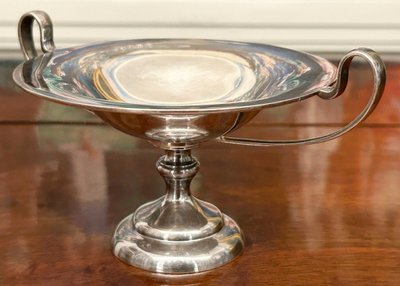
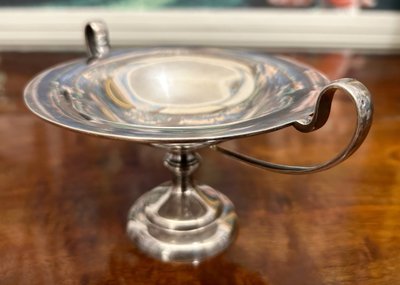
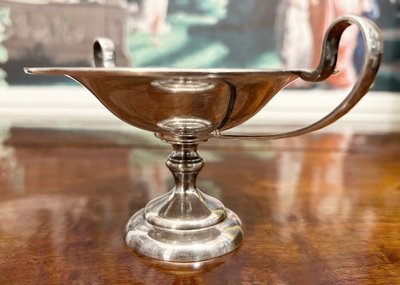
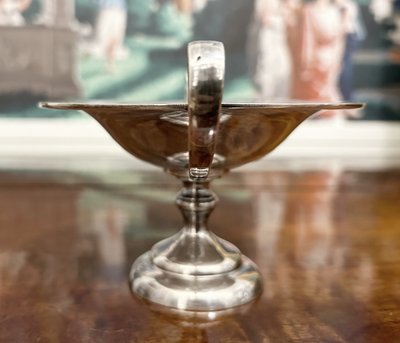
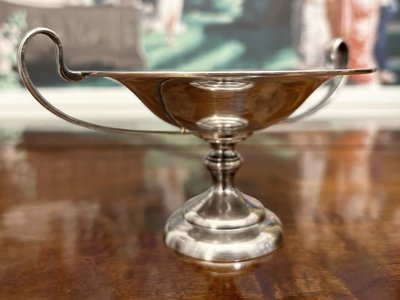
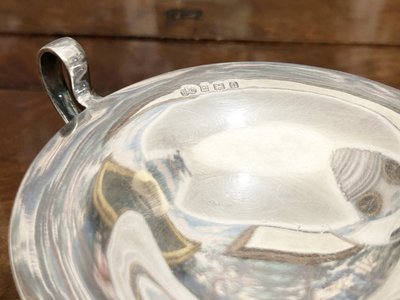
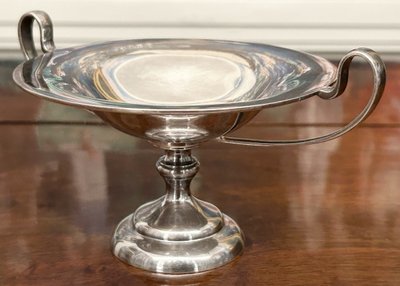
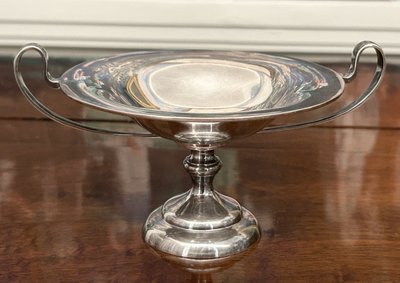
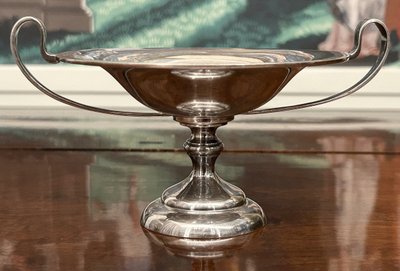
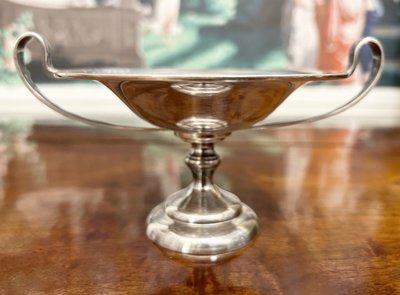
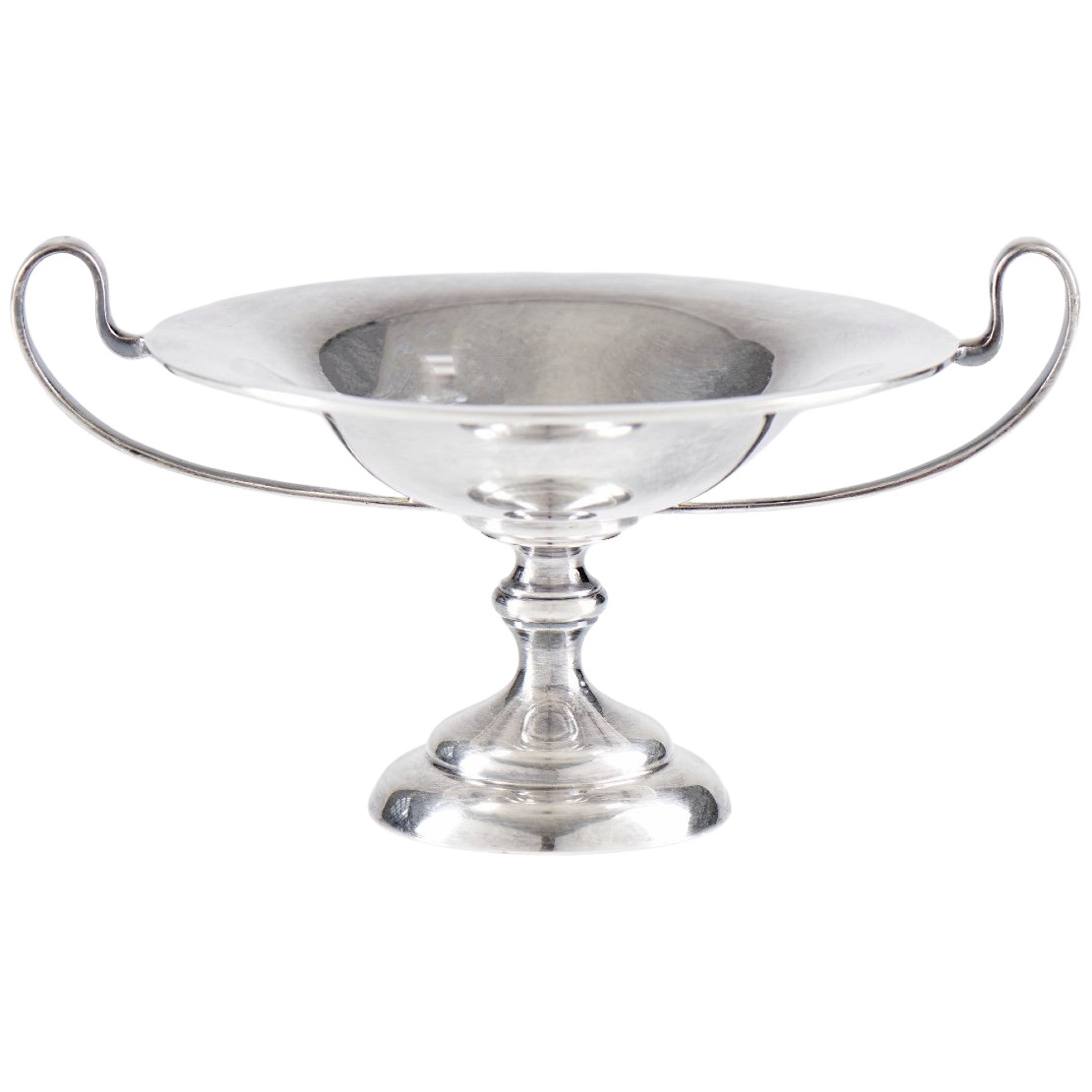
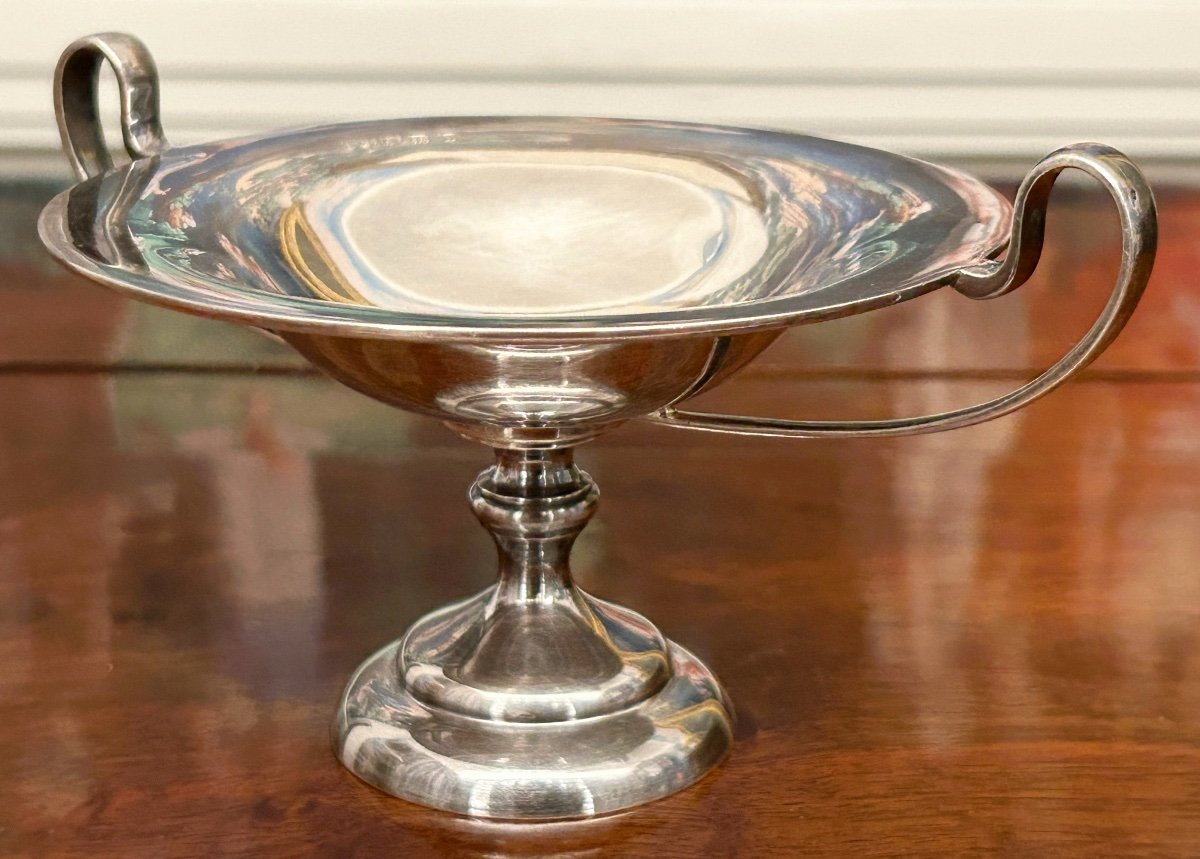
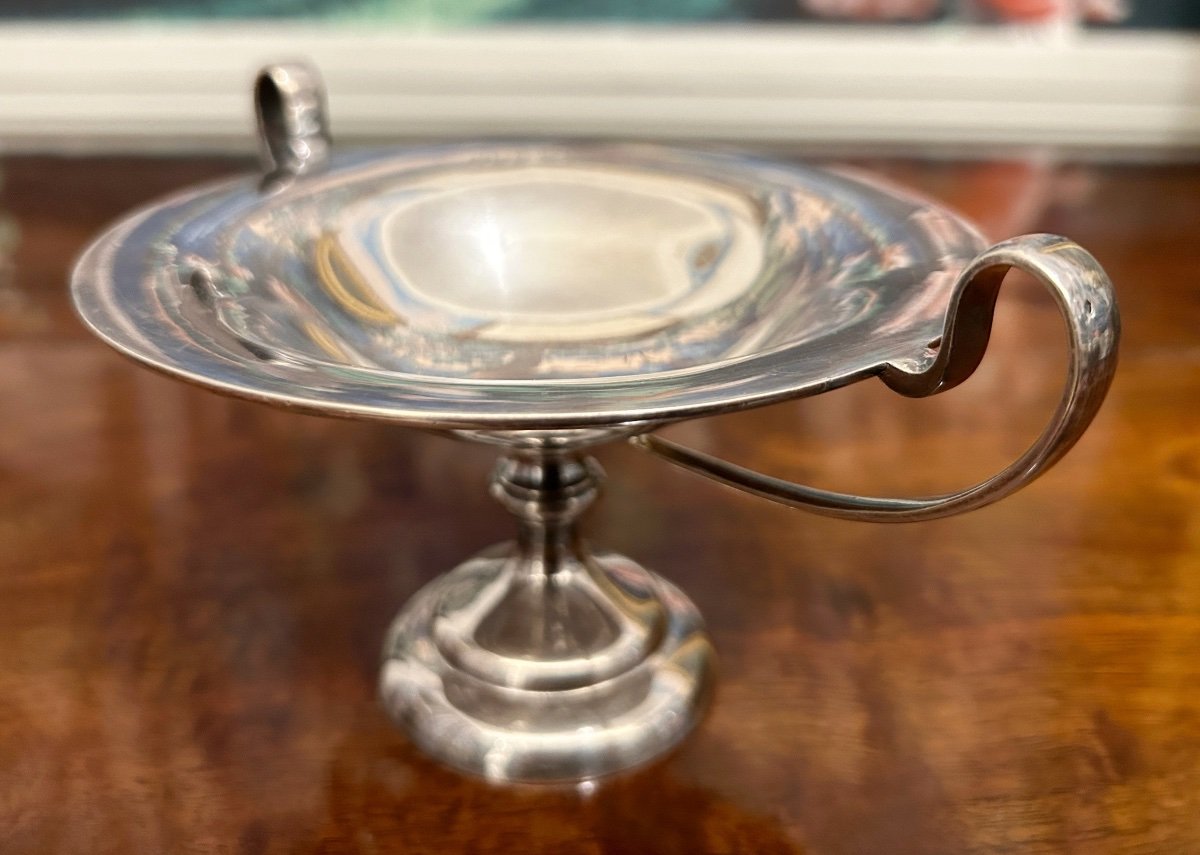
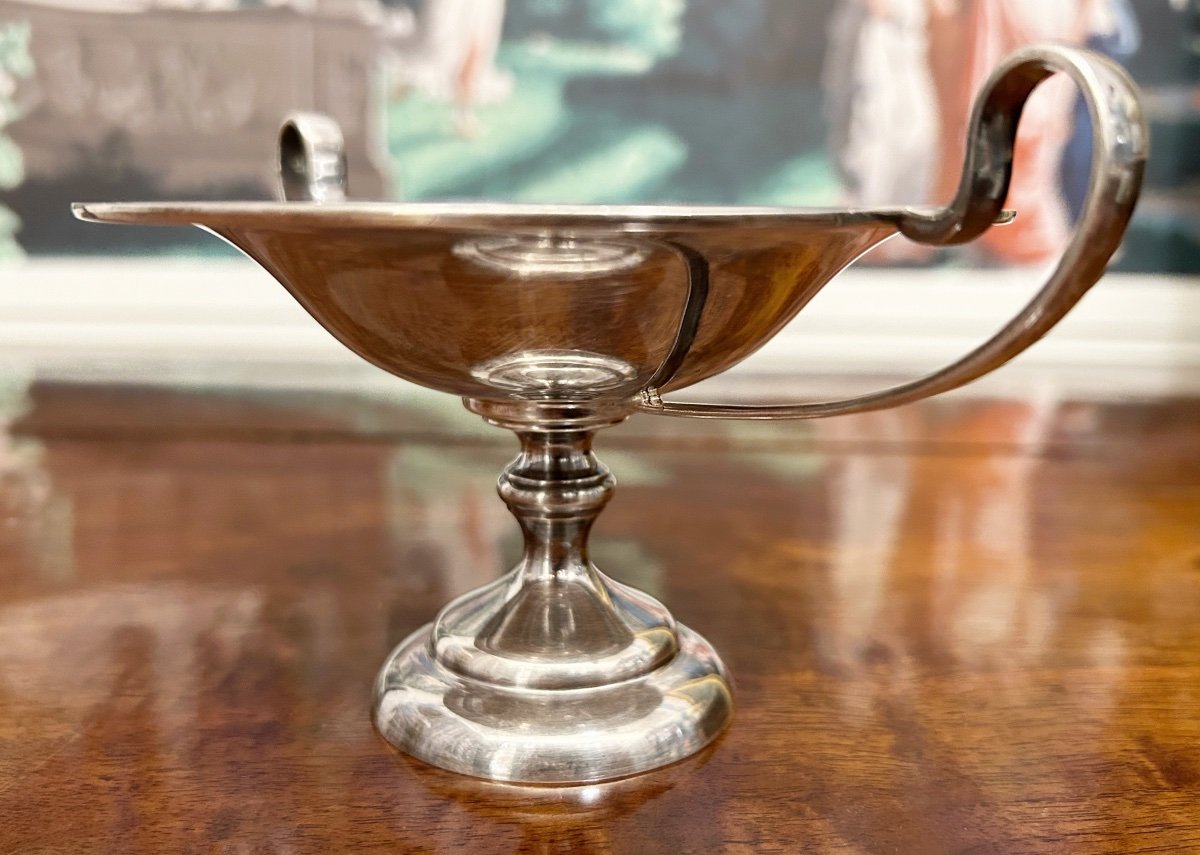
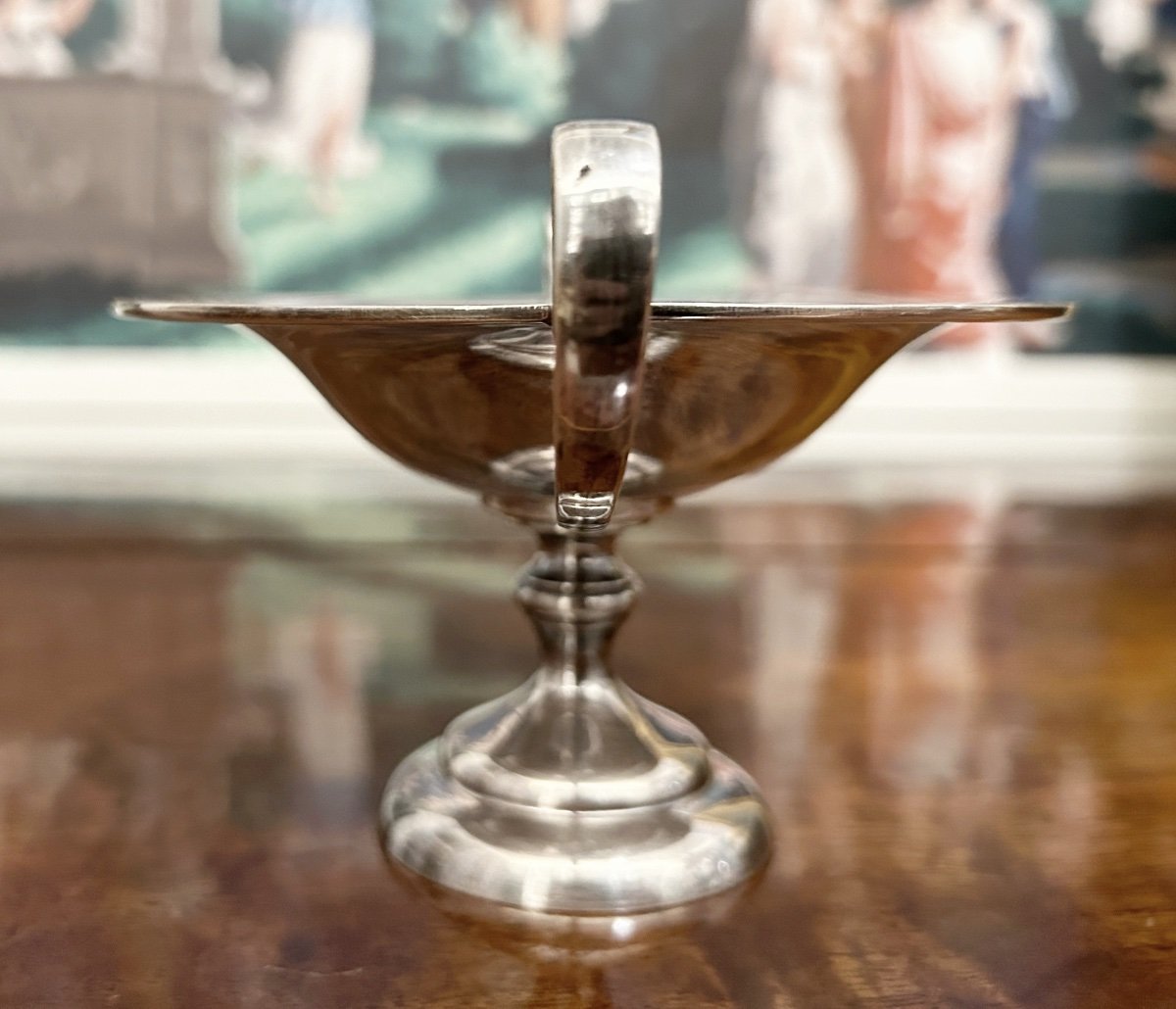
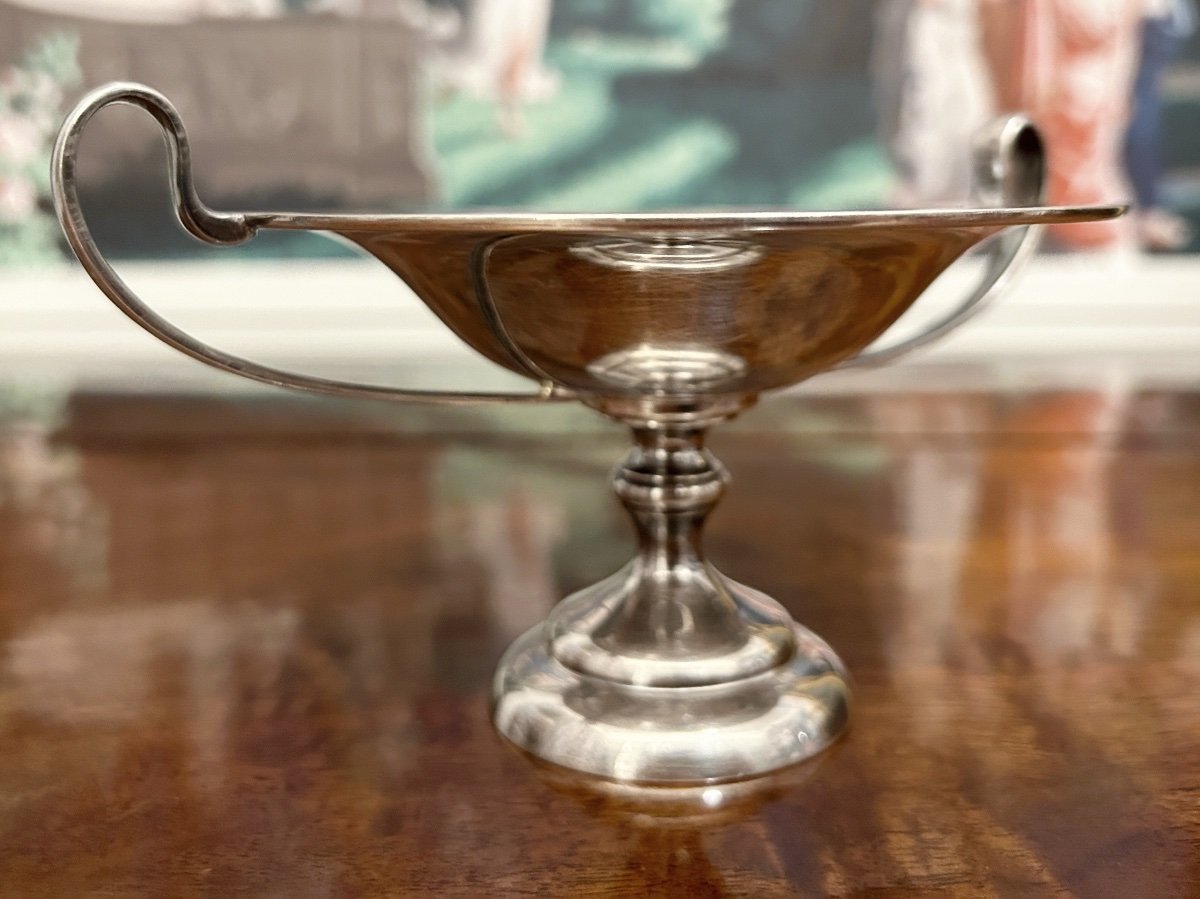
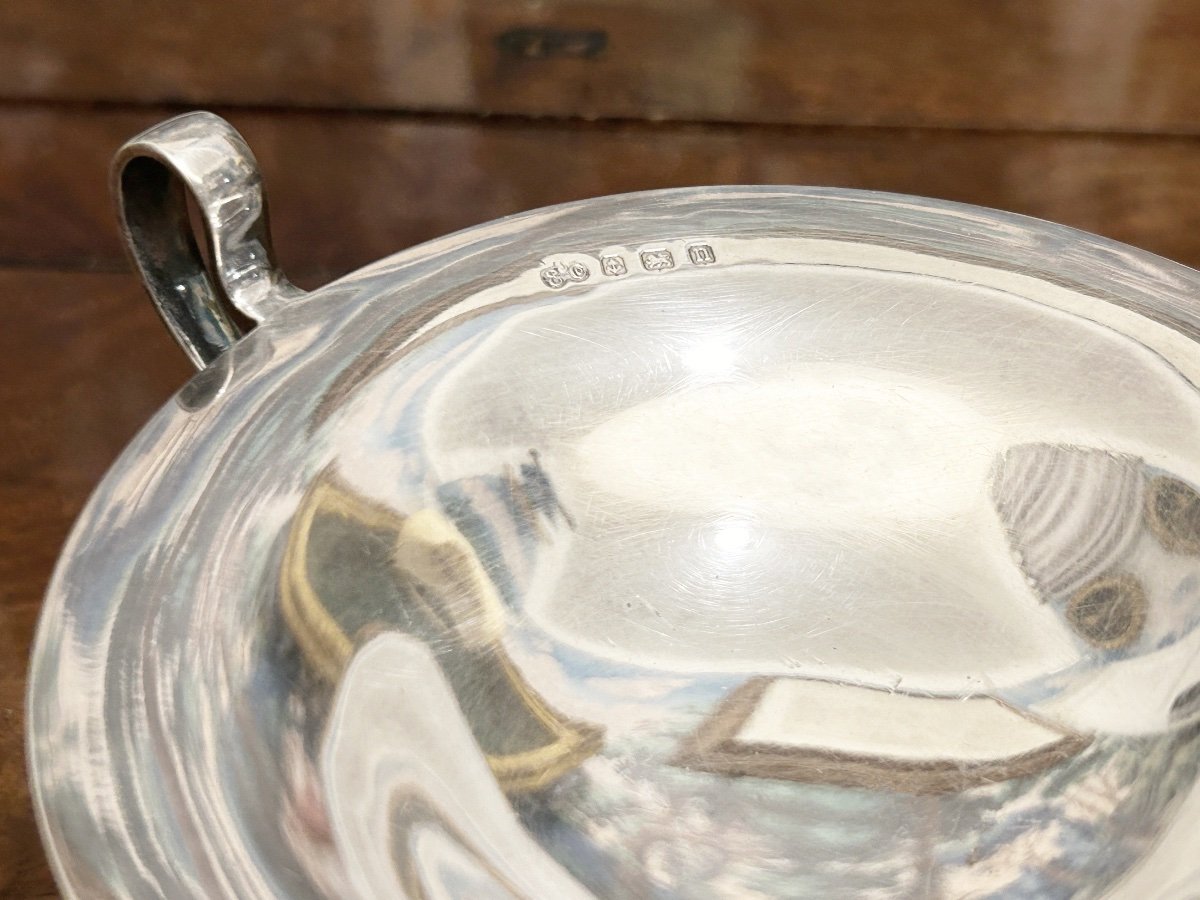
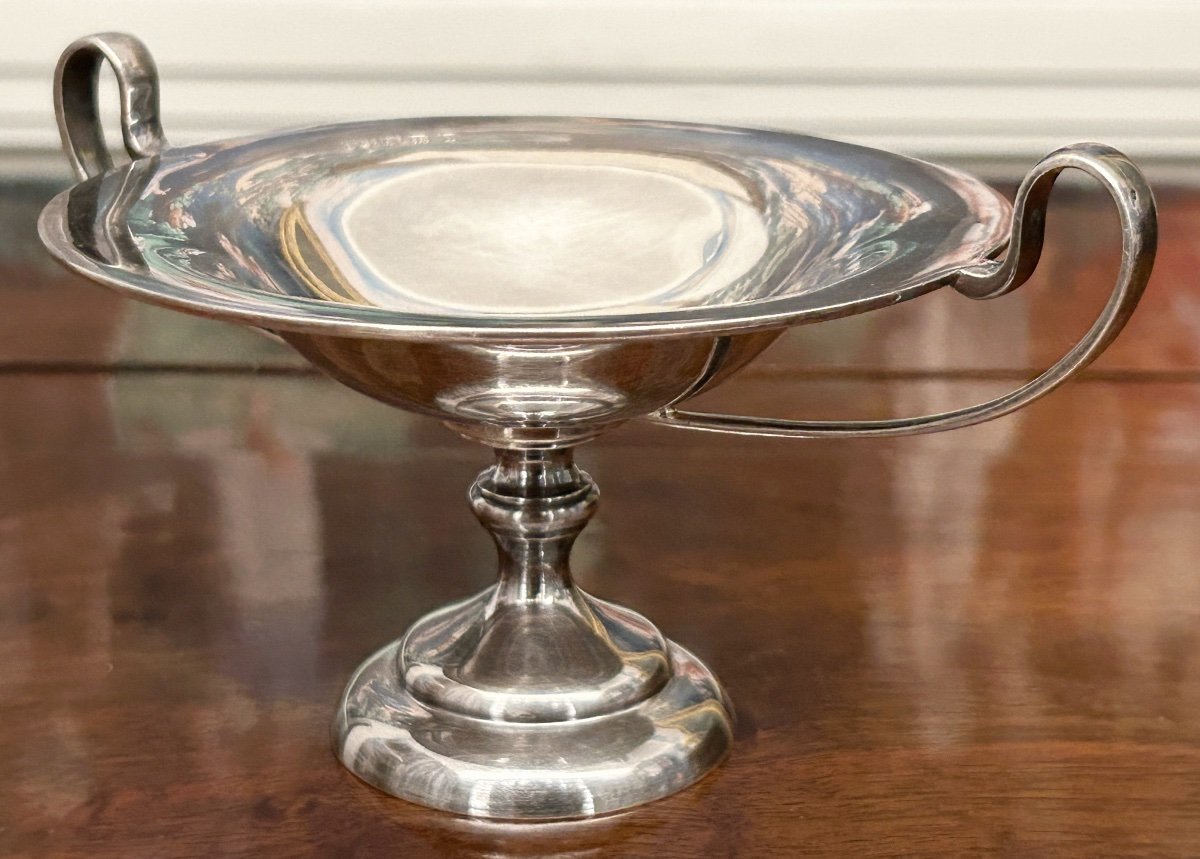
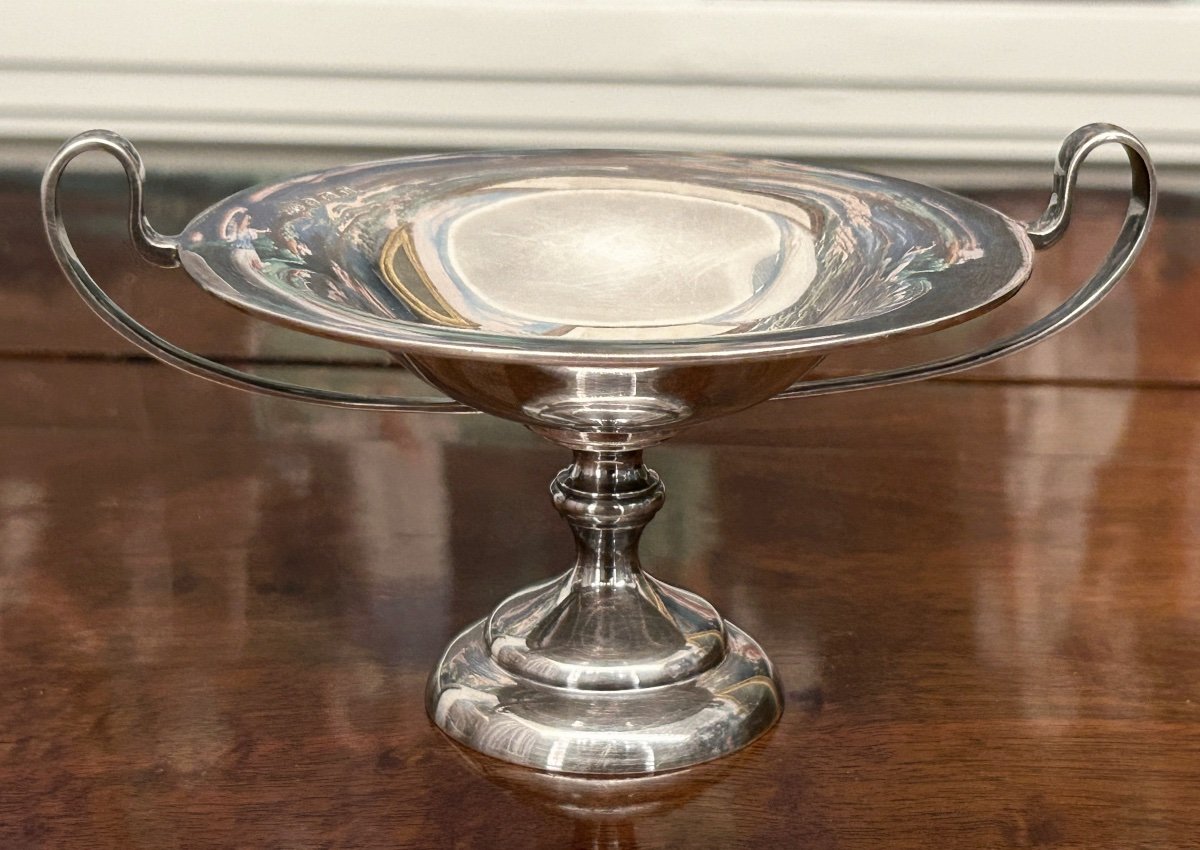
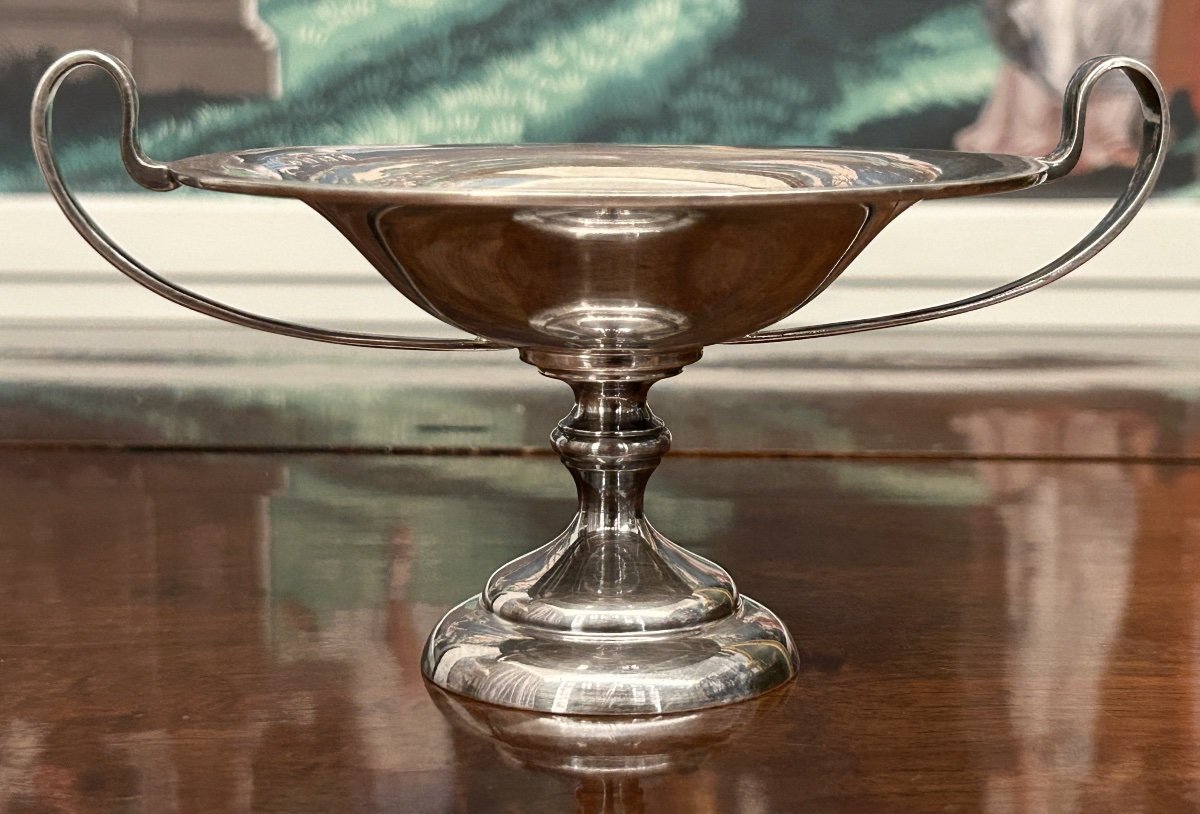
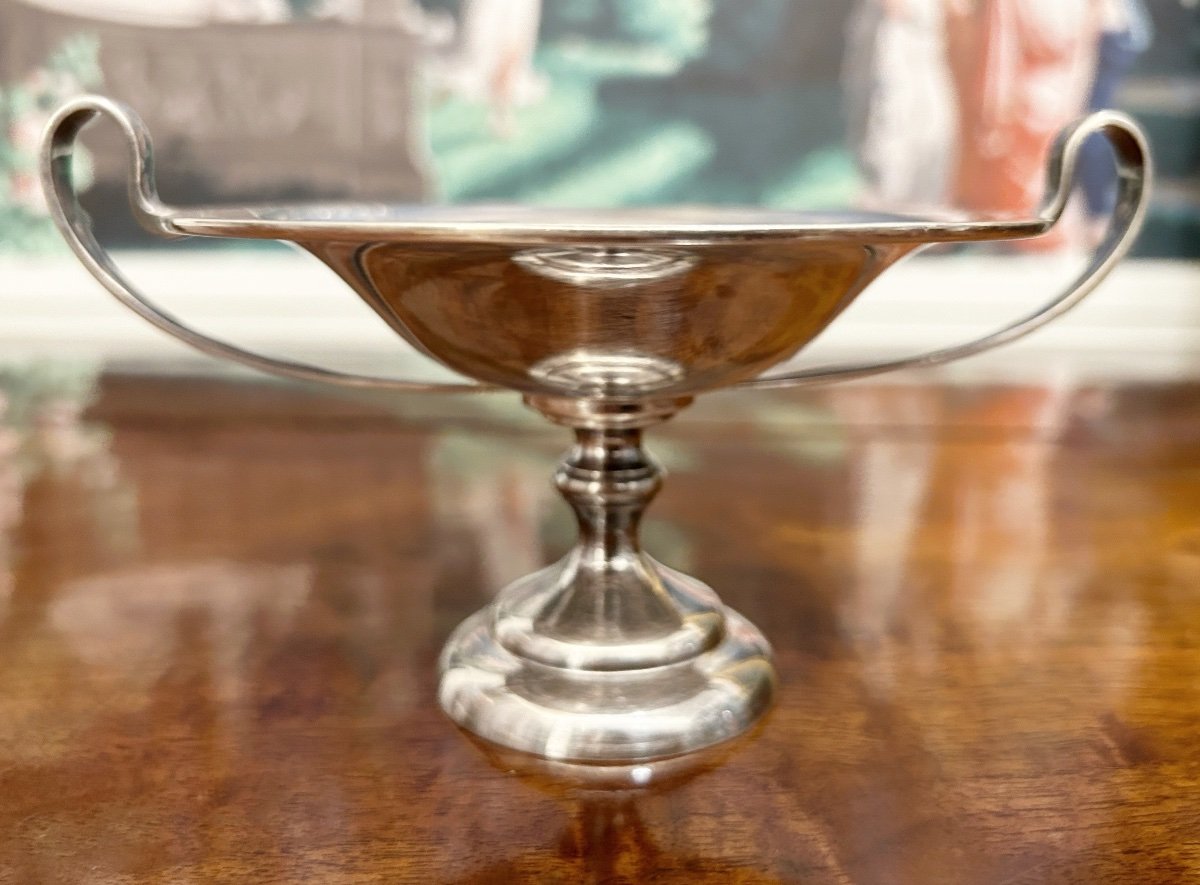
A George VIII period sterling silver bowl with handles by Elkington & Co. Circular in shape, it rests on a molded foot. The plain bowl has a wide rim, the lip of which is stamped with the various hallmarks for standard, guarantee, and maker's mark.
It has two band handles that meet at the base. Birmingham, England, 1937.
Hallmarks:
• Lion passant
• Ink for Birmingham
• Date letter N for 1937
• Maker's mark: Elkington & Co.
Dimensions
Height: 13 cm
Width: 17 cm
Diameter: 10 cm
Gross weight: 185 g
Condition report: Minor scratches from use, no dents or deformations.
ELKINGTON & Co. – Supplier to the British Crown
Founded in Birmingham in 1824 by George Richards Elkington (1800-1865), Elkington & Co. established itself as one of the leading names in British silversmithing. A pioneer in the electroplating of silver, the company revolutionized silver production by patenting a galvanic gilding and silvering process in 1840. This patent was quickly adopted in France by the silversmith Christofle, confirming the importance of this innovation in European silversmithing.
From the 1850s onward, Elkington & Co. diversified its production and collaborated with renowned artists such as Albert Willms (1827-1899) and Léonard Morel-Ladeuil (1820-1888), whose remarkable creations helped solidify its prestige at major world's fairs. The famous Milton Shield, crafted by Morel-Ladeuil in 1867 for the Paris Universal Exhibition, is now housed in the Victoria & Albert Museum in London, a testament to the firm's refinement and technical mastery.
While Elkington & Co. is renowned for its silver-plated pieces, the firm also excels in the production of solid silver objects, characterized by elegant design and impeccable craftsmanship. Tableware, ceremonial pieces, and decorative objects, often inspired by Neo-Renaissance and Neo-Gothic styles, attest to the unparalleled expertise of the manufacturer.
Recognized and prized by European courts, ELKINGTON & Co. established itself as a major player in 19th-century silversmithing, combining technical innovation with artistic excellence. Its works are now held in the world's greatest museums, notably the Victoria & Albert Museum in London, which holds more than 400 pieces, and the Metropolitan Museum of Art in New York, which houses more than 240 pieces from the firm, thus testifying to its historical and artistic importance.
MUSEUMS AND PUBLIC INSTITUTIONS
MUSÉE D’ORSAY, Paris – Cup, cloisonné enamel and gilt bronze, 1875. Inv. OAO 1229.
MUSÉE D’ORSAY, Paris – Teapot; Sugar bowl; cream pot; sugar tongs; "Archaic" tea service, hammered silver with repoussé, applied, chased, partially gilded decoration, and horn, 1885-1886. Inv. OAO 1217.
MUSÉE D’ORSAY, Paris – Ornamental shield known as the "Milton Shield," electroplating, circa 1880. Inv. OAO 1773 1.
MUSÉE D’ORSAY, Paris – Ornamental shield known as the "Bunyan Shield," electroplating, circa 1880. Inv. OAO 1773 2.
VICTORIA & ALBERT MUSEUM, London – 401 catalogued items
BRITISH MUSEUM, London – 37 catalogued items.
SCIENCE MUSEUM GROUP COLLECTION (GB) – nearly 1,000 pieces cataloged across the group's various museums.
METROPOLITAN MUSEUM, New York – The Milton Shield, Electroformed copper, silver-plated, 1867. Inv. 2011.428.
METROPOLITAN MUSEUM, New York – 242 pieces cataloged.
HARVARD ART MUSEUMS, Cambridge – Pair of vases, enamel and gilt metal, c. 1876. Inv. 2013.82.1 and 2.
HARVARD ART MUSEUMS, Cambridge – The Pompeian Lady, Electroformed copper, electroplated silver, c. 1876. Inv. 2019.93.
ROYAL COLLECTION TRUST – 82 catalogued pieces, including an impressive silver, vermeil, and enamel statue of Prince Albert commissioned by Queen Victoria.
ROYAL ALBERT HALL – Queen Victoria, bronze, 1864. Inv. VA/2/12.
ROYAL ALBERT HALL – King Albert, bronze, 1864. Inv. VA/2/13.
FITZWILLIAM MUSEUM, Cambridge
NATIONAL PORTRAIT GALLERY, London.
MUSEUM BOIJMANS VAN BEUNINGEN, Rotterdam – Tea spoons, silver. Inv. MBZ 527 a, b, c.
Ref: I904336OW3

 English
 Français
 Italiano
 Deutsch
 Louis XIV Norman writing table
850 € EUR