This description has been translated and may not be completely accurate. Click here to see the original
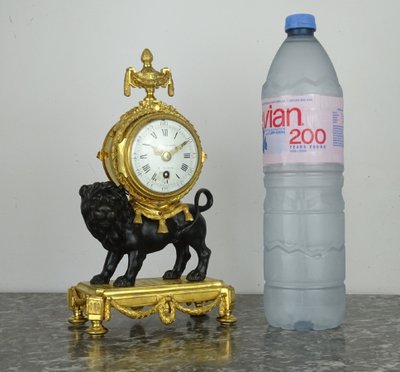
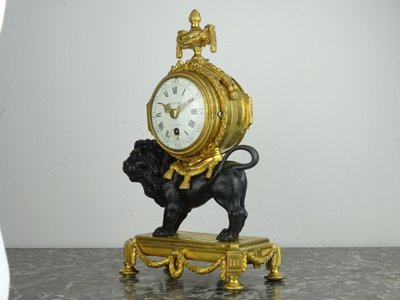
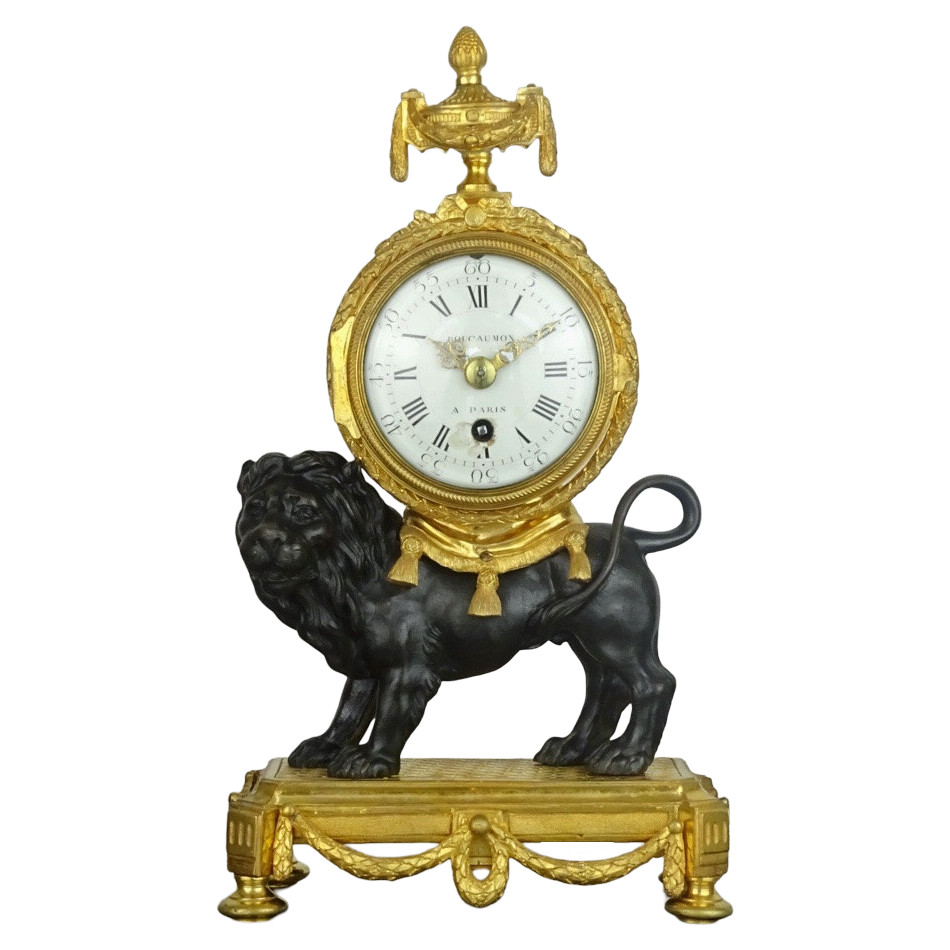
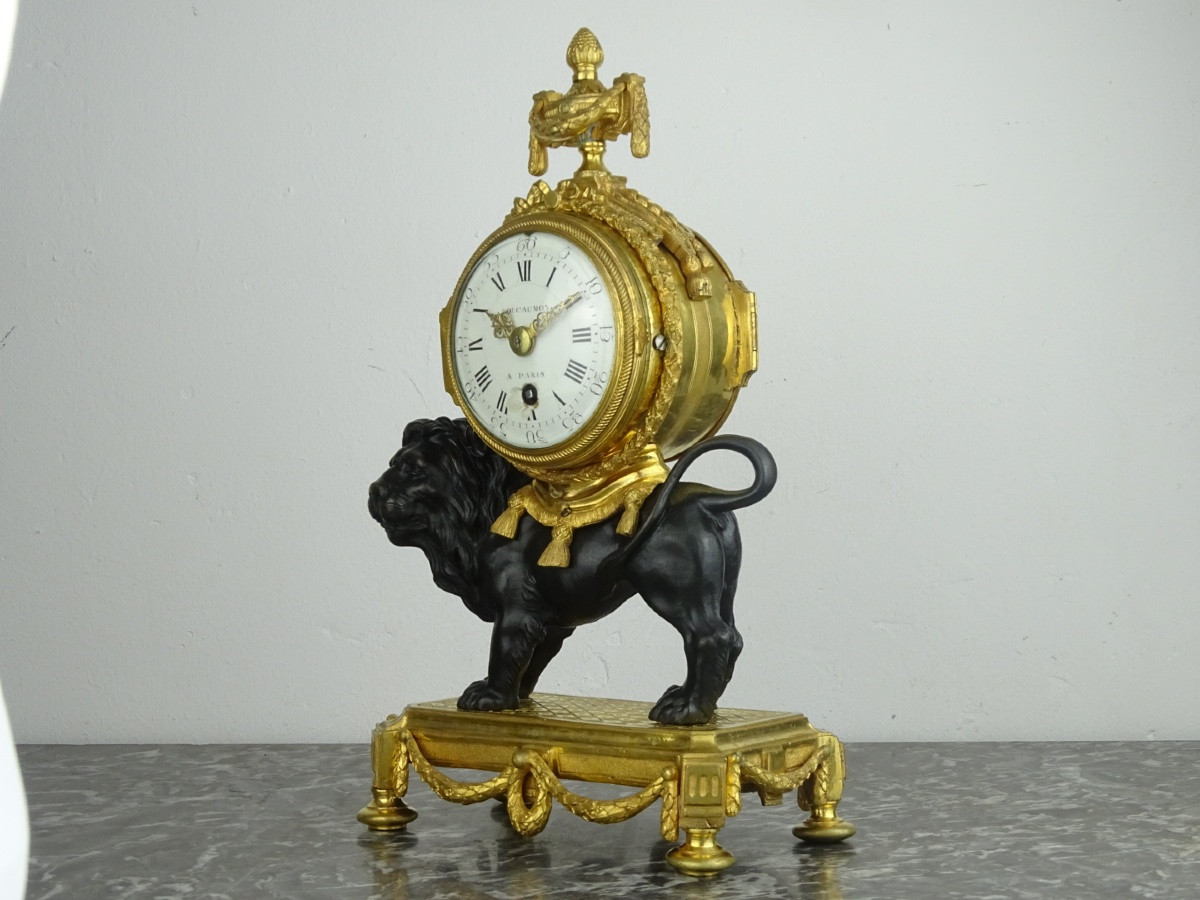
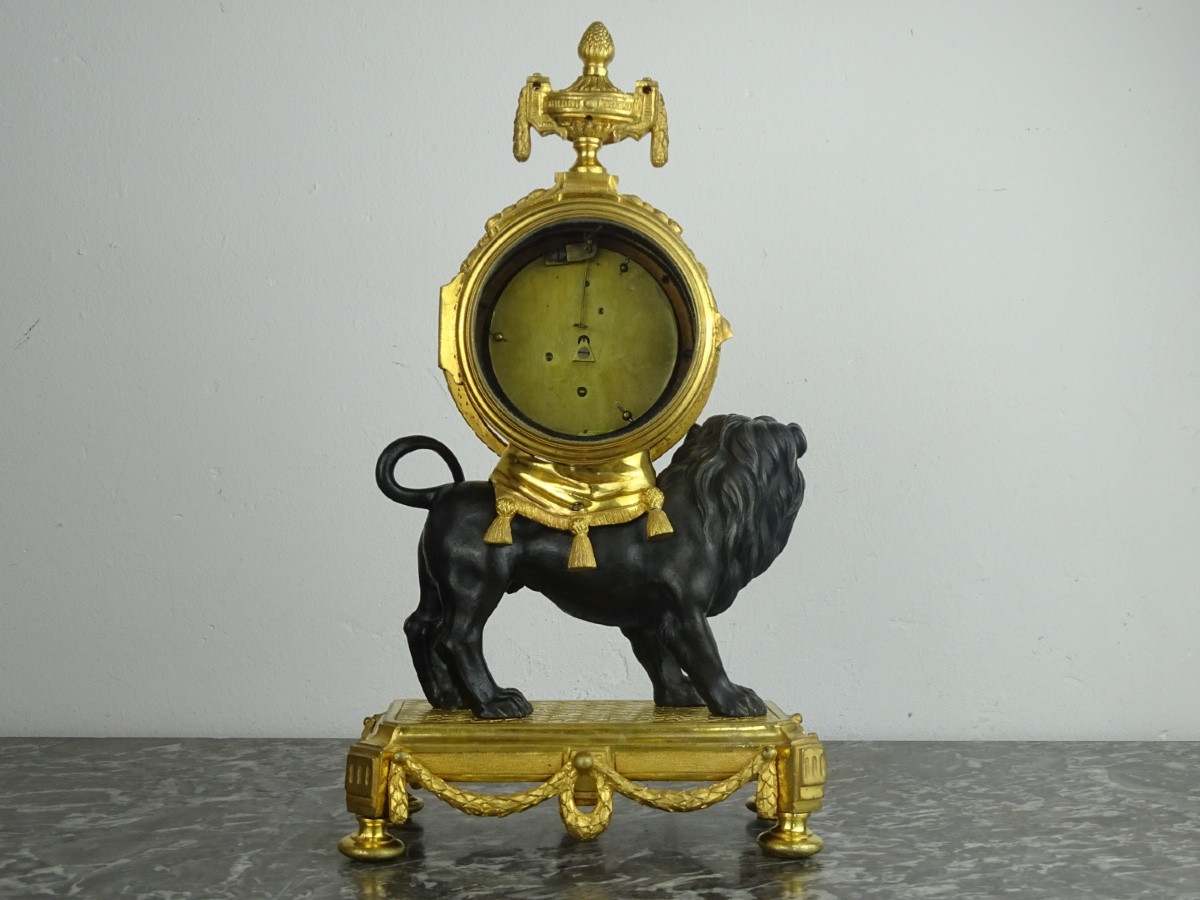
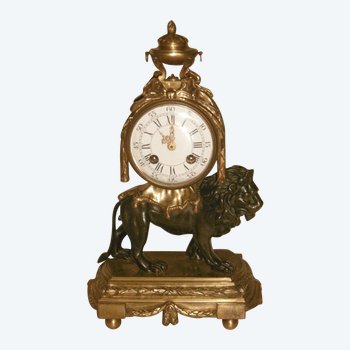
A very beautiful and rare Louis XVI period clock known as the "Lion" clock, made in Paris around 1770, in finely chased, mercury-gilded, and patinated bronze. The enamel dial is signed "BOUCAUMON À PARIS."
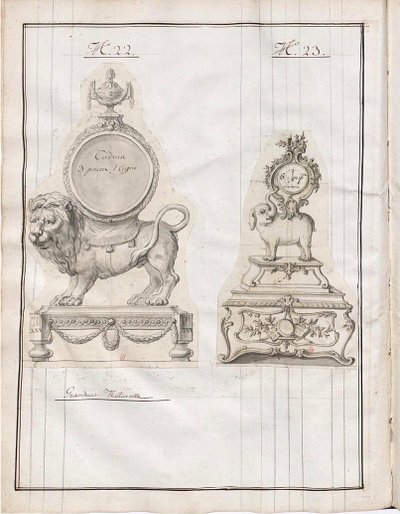
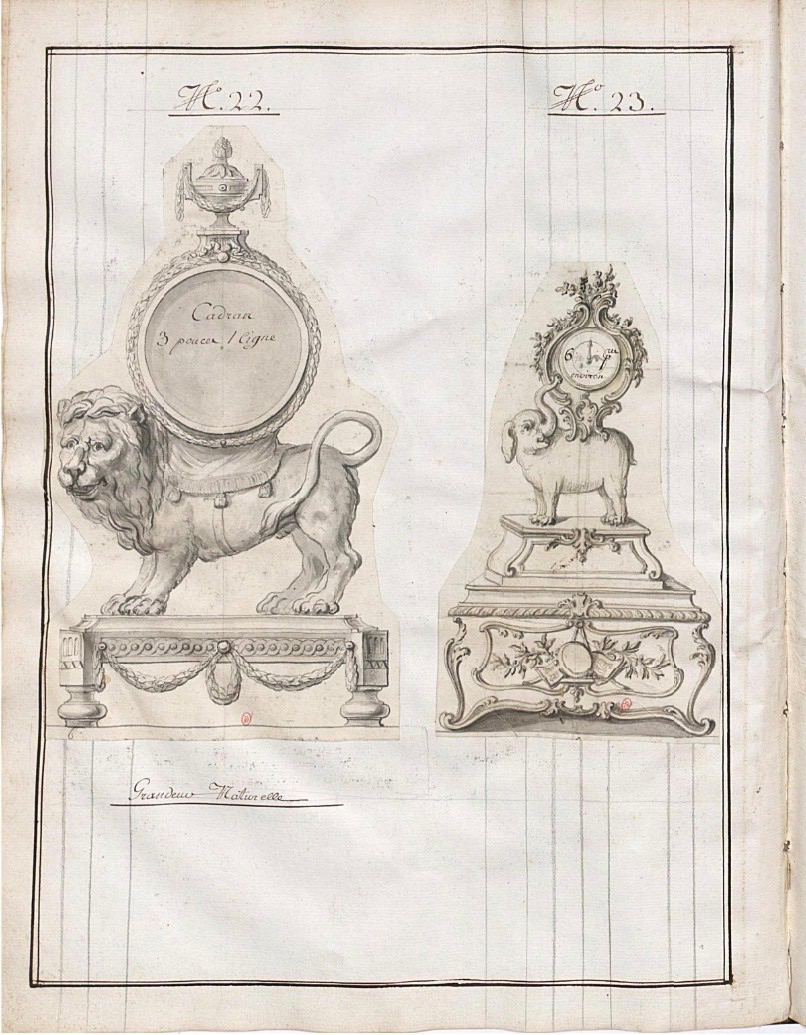
This particularly elegant model is based on a design by the bronze caster François Vion, who became a master founder and chaser in Paris in 1764 and was among the leading bronze casters of the second half of the 18th century. The design of this clock belongs to a group of Vion's models now held at the Jacques Doucet Library in Paris and published, notably, by Hans Ottomeyer and Peter Pröschel in Vergoldete Bronzen (Gilded Bronzes).
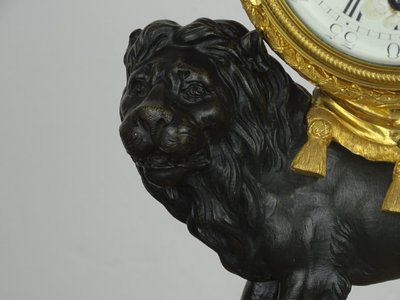
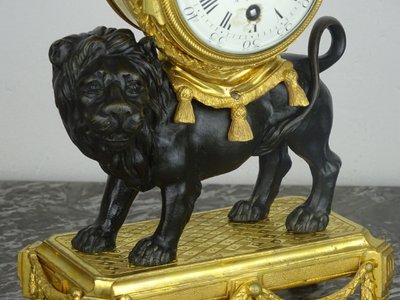
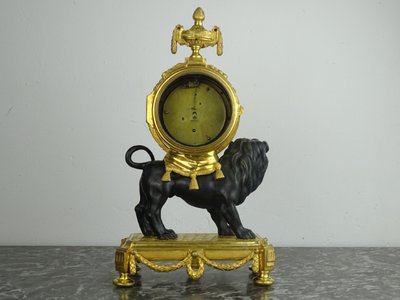
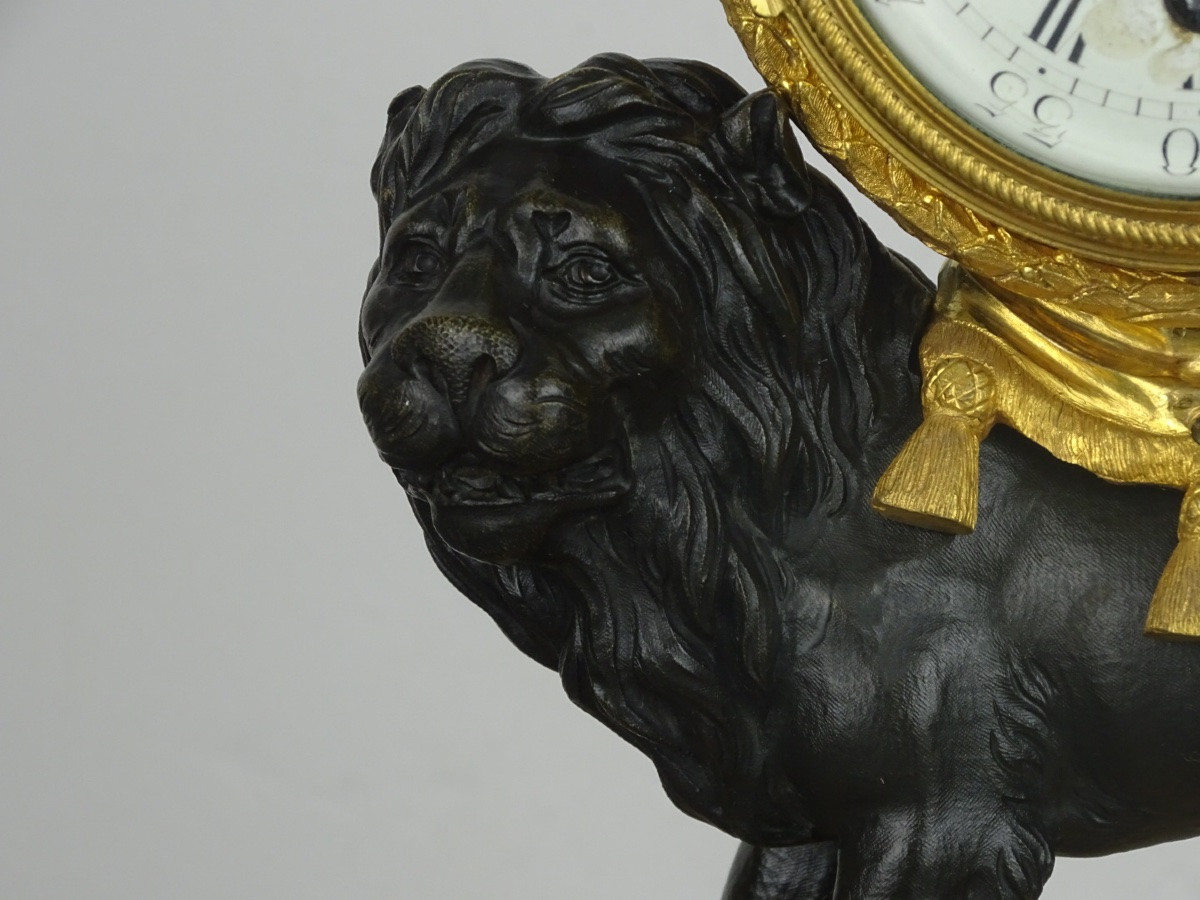
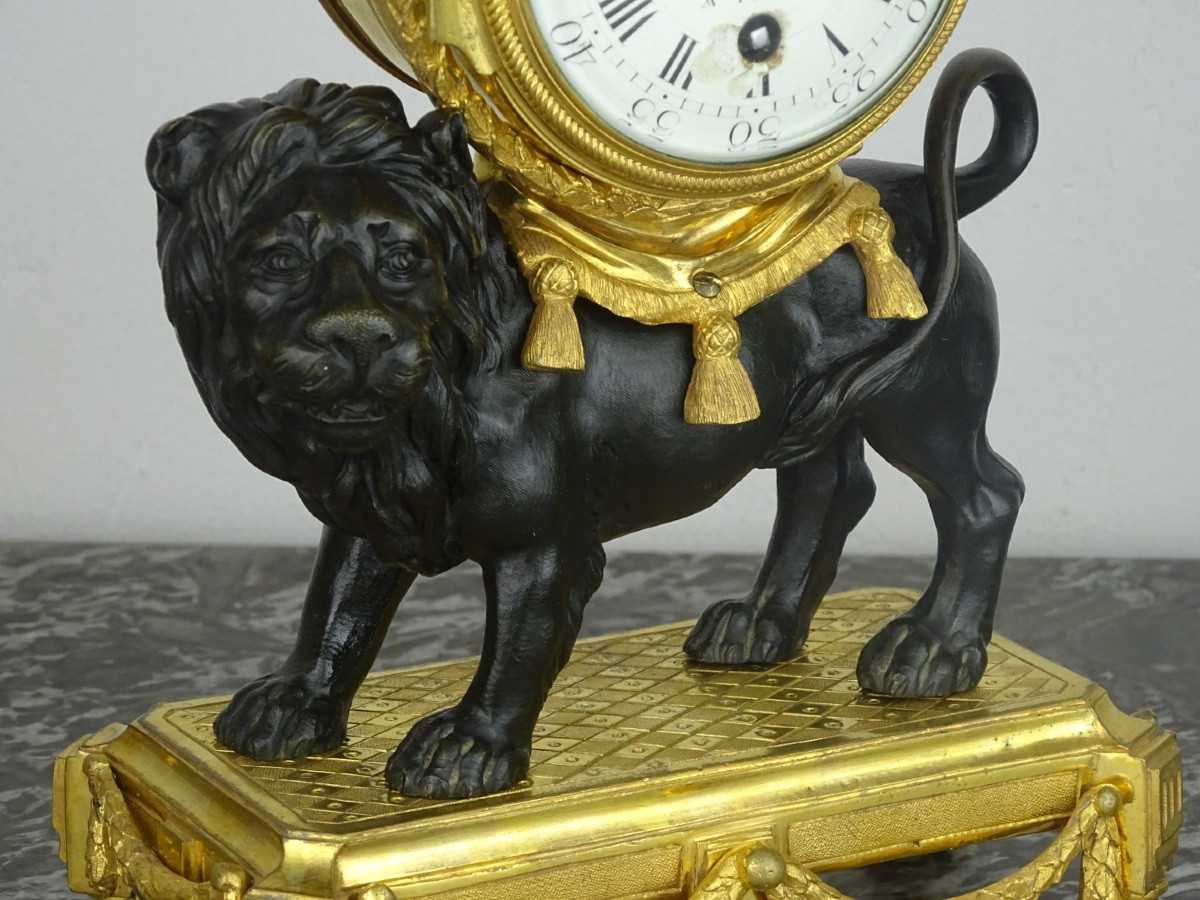
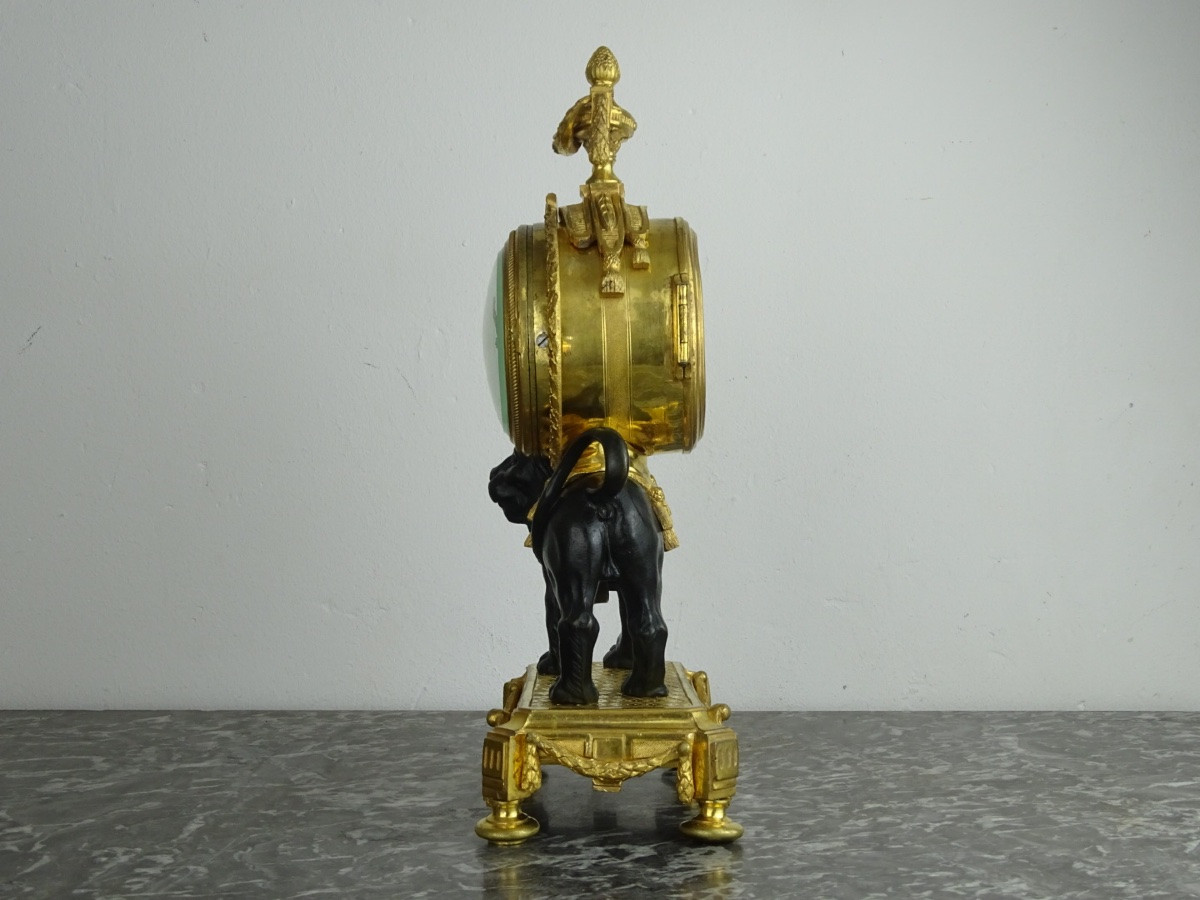
The composition is dominated by a superb bronze lion with a dark patina, depicted standing with its head turned towards the viewer. The quality of the modeling is particularly evident in the treatment of the mane, face, and musculature. The movement rests on its back, housed in a richly ornamented circular case of gilt bronze.
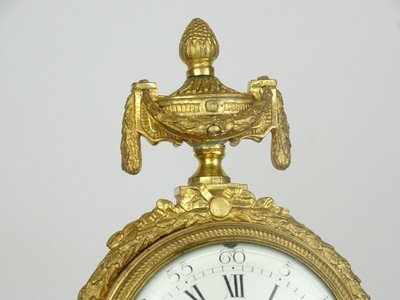
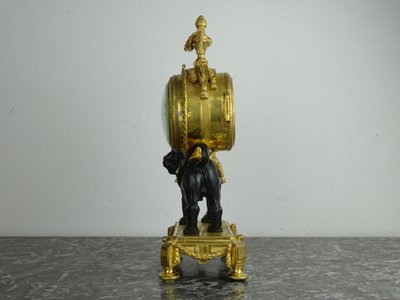
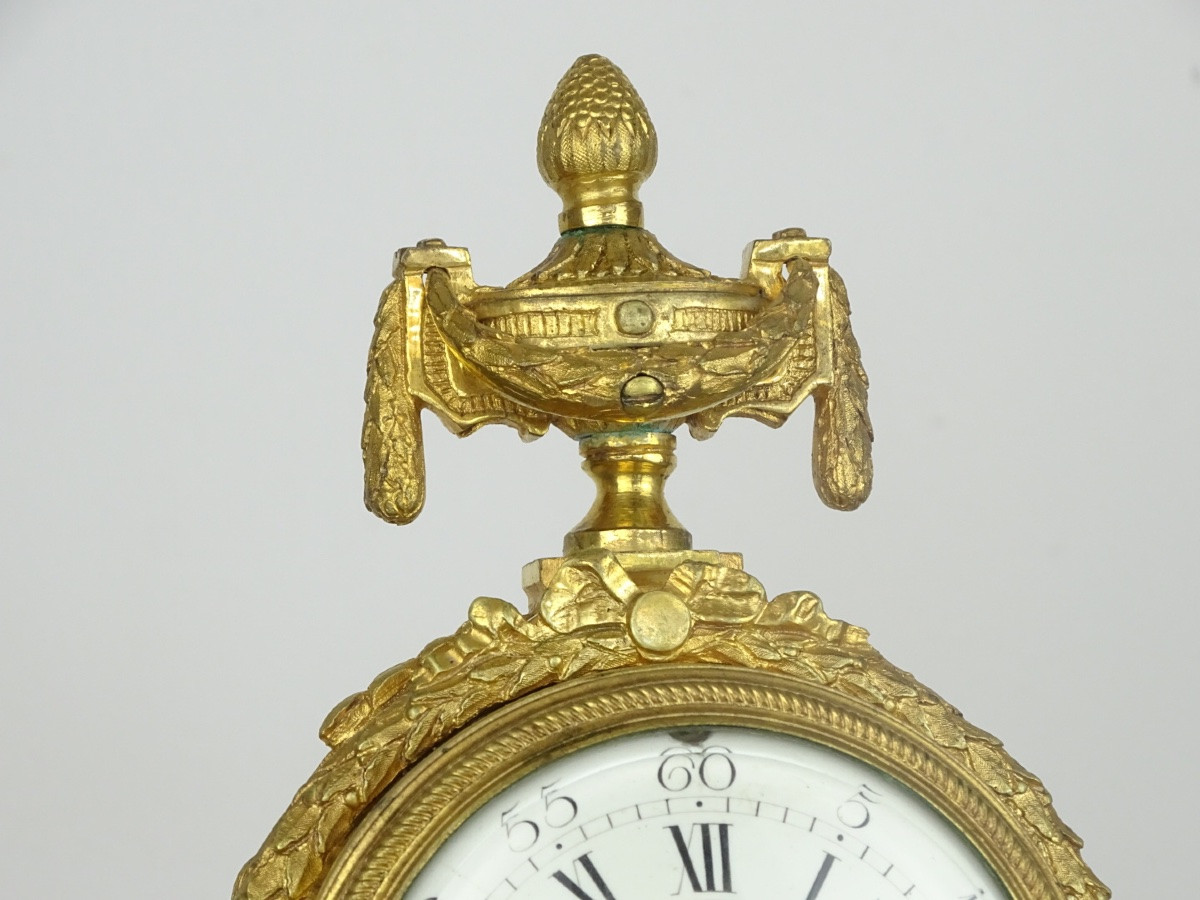
This case is surrounded by foliate friezes and ribbon motifs and surmounted by an elegant covered vase in the antique style, adorned with garlands and foliate swags, then crowned with a pine cone. The delicacy of these ornaments and the contrast between the gilding and the deep patina of the lion give the piece its full presence.
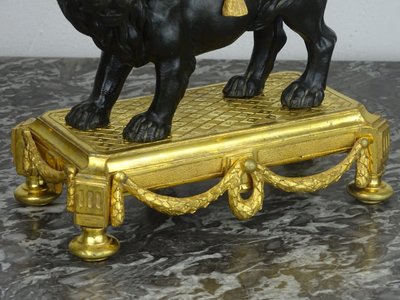
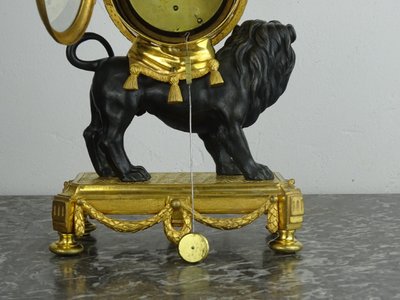
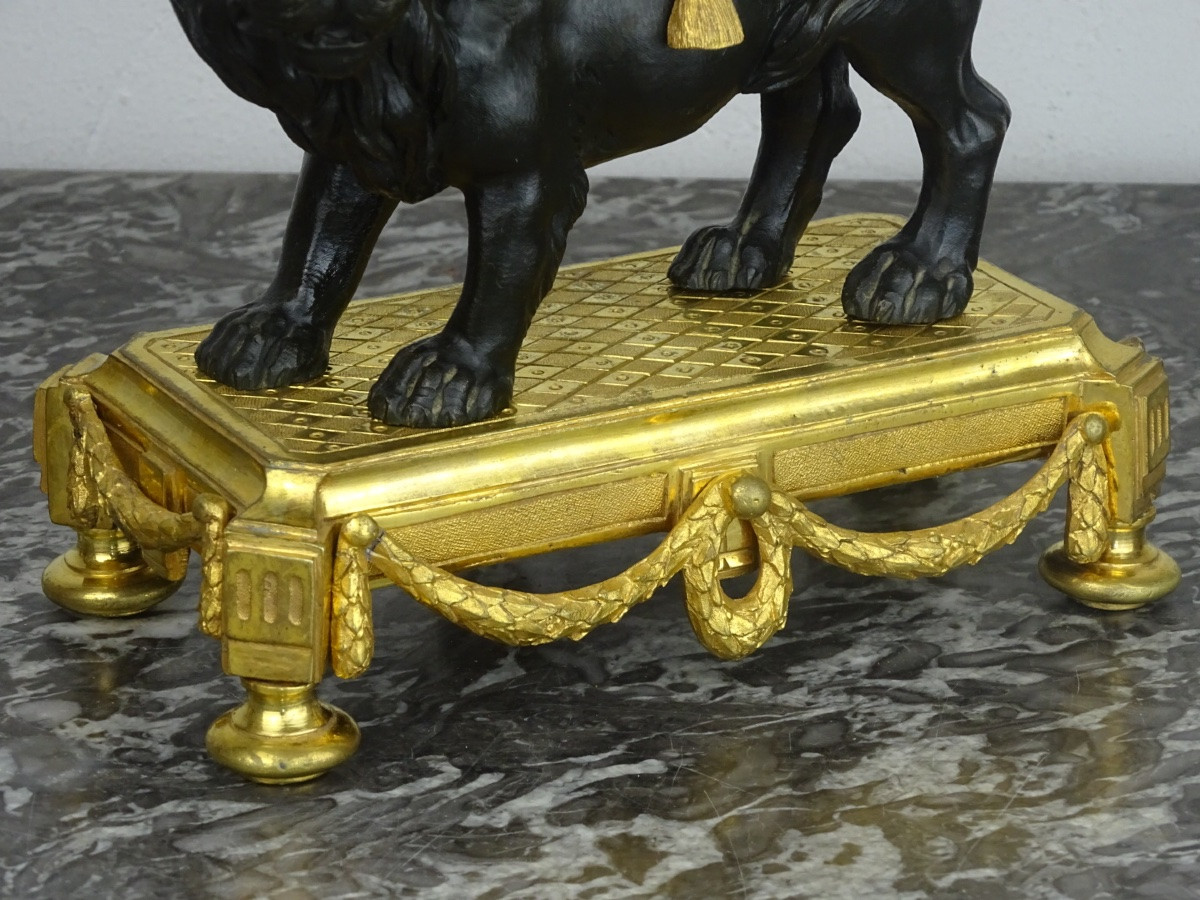
The lion rests on a rectangular base entirely of gilt bronze. Its base features a finely worked decoration, while the belt is adorned with laurel wreaths, suspended from the corners and gathered in the center around a crown. The whole rests on four circular feet.
The white enamel dial, signed "BOUCAUMON À PARIS," indicates the hours in Roman numerals and the minutes in Arabic numerals. It retains its elegant openwork hands in gilt bronze. A well-documented model in major collections
The interest of this clock also lies in the historical importance of the model created by François Vion.
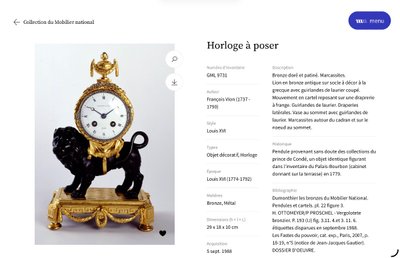
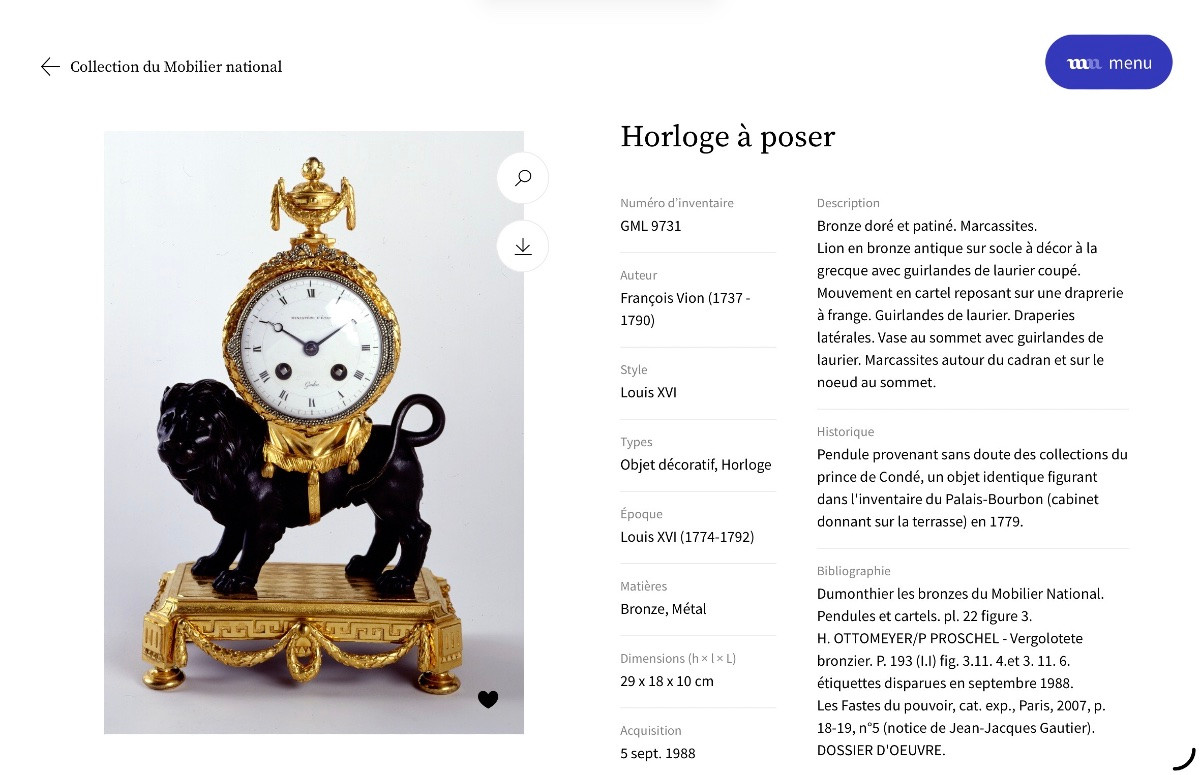
An example attributed to Vion is now held in the collections of the Mobilier National (National Furniture Collection). A clock of this model is mentioned as early as 1779 at the Palais Bourbon, in the collections of Louis-Joseph de Bourbon, Prince of Condé, which testifies to the prestige this design already enjoyed in the 18th century.
Other examples or variations are documented in important collections, notably at the Pavlovsk Palace near Saint Petersburg. The Jacquemart-André Museum in Paris also holds a lion clock made after the François Vion model.
The model is also known with the signatures of various Parisian clockmakers, a perfectly normal practice in the 18th century: the bronze worker supplied the case while the clockmaker fitted the movement to it. François Vion
Admitted as a master bronze founder and chaser in 1764, François Vion distinguished himself particularly in the creation of clock cases where bronze becomes a true sculpture. Mythological figures, animals, and allegorical compositions take on an essential role in his work and are no longer simply decorative elements surrounding the movement.
The Lion Clock belongs fully to this body of work: here, the animal itself becomes the architectural support for the clock. The preservation of the preparatory drawing and the existence of several examples in prestigious collections allow us today to precisely identify this model among the bronze caster's important creations.
A Chamber Movement
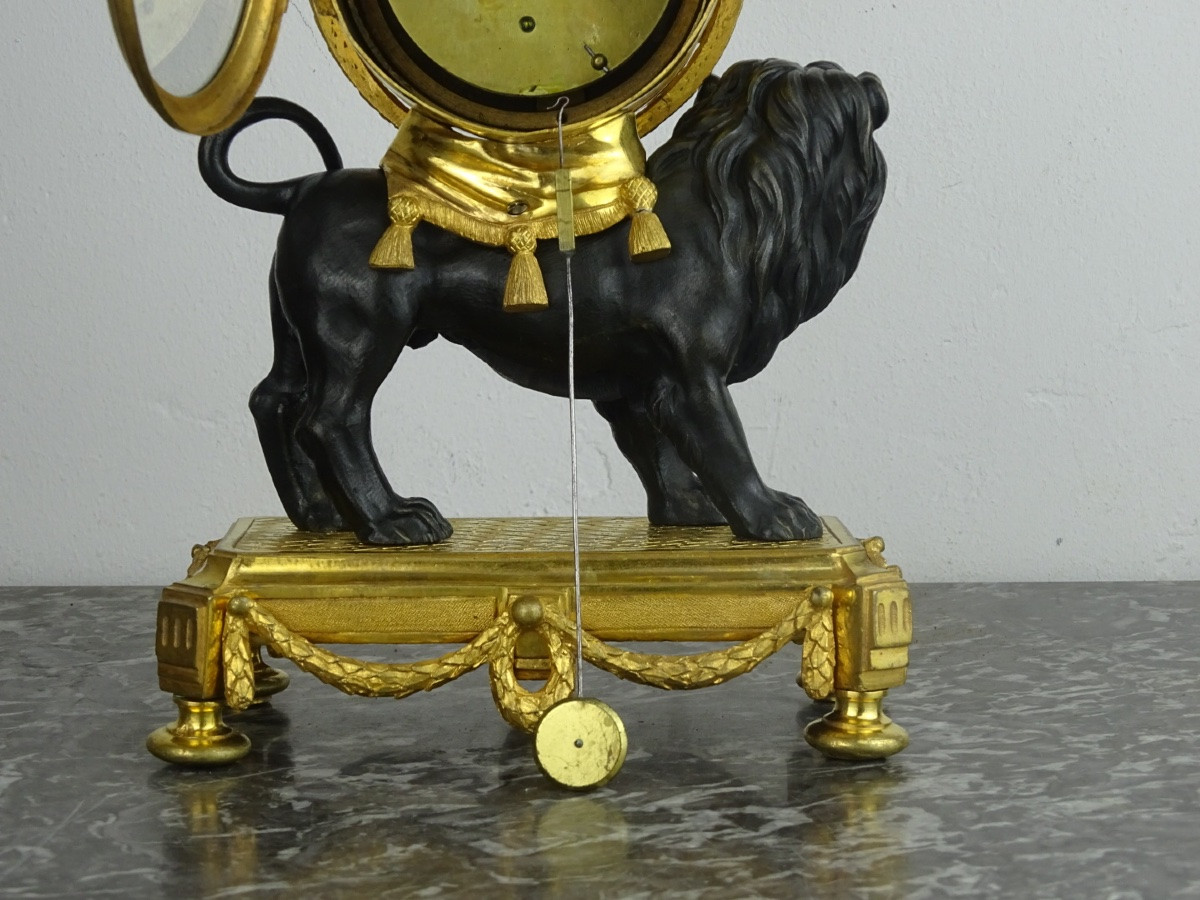
An interesting feature is that the clock has a chamber movement without a striking mechanism, suspended by a thread. The absence of a striking mechanism is therefore consistent with the more intimate purpose of this type of clock, designed to tell the time without disturbing a bedroom or study.
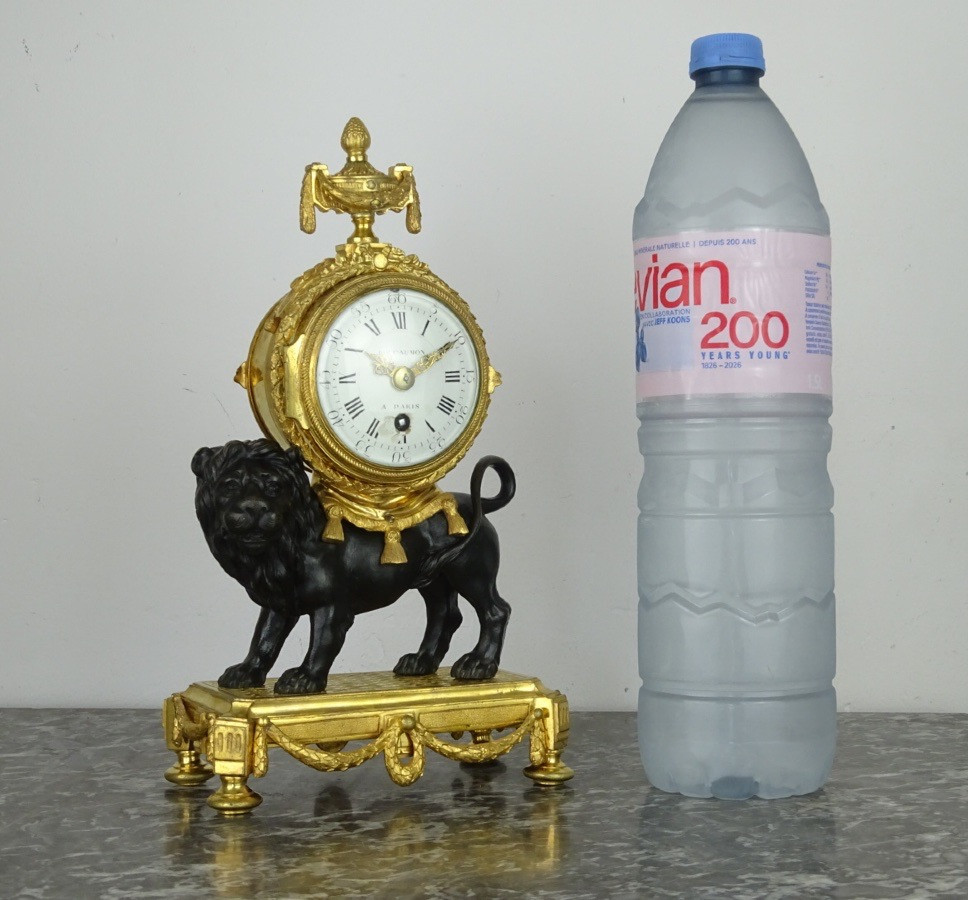
Its proportions, its richness without heaviness, and the delicacy of its decoration make it a particularly attractive clock on a dressing table, chest of drawers, or writing desk, perhaps alongside jewelry, vanity cases, or other precious objects.
It possesses something of a jewel-like object: the contrast of the black bronze and gilding, the sculpted lion, the antique-style vase, and the fineness of the small ornaments give it a remarkable presence without requiring the imposing dimensions of a large parlor clock.
Condition
The clock is in very good overall condition, particularly noteworthy for a Louis XVI period piece. The bronzes retain a very fine quality of chasing, a beautiful mercury gilding, and the lion its original patina.
The original movement, with its wire suspension, is in working order and complete with its pendulum. A small chip in the enamel around the single winding hole, visible in the photographs, is the only thing to note. This piece can, if desired, be entrusted to a specialist restorer for expert restoration; restoration is available upon request and subject to a quote.
During dismantling, a small carved flower was also discovered beneath the main base. (Probably)
Ref: ZCK43OBLBN

 English
 Français
 Italiano
 Deutsch
 Dance drum - Plains Indians, USA
1 600 € EUR