This description has been translated and may not be completely accurate. Click here to see the original
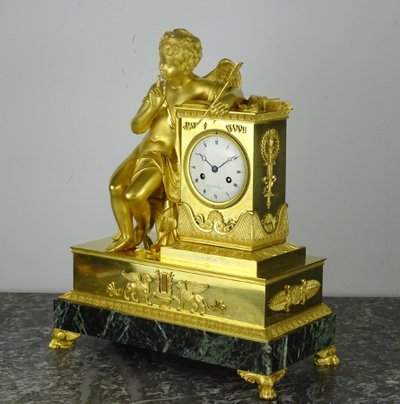
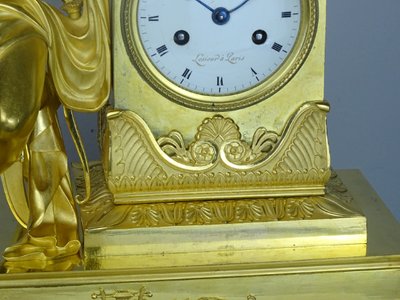
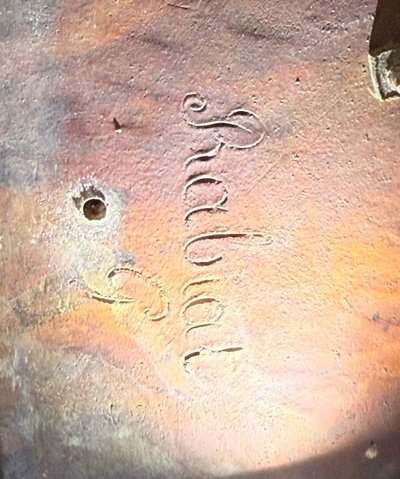
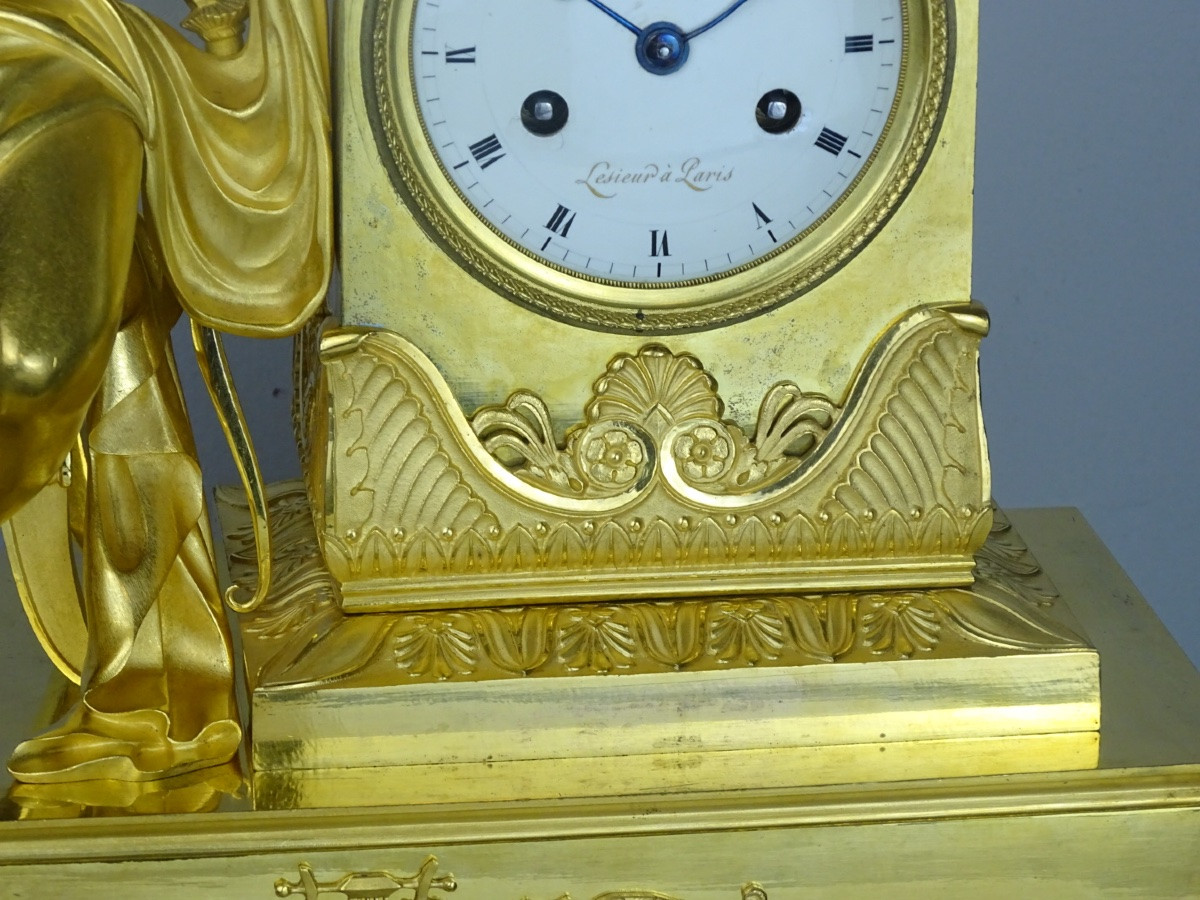
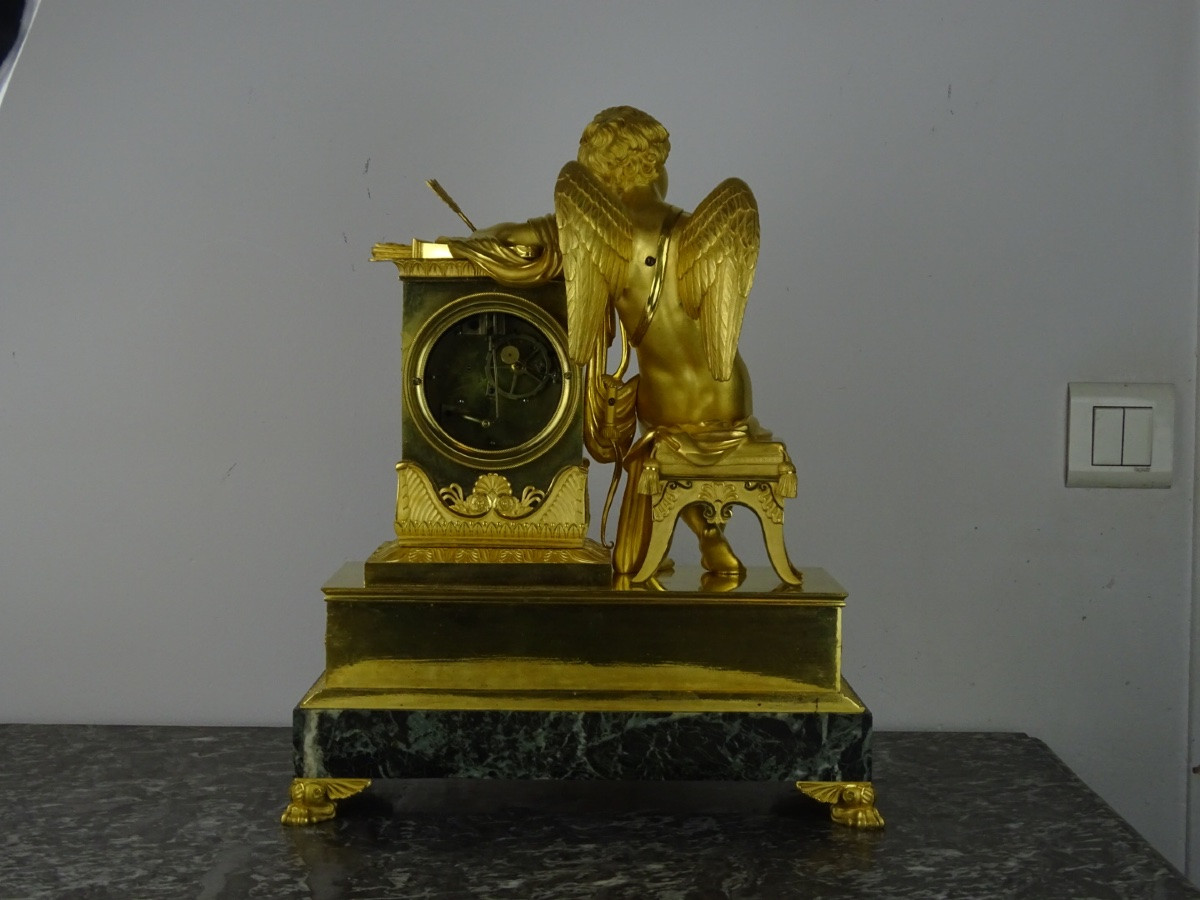
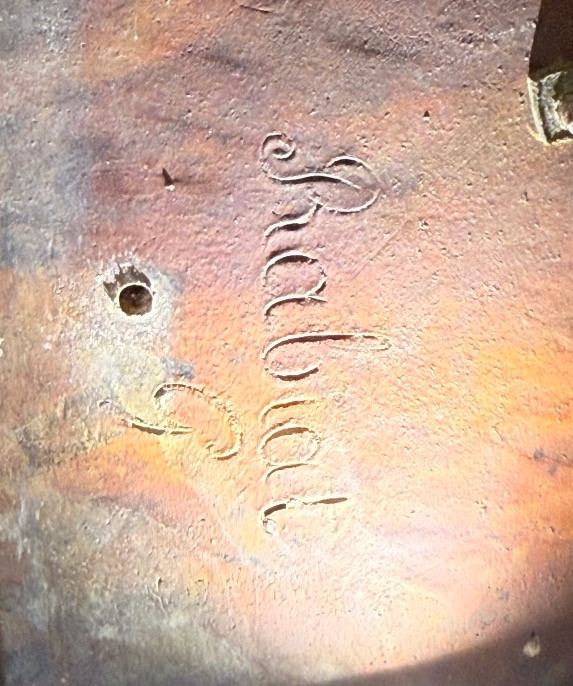
A rare and important Empire period clock, known as "Garde à vous" or "Le Silence," made in Paris in the early 19th century in finely chased and mercury-gilded bronze, patinated bronze, and sea-green marble. Of remarkable quality, it bears the signature of Claude-François Rabiat (1756-1815) twice on the reverse of its bronze mounts. The dial and movement are signed "Lesieur à Paris," uniting on a single object the names of a prominent bronze founder and chaser and a renowned Parisian clockmaker of the Empire period.
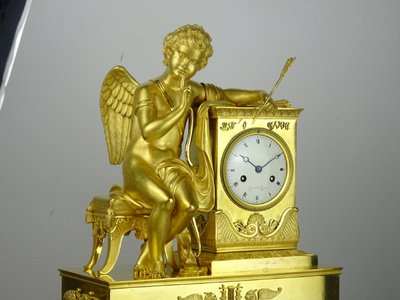
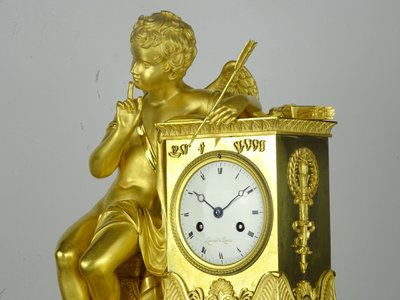
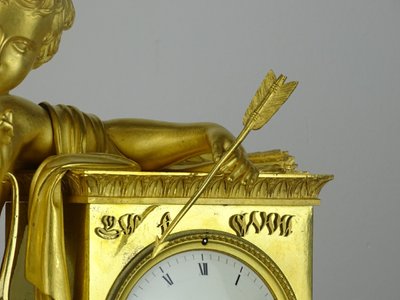
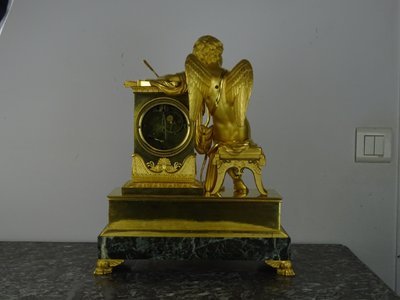
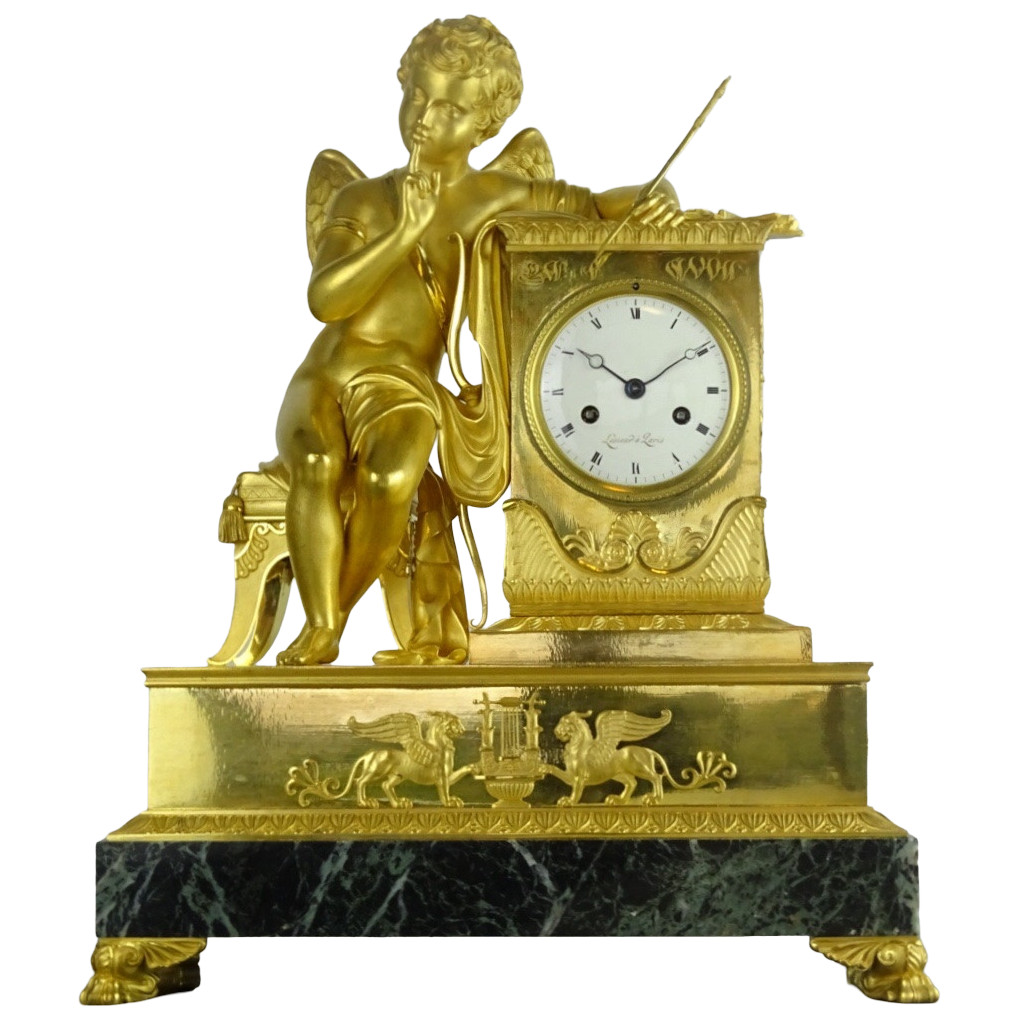
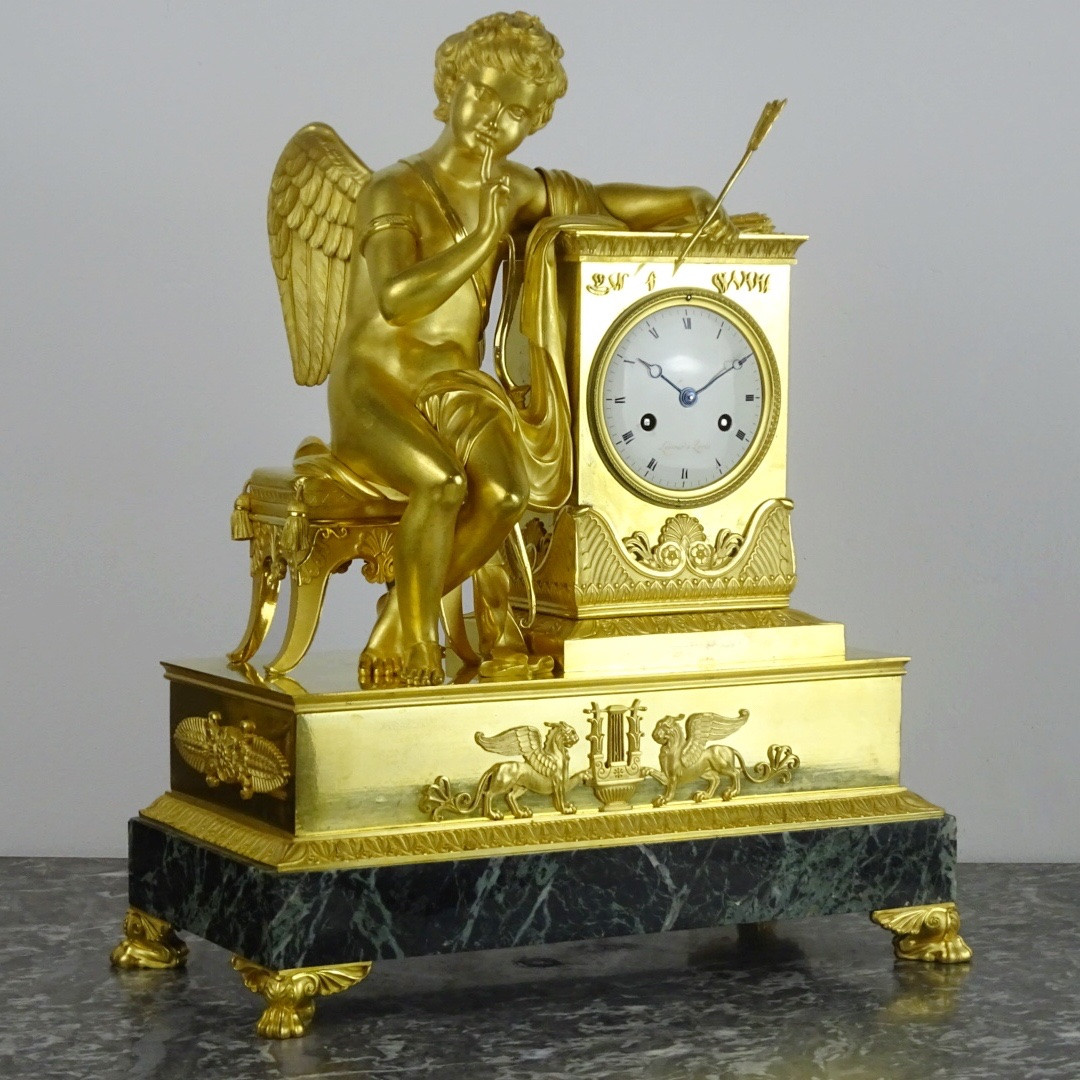
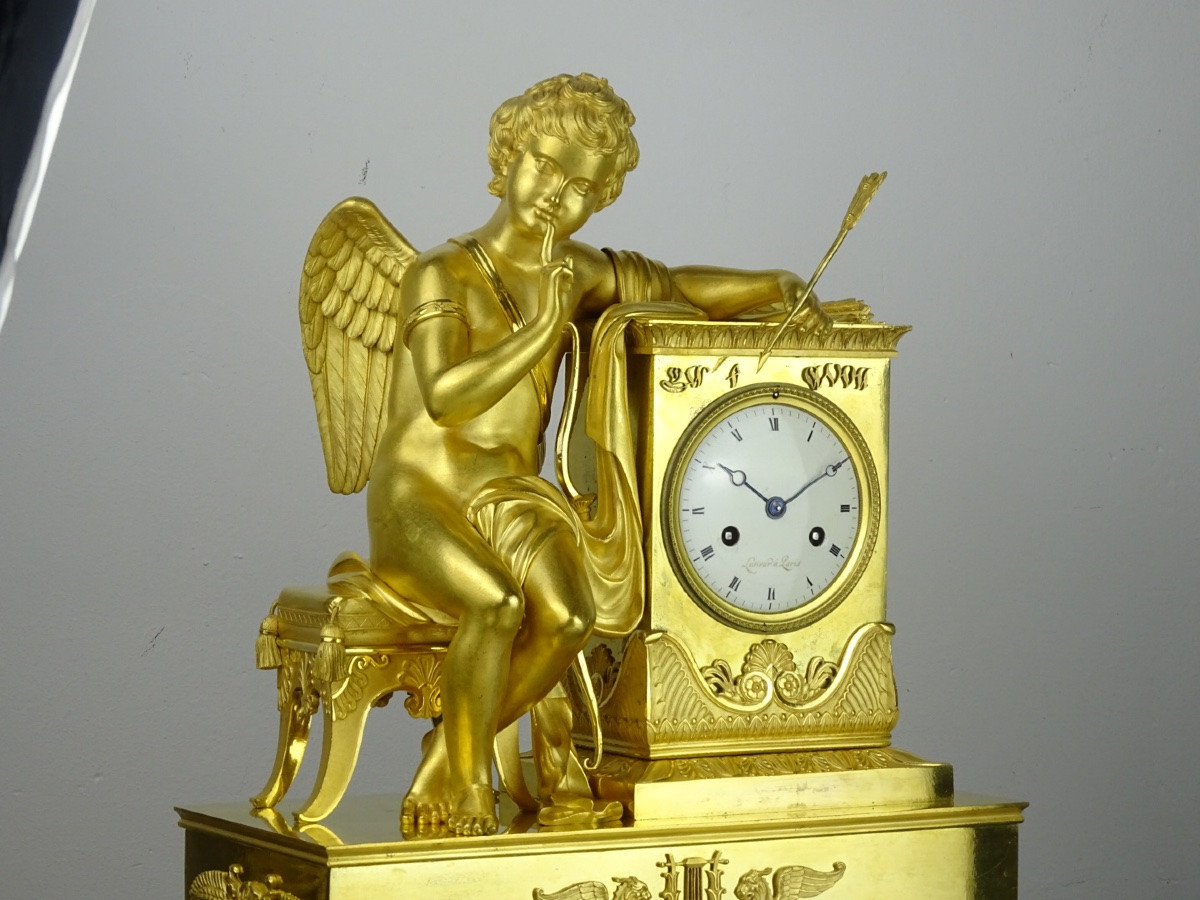
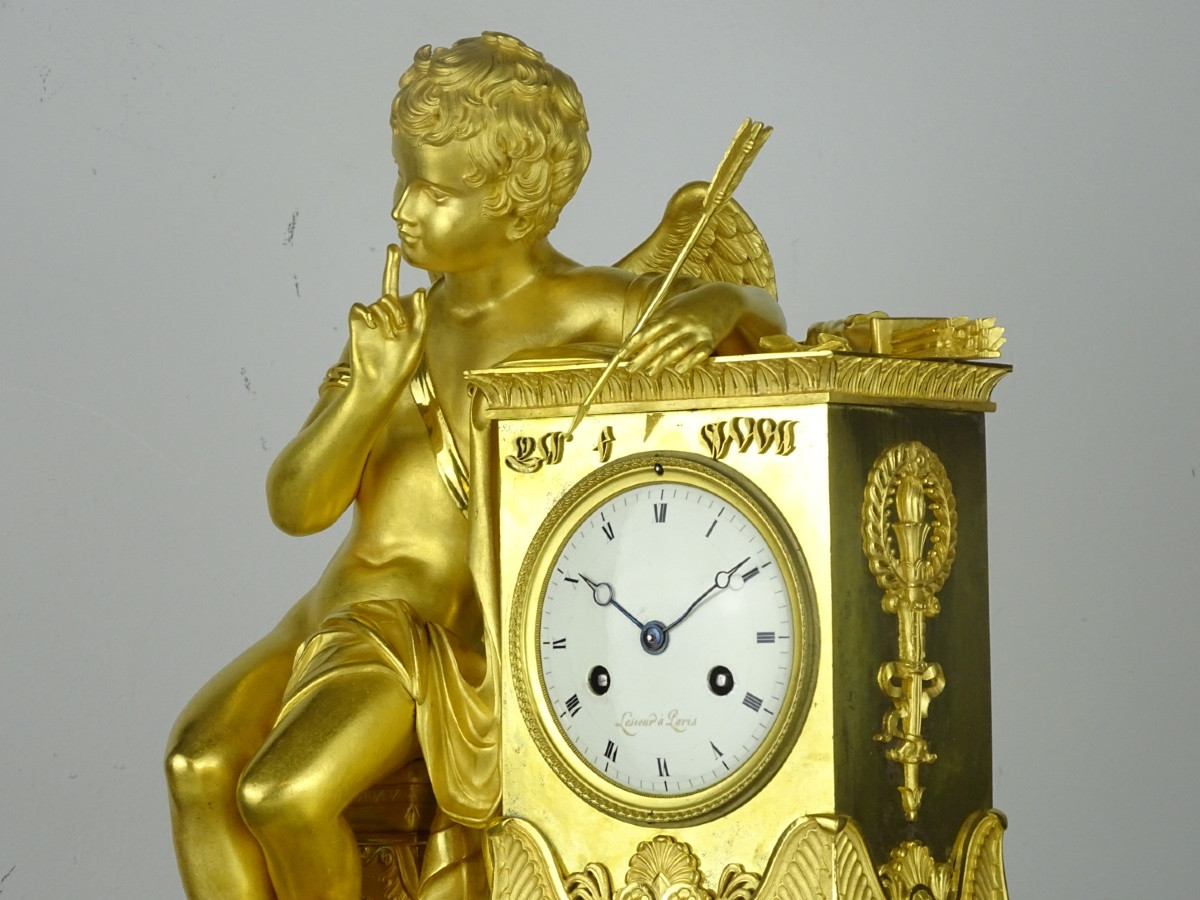
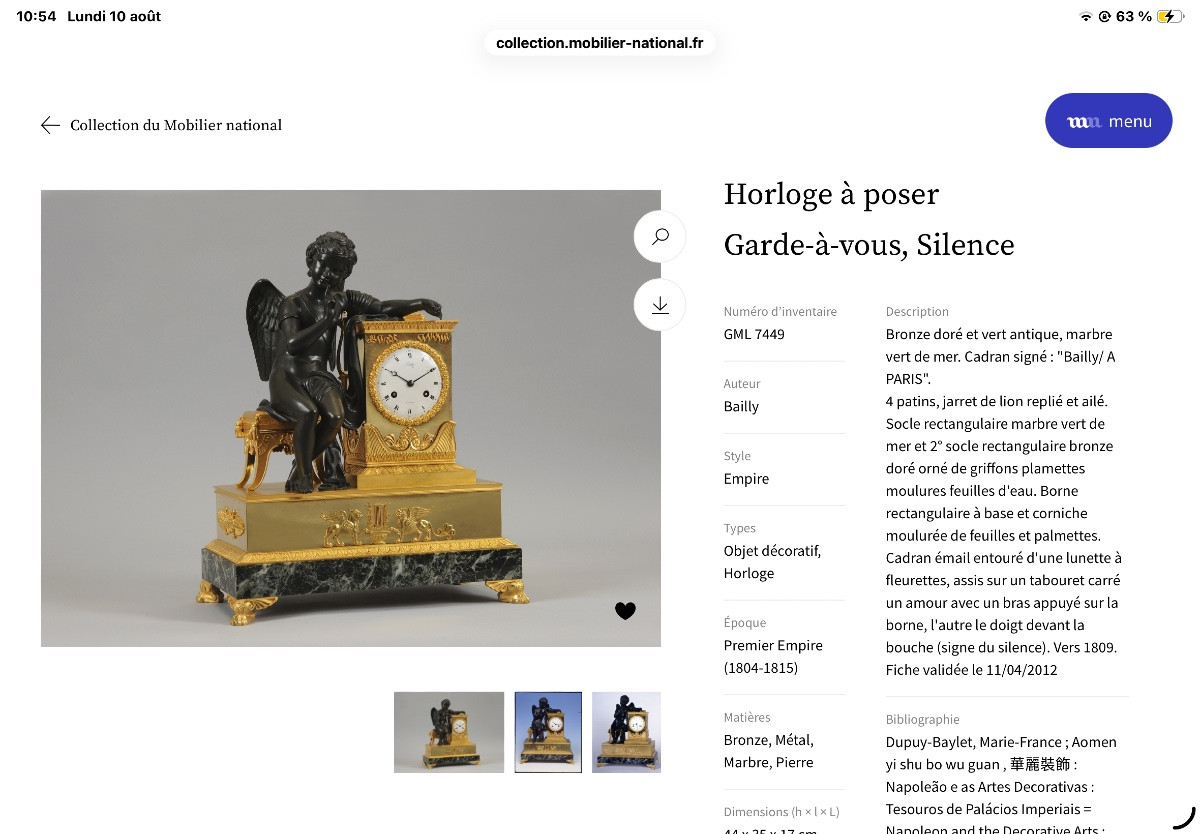
The composition is dominated by a spectacular figure of Cupid, seated beside the pedestal housing the movement. Cupid raises his index finger to his lips in a gesture inviting silence; his bow, arrow, and quiver immediately identify him.
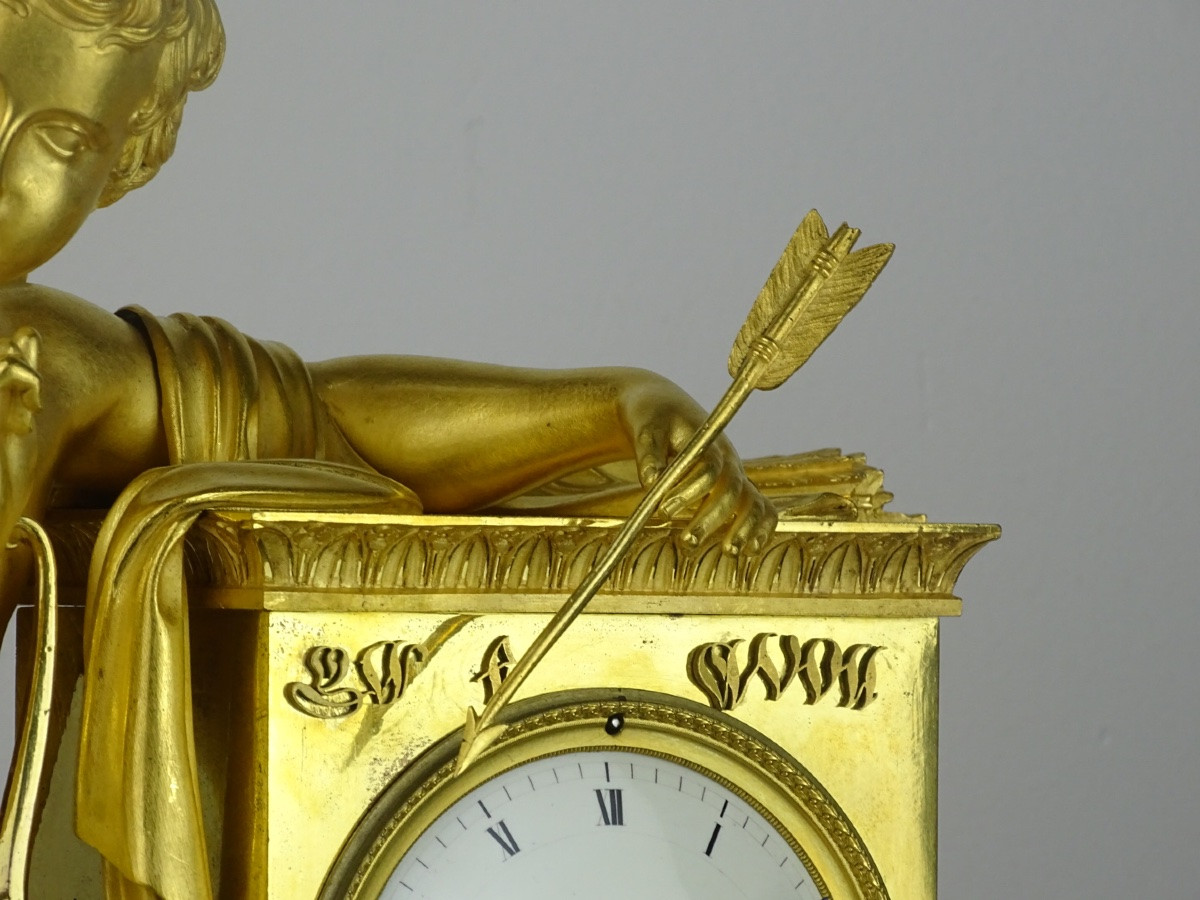
Above the dial is the inscription that gives the model its name: "GARDE À VOUS" (Attention). Two added letters, the D and the S, are now missing, so the inscription currently reads "GARE À VOU" (Beware of You).
The figure of Cupid is a true sculpture in itself. The face, the curls of the hair, the modeling of the body, the hands, the feet, the wing feathers, and the folds of the drapery are rendered with extreme precision. The quality of the casting is enhanced by particularly fine chasing, even in the least immediately visible details.
The mercury gilding is also remarkable. Very well preserved, it displays the variations of matte and gloss that give such depth to high-quality French bronzes from the early 19th century.
At 46 cm in height, the clock is already of considerable size. But it is above all the proportion given to Cupid that lends it its spectacular character: the figure occupies a considerable portion of the composition and appears almost independent of the case. This unusual prominence of the figure gives it a presence not necessarily found on clocks with figures, even those that are taller.
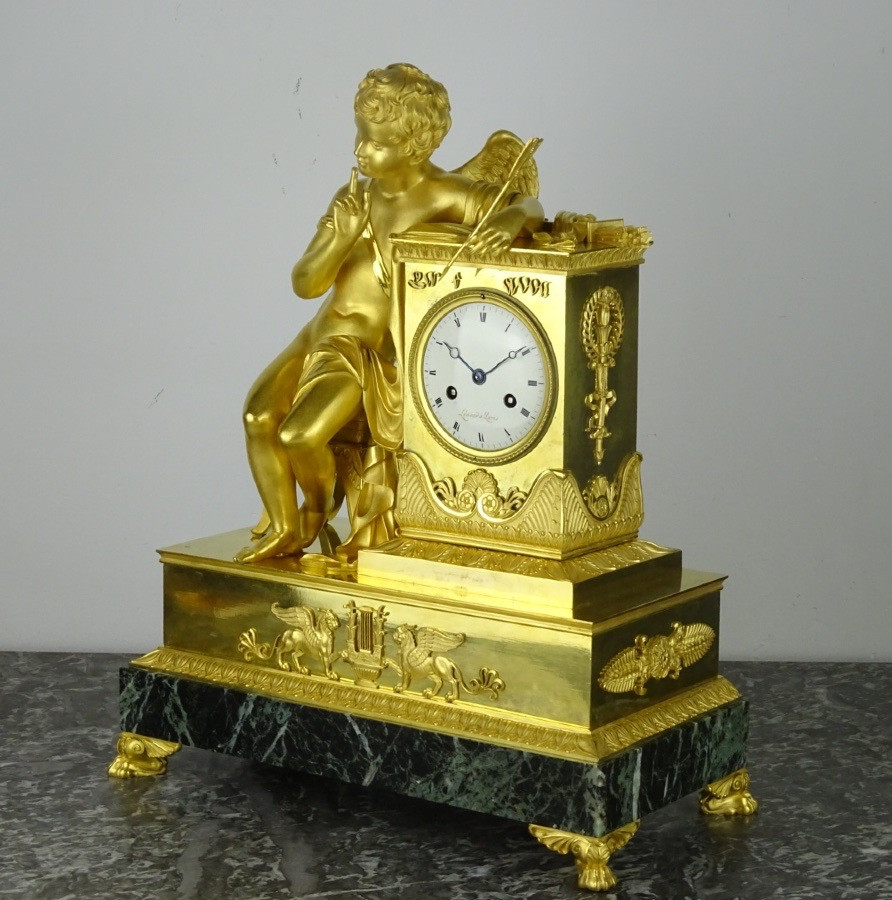
The quadrangular base is itself richly decorated with palmettes, water leaves, rosettes, and applied ornaments. The front of the base features a beautiful composition of two winged griffins positioned on either side of a lyre, motifs characteristic of the neoclassical vocabulary adopted during the First Empire.
The whole rests on a base of sea-green marble, whose deep hues offer a superb contrast with the gold of the bronze mounts. It is supported by four winged claw feet in gilt bronze, particularly well-designed and chased. Particular care has been taken with the entire construction: the clock is decorated on all its sides. The sides of the mantelpiece, like those of the base, receive their own ornamentation. This complete finish, much less common than on clocks designed simply to be viewed from the front, is indicative of the level of quality to which our example belongs.
Claude-François Rabiat and the Organization of the Major Parisian Workshops
The double Rabiat signature is one of the great points of interest of this clock.
Claude-François Rabiat (1756-1815), who became a master founder in 1778, belonged to the important Parisian bronze artisans active at the turn of the 18th and 19th centuries.
To understand the presence of his signature, it is necessary to recall the highly specialized workings of the bronze trades in Paris. A clock of this importance was generally not the work of a single individual. The model could be designed or marketed by a bronze merchant, while the casting and chasing were entrusted to a specialized workshop; the clockmaker then supplied the movement. Thus, bronze casters as important as Thomire could commission pieces from founders and chasers such as Rabiat, purchase their castings, or entrust them with the execution of certain elements before incorporating them into their own creations. The Rabiat signature on the reverse of the bronzes should therefore be understood as the valuable trace of one of the workshops that materially participated in the creation of the case.
This division of labor explains why major Parisian productions can today combine several prestigious names, each corresponding to a different craft, on the same object.
Lesieur in Paris
The clockwork mechanism bears the signature "Lesieur in Paris."
Lesieur is a well-documented Parisian clockmaker from the early 19th century, notably on the Vieille rue du Temple in 1806. His name appears on several high-quality Empire clocks, sometimes associated with particularly ambitious cases. An Empire-era portico clock signed Lesieur is listed in the French heritage collection, while other movements bearing his signature are known on figurative clocks from the early 19th century. Its association here with a case whose bronze mounts bear Rabiat's mark twice is particularly interesting.
Ref: ZDW4SE8BPJ

 English
 Français
 Italiano
 Deutsch
 Light stand, 17th century.
1.200 € EUR