This description has been translated and may not be completely accurate. Click here to see the original
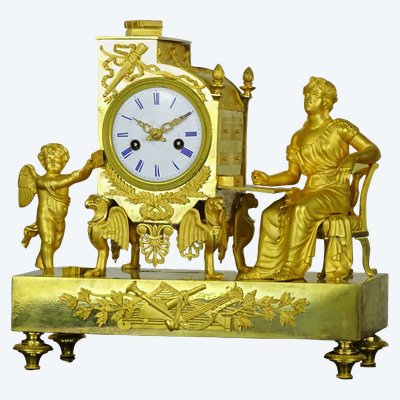
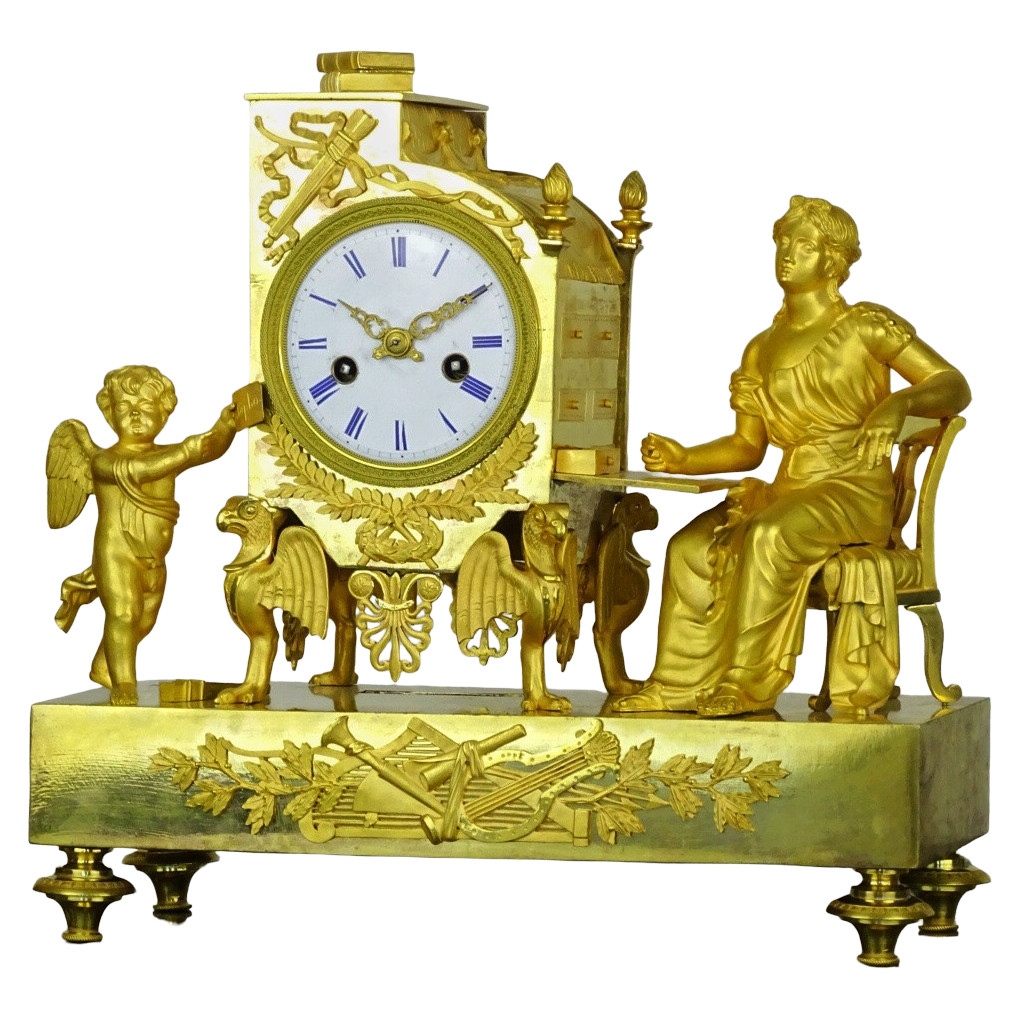
An exceptional Charles X-era clock in finely chiseled and mercury-gilded bronze, signed “LF” on the reverse of the bronze parts—a mark attributed to the famous bronze artist Lucien François Feuchère (1797–1849), one of the leading figures in Parisian bronze art of the first half of the 19th century.
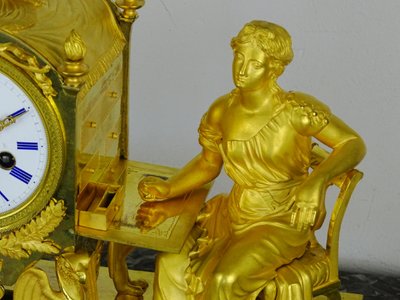
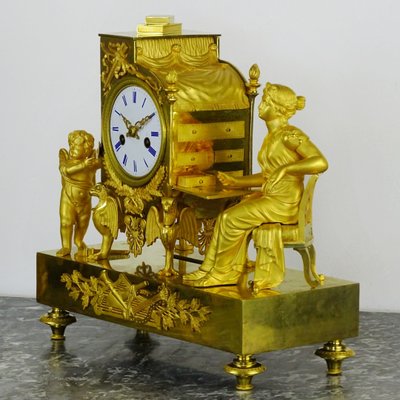
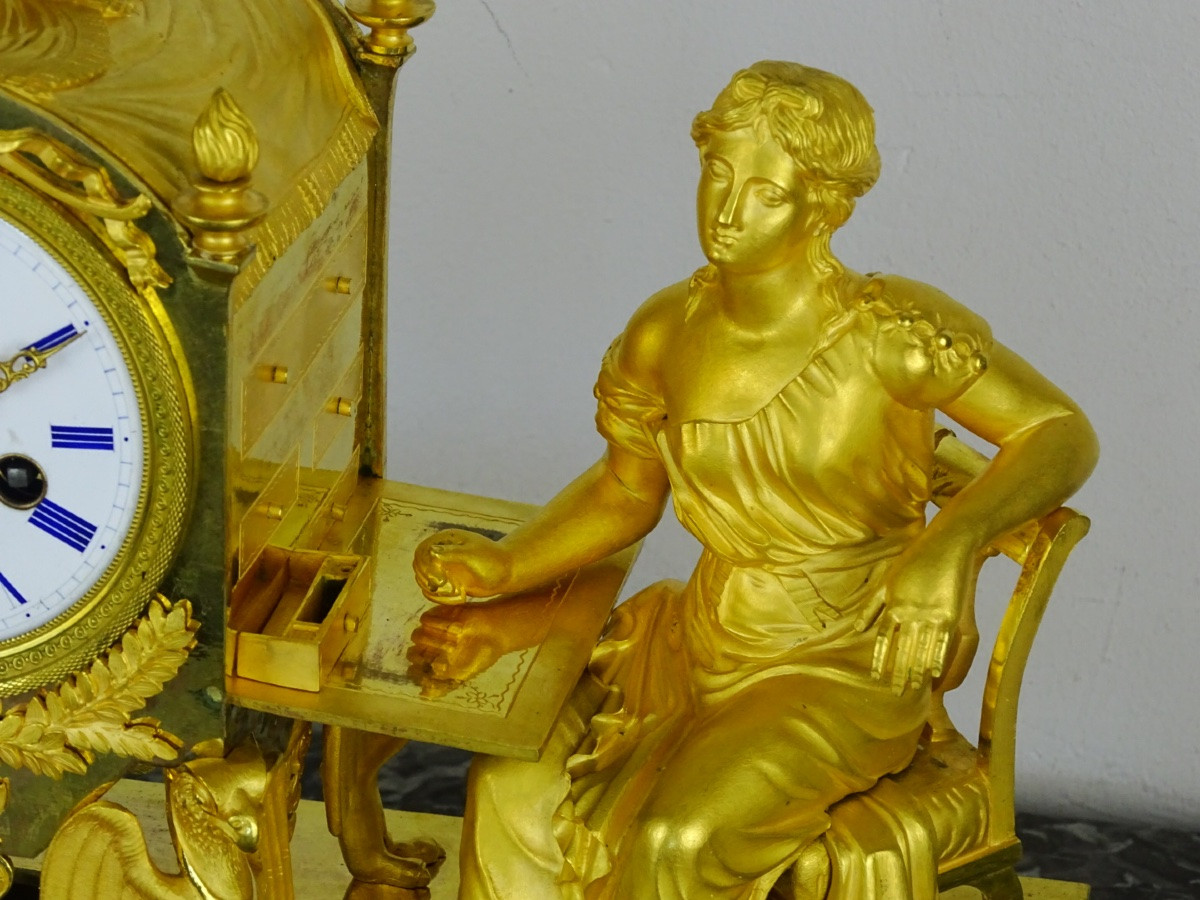
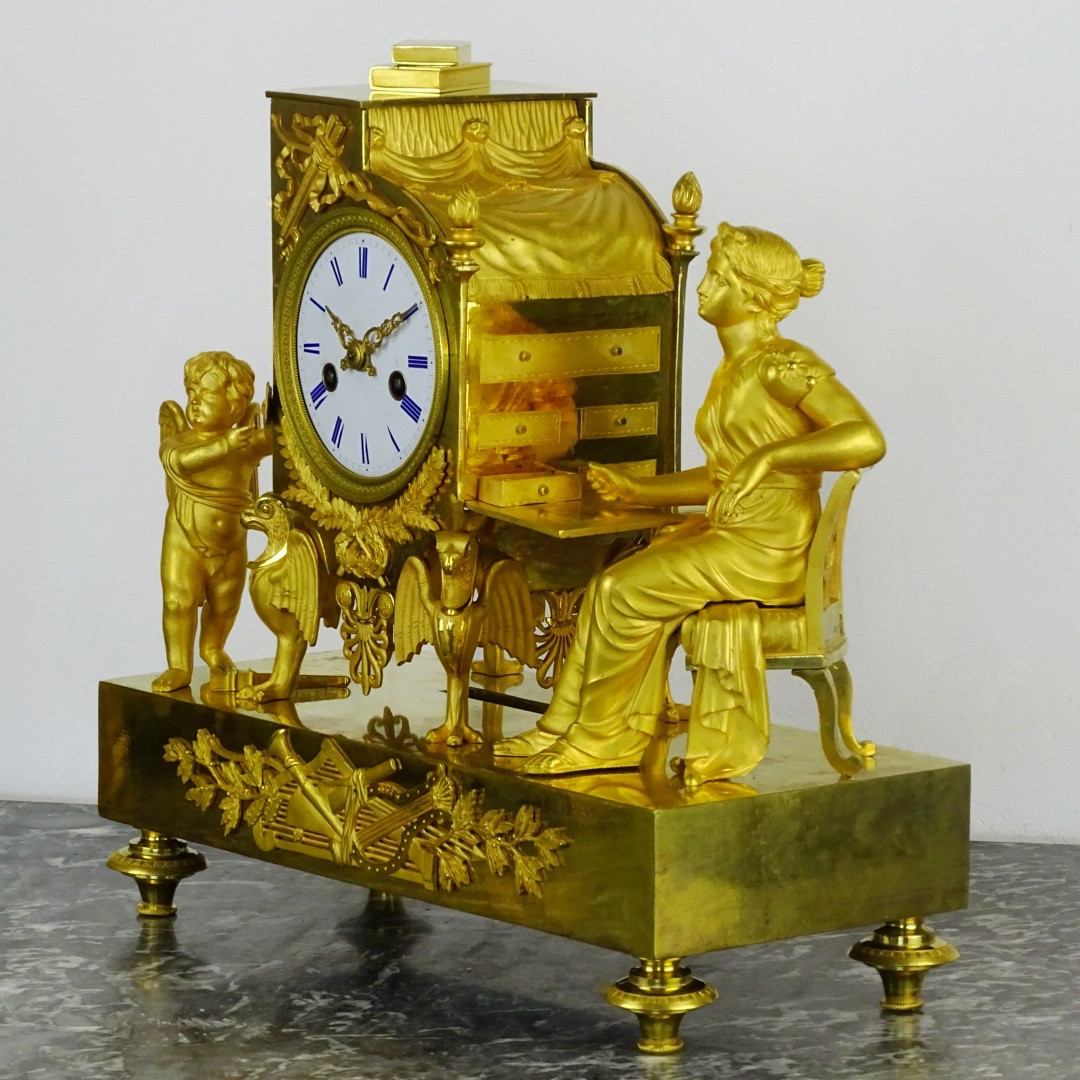
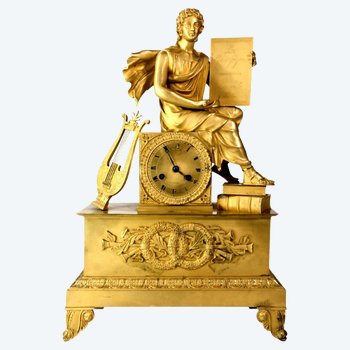
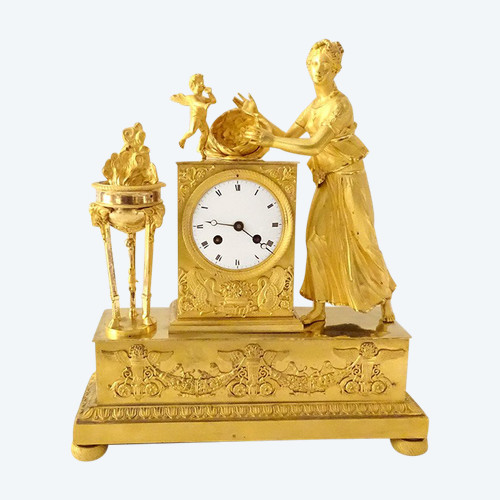
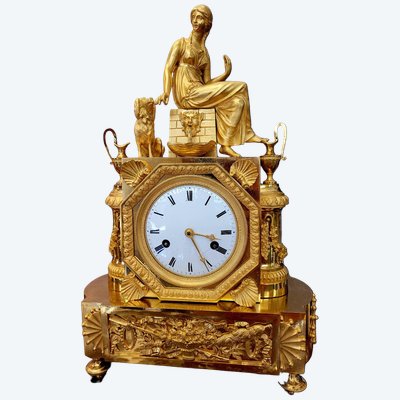
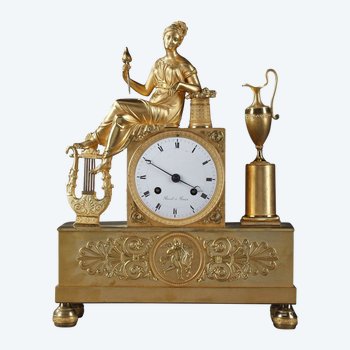
This remarkable composition depicts Sappho, the famous poetess of antiquity, guided by Cupid. On the left, the young god of Love, recognizable by the quiver at his feet, holds a small tablet inscribed with “SAPHO,” unambiguously identifying the subject. Facing him, the poetess is depicted seated at an elegant cylindrical writing desk, in a moment of inspiration.
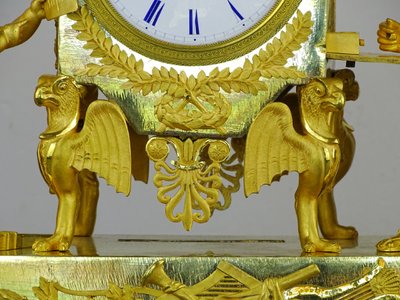
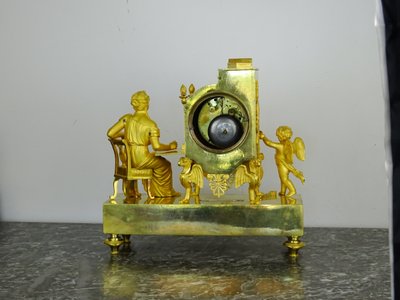
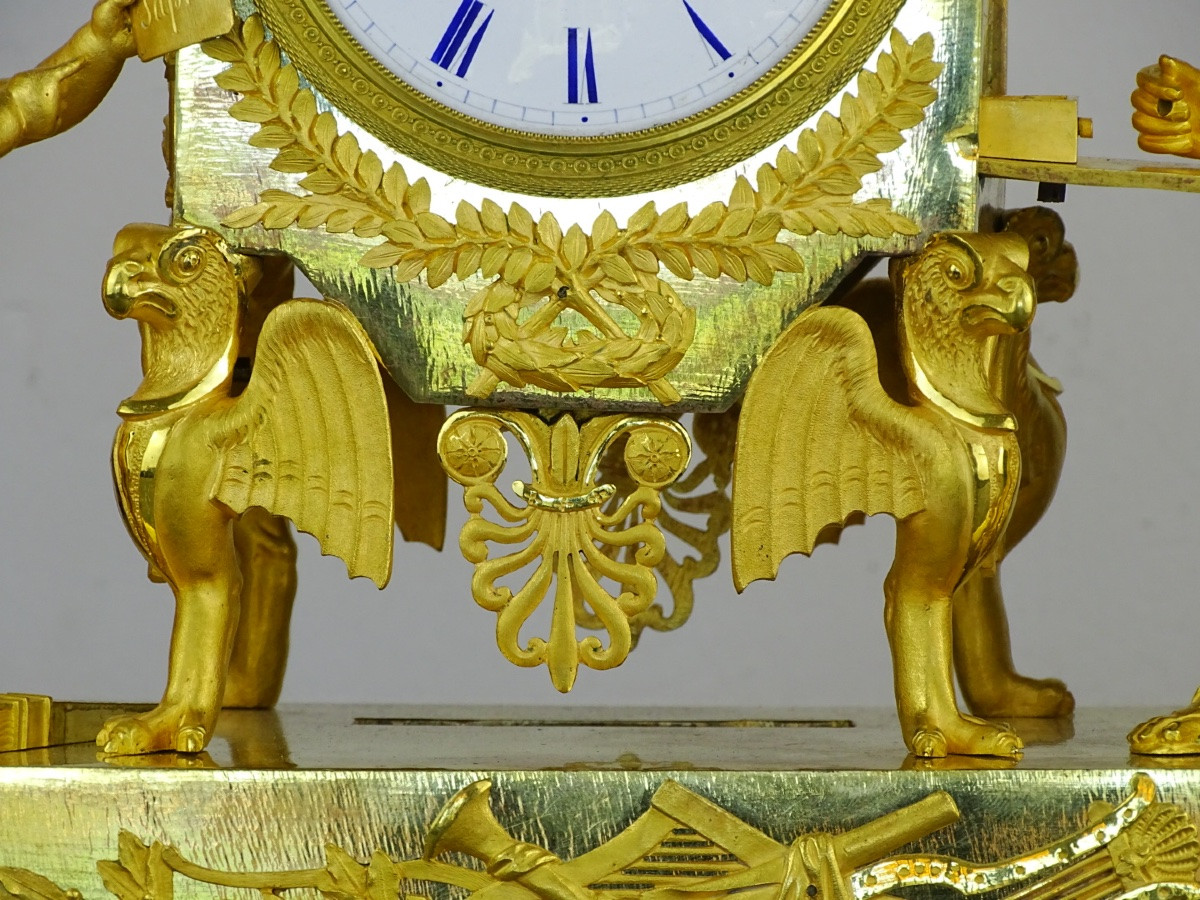
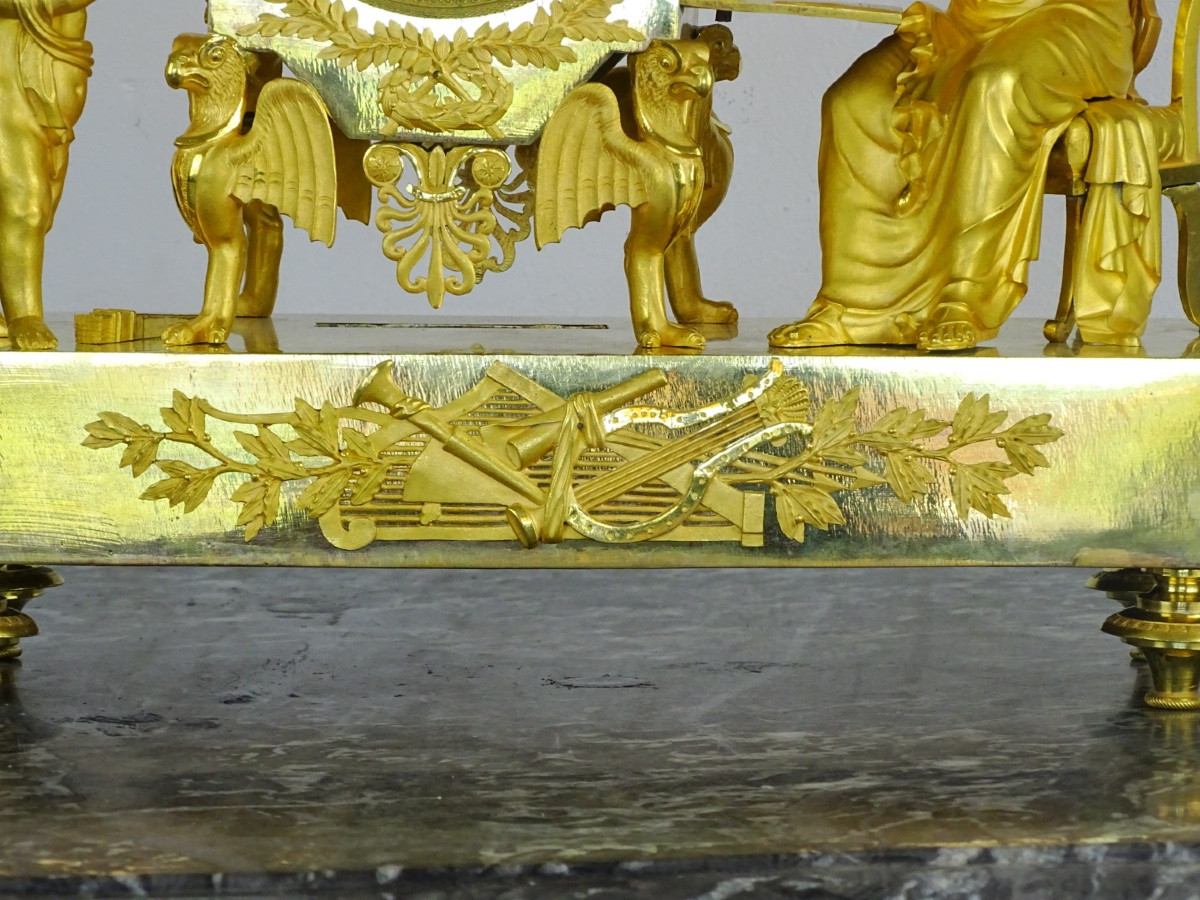
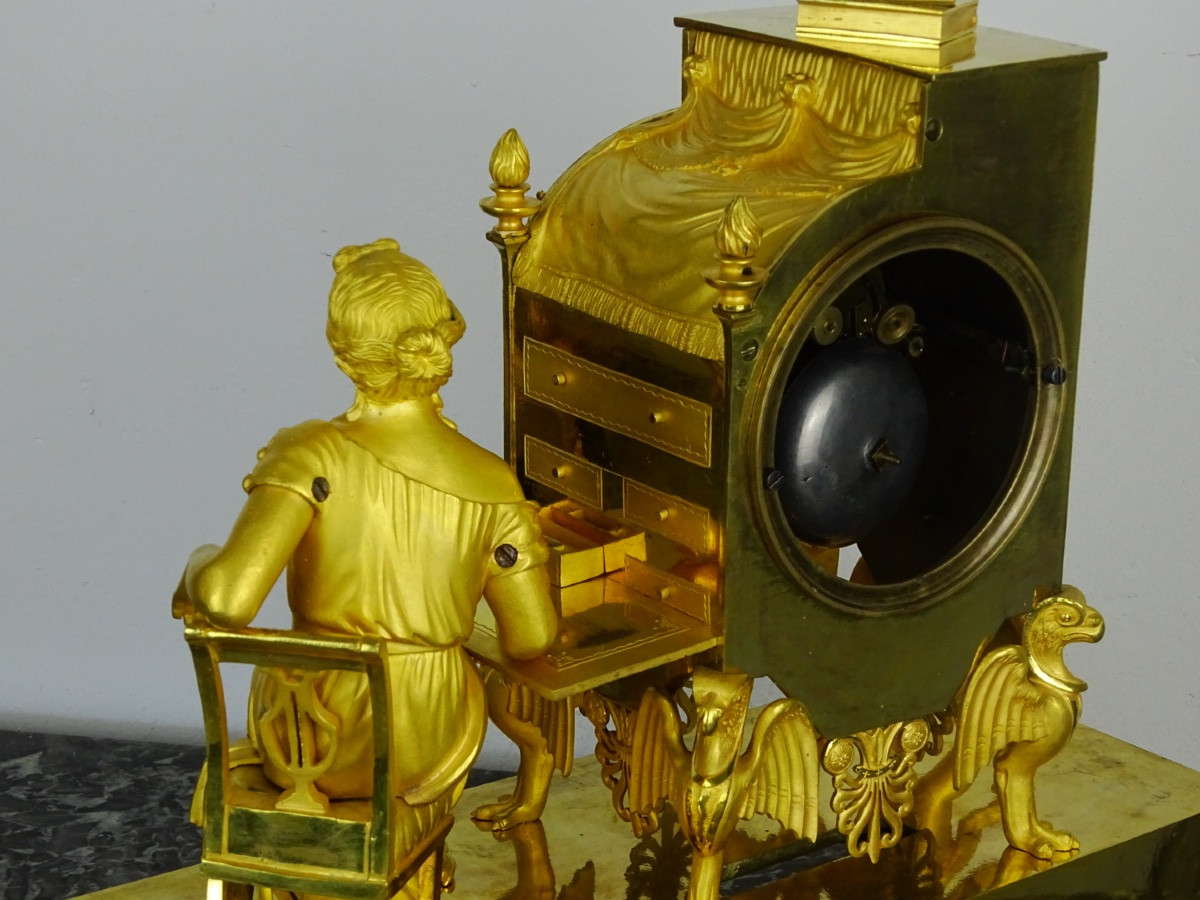
The design of this desk is one of the most remarkable features of this clock. Of exceptional sculptural quality, it is supported by four winged griffins, while its raised cylinder reveals a fully furnished interior. One of the drawers is slightly ajar, revealing an inkwell, while two books rest on top of the desk, evoking the poetess’s intellectual work. This wealth of detail, rarely encountered, attests to the refinement of the finest Parisian productions of the Charles X period.
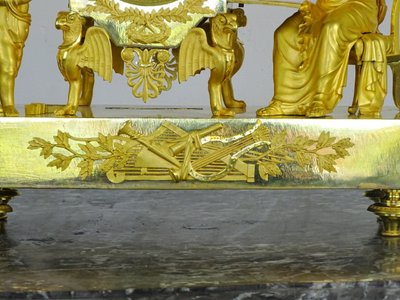
The quality of the carving is simply remarkable. Sappho’s drapery, the delicate expressions on the faces, the modeling of the little Cupid, and all of the decorative bronze elements reveal the handiwork of a first-rate workshop. The mercury gilding, superbly preserved, possesses an exceptional luster and beautifully highlights every detail of the composition.
With its erudite subject matter, its signature, its state of preservation, and above all the richness of its craftsmanship, this clock ranks among the finest works by Lucien François Feuchère. Pieces signed by or attributed to this great bronze artist are today among the most sought-after works by collectors of French bronzes from the Restoration and Charles X periods.
The movement is in working order and is complete with its balance wheel, gong, and key.
It is worth noting two minor missing parts: Cupid’s bow, which was once attached to the quiver, and the stylus that Sapho held in her right hand. Both of these elements can be custom-made in gilded bronze by a specialized artisan, using traditional 19th-century manufacturing techniques, to restore the clock to its original condition. This restoration can be carried out upon request and based on a quote.
With its refined iconography, the quality of its cast bronze and engraving, its prestigious signature, and its remarkable state of preservation, this clock is a major work of Parisian clockmaking from the first third of the 19th century, destined for the finest collections.
Ref: WYYL1HKFPD

 English
 Français
  Italiano
  Deutsch
  The fisherman with the net
3.450 € EUR
The fisherman with the net
3.450 € EUR