This description has been translated and may not be completely accurate. Click here to see the original
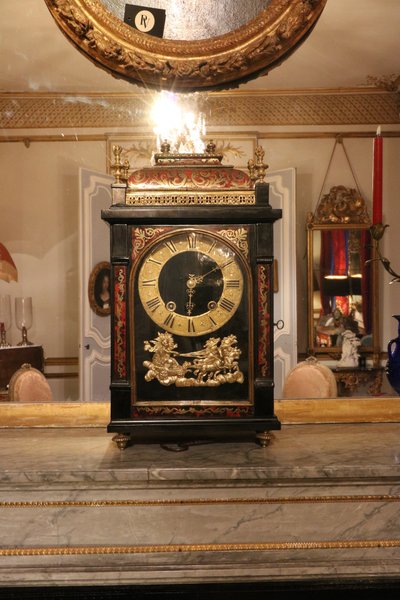
Movement signed Gaudoin Paris
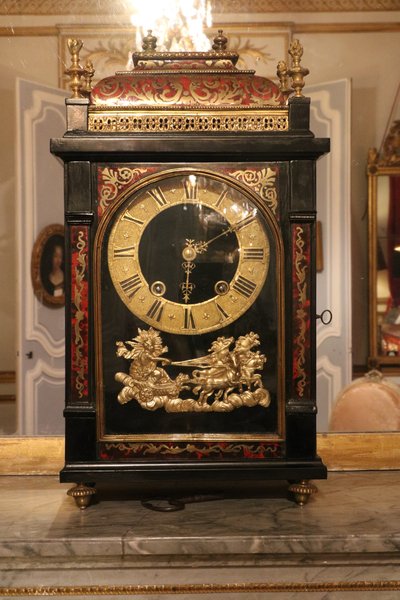
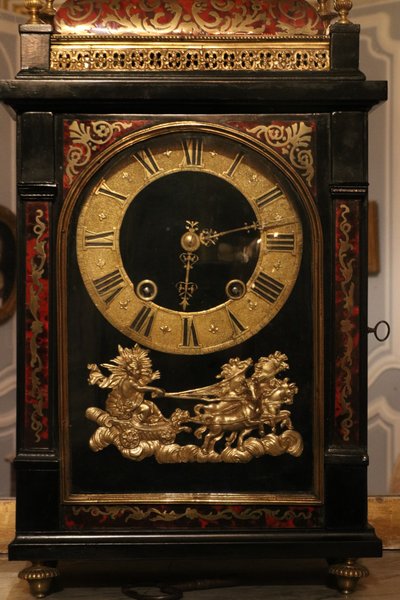
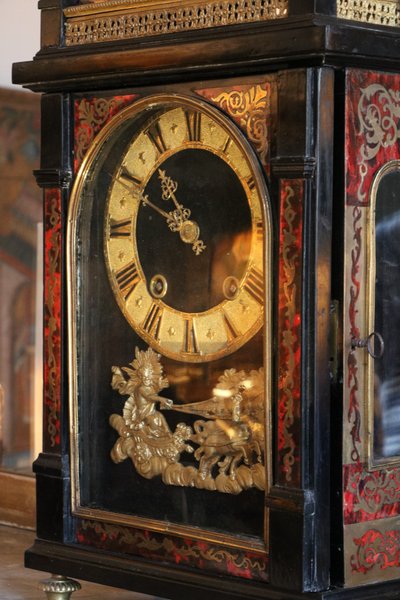
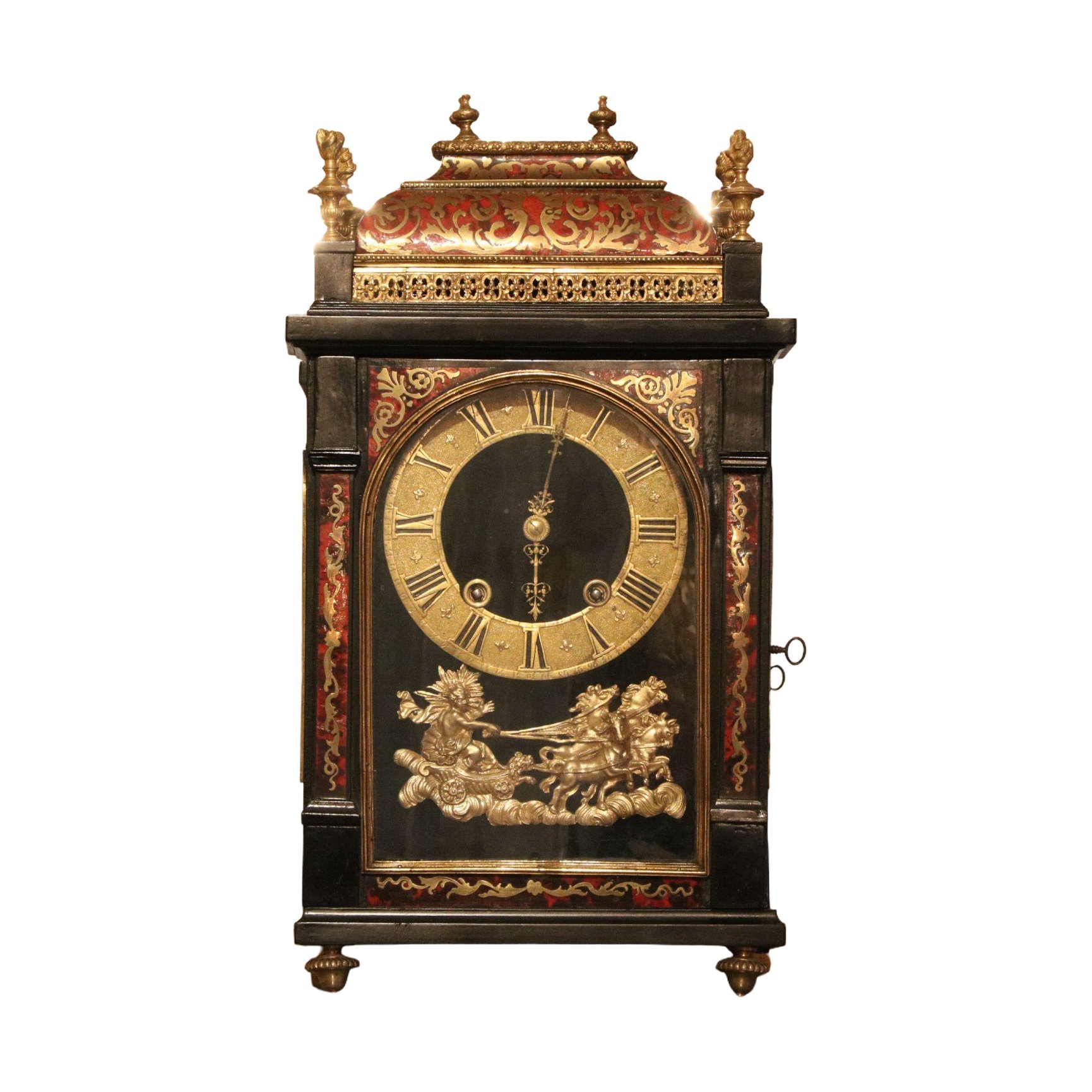
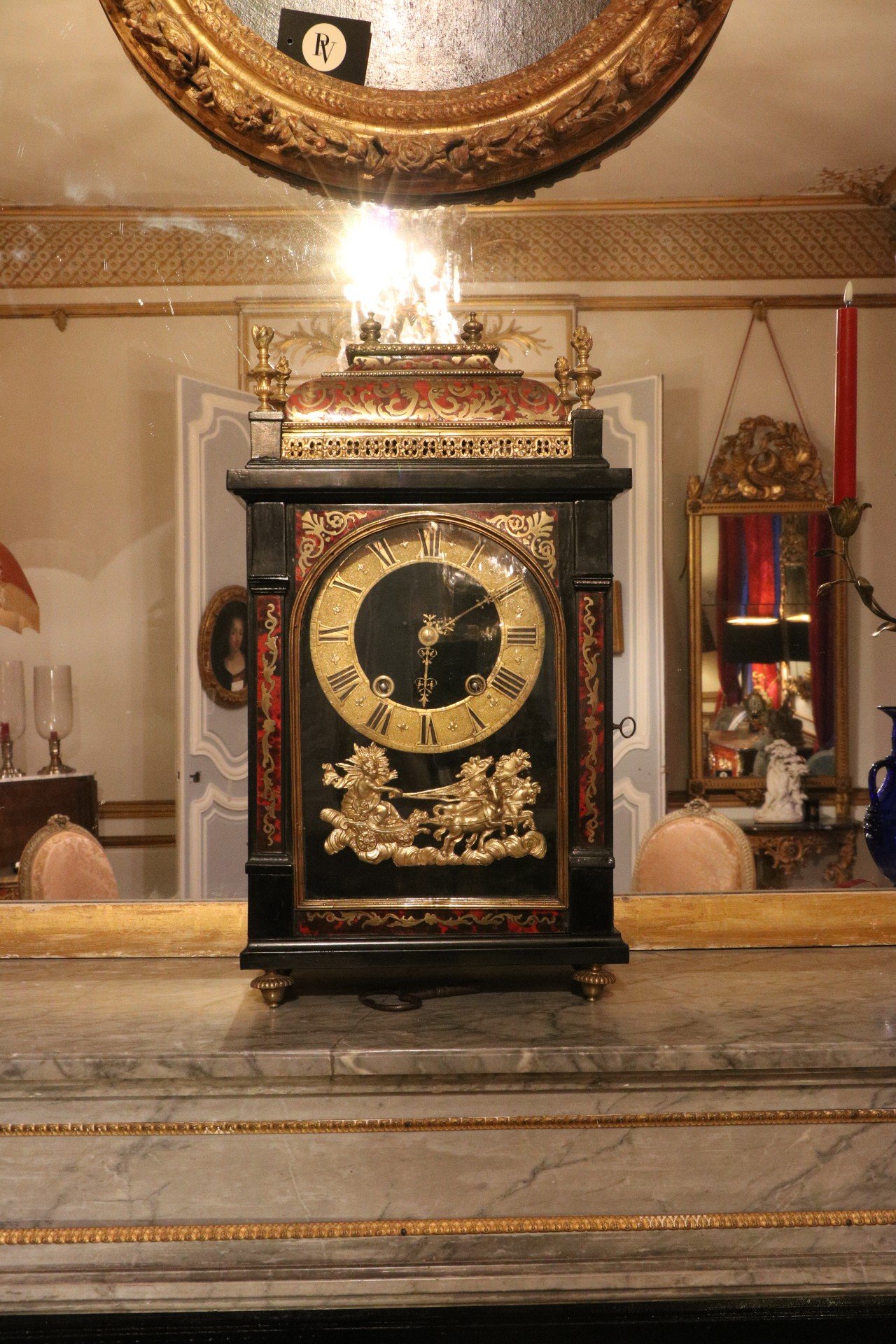
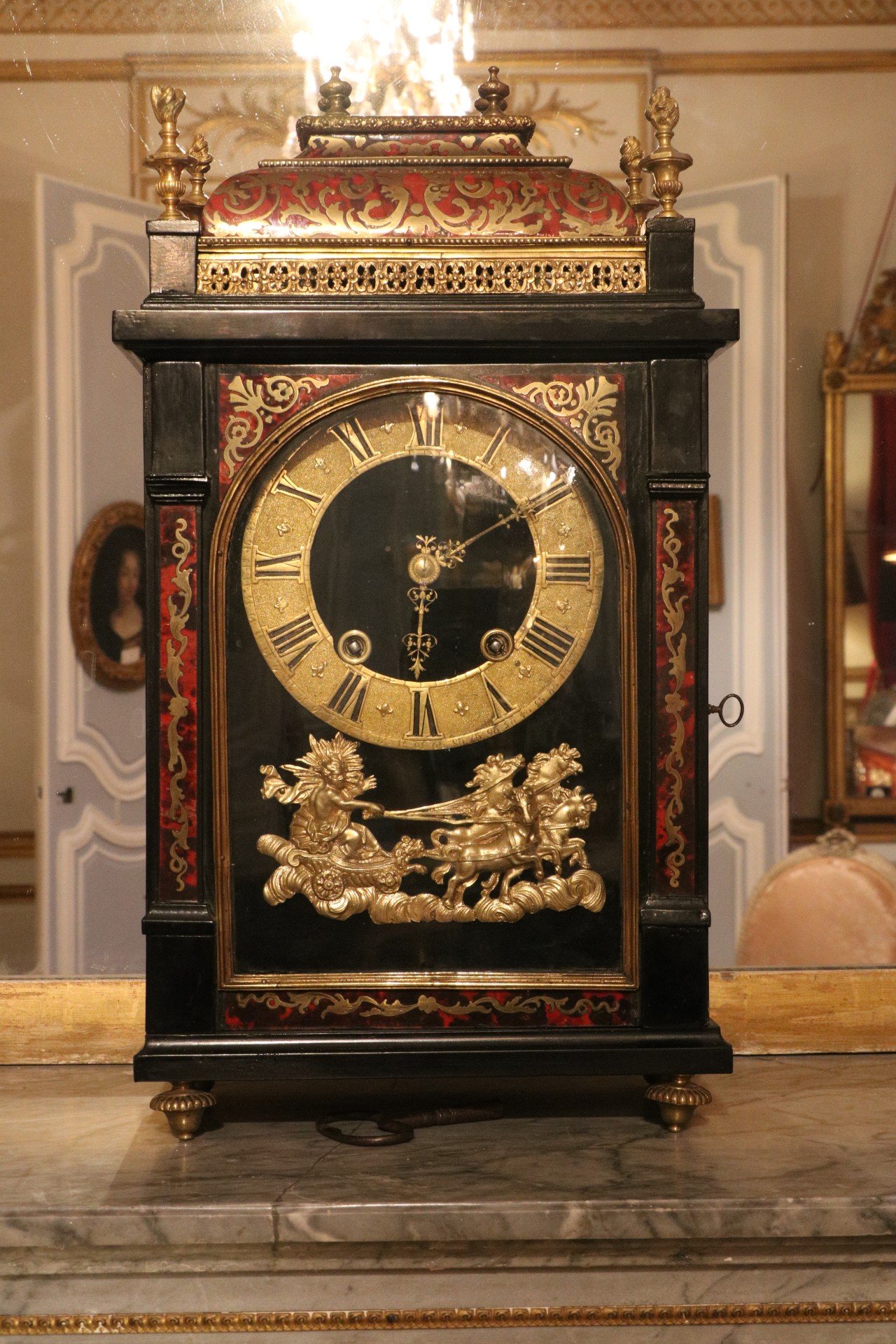
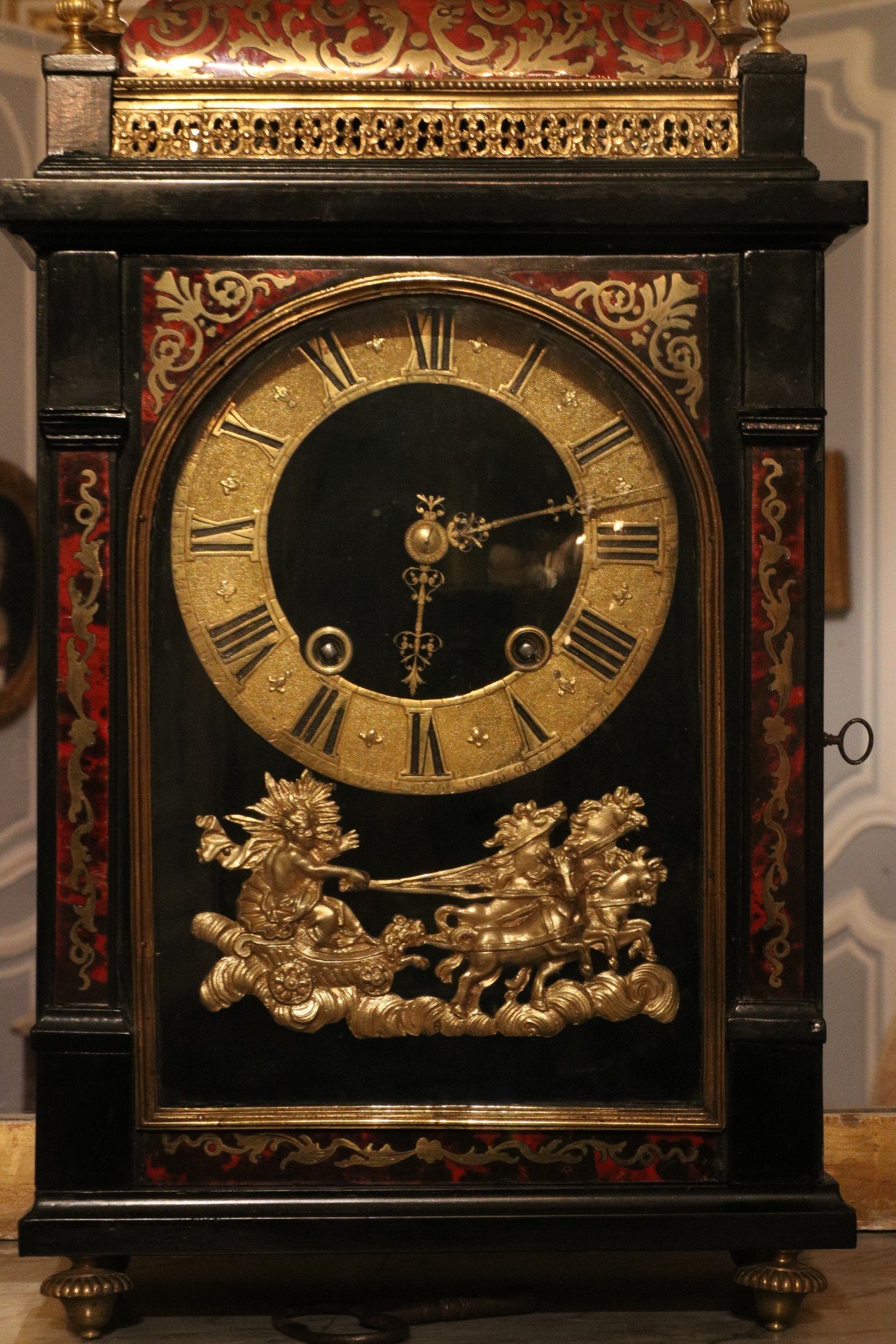
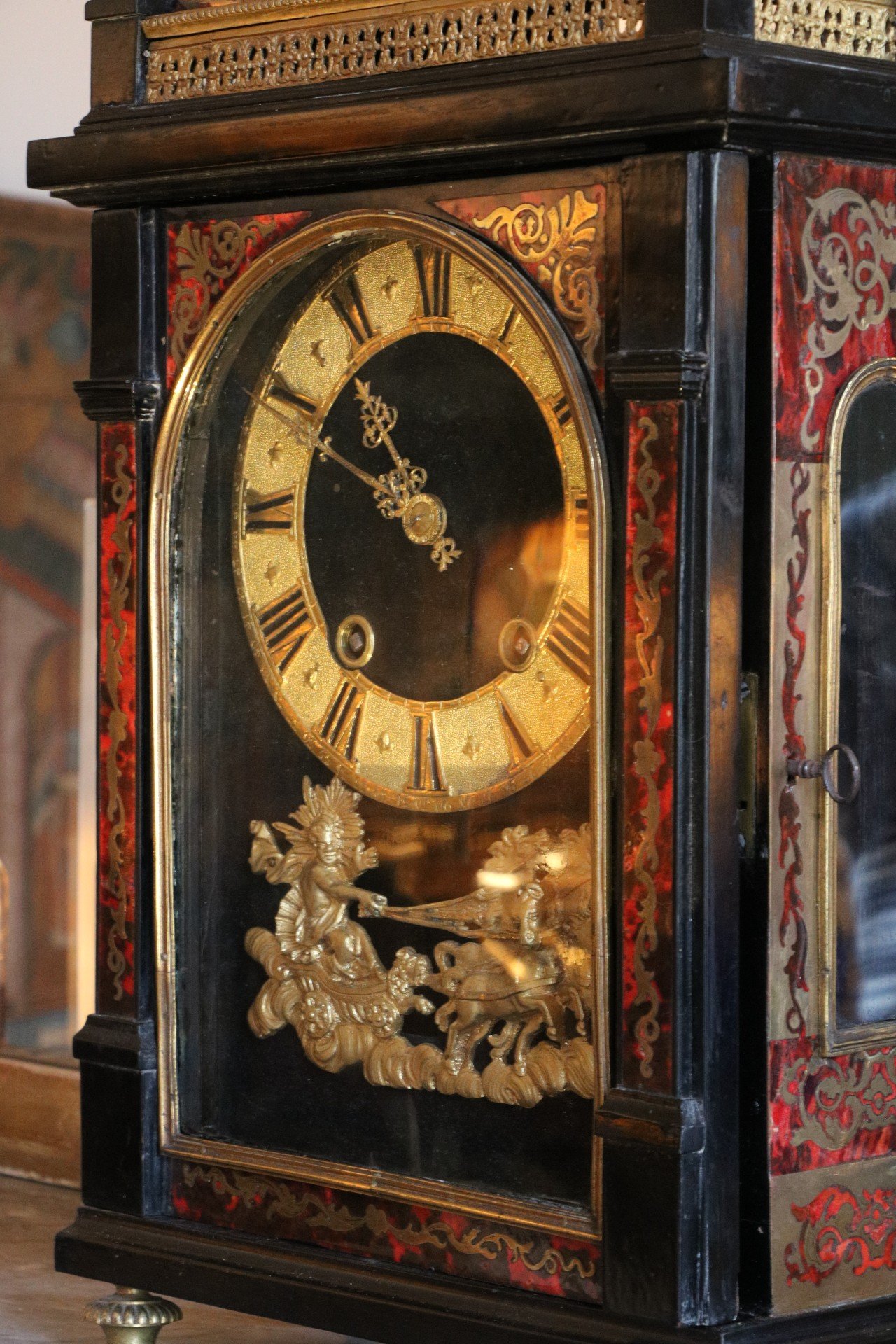
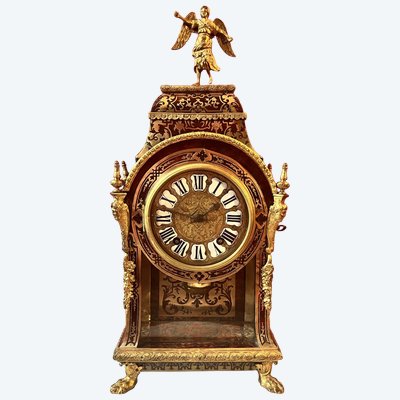
The entire decoration is in two-part Boulle-style marquetry; brass on a red tortoiseshell background. The architectural front is framed by two pilasters. The side panels are openwork, allowing a glimpse behind glass of the clock's movements.
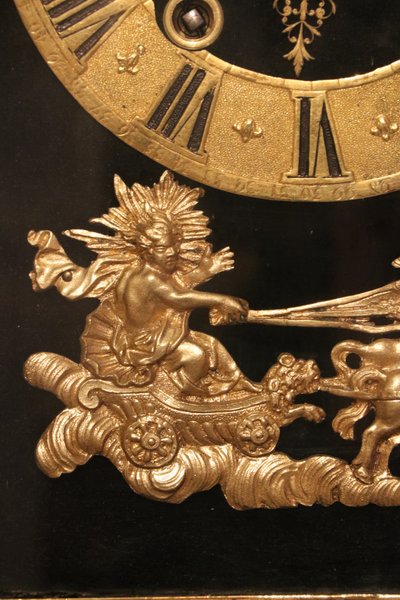
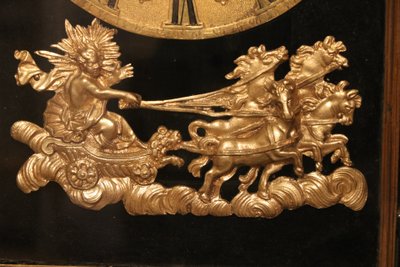
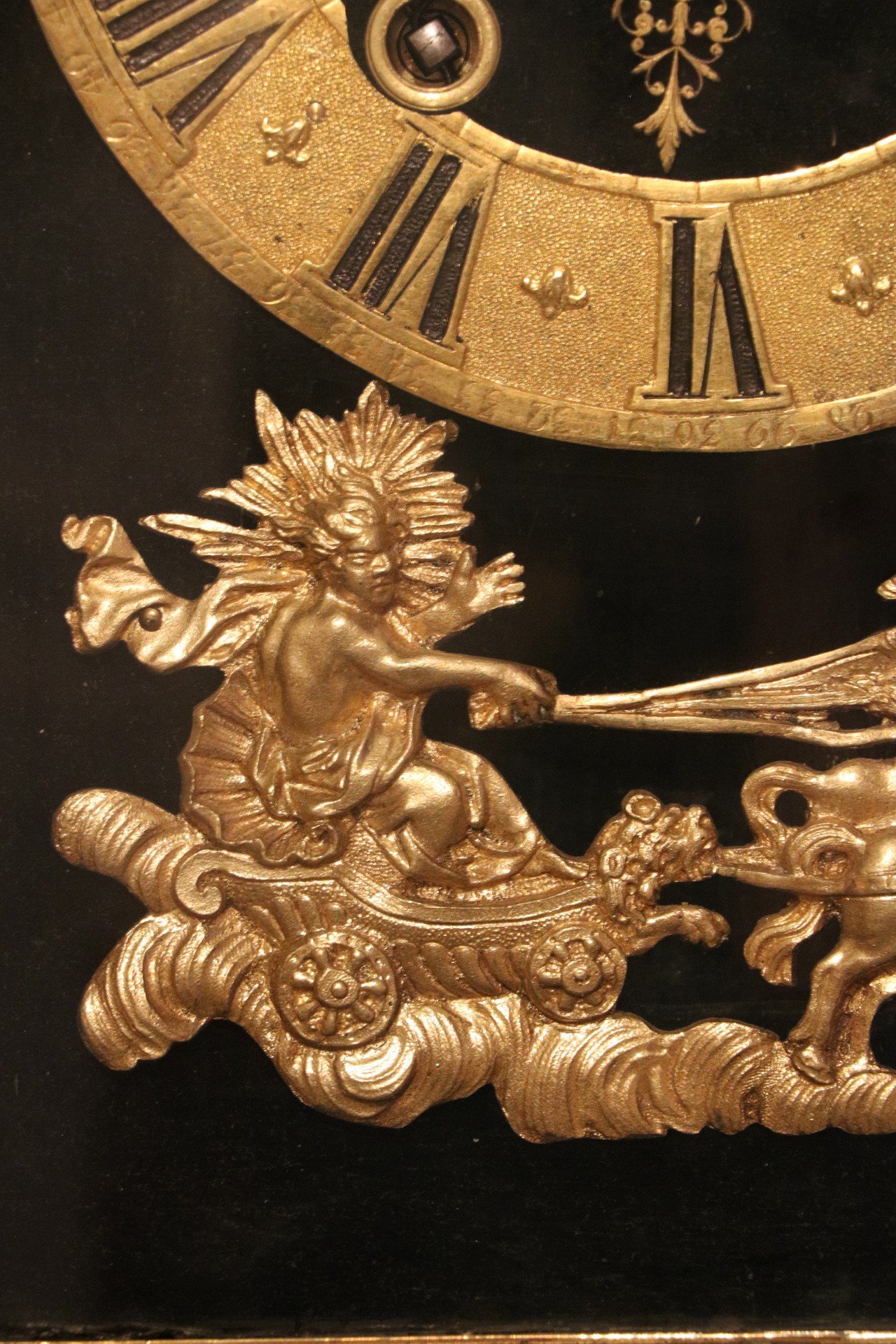
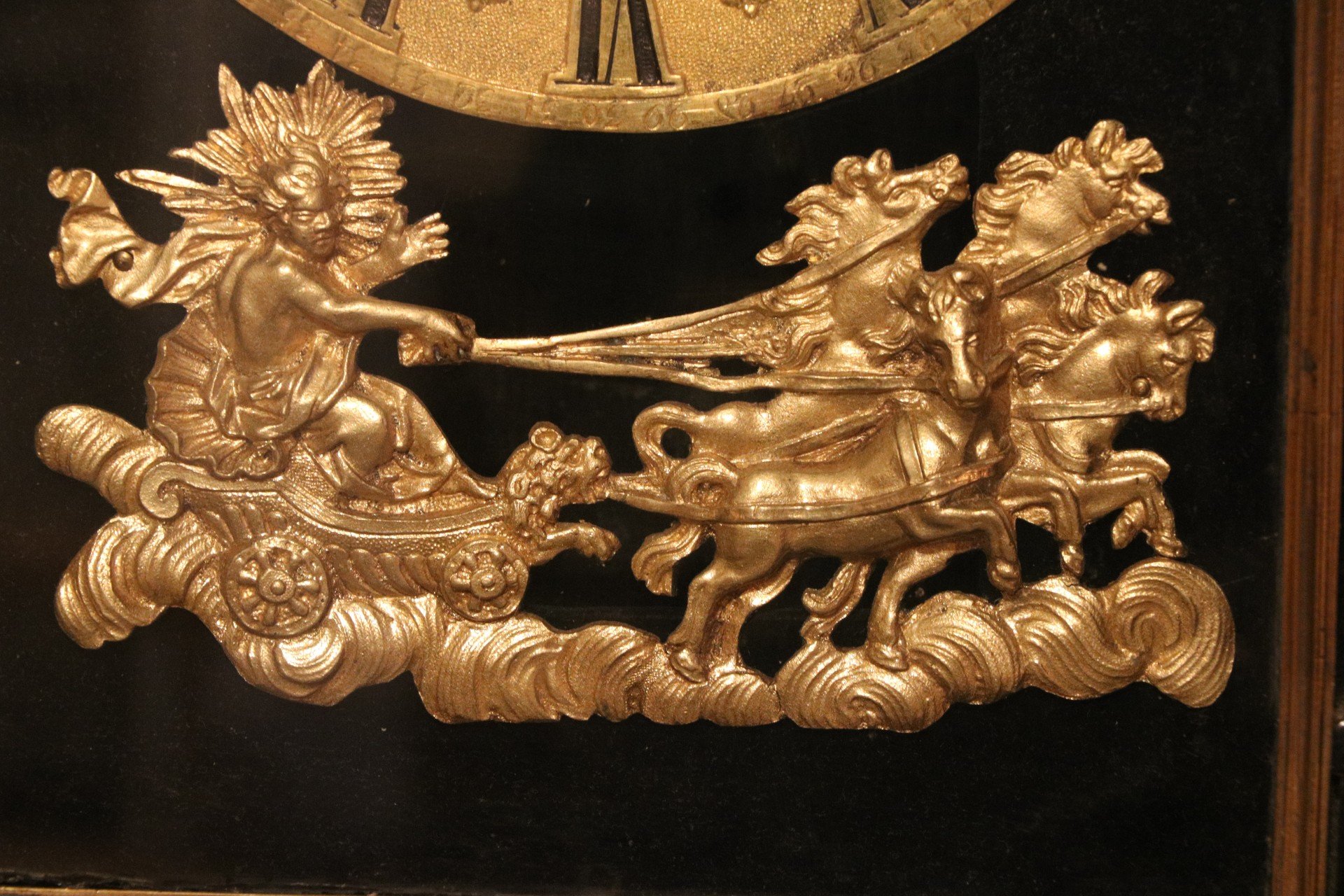
The dial features a gilded bronze decoration depicting Apollo's chariot. The clock stands on four gadrooned feet. The cornice, decorated with beaded friezes, rests on an openwork gallery, surmounted by four fire pots and four narrowed sockets.
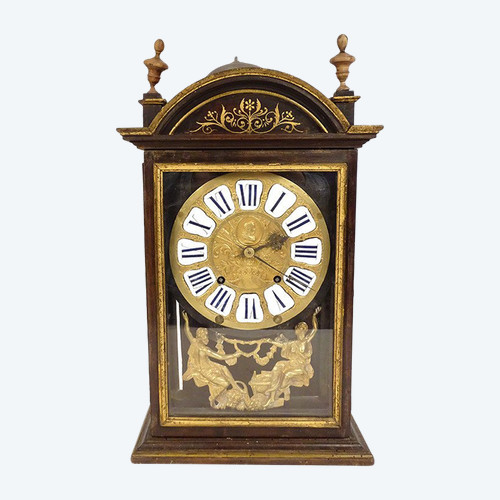
Religieuse" clocks, created mainly at the beginning of the reign of Louis XIV, are characterized by their simplicity, austerity and style, reminiscent of that of Louis XIII. Their shape and ornamentation are inspired by the architecture of the period, often depicting the façade of a palace. The decorative elements of these pendulums, such as pilasters, cornices and pediments, are similar to those found on buildings like the Palais Mazarin or the Institut de France. Clock cages were mainly made of walnut or sometimes oak, and their decoration ranged from the simple (veneered ebony or blackened pearwood cages) to the more elaborate, with copper, ivory or tortoiseshell inlays. Early clocks were minimalist, with a simple pediment, while more elaborate ones incorporated columns and more sumptuous decorations, marking the evolution towards the grand style.
Louis XIV period circa 1700
Used condition
H. 57 x W.31 x D.14 cm
Ref: IFHJBRVEBD

 English
 Français
 Italiano
 Deutsch
 Cup carrier, Fon, Benin
650 € EUR