




Would you like more images?

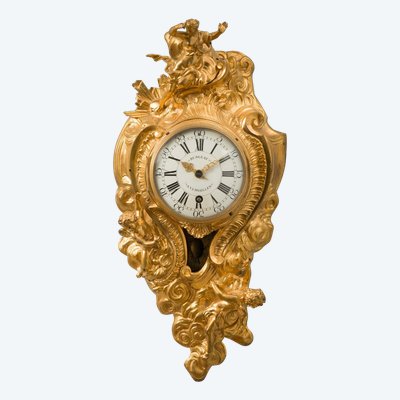
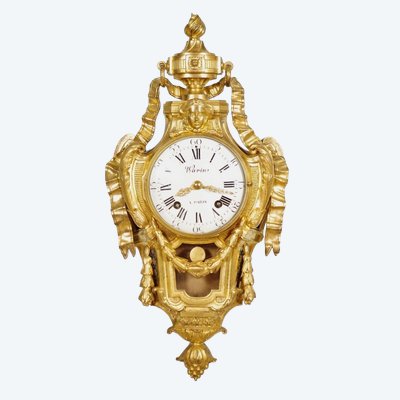
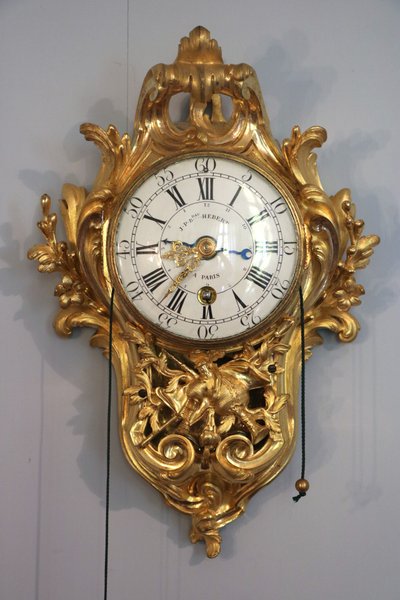
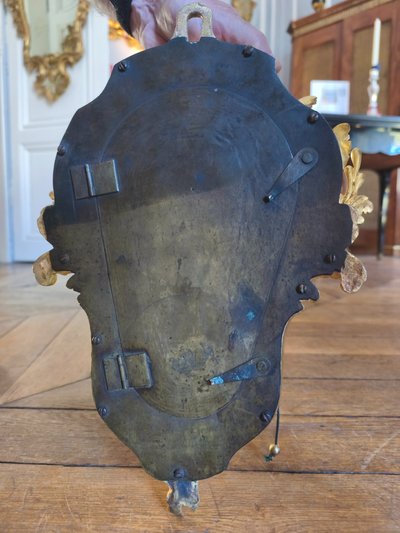
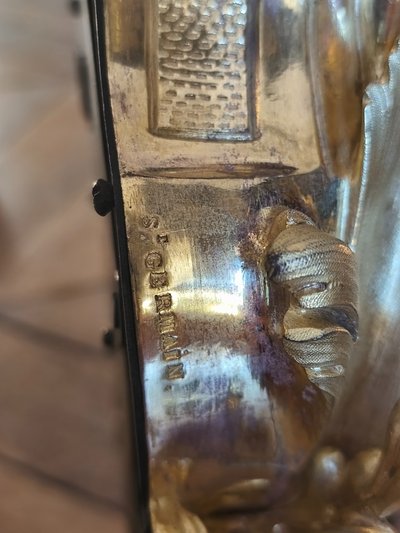
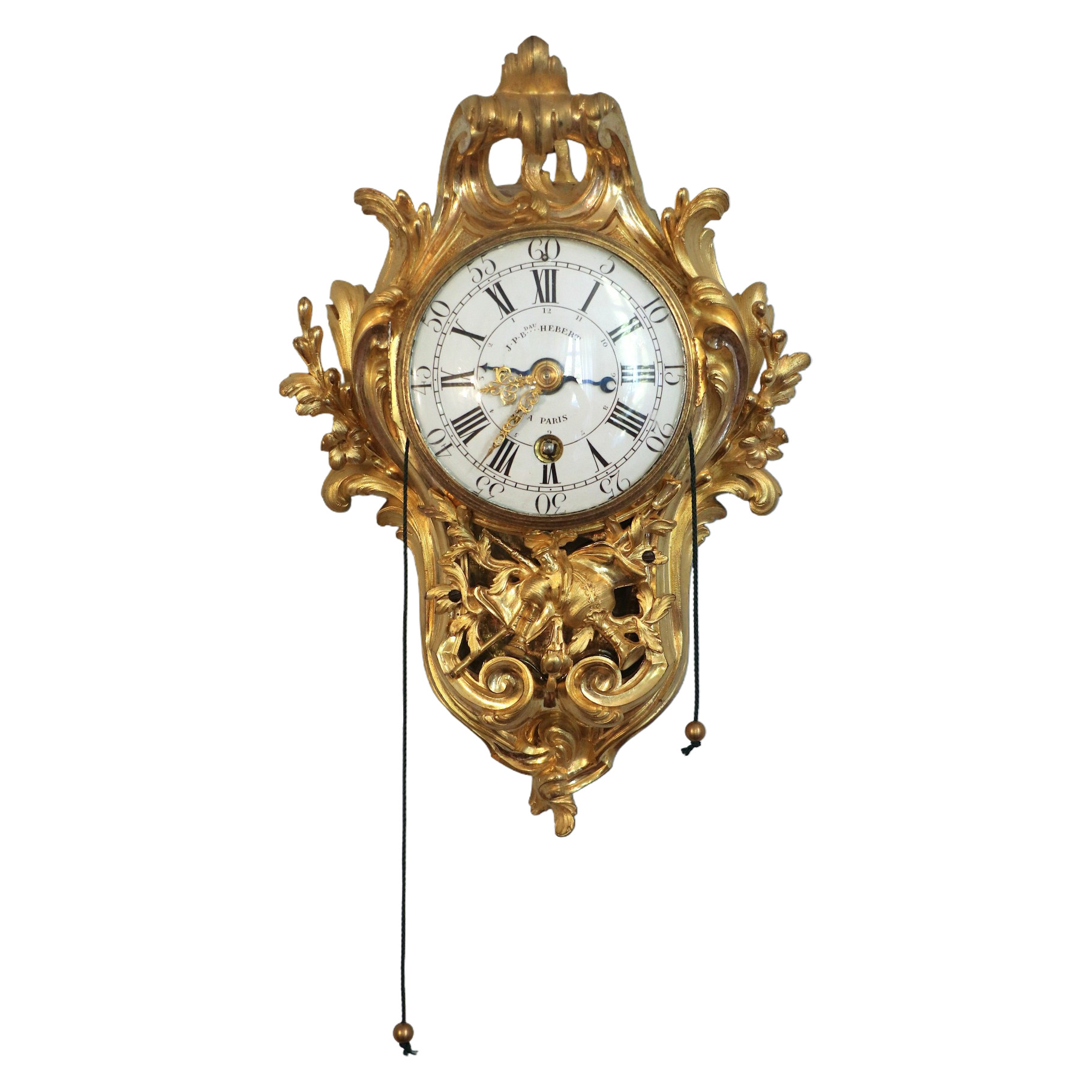
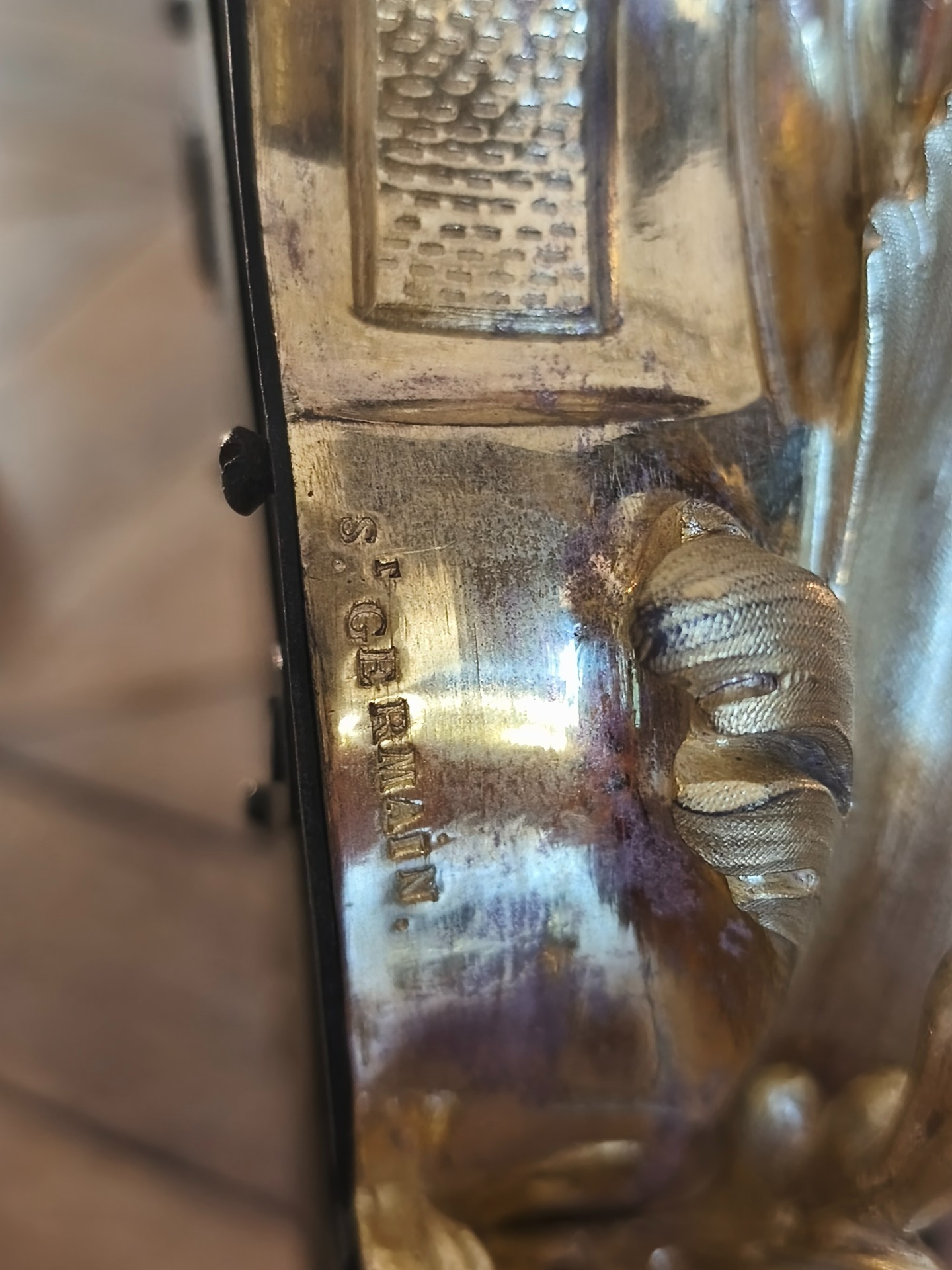
A Louis XV period gilt bronze cartel clock, signed Saint Germain.
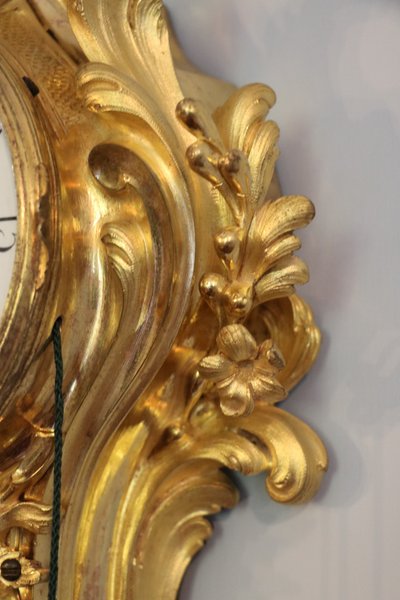
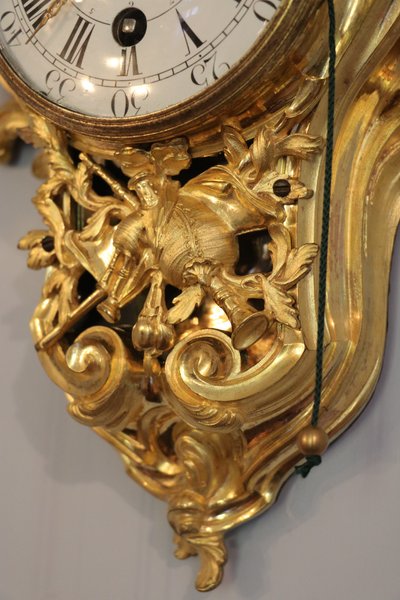
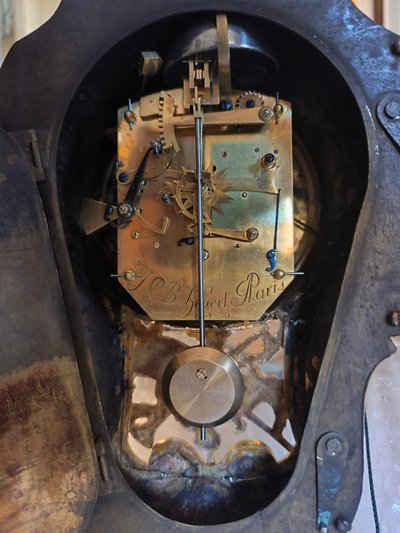
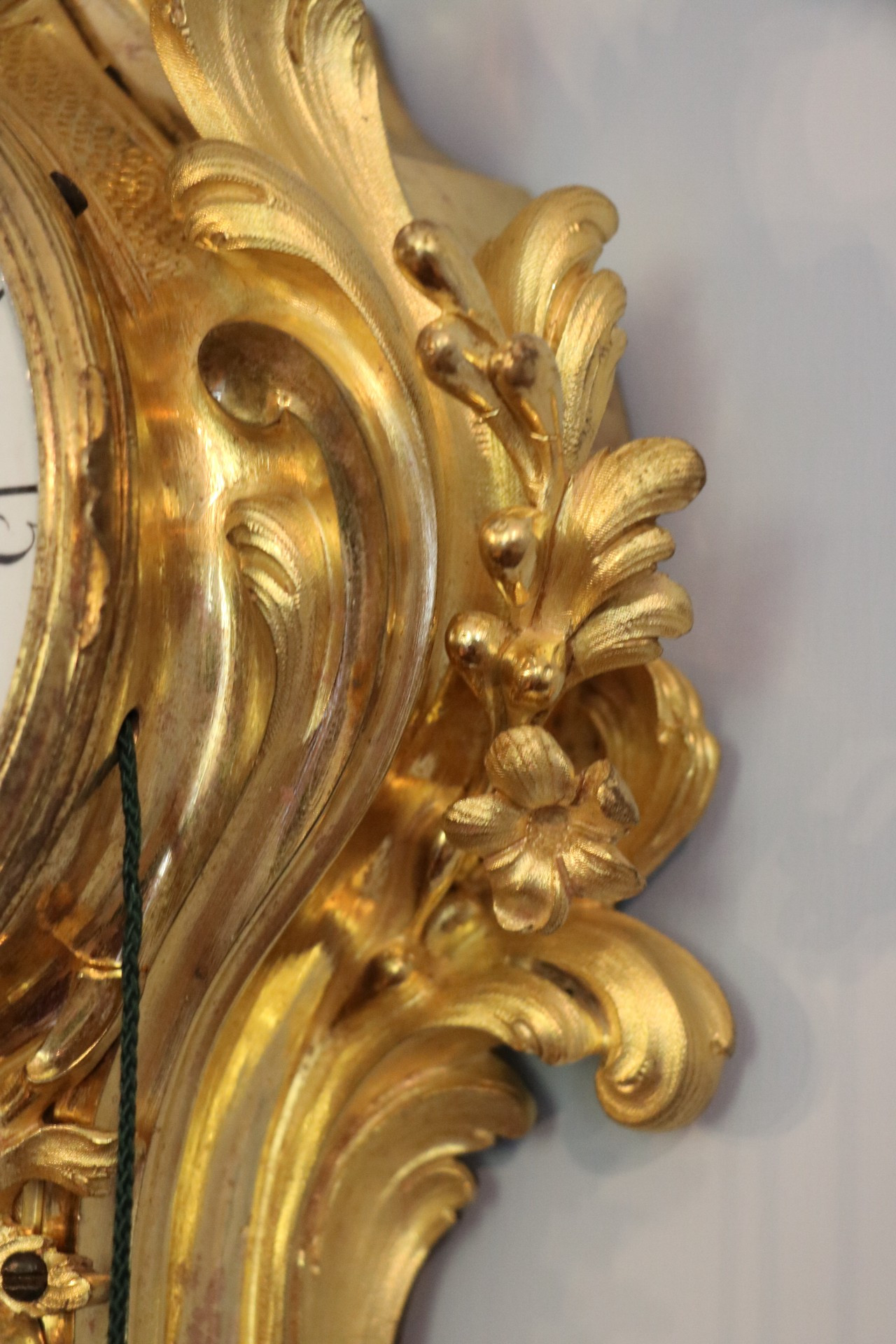
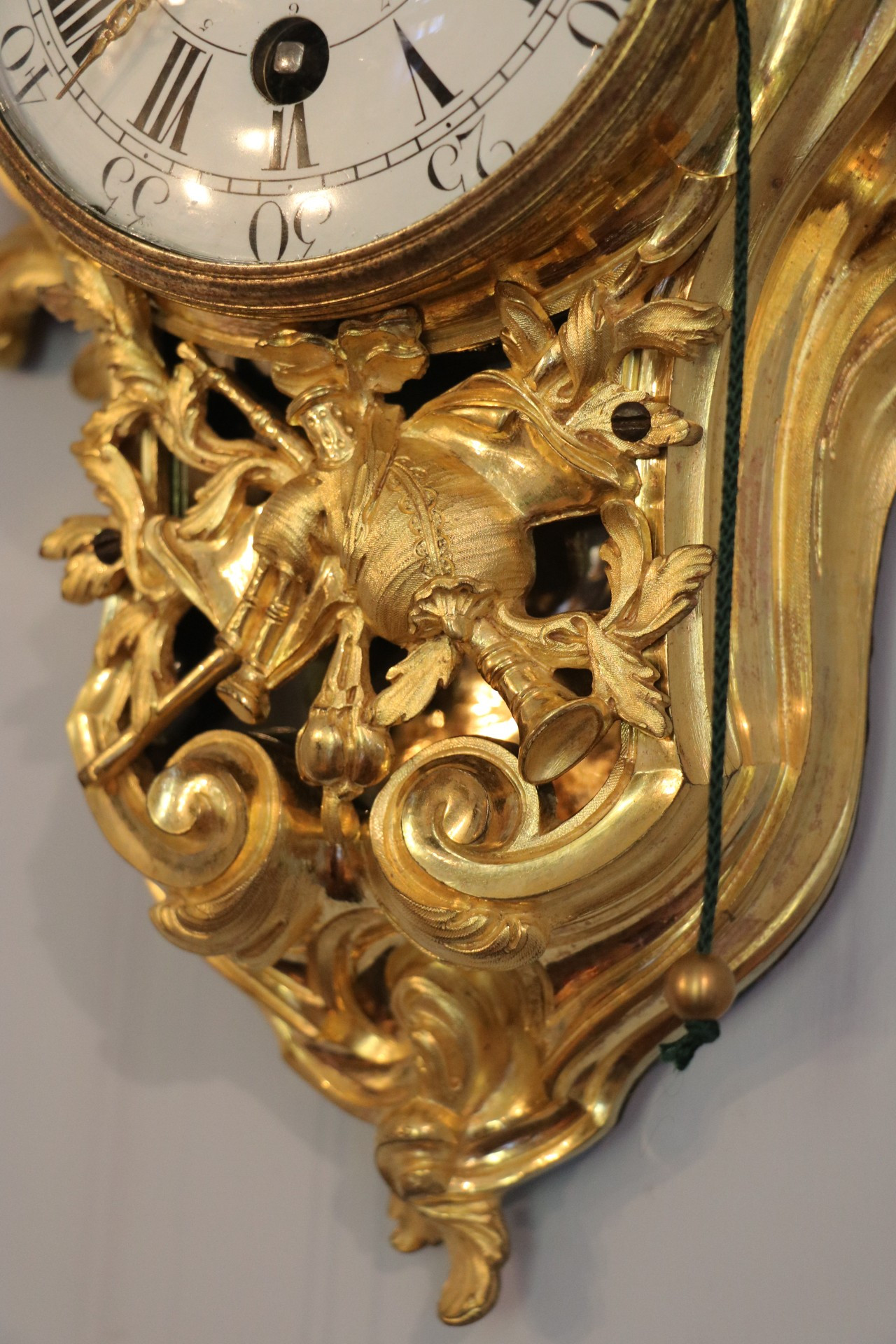
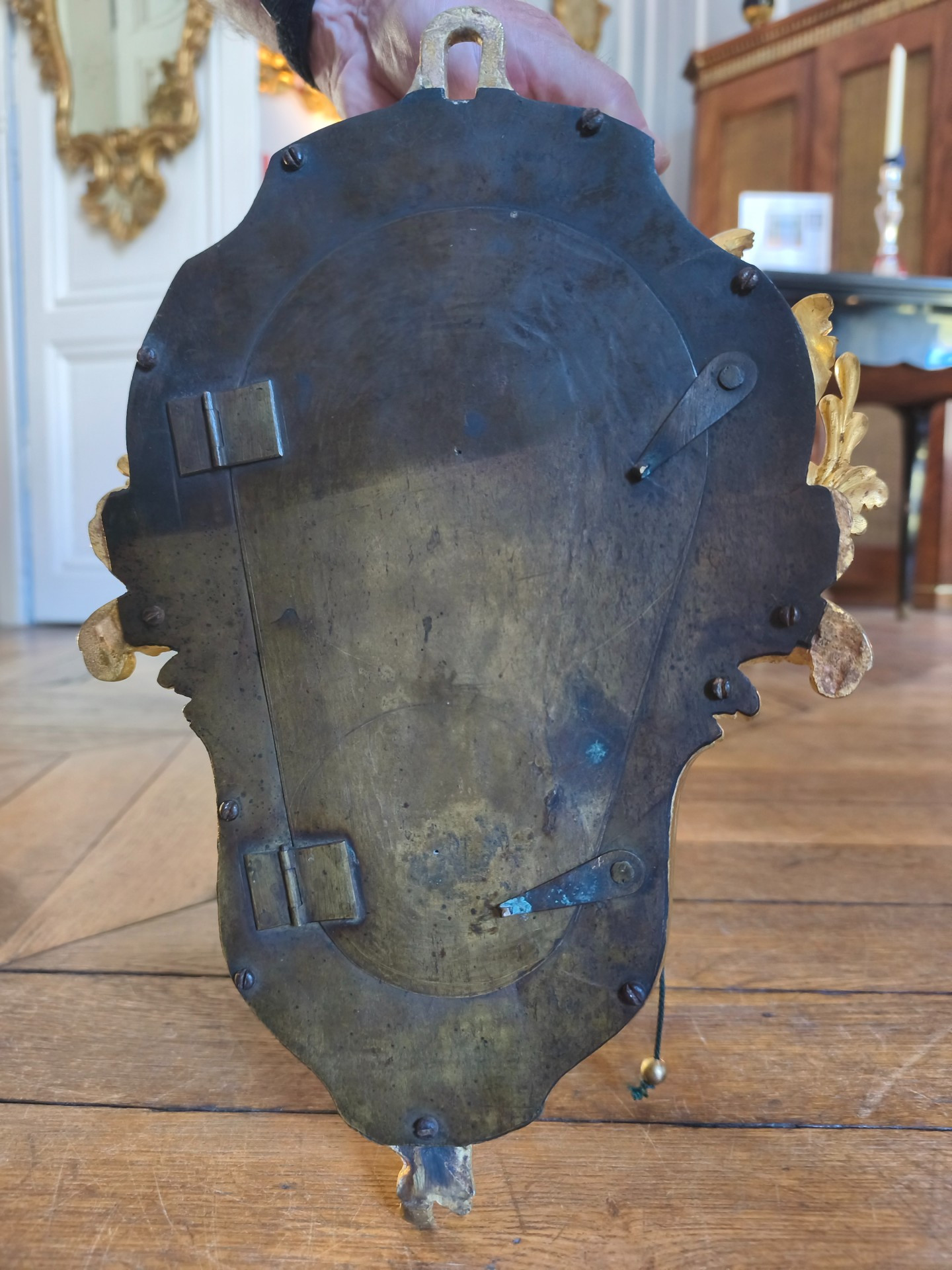
Our chased and gilt bronze cartel clock features a drawspring mechanism and an alarm.
The openwork floral decoration is adorned with flowers, buds, scrolling foliage that winds around the dial, and musical instruments positioned on the lower part of the clock.
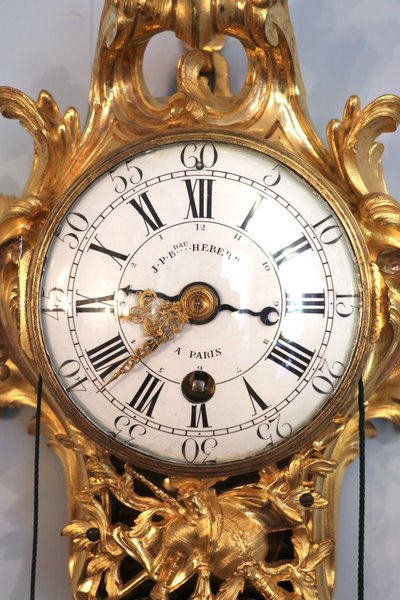
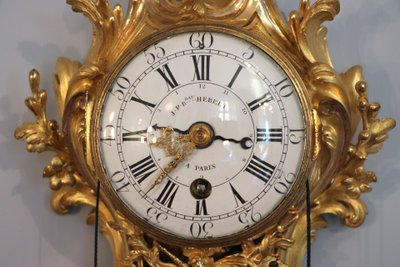
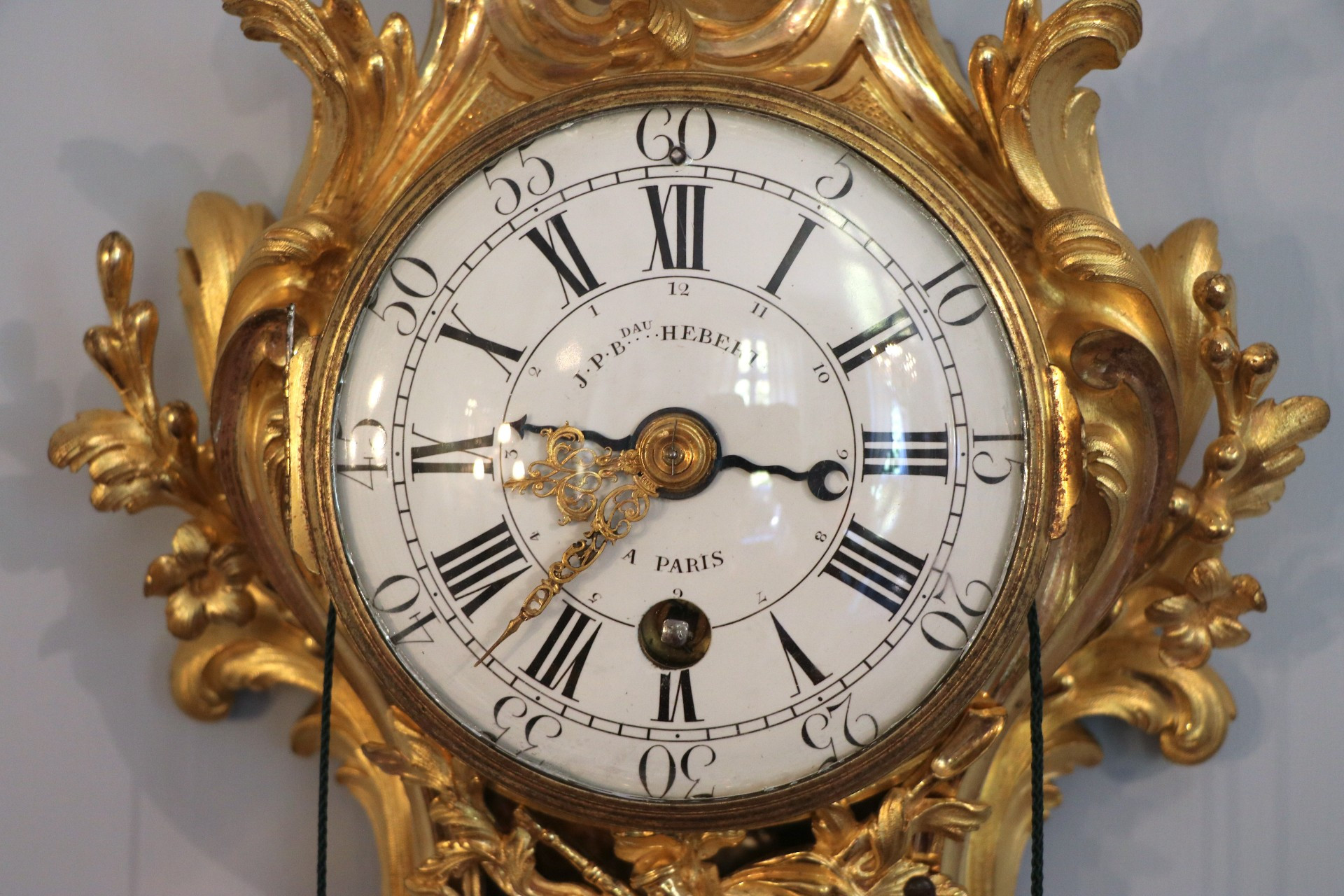
The enamel dial is signed J.P.B. dau Hebert in Paris. The hour and minute hands are gilt bronze and form openwork arabesques.
Louis XV period - Later Brocot escapement.
Used condition
H. 36 x W. 26 cm
Jean-Joseph de Saint-Germain is one of the most celebrated Parisian bronze casters of the mid-18th century. Active from 1742, he became a master craftsman in July 1748. He is best known for creating numerous clock cases and wall clocks that brought him renown, notably the clock known as the "Diana the Huntress" (see an example in the Louvre Museum), the clock supported by two Chinese figures (see a model of this type in the Museum of Decorative Arts in Lyon), as well as several clocks with animal themes, primarily elephants and rhinoceroses (example in the Louvre Museum).
Alongside his horological creations, Saint-Germain also produced numerous bronze furnishings—including andirons, wall sconces, and candelabra—always demonstrating the same creativity and showcasing his exceptional talent as a bronze worker. He retired from business in 1776.
The Brocot escapement (or roller escapement) is a clockwork regulating mechanism invented in 1826 by the French watchmaker Louis-Gabriel Brocot and patented in 1840. This system allowed for greater precision.
Ref: IOCXY56JIO
| Condition | As is |
| Style | Louis XV style (Wall clocks, cartels of Louis XV style Style) |
| Period | 18th century (Wall clocks, cartels 18th century) |
| Country of origin | France |
| Materials | Gilt bronze |
| Shipping Time | Ready to ship in 4-7 Business Days |
| Location | 78 000, Versailles, France |
4 commitments to buy with confidence

 English
 Français
 Italiano
 Deutsch