




Would you like more images?

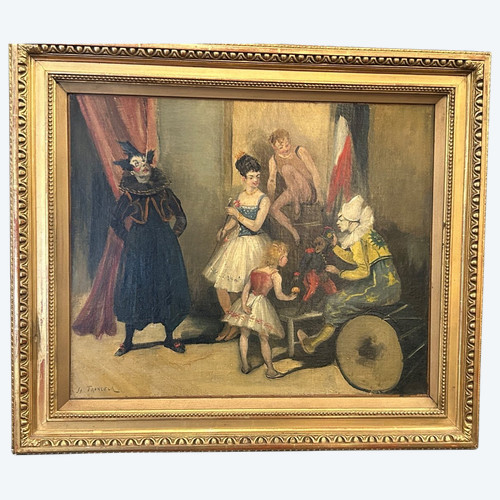
Charles Dufresne (1876-1938)
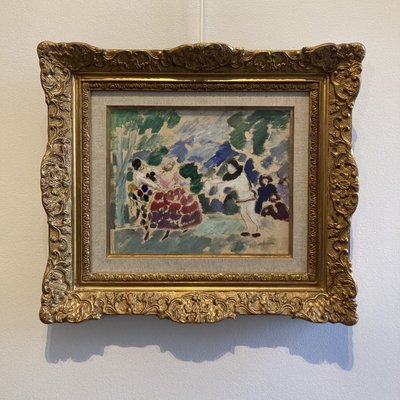
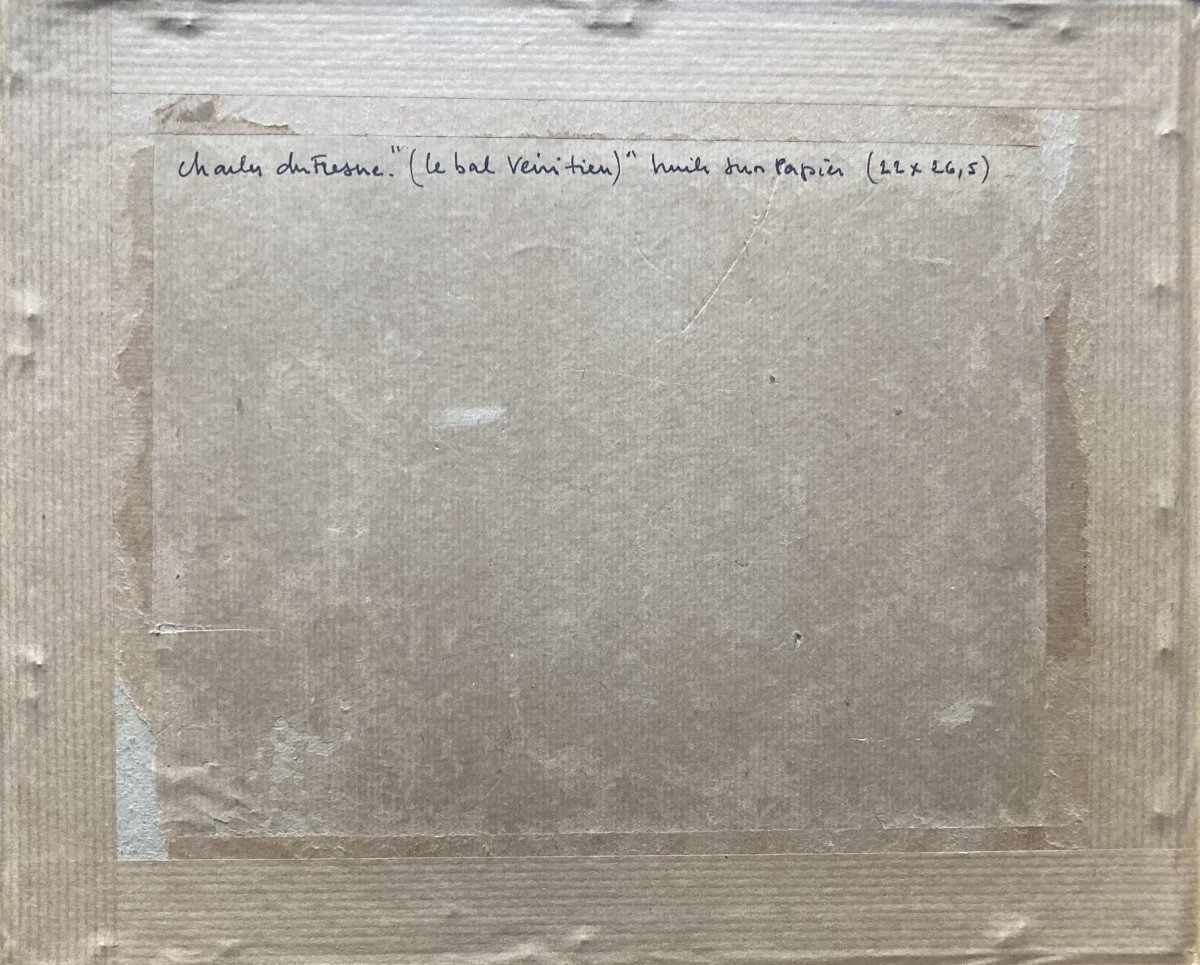
Carnival, circa 1910
Oil on paper
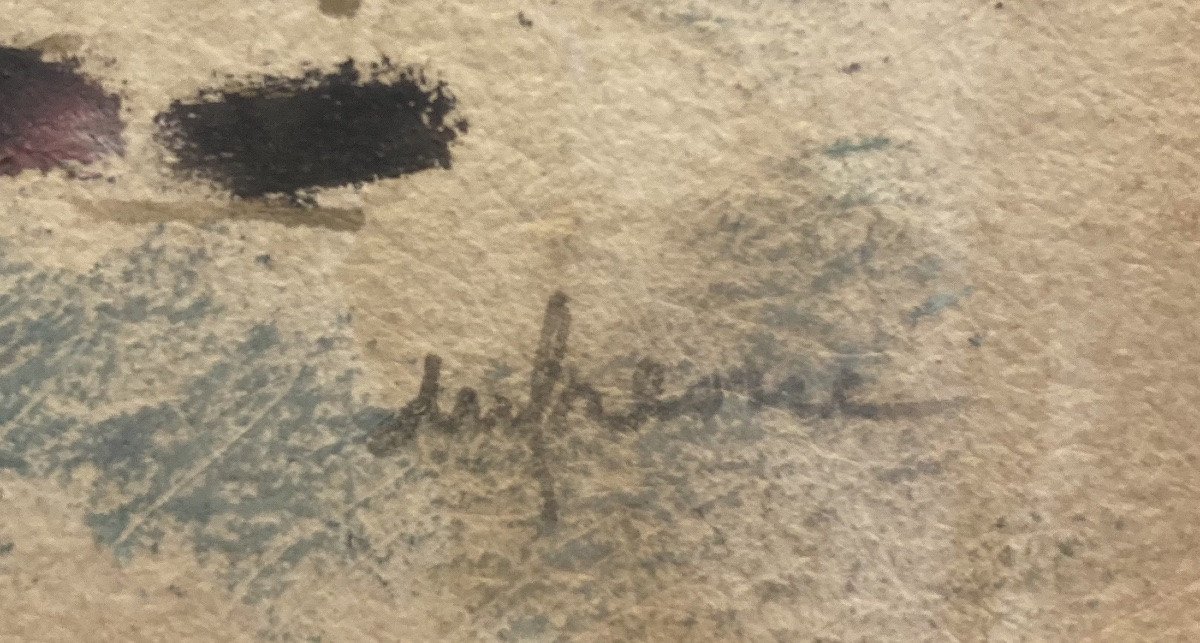
Signed lower right
22 x 26.5 cm
In this spirited drawing, Dufresne depicts a scene from the ballet Carnival, performed at the Palais Garnier in 1910 with choreography by Fokine. The artist was particularly influenced by Vaslav Nijinsky's (1889-1950) virtuoso performance as Harlequin, whom Paris was then celebrating as the new god of dance.
Charles Dufresne (1876-1938)
Born in 1876, Charles Dufresne belonged to the Fauvist generation. He received academic training at the École des Beaux-Arts in Paris in the studio of the medalist Ponscarme. His early works are those of a restrained artist whose output was inspired by reality. In 1903, he became a member of the Salon de la Société Nationale and exhibited at the Salon des Artistes Indépendants. Dunoyer de Segonzac, Despiau, Waroquier, and later Ceria became close friends.
His stay in Algeria between 1910 and 1912 was a revelation that significantly influenced his artistic development. Immersed in the nature of the Orient, he awakened to distant lands and exotic landscapes.
During the war, he produced drawings and watercolors in a Cubist style, often imbued with an imaginative quality. Upon his return, memories of his time in Algeria resurfaced, and he painted scenes of Oriental hunts, jungles, and exotic landscapes. These canvases—among them the Still Life in Plaster—with their dark tones of green and brown, possess a great density. While employing a rigorous construction, like the Cubists, the painter did not explore the depth of space. He paints large, simple volumes with a palette knife, using dense impasto.
Around 1930, Dufresne broke free from academic constraints and unleashed a vibrant lyricism. He completely reinvented himself, tackling compositions with multiple figures and becoming more Fauvist, breaking down color barriers, exalting tones with an ethereal light, within an expanded and constructed space, where his pursuit of movement converges with his admiration for Baroque painters. He became the quintessential French Baroque painter, with his sense of eloquence, lyricism, and instinct for decoration, making him the Delacroix of modern times.
His works are held in numerous museums in France and abroad, including the Centre Pompidou, the Musée d’Art Moderne de Paris, the Musée Calvet in Avignon, the Musée des Beaux-Arts in Dijon, the Musée Fabre in Montpellier, the Tate Gallery, the National Gallery of Art in Washington, D.C., and the Art Institute of Chicago.
Ref: 2DG53I1HQ7
| Condition | Very good |
| Style | Modern Art (Abstract paintings of Modern Art Style) |
| Period | 20th century (Abstract paintings 20th century) |
| Country of origin | France |
| Artist | Charles Dufresne (1876-1938) |
| Shipping Time | Ready to ship in 4-7 Business Days |
| Location | 75008, Paris, France |
4 commitments to buy with confidence

 English
 Français
  Italiano
  Deutsch