This description has been translated and may not be completely accurate. Click here to see the original
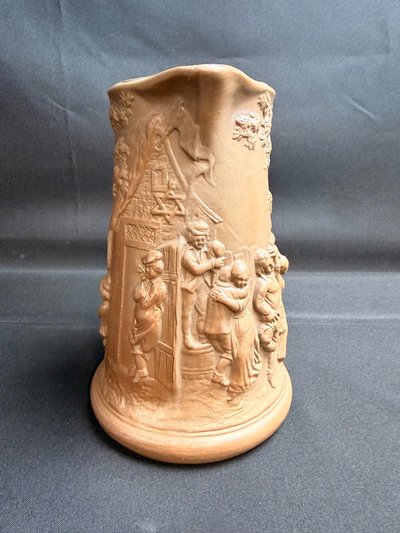
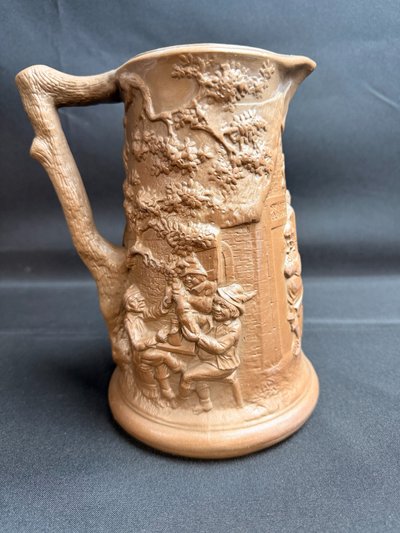
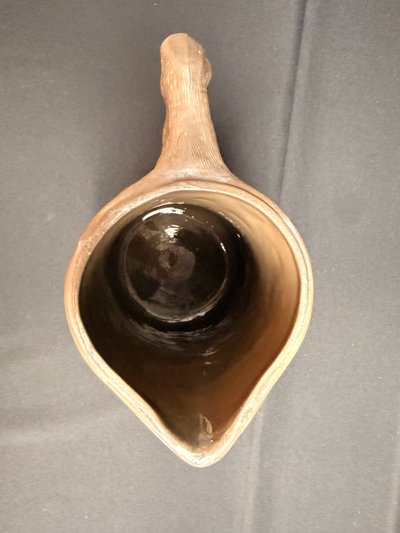
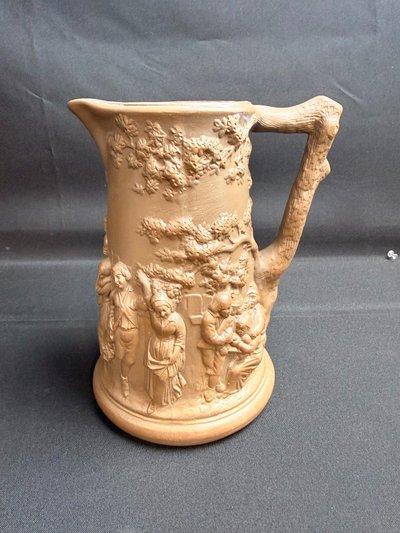
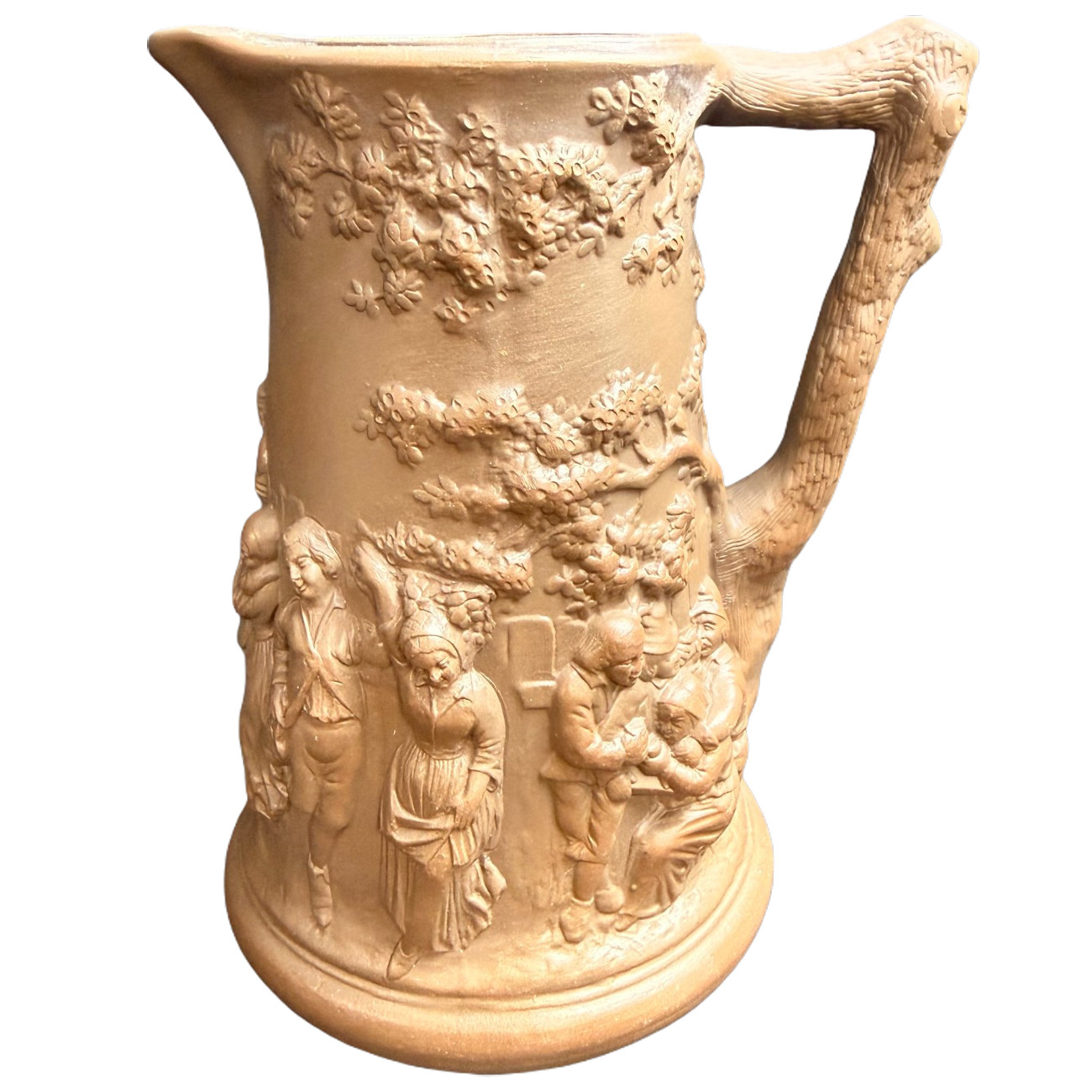
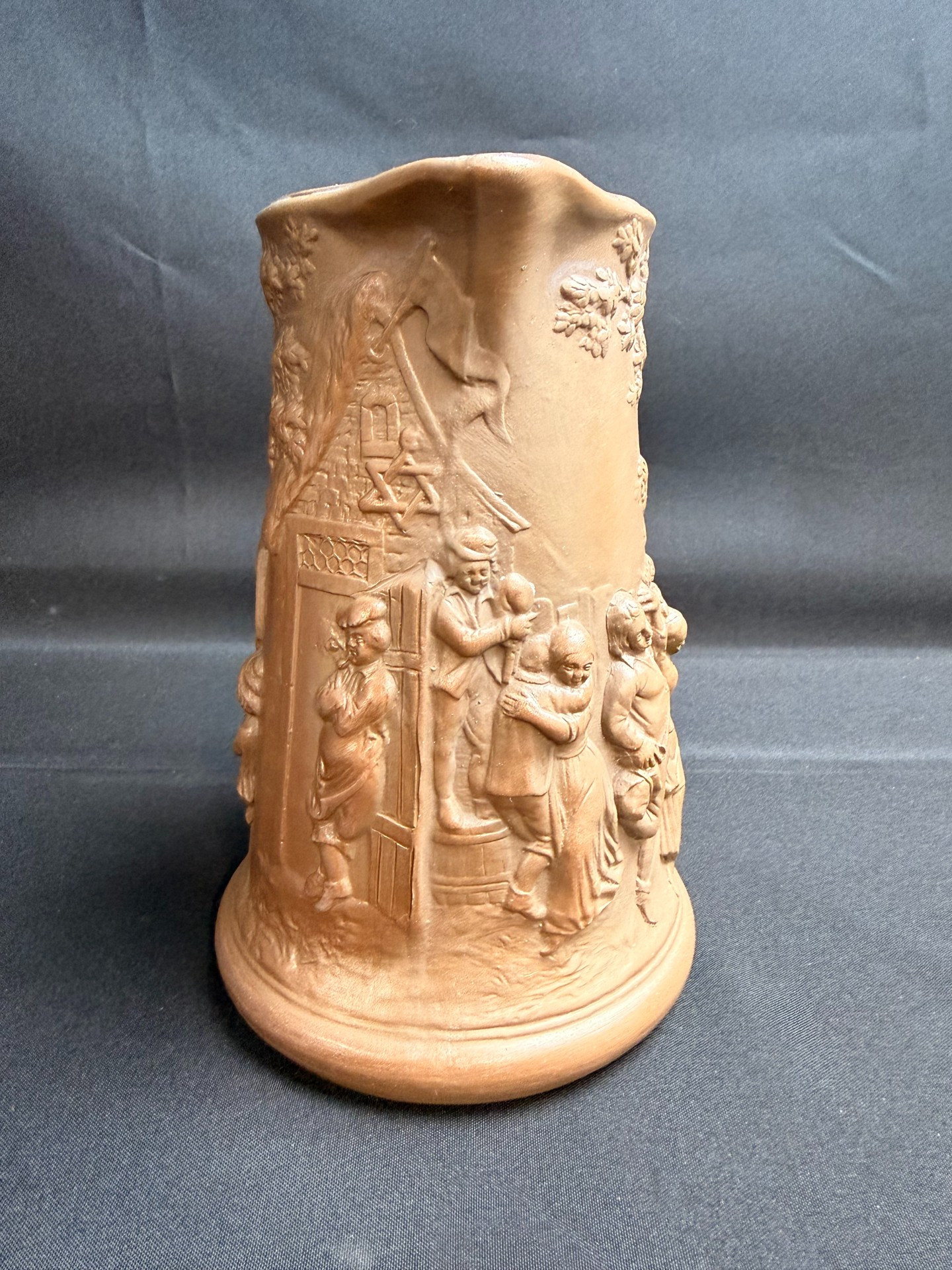
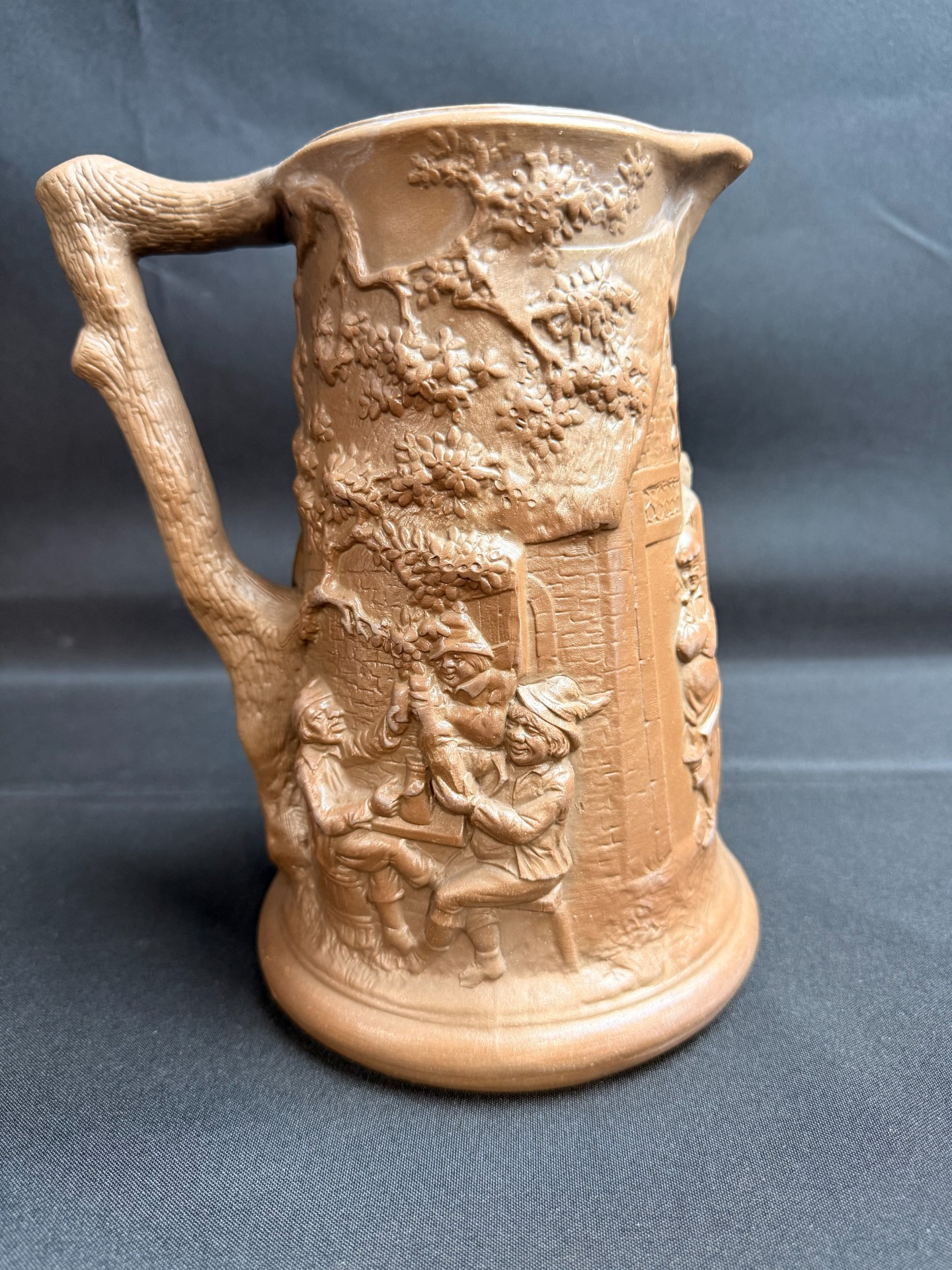
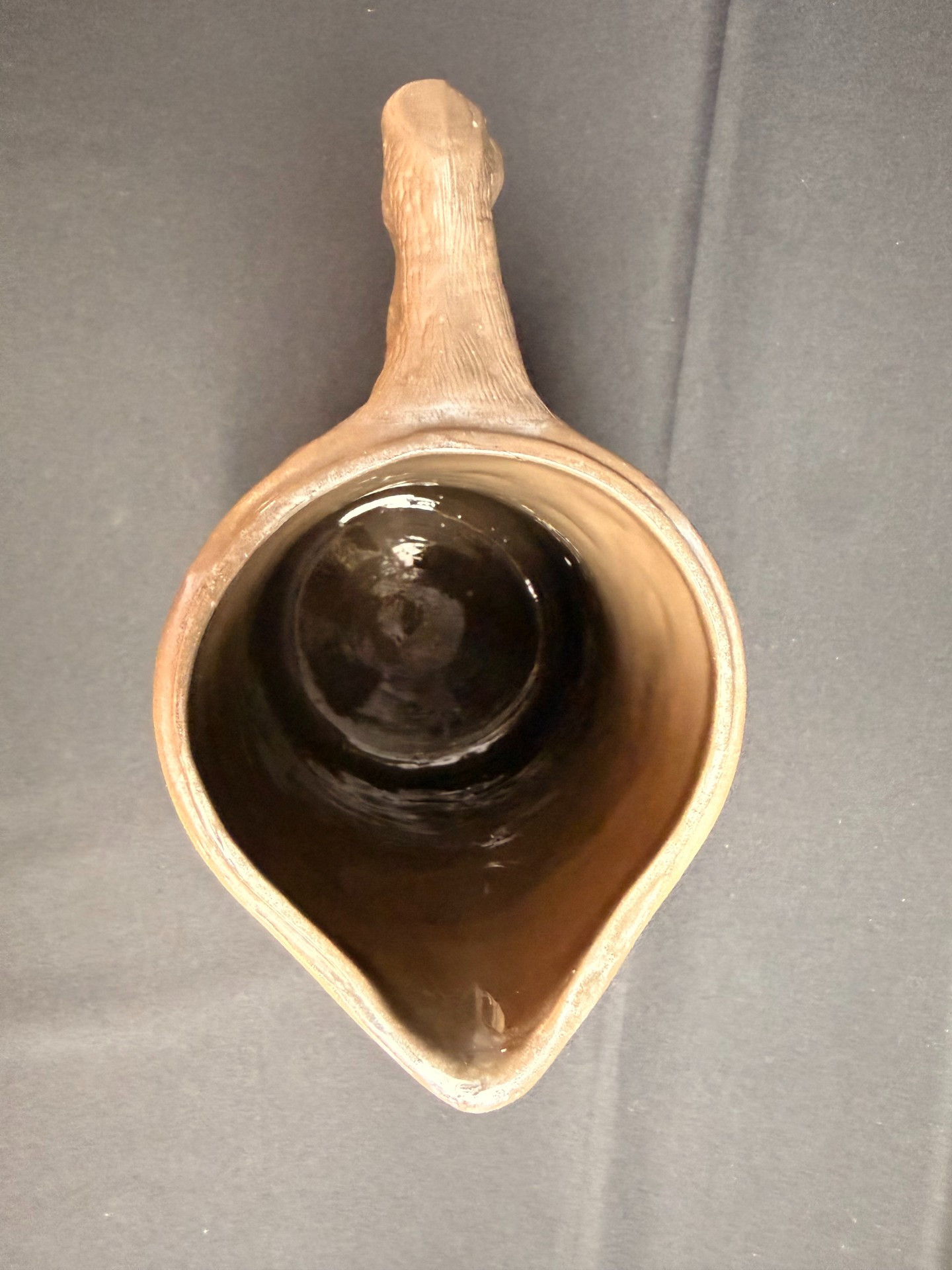
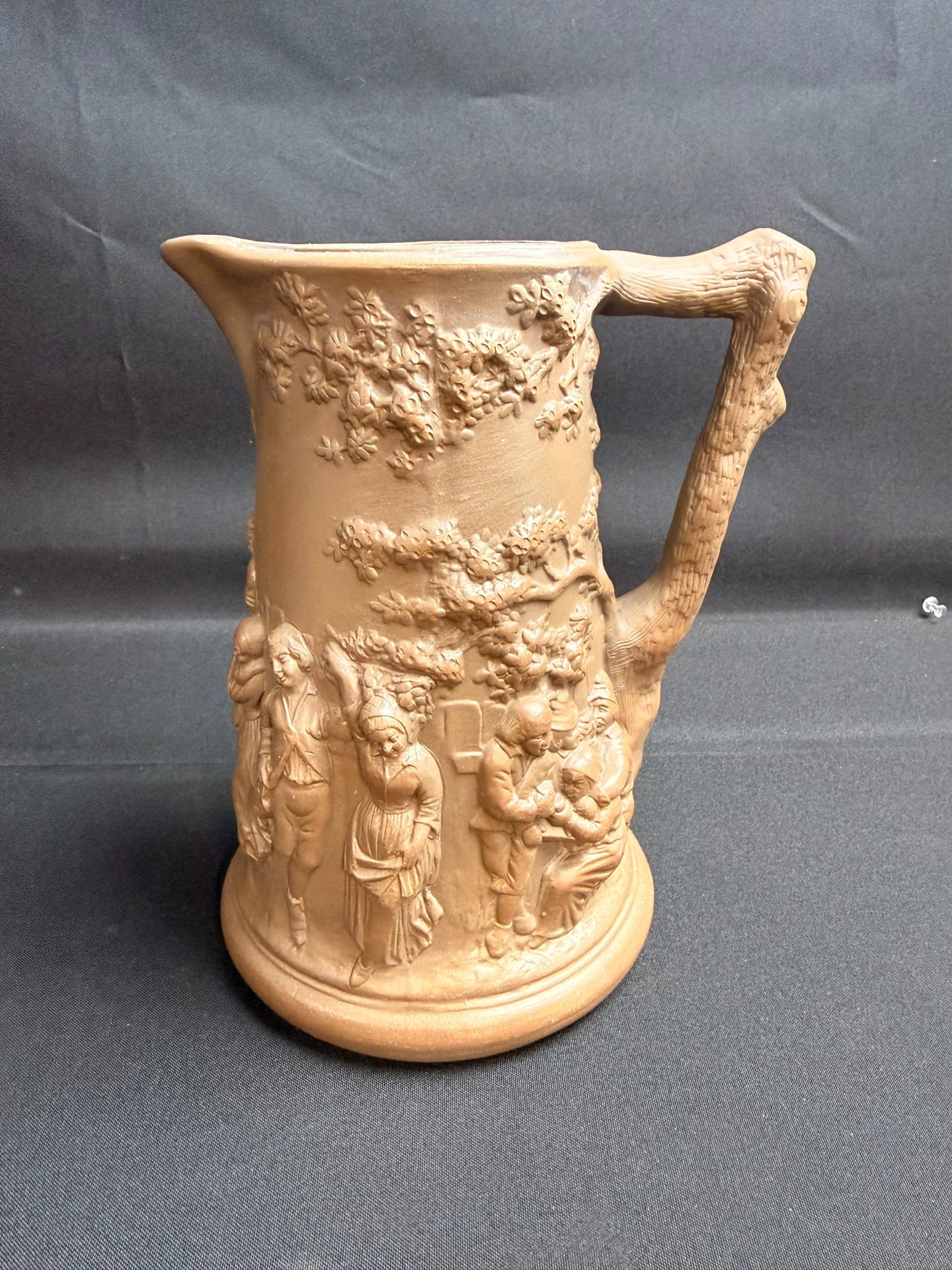
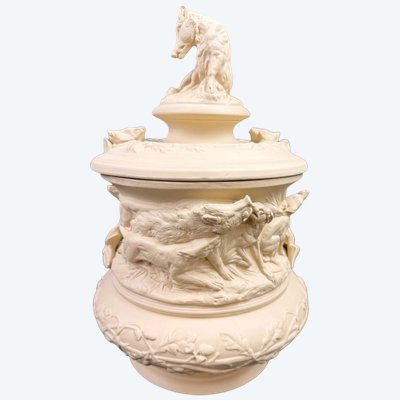
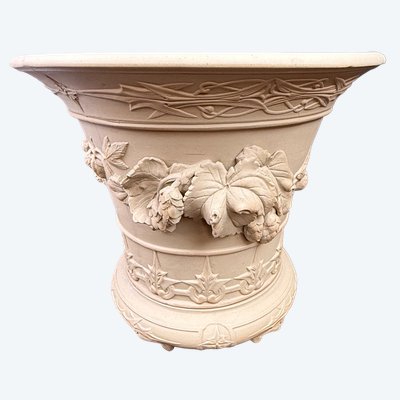
Superb pitcher from the Sarreguemines pottery factory
Made of fine stoneware tinted brown
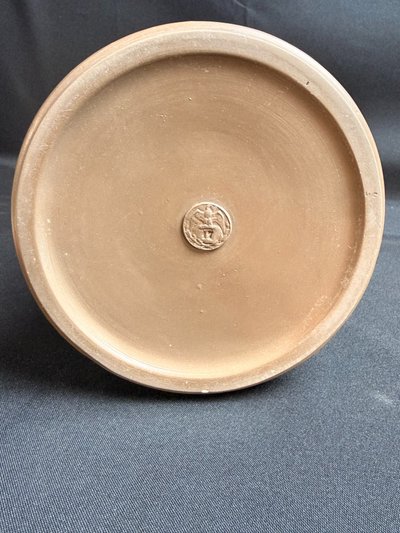
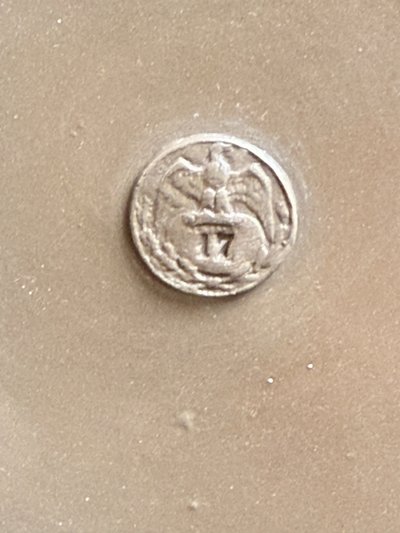
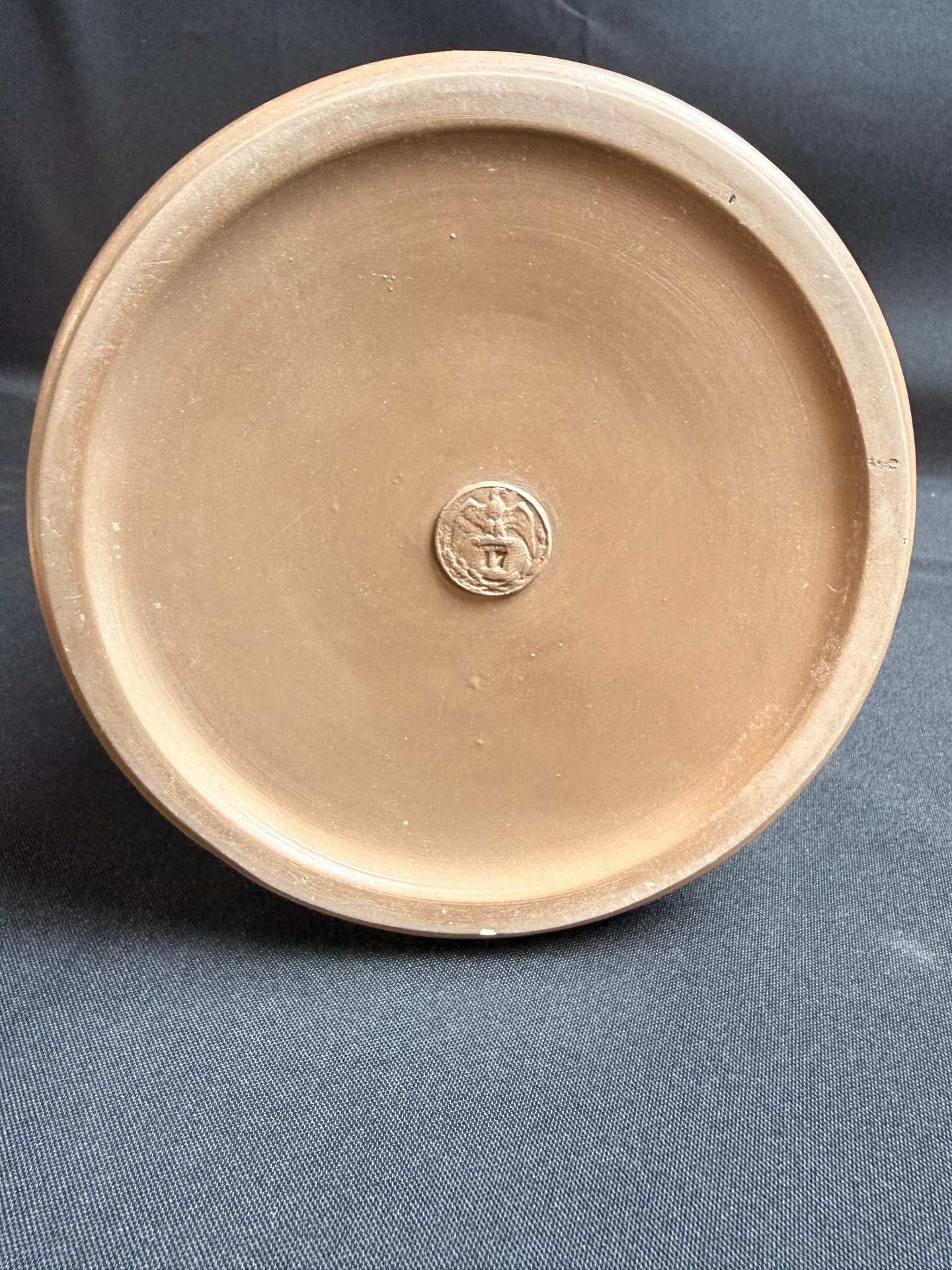
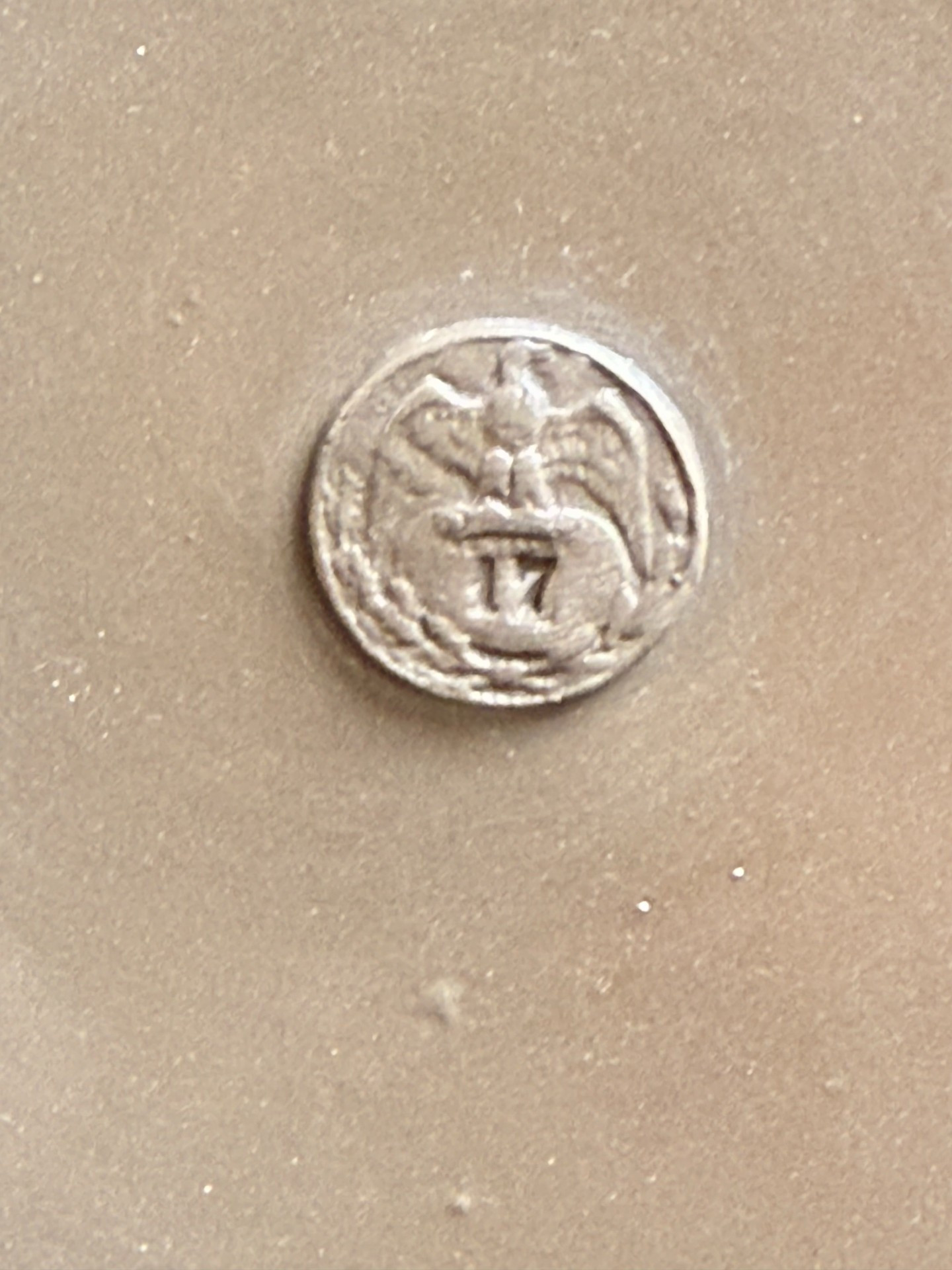
Eagle mark under the base with the number 17
Indicating manufacture around 1860-1880.
This pitcher exists in different versions: in fine stoneware tinted brown, or tinted light ochre, or with a lid...
A little history:
In the history of the Sarreguemines pottery factory (1790 - 2007), stoneware production developed from the 1800s onwards, with pieces still present and visible at the Château de Fontainebleau and Trier Cathedral... It then became more popular, exploring various techniques and compositions to become a fairly significant production at the end of the 19th century, continuing into the beginning of the 20th century.
Stoneware is a hard-paste ceramic made of clay and sand, fired at a high temperature (1200/1300°C). This process results in natural vitrification, making it impermeable.
In Sarreguemines, polished stoneware imitating hard stones such as jasper, porphyry, and marble was produced around 1800. Later, fine stoneware (copies of English Wedgwood productions) was produced from 1827 onwards, followed by black stoneware (known as Smearblack around 1837), brown stoneware known as Egyptian Earth between 1820 and 1840, fine glazed stoneware, so-called Umbrian stoneware, so-called Tuscan stoneware, and finally salt-glazed stoneware from the 1860s-80s.
Ref: NK51G2YT7D