This description has been translated and may not be completely accurate. Click here to see the original
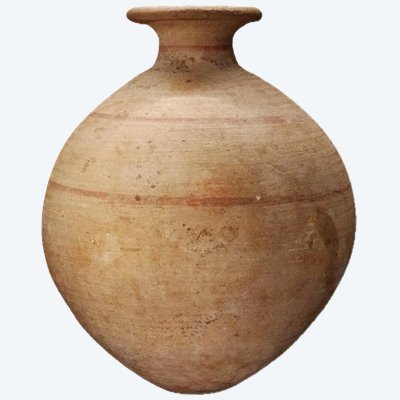
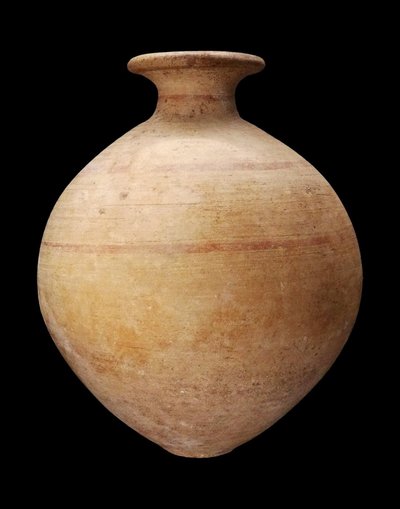
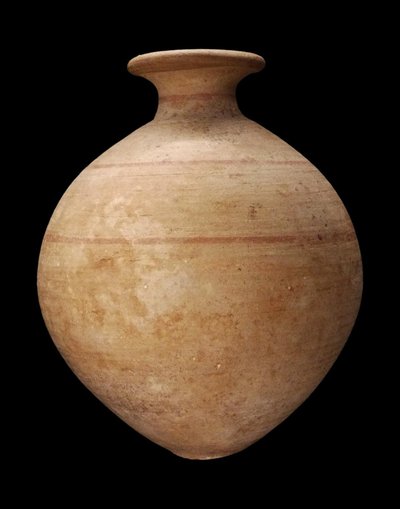
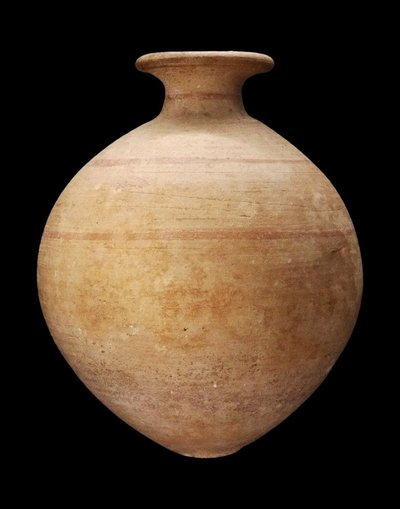
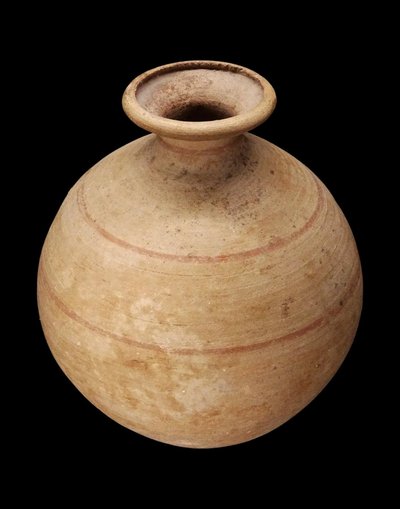
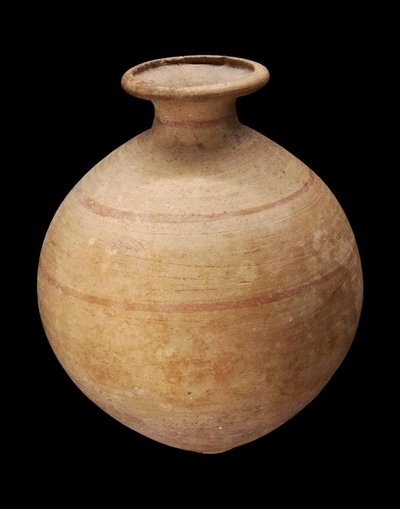
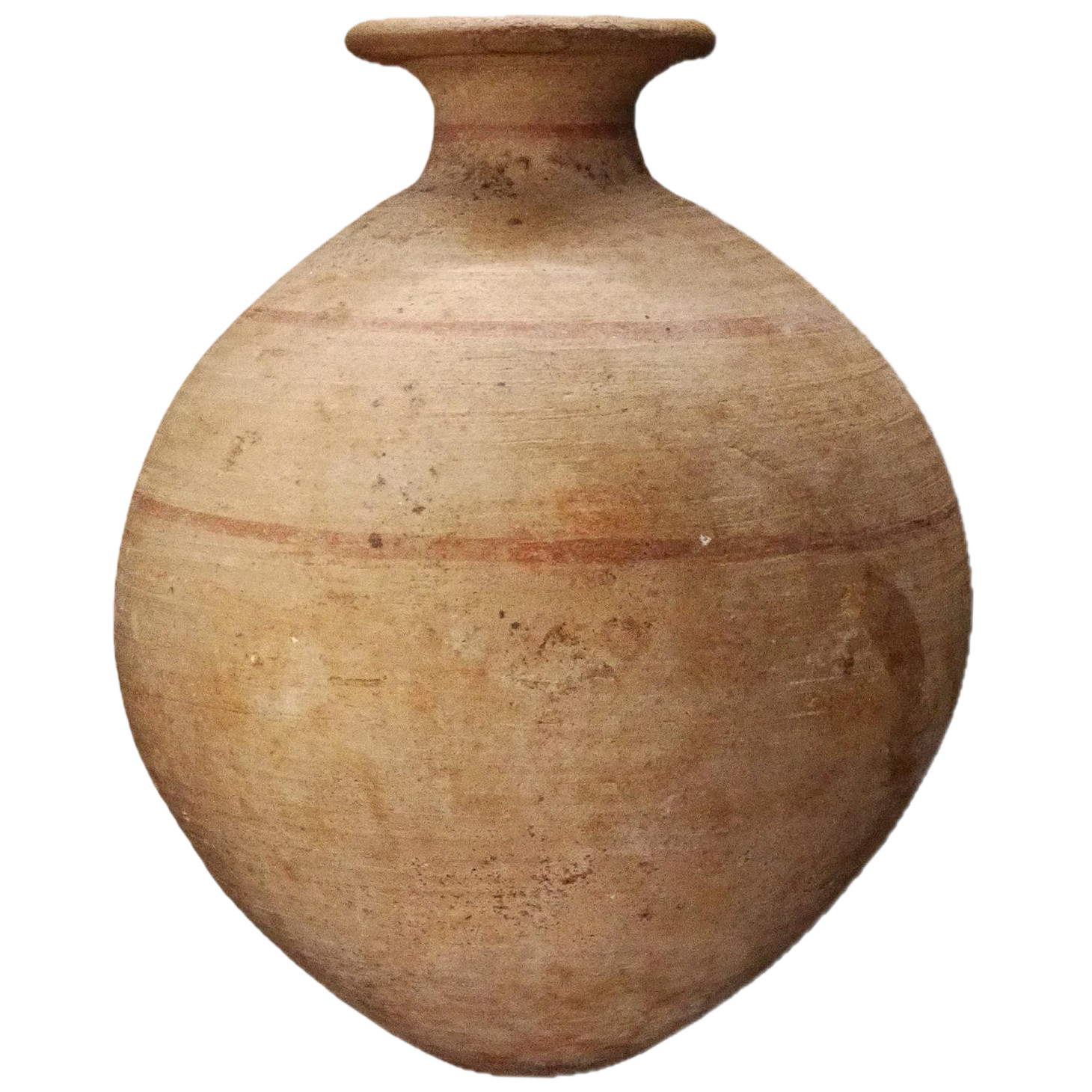
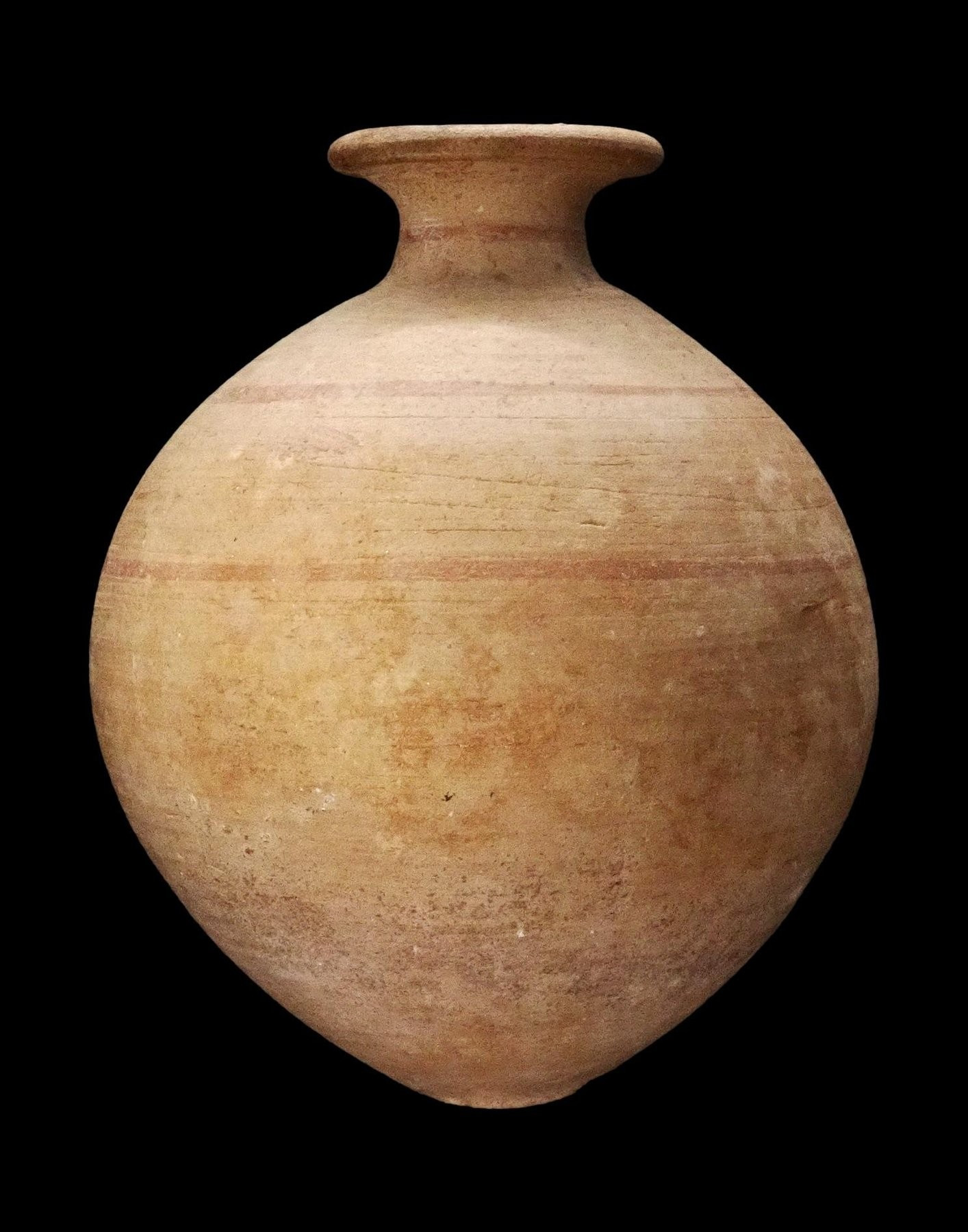
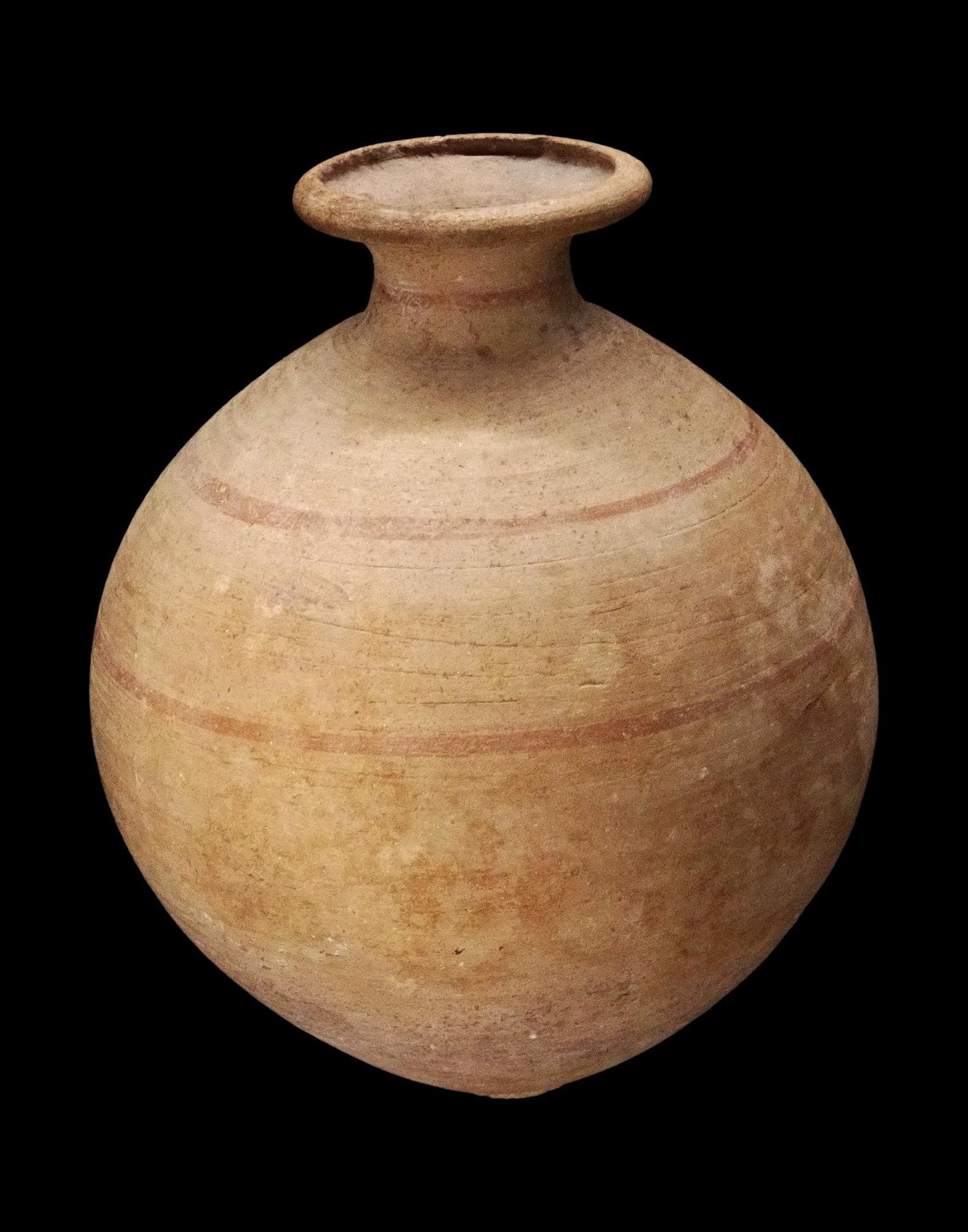
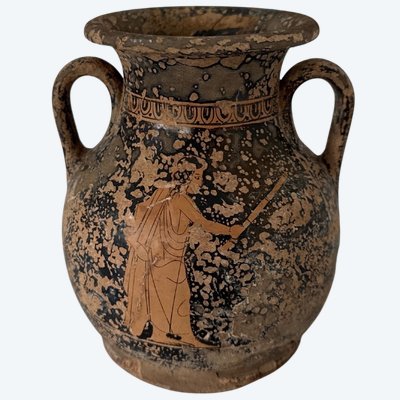
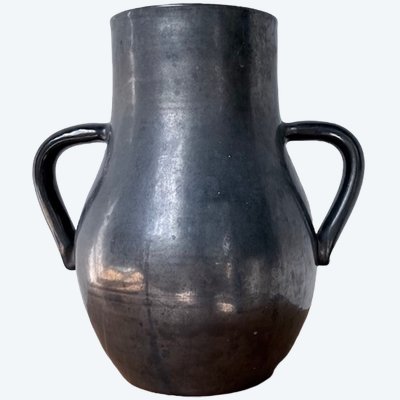
Originating from a former French provenance, the Auction House of M. R. S., with a collection history dating back to 1980, and accompanied by a certificate of authenticity, this magnificent Greek vase from Southern Italy, originating from Apulia and dating to the 6th–5th centuries BC, constitutes a remarkable testimony to the ceramic art of the late Archaic period and the early developments of the Classical era, when the workshops of Magna Graecia and the artisanal traditions of the indigenous populations of Southern Italy gave rise to productions of great elegance, characterized by purity of form, subtlety of geometric decoration and mastery of clay working; standing 18.9 centimetres high, this example is distinguished by the generous fullness of its slightly pear-shaped globular body, the harmony of its shoulder, the delicacy of its constricted neck and the beautiful opening of its flared mouth, whose thick and gently rounded lip brings the silhouette to a particularly balanced conclusion, while its light beige terracotta with ivory, golden sand and pinkish ochre nuances, enlivened by fine circular bands painted in reddish brown, reveals an aesthetic of remarkable sobriety, in which the continuity of the curves and the regularity of the decorative lines are sufficient to confer genuine artistic distinction upon the object; intact and preserved in excellent condition, this vase displays an ancient patina with warm tones, natural chromatic variations and delicate shaping marks that enrich the appreciation of its material, making this example a particularly appealing piece for the collector sensitive to the beauty of Mediterranean ceramics and the historical depth of the civilizations of Antiquity.
Technical Characteristics
– Object: slightly pear-shaped globular vase with constricted neck, flared mouth and painted circular band decoration
– Culture: Greek of Southern Italy, Apulia, ceramic tradition of Magna Graecia
– Period: 6th–5th centuries BC, late Archaic period and beginning of the Classical era
– Material: fine terracotta with a light beige clay body, surface displaying ivory, sand and golden ochre nuances, decoration of circular bands painted in reddish brown, naturally nuanced ancient patina
– Dimensions: 189 × 147 mm (height × maximum diameter)
– Condition: excellent state of preservation; intact, complete vase displaying a beautiful ancient patina, discreet surface variations and fine shaping marks
– Provenance: France, Auction House of M. R. S.; collection history dating back to 1980, with acquisition from an art-market professional in France; subsequent acquisition in France in 2026
– Authenticity: certificate provided
– Sale: acquired in 2026 from an art-market professional in France; offered by ANTIKARTS
Historical Context
During the 6th and 5th centuries BC, Southern Italy experienced a period of extraordinary artistic and cultural vitality, marked by the development of the Greek cities of Magna Graecia and the intensification of exchanges with the indigenous populations of the peninsula, while Apulia, a vast region opening onto the Adriatic and Ionian Seas, became one of the principal territories for these encounters between local traditions and Hellenic influences, giving rise to a particularly rich material civilization, of which ceramic productions now constitute some of the most eloquent testimonies. The major indigenous communities of the region, particularly the Daunians, Peucetians and Messapians, possessed their own artisanal traditions, while their relations with Greek cities such as Tarentum and Metapontum encouraged the circulation of objects, techniques and artistic forms, contributing to the emergence of original decorative repertoires in which the simplicity of geometric lines encountered the Greek pursuit of balance and proportion.
It was within this cultural environment that Apulian painted-band ceramics developed, known in Italian archaeological literature under the designation ceramica a fasce, whose compositions were based on horizontal lines and coloured bands arranged around the bodies of vessels, following an organization that embraced the articulations of their profiles and transformed the clay surface into a remarkably ordered decorative space. Heirs to an ancient geometric sensibility, these productions fully participated in the artisanal transformations of the late Archaic period, when the use of the potter's wheel permitted increasing mastery of volumes, greater regularity of the walls and an aesthetic pursuit founded upon the continuity of curves, while reddish and brownish pigments, applied to naturally light-coloured clays, created subtle contrasts that emphasized the silhouette without diverting attention from it.
Unlike the great figured ceramics, whose mythological scenes and narrative compositions demonstrate the iconographic richness of Greek art, painted-band vases express a more refined conception of beauty, in which form remains sovereign and decoration acts as a natural extension of the vessel's architecture. This aesthetic of restraint bears witness to the sophistication of craftsmanship capable of producing objects that were both functional and artistically accomplished, intended to accompany the everyday practices of Mediterranean societies, from the storage of liquids and provisions to domestic and ceremonial activities, while certain categories of vessels also formed part of funerary deposits, revealing the important place occupied by ceramics in the social and religious traditions of ancient Italy.
Through its globular body, constricted neck, widely flared mouth and fine red bands, the present vase belongs to this aesthetic tradition of early Apulian productions, whose value lies in the intimate harmony between material, geometry and function, offering a particularly evocative testimony to the encounter between local craftsmanship and Greek artistic influences within one of the most fertile regions of the ancient Mediterranean.
Formal and Material Analysis of the Example
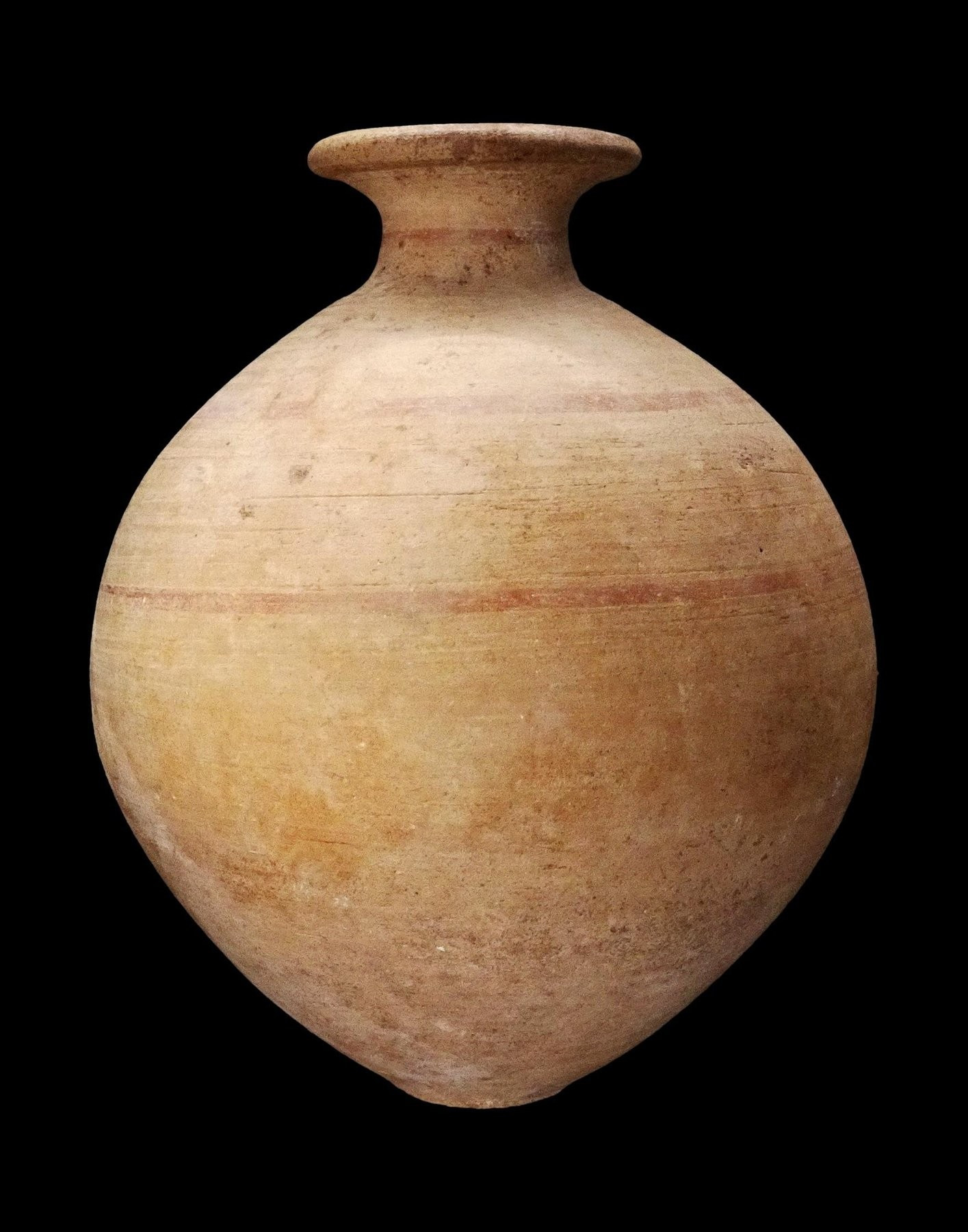
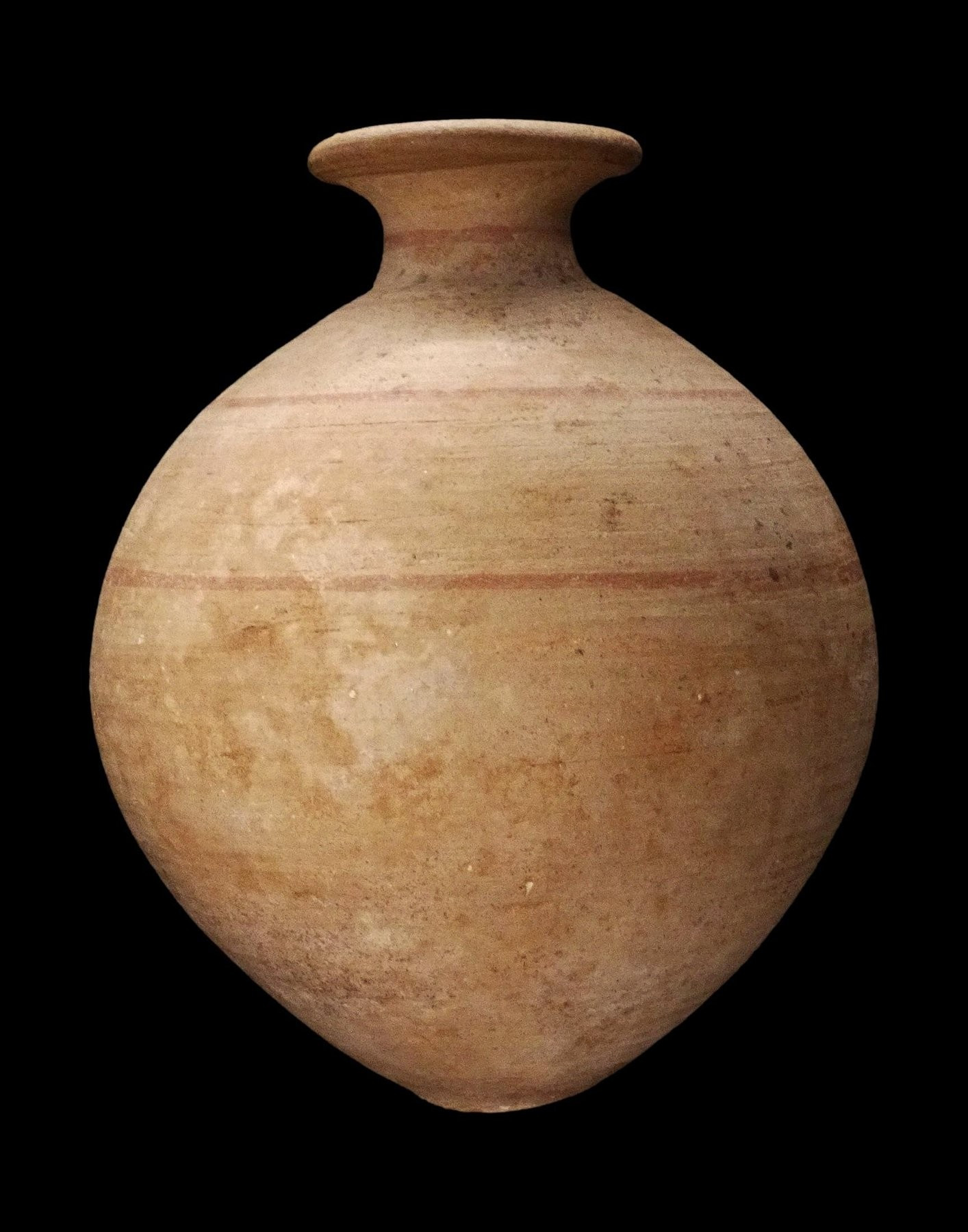
– Volume and profile: vase of generous proportions, measuring 189 mm in height and 147 mm in maximum diameter, whose silhouette is characterized by a slightly pear-shaped globular body, broadly developed in its middle region and progressively narrowing towards the lower section, while the shoulder forms a generous, continuous curve that naturally accompanies the beginning of the neck; the perfectly harmonious succession of these volumes lends the whole a particularly elegant sculptural presence, revealing a careful pursuit of proportion and balance.
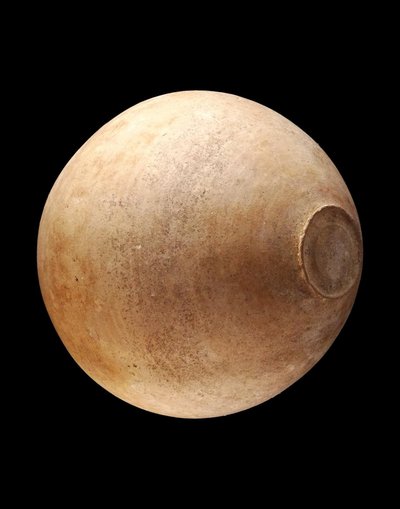
– Body and development of the curves: generously proportioned body, presenting its greatest diameter slightly below the shoulder before progressively tapering towards the base, following a continuous and delicately taut line; this arrangement of volumes gives the vase a silhouette that is both ample and light, in which the roundness of the body subtly contrasts with the narrowing of the neck, while the absence of any pronounced angular interruption emphasizes the mastery of shaping and the overall fluidity of the profile.
– Shoulder and transition towards the neck: gently rounded shoulder, whose regular curve rises progressively from the body before narrowing at the beginning of the neck, creating a transition of great softness; this articulation, particularly important to the aesthetic balance of the vessel, establishes a dialogue between the fullness of the body and the verticality of the upper section, while fine circular marks and nuances of the clay discreetly accompany the movement of the surface.
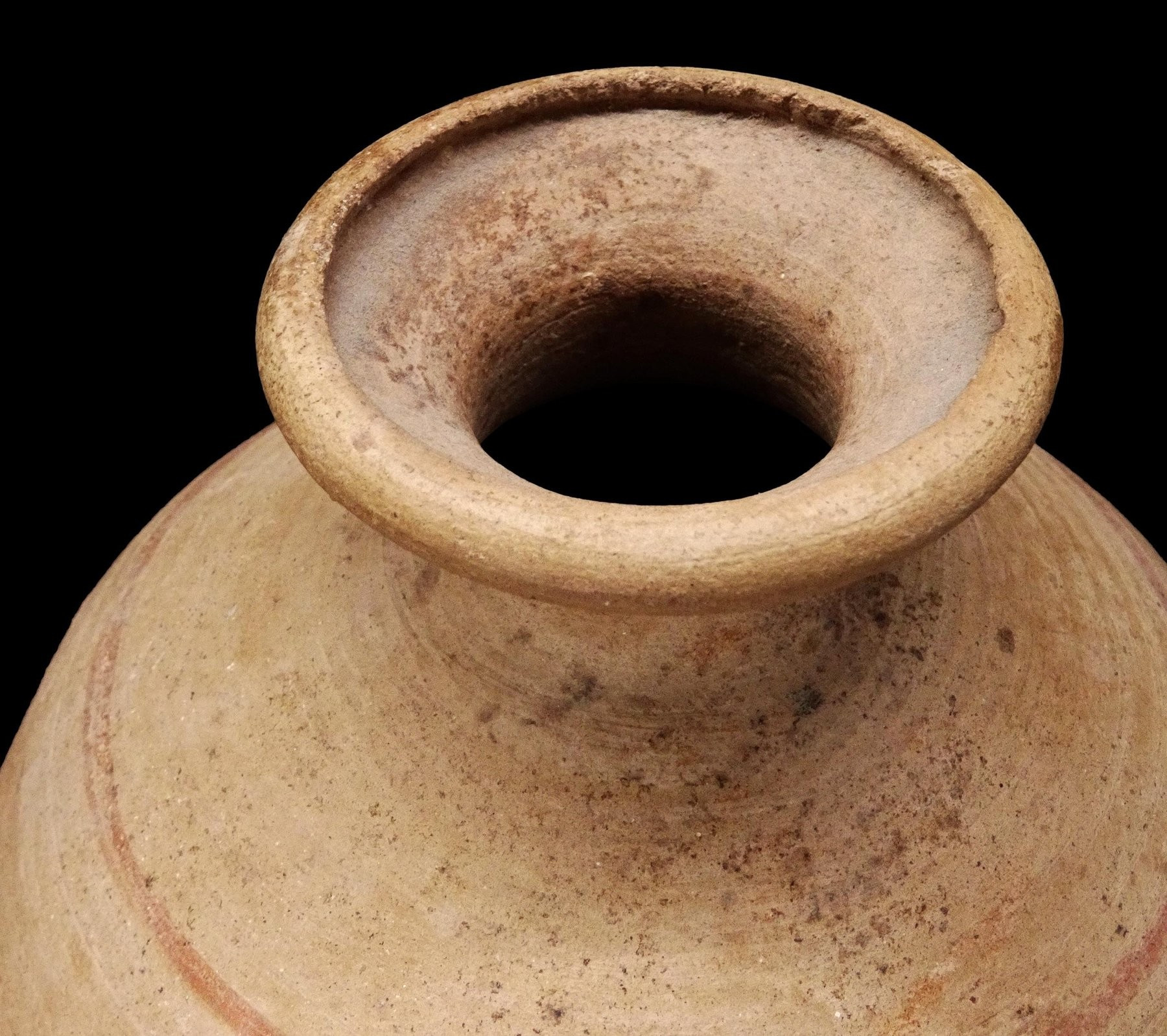
– Neck and upper proportions: relatively short, slightly concave and clearly defined neck, displaying a central constriction that accentuates the elegance of the silhouette before widening towards the mouth; a fine reddish-brown painted line emphasizes this region, while the small chromatic variations of the terracotta and discreet shaping marks enrich the appreciation of the profile, whose regularity bears witness to particularly careful craftsmanship.
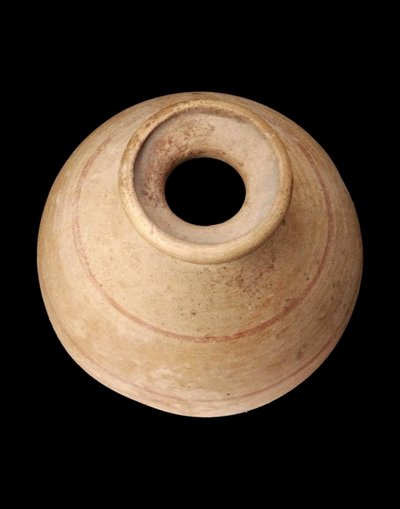
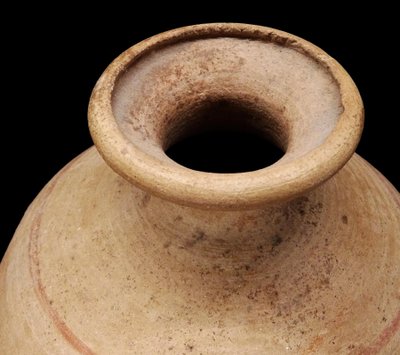
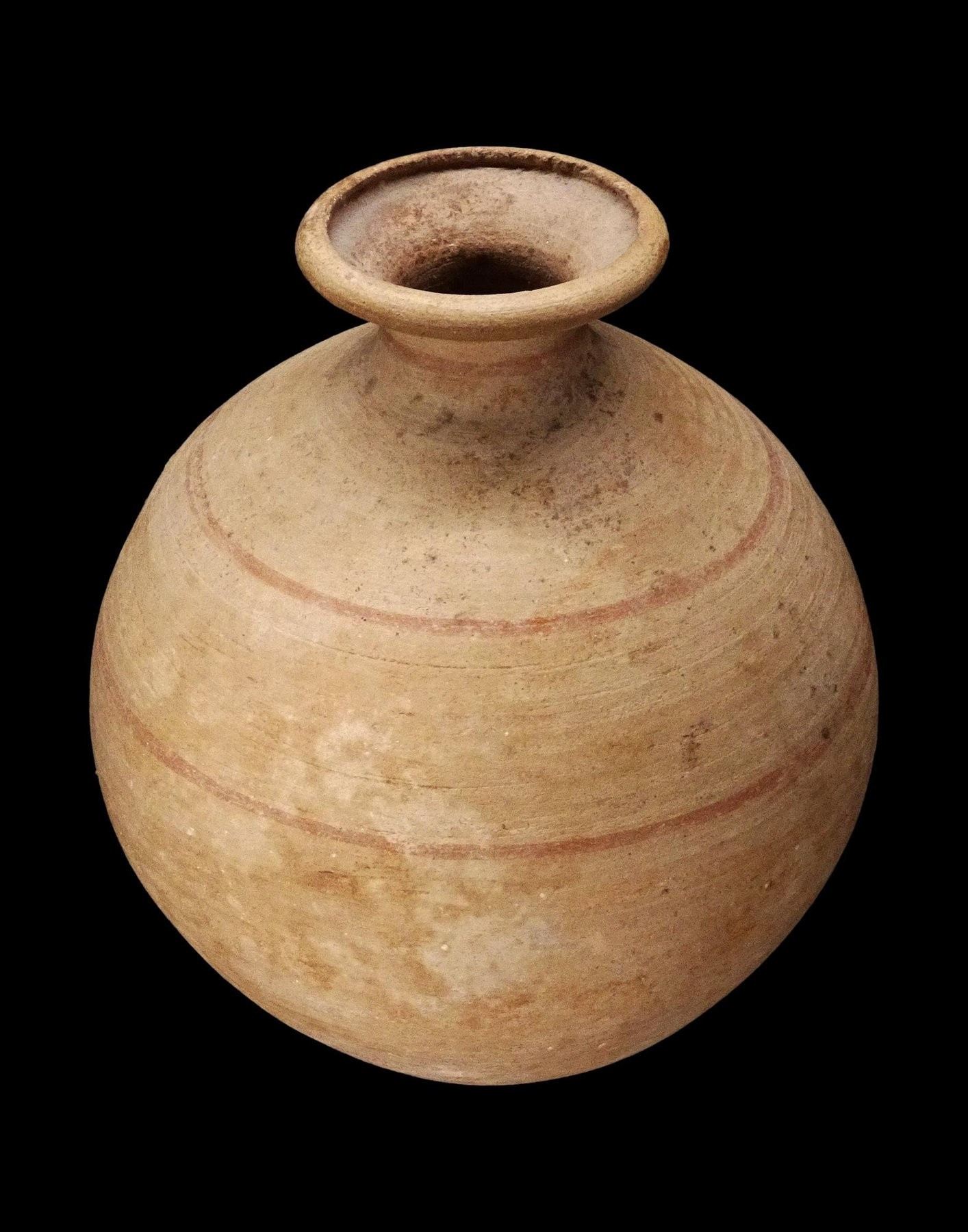
– Mouth and lip: widely flared opening, developing a funnel-shaped profile whose outer curve terminates in a thick, rounded lip, slightly curved inwards, forming a peripheral moulding of pleasing regularity; the upper surface preserves a finely granular texture, delicate brownish nuances and a naturally softened patina, while the contrast between the flaring of the lip and the constriction of the neck contributes to the architectural harmony of the vessel.
– Circular band decoration: the exterior surface displays an arrangement of fine horizontal lines painted in reddish brown, positioned on the neck, shoulder and upper section of the body, whose trajectories elegantly follow the circumference of the vase; these bands, delicately blended with the warm nuances of the terracotta, create a decorative rhythm of remarkable subtlety, emphasizing the principal articulations of the volume and introducing a measured visual animation, perfectly in keeping with the overall sobriety of the composition.
– Ornamental organization: linear decoration based on the repetition of the circle and the alternation between the natural surfaces of the clay and the reddish painted bands, according to an aesthetic conception in which every line contributes to the balance of the whole; the upper bands accompany the beginning of the neck and the development of the shoulder, while the lines situated on the body emphasize its fullness, creating a particularly harmonious composition whose simplicity constitutes precisely one of its principal artistic qualities.
– Clay body and nature of the terracotta: fine ceramic of ivory-beige to golden-ochre colour, displaying a relatively homogeneous material punctuated by small mineral inclusions and discreet firing variations; certain regions develop slightly pinkish, sandy and earthy-brown nuances, while the lighter surfaces retain a particularly appealing chromatic softness, lending the whole that warm presence characteristic of ancient Mediterranean ceramics fashioned from naturally luminous clays.
– Wheel-throwing marks: the surface of the body preserves fine horizontal striations and slight concentric undulations, particularly perceptible on the shoulder and in the upper regions of the body, whose regular arrangement bears witness to the movement of the potter's wheel and the progression of the shaping process; these discreet marks, harmoniously integrated into the material, allow appreciation of the quality of the craftsmanship and the precision required to produce a vessel of such balanced proportions.
– Surface and patina: ancient patina in shades of sandy beige, cream, light ochre and honey, displaying a matte, slightly powdery texture, with delicate chromatic variations distributed across the entire surface; the reddish-brown bands retain excellent legibility, while small mineral speckles, earthy nuances and fine contact marks enrich the material without altering the overall harmony of the decoration, lending this example a particularly expressive archaeological personality.
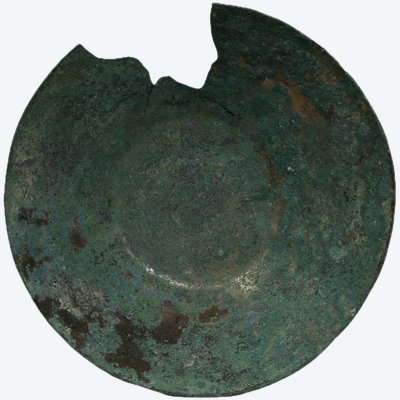
– Interior and opening: mouth displaying a regular funnel-shaped depression, whose walls progressively converge towards the central passage of the neck, while the interior surface preserves a greyish-beige tone, enlivened by brownish nuances and small natural irregularities; the interior profile, perfectly consistent with the exterior form, bears witness to a design attentive to the functionality of the vessel, combining a generous opening with a narrower passage towards the body.
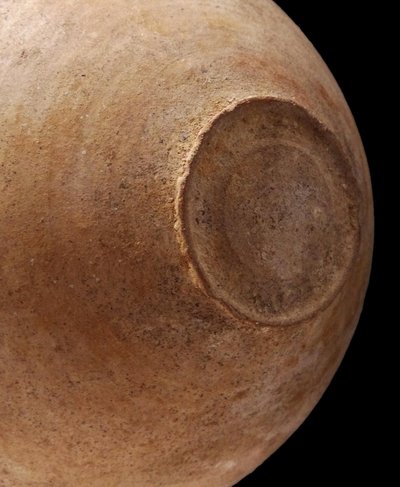
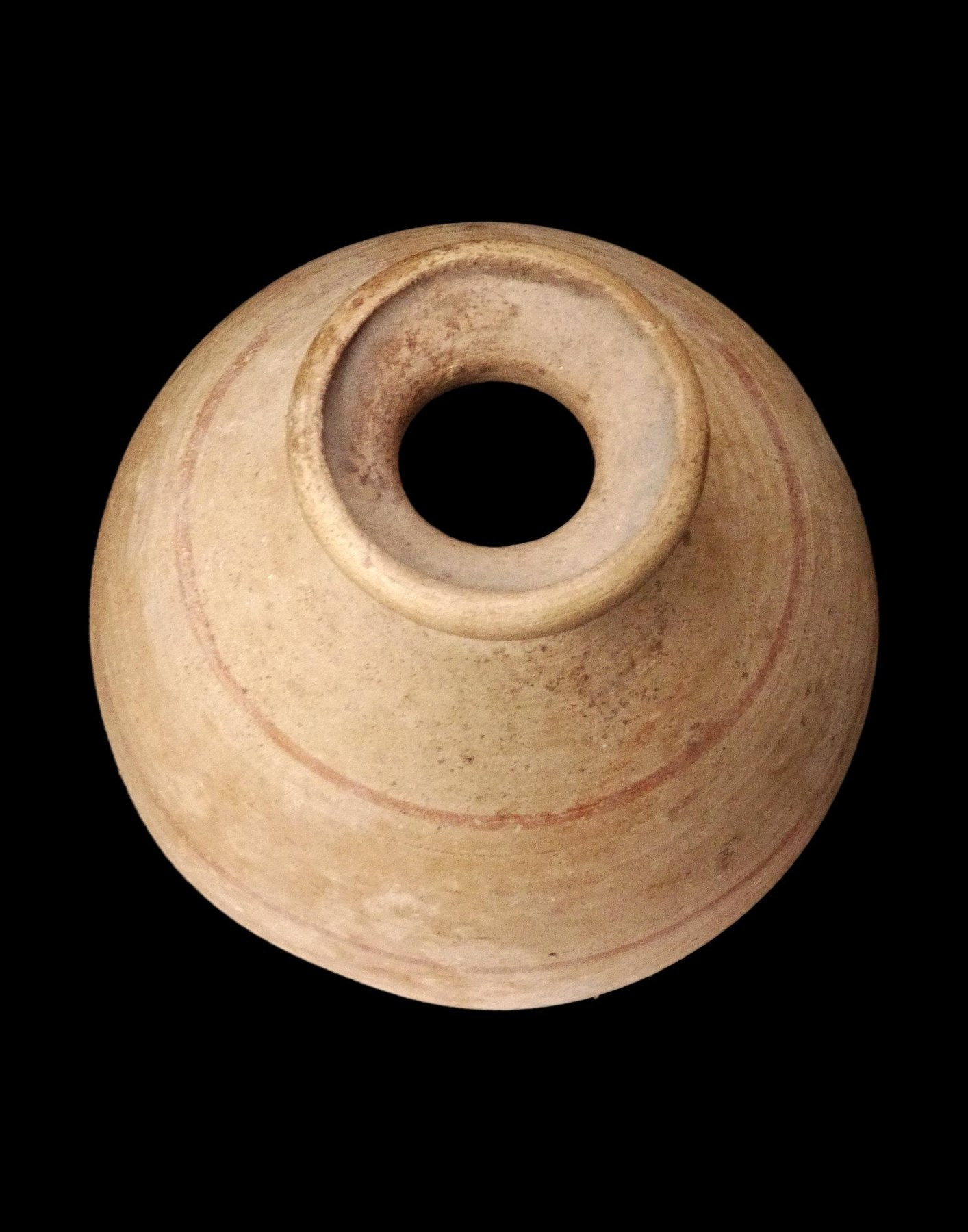
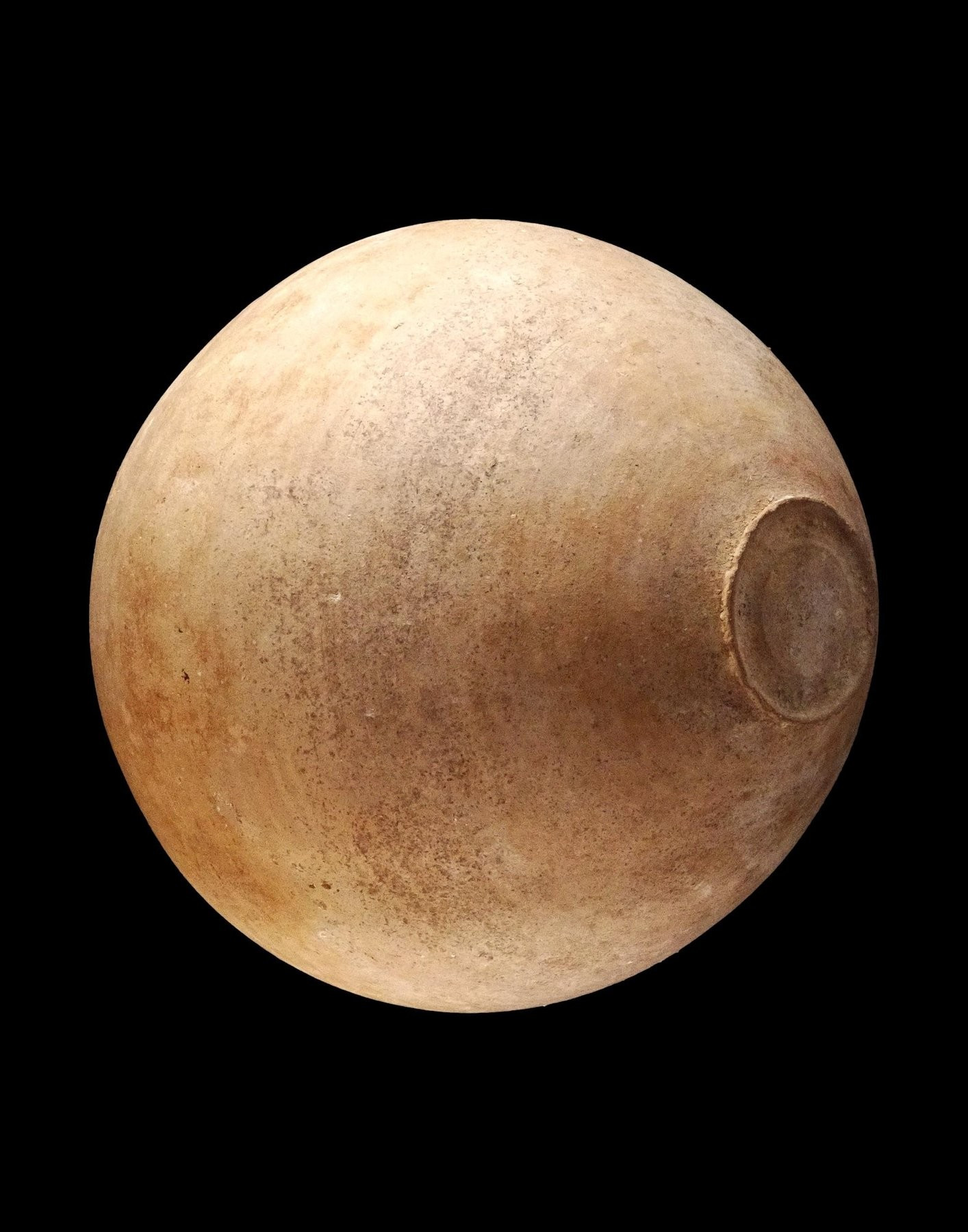
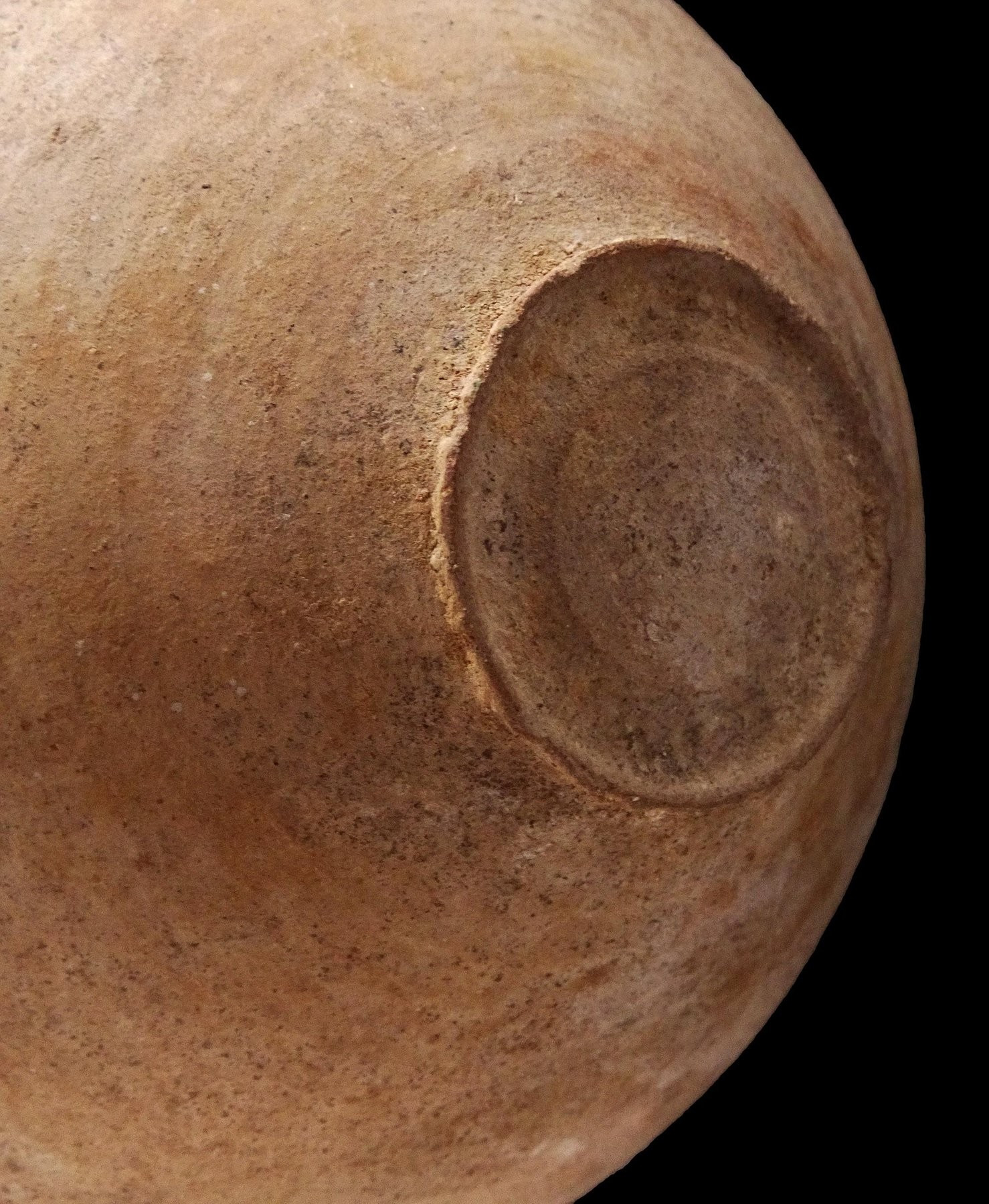
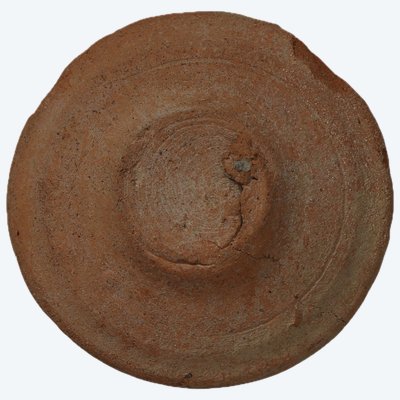
– Base and resting surface: progressively narrowing lower section, terminating in a small circular base with a slightly recessed bottom, whose underside displays a central depression clearly delimited by an annular border; this arrangement reveals a particularly interesting finish from a technical perspective, while the surface preserves fine circular traces, small dark speckles and a slightly more granular texture, material characteristics that contribute to understanding the shaping process.
– Overall preservation: entirely intact and complete example, retaining the entirety of its original silhouette, from the upper lip to the circular base, with a harmoniously developed body, a perfectly defined neck and painted-band decoration that remains clearly perceptible; discreet patina variations, fine surface marks and natural nuances of the clay accompany the preservation of the material, while the excellent integrity of the whole constitutes a particularly appreciable quality for a ceramic attributed to the late Archaic period.
– Aesthetic balance: one of the most remarkable qualities of this example lies in the relationship between the generous roundness of the body, the relative delicacy of the neck and the elegantly flared opening of the lip, whose proportions create a composition of great serenity; this harmony is reinforced by the sobriety of the reddish bands, whose circular lines appear to accompany naturally the movement of the clay, giving the vase a particularly refined decorative presence and a surprisingly modern aesthetic for a production of Antiquity.
– Typological consistency: the proportions (189 × 147 mm), slightly pear-shaped globular body, constricted neck, flared mouth, small circular base and reddish-brown painted-band decoration correspond to the ceramic traditions of Southern Italy during the 6th–5th centuries BC, particularly the Apulian productions with linear decoration developed in environments of contact between indigenous populations and Greek cities; these characteristics find parallels in the archaeological collections of Apulia, notably at the Archaeological Museum of Santa Scolastica in Bari, as well as in specialized studies devoted to the painted-band ceramics of Peucetia and Messapia, whose geometric compositions and simplicity of form constitute characteristic expressions of regional craftsmanship.
– Traceability: the French provenance, associated with the Auction House of M. R. S., forms part of an ownership history dating back to 1980, the year of acquisition from an art-market professional in France, followed by a subsequent French acquisition in 2026; this history, accompanied by the certificate of authenticity provided, constitutes a valuable documentary record of the modern history of the example and its transmission within an antiquities collection.
Cultural Value
Through the sovereign purity of its silhouette, the almost perfect generosity of its body and the delicacy of its reddish painted bands, this Apulian Greek vase of the 6th–5th centuries BC belongs to that family of archaeological objects whose cultural value resides in a harmony so profoundly mastered that it seems to have traversed the centuries without losing any of its self-evident beauty, for it bears witness to one of the most fertile moments in the artistic history of Southern Italy, when the artisanal traditions of indigenous populations encountered the influence of the Greek cities of Magna Graecia and gave rise to original productions in which the pursuit of proportion, the quality of shaping and the sobriety of decoration express a genuine philosophy of beauty.
This aesthetic, founded upon the balance of masses and the continuity of lines, reveals a particularly refined artistic sensibility, for the fine circular bands traversing the surface do not merely ornament the vessel: they accompany its form, emphasize its articulations and introduce a visual rhythm that transforms the material into a perfectly ordered composition, while the ivory, sand and ochre nuances of the terracotta recall the natural richness of Mediterranean clays and the intelligence of the craftsmen who knew how to exploit their plastic and chromatic qualities.
Remarkably preserved, entirely intact and endowed with a beautiful ancient patina, this example possesses that superior quality sought after by discerning enthusiasts: the possibility of appreciating, in their original continuity, the proportions, surfaces and principal articulations of a ceramic nearly two and a half millennia old, whose elegance depends upon no spectacular ornament, but solely upon the precision of the craftsman's gesture and the harmony of the volumes. Its generous silhouette, widely flared mouth and delicate reddish-brown bands lend it a particularly appealing decorative presence, capable of finding a natural place in a specialized collection of Greek and Italic ceramics, while offering, through the sobriety of its lines, a remarkable harmony with contemporary aesthetic sensibilities.
Originating from a former French provenance whose history dates back to 1980, and accompanied by a certificate of authenticity, this vase thus constitutes a precious testimony to the material civilization of Archaic Apulia, where the apparent simplicity of objects often reveals the most accomplished forms of artisanal expertise, while the sought-after perfection of a curve, the softness of terracotta and the delicacy of a few painted lines are sufficient to inspire that particular emotion awakened by great antiquities: the silent encounter between the beauty of an object, the intelligence of those who fashioned it and the depth of time separating us from them.
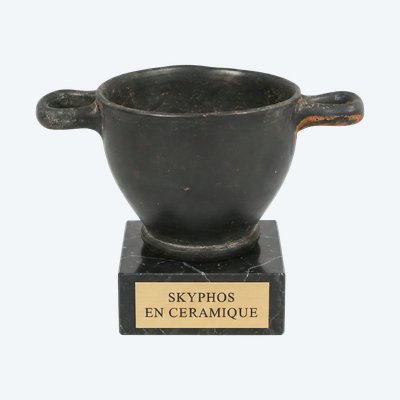
NB: The stands, frames and display elements visible in the photographs are intended exclusively for presentation purposes and are not included in the sale.
Ref: XVY5XVG6PB

 English
 Français
 Italiano
 Deutsch
 Royal Banner
1.500 € EUR