

Would you like more images?


– Object: cinerary urn lid
– Culture: Roman
– Period: 1st–3rd centuries AD
– Material: terracotta, orange-bodied pottery, displaying an ancient patina in shades of ochre, beige and earthy brown
– Dimensions: 20 × 94 mm (height × diameter)
– Condition: good condition; harmonious overall preservation, with ancient patina, slight edge irregularities, fine fissure lines and traces of surface wear
– Provenance: former American private collection “Ex Emeritus”; collection assembled between the 1950s and 1980s by a university professor who held important academic responsibilities
– Authenticity: certificate of authenticity provided
– Sale: acquired from a private collection; example offered by ANTIKARTS
In the Roman world of the first centuries of our era, funerary practices bear witness to a particularly profound relationship between the memory of the deceased, respect for rituals and the symbolic continuity of the family, while cremation, widely practised during the Early Roman Empire before gradually giving way to the increasing prevalence of inhumation, involved the gathering of skeletal remains from the funeral pyre, followed by their deposition in cinerary vessels made of terracotta, glass, stone or, for the most prestigious burials, marble; within this complex of practices, the urn lid fulfilled a discreet yet essential function, since it ensured the closure of the vessel intended to receive the remains of the deceased, thereby contributing to the material protection of its contents and the completion of the funerary gesture, while the simplest examples, fashioned from common clay and devoid of figurative ornamentation, remind us that Roman civilization finds expression not only in the monumentality of its tombs, but also in these modest objects in which the potter's everyday craftsmanship encountered one of humanity's most universal concerns: preserving the memory of those who had passed away.
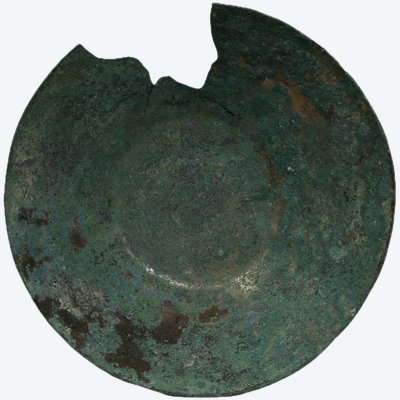
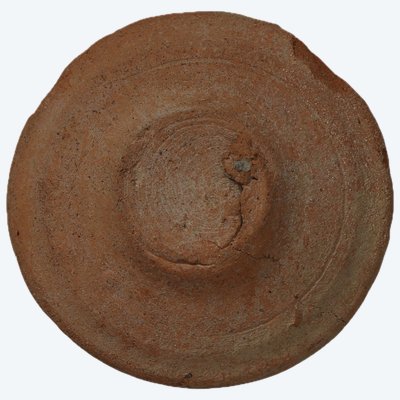
– Volume and profile: circular lid of low elevation, measuring 94 mm in diameter and 20 mm in height, whose compact silhouette, regular proportions and gentle curvature demonstrate a functional design suited to closing a vessel, the low height favouring a discreet and balanced form, characteristic of numerous utilitarian ceramic productions of the Roman world.
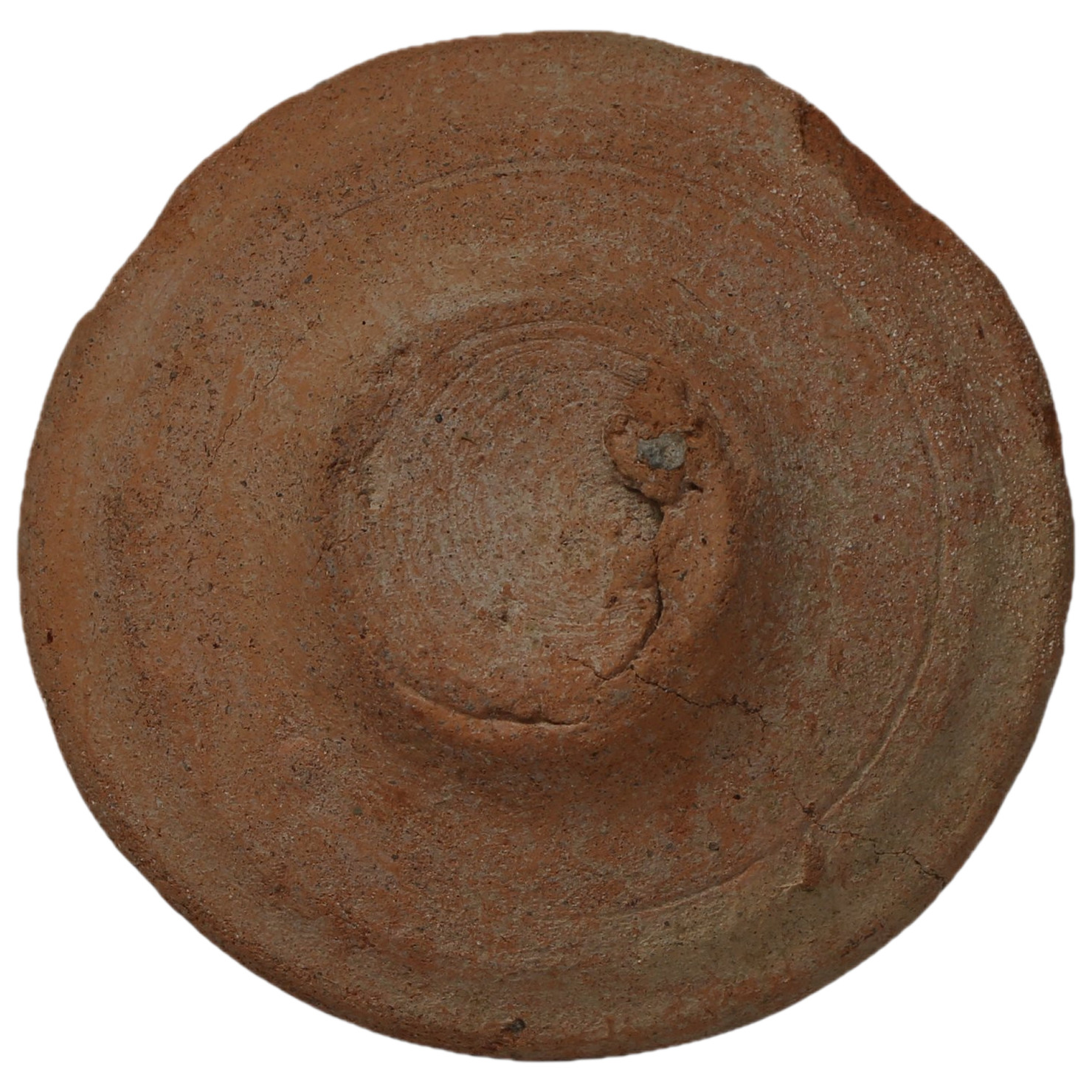
– Clay body and apparent composition: terracotta ranging from orange to brick-red in colour, whose slightly granular texture reveals small mineral inclusions and natural variations resulting from firing, while the greyish-beige and pale ochre shades extending across certain areas of the surface lend the whole that subtle chromatic richness characteristic of ancient ceramics that have retained their original material appearance.
– Shaping and wheel-throwing marks: one face displays a remarkable succession of concentric lines and circular grooves, arranged around a more clearly defined central area, whose overall regularity evokes the successive movements of shaping on the potter's wheel, revealing an artisanal technique in which the rotation of the clay made it possible to obtain circular forms while preserving, within the fired material, the characteristic impressions of manual craftsmanship.
– Central area and relief: the central section, slightly recessed and emphasized by an annular border, displays a small irregular terracotta relief near its periphery, a material detail that discreetly animates the composition and emphasizes the artisanal character of the example, while the slight variations in depth and surrounding circular marks contribute to an understanding of its structure and manufacturing process.
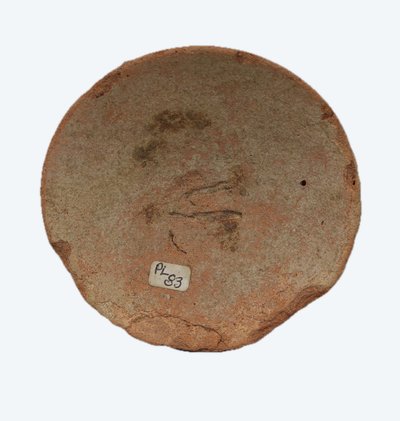
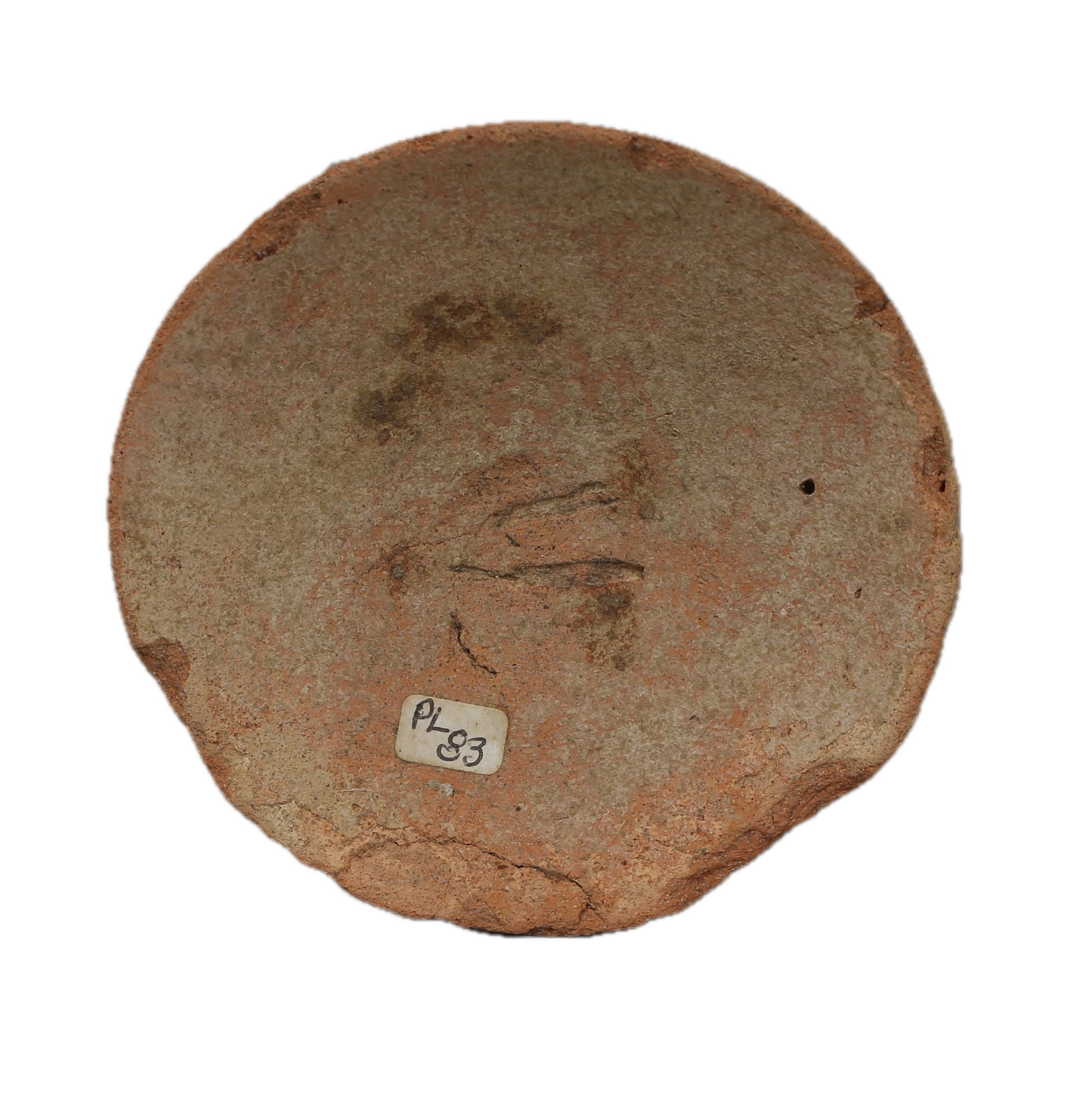
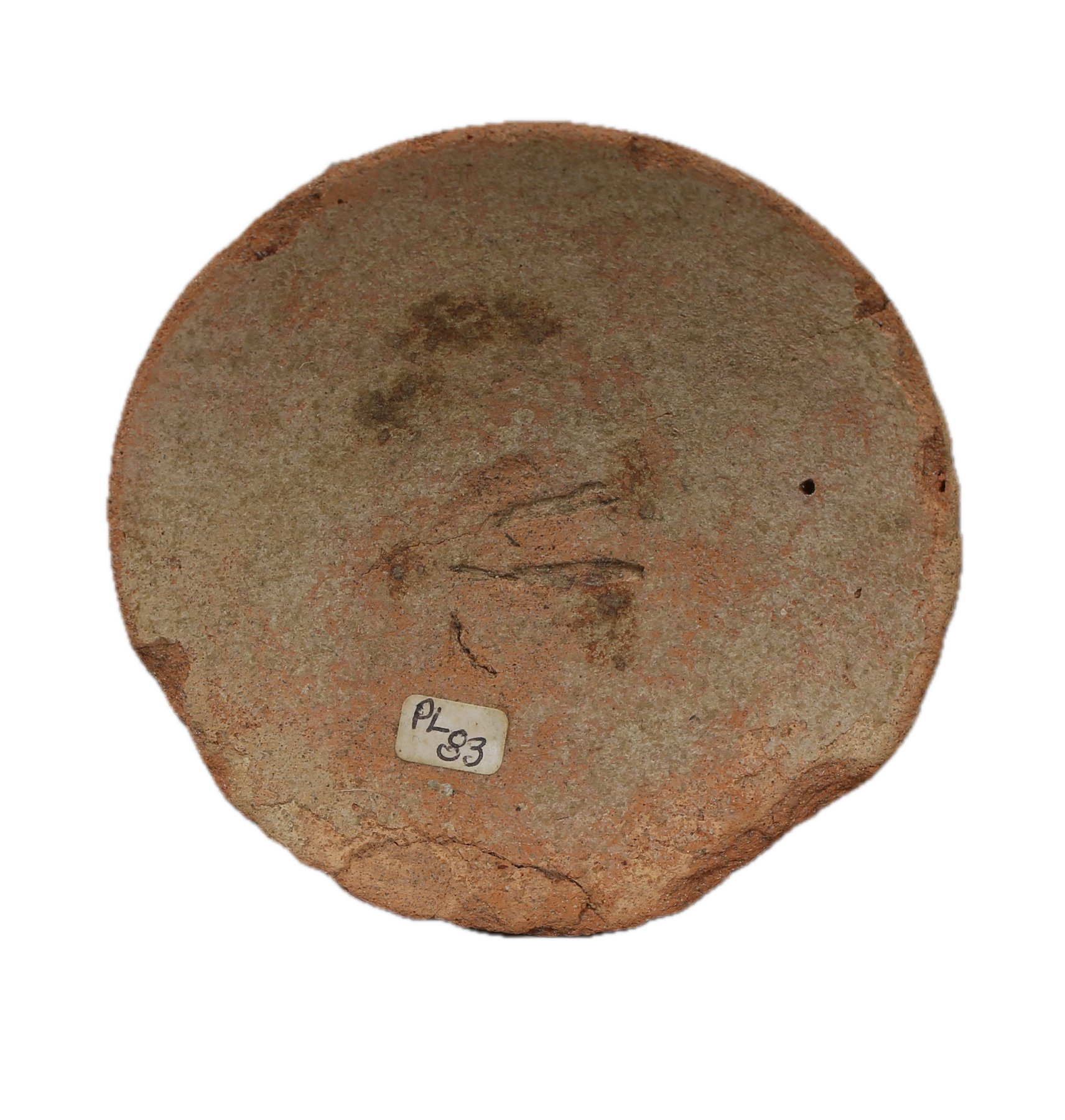
– Opposite face: a more broadly flat surface, characterized by a greyish-beige patina through which the orange colour of the clay body remains visible, with several contact marks and fine curvilinear traces in the central region, whose brownish tones contrast with the lighter areas and contribute to the aged and naturally nuanced appearance of the whole.
– Peripheral edge: relatively regular circular outline, nevertheless retaining the small irregularities inherent in the shaping and material history of the piece, with localized small chips, fine abrasions and a few darker speckles within the clay body, elements that emphasize the texture of the terracotta without compromising the overall legibility of its form.
– Surface and patina: matte, mineral patina, particularly interesting for the coexistence of reddish-ochre areas, pale beige veils and more diffuse greyish zones, accompanied by small surface irregularities, traces of abrasion and discreet fissure lines, the whole giving this ceramic object a tactile and visual presence authentically evocative of archaeological objects preserved in historic collections.
– Collection marking: presence of a small old label bearing a handwritten reference, preserved on one of the faces, a documentary detail accompanying the modern history of the example and recalling its passage through a collection of antiquities assembled for collecting and scholarly study.
– Typological consistency: the circular form, reduced dimensions, surface devoid of figurative decoration, terracotta clay body and shaping marks belong to the tradition of utilitarian ceramic lids of the Roman period, examples comparable in their function and manufacturing principles being attested in funerary contexts of the first centuries of our era, particularly in association with vessels intended to receive cremated remains.
– Traceability: the stated association with the former American collection “Ex Emeritus”, assembled over several decades during the 20th century, provides this piece with an interesting element of collection history, reinforced by the presence of its inventory label and the certificate of authenticity accompanying it.
Through the sobriety of its form, the natural beauty of its orange-coloured terracotta and the concentric impressions left within its substance by the potter's craftsmanship, this Roman urn lid belongs to that category of archaeological objects whose cultural value resides less in decorative ostentation than in their profound connection with the gestures, beliefs and practices of ancient societies, for behind this simple ceramic disc emerges an entire universe of funerary traditions, family remembrance and respect for the dead, in which the closing of a vessel could become the final material gesture of a ritual performed for someone who had passed away; thus, through its modest proportions, subtly varied patina, shaping marks and history within a former American academic collection, this example retains a singular evocative power, offering the collector not only a testimony to Roman craftsmanship during the first centuries of our era, but also a fragment of that silent history in which the simplest objects sometimes become the most moving witnesses to the human condition.
NB: The stands, frames and display accessories visible in the photographs are intended exclusively for presentation purposes and are not included in the sale.
Ref: E0BFMU3N14
| Condition | Good |
| Style | Rome and ancient Greece (Archeology of Rome and ancient Greece Style) |
| Period | 16th century and older (Archeology 16th century and older) |
| Country of origin | Europe |
| Internal reference | ANT-A015 |
| Shipping Time | Ready to ship in 2-3 Business Days |
| Location | 75008, Paris, France |
| Shipping Information | All our shipments are handled with the utmost care. Secure packaging: Each item is protected by appropriate and reinforced packaging to guarantee its integrity during transport. Tracked shipping: All packages are sent via registered mail or international tracked service with a tracking number provided to the buyer. Processing time: Shipments are generally processed within 2 to 5 business days after payment confirmation. Insurance: Additional insurance can be added to the shipment upon request. Delivery areas: Shipping is available to the European Union. For other destinations, please contact us before purchasing. |
4 commitments to buy with confidence

 English
 Français
 Italiano
 Deutsch