This description has been translated and may not be completely accurate. Click here to see the original
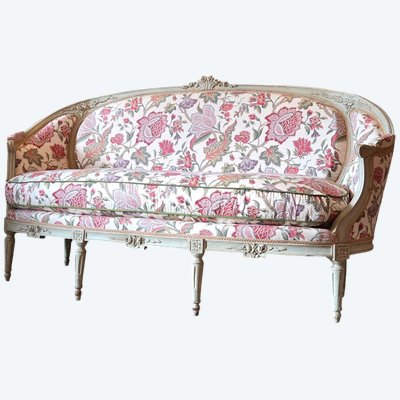
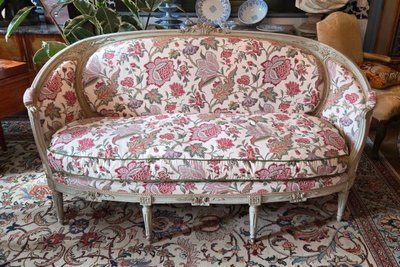
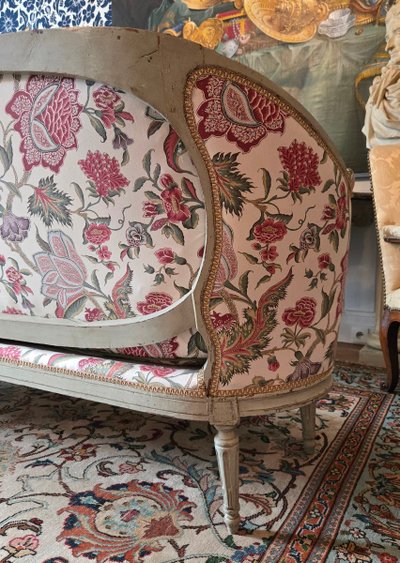
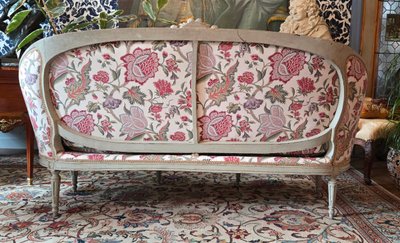
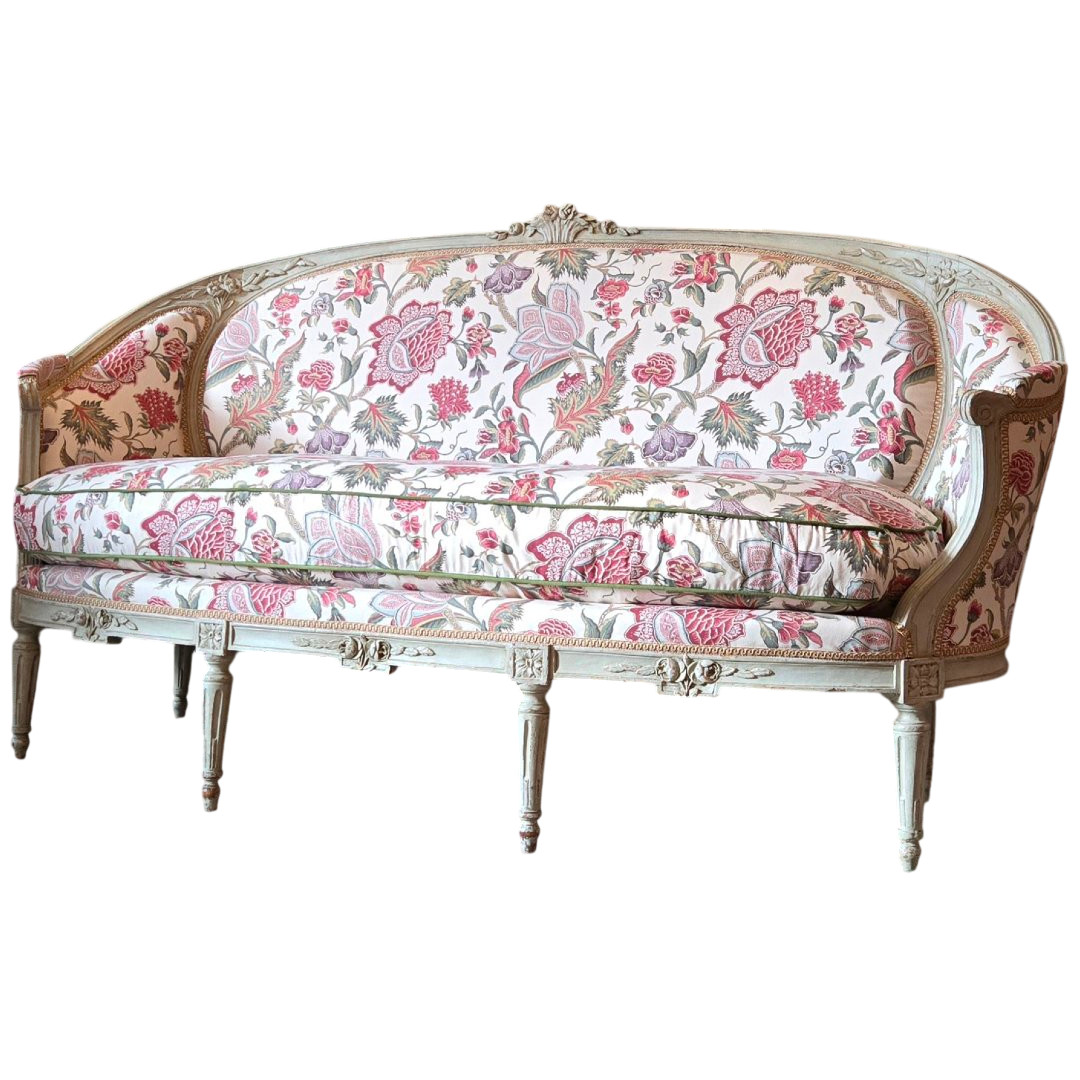
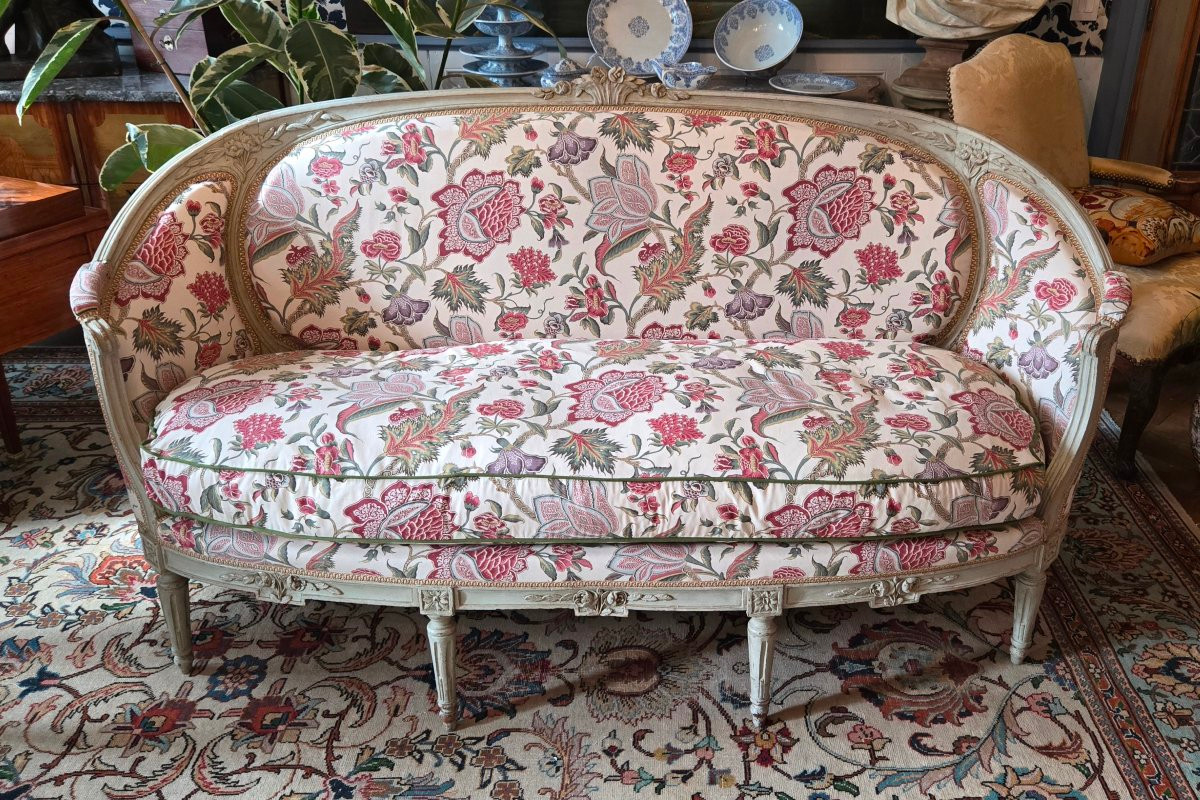
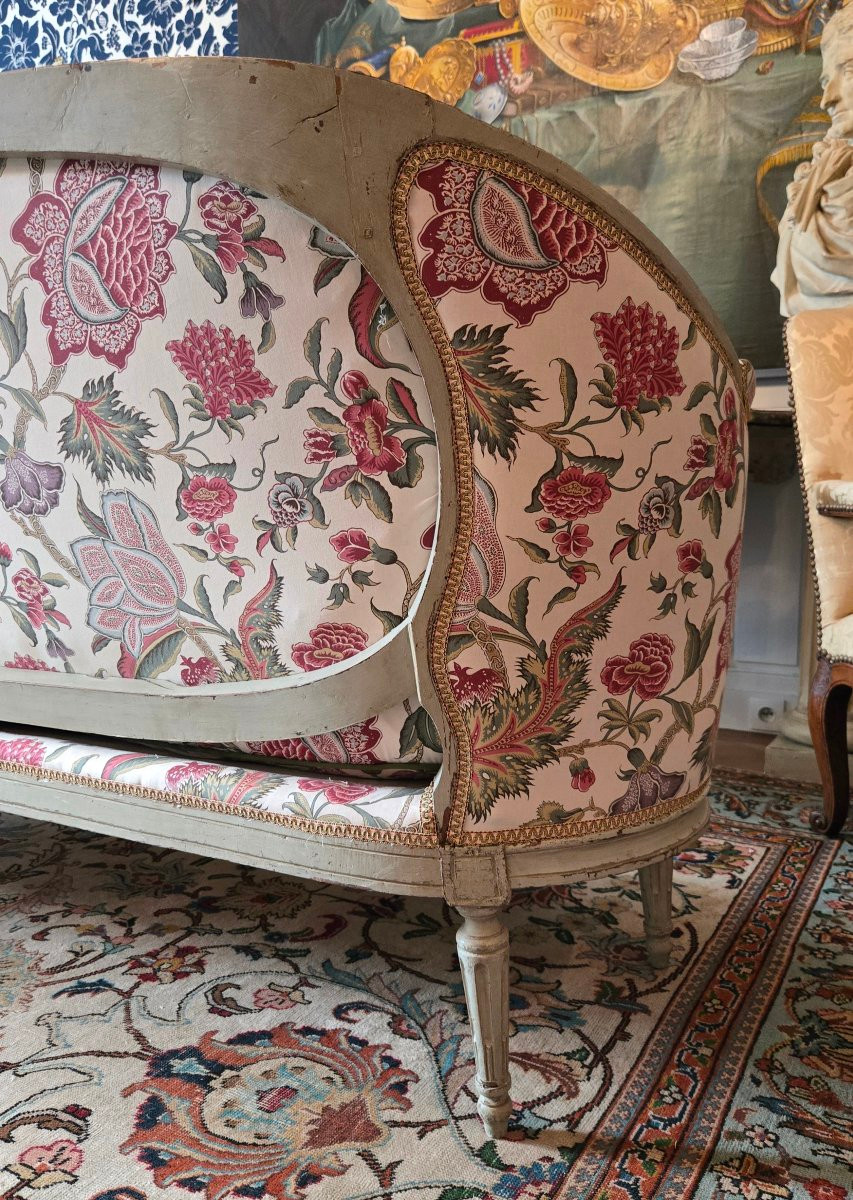
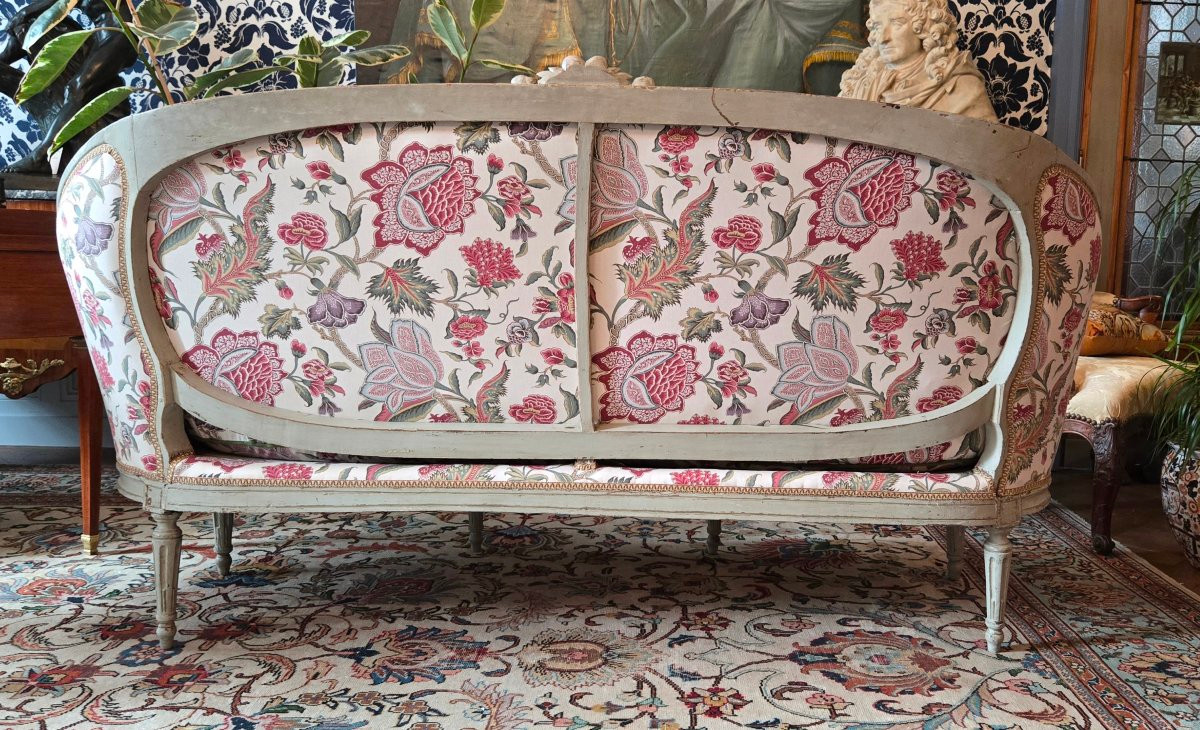
A large, three-seater gondola-shaped sofa, also known as an ottoman, from the Louis XVI period, crafted entirely from solid walnut, molded, carved, and painted, featuring an unusual design and refined floral ornamentation.
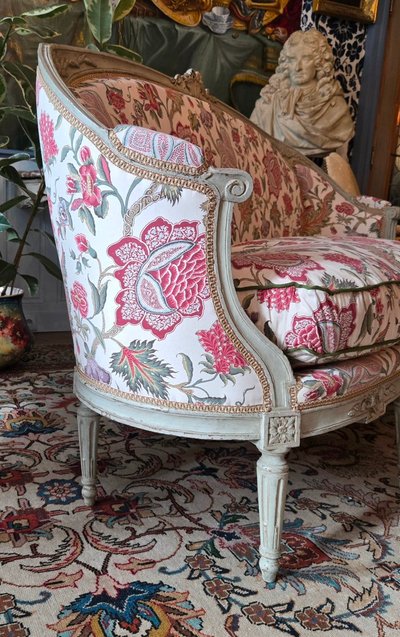
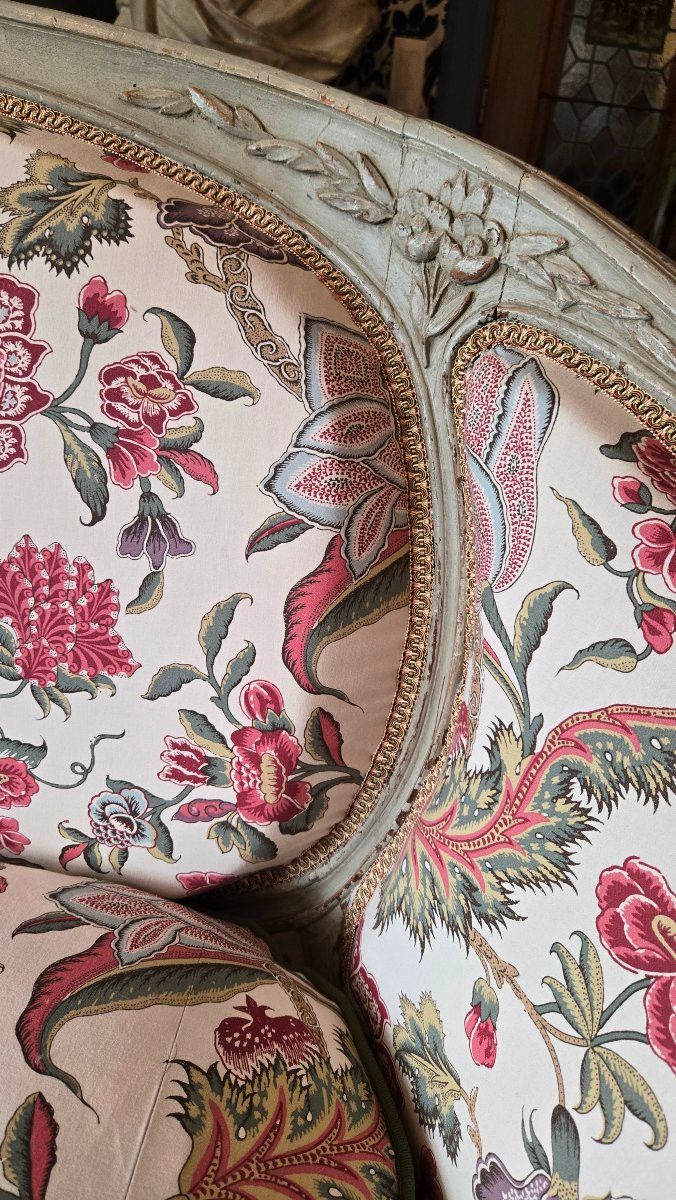
This sofa is distinguished by its wide, enveloping back, organized around a large, elongated oval medallion, connected to the two curved side panels that gradually curve forward. The connections form wide, carved spandrels, whose design follows the curves of the back and contributes to the balanced proportions.
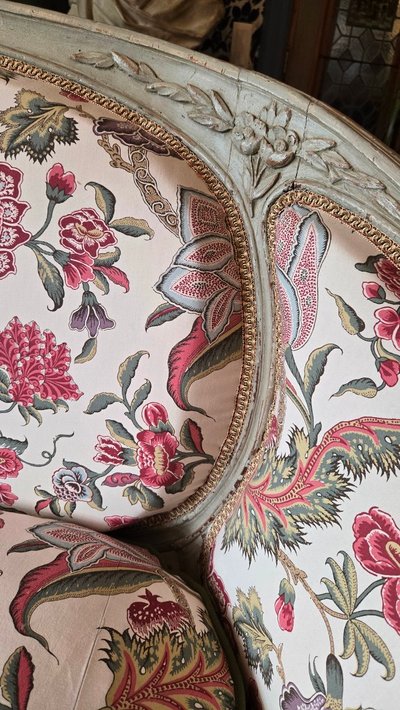
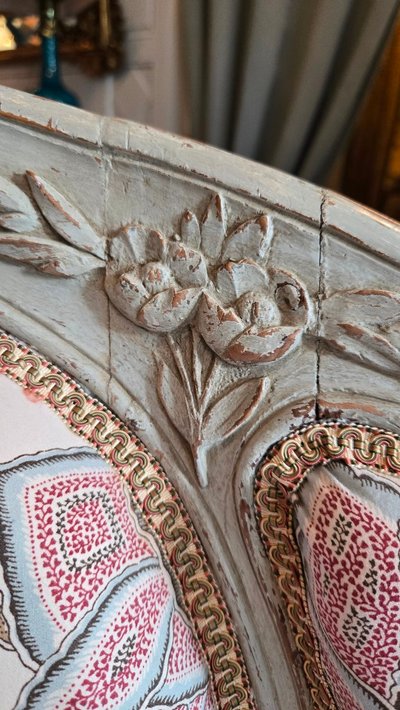
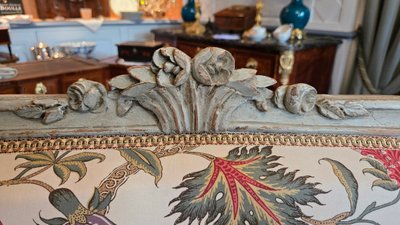
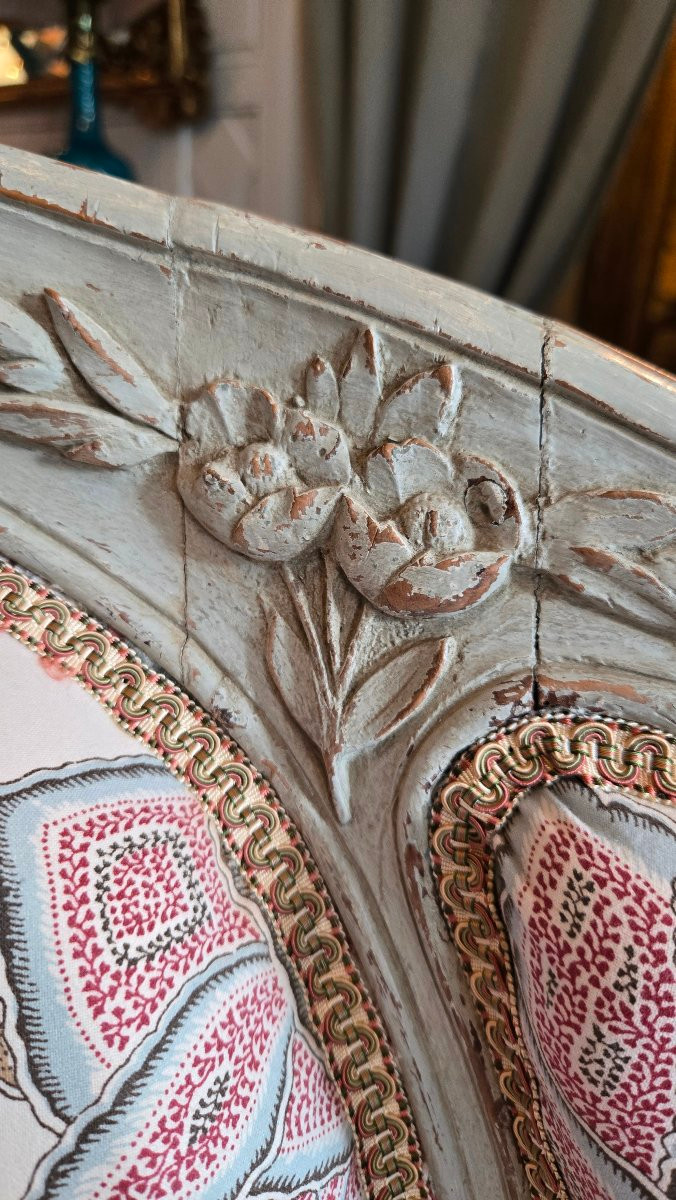
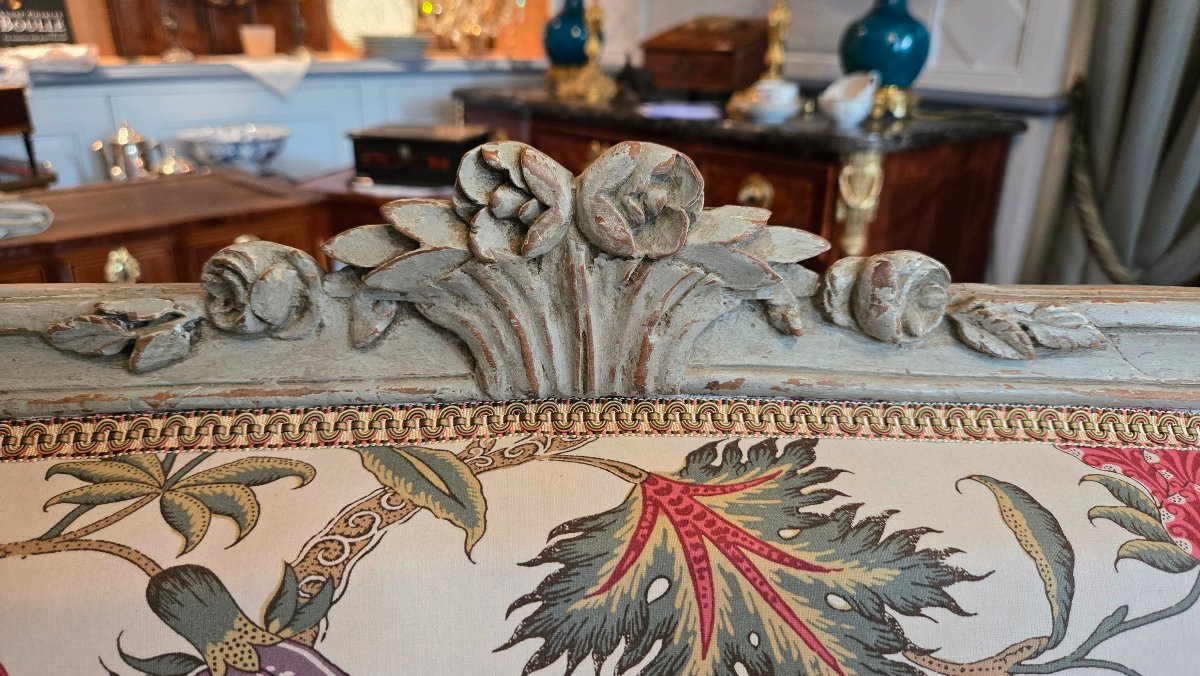
At the top of the back, a floral composition is arranged around a large palmette of acanthus leaves fanned out, from which roses, flower buds, and leafy branches emerge. On either side of the medallion, the spandrels are adorned with blooming flowers and foliage carved in relief, extending across the various assembled pieces of the woodwork.
This ornamentation retains the naturalism and fluidity of the Louis XV style, while fitting within the neoclassical architecture characteristic of the Louis XVI period. The moldings remain unobstructed, with the carvings punctuating the main structural joints rather than forming repetitive friezes.
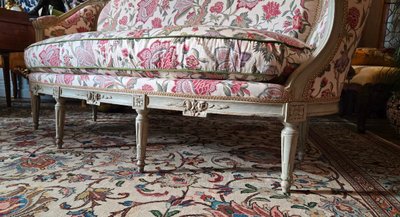
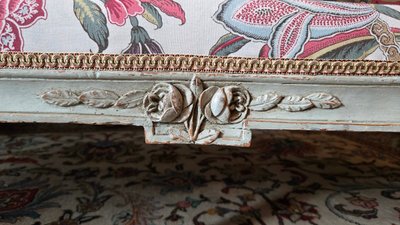
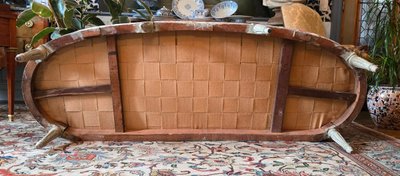
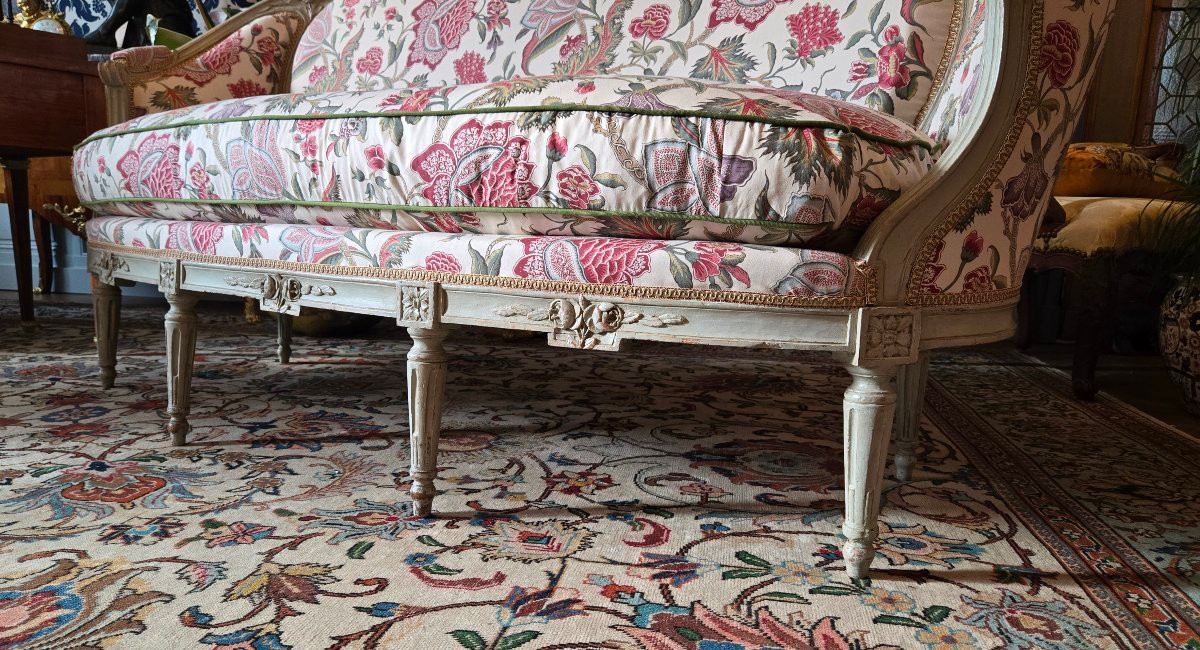
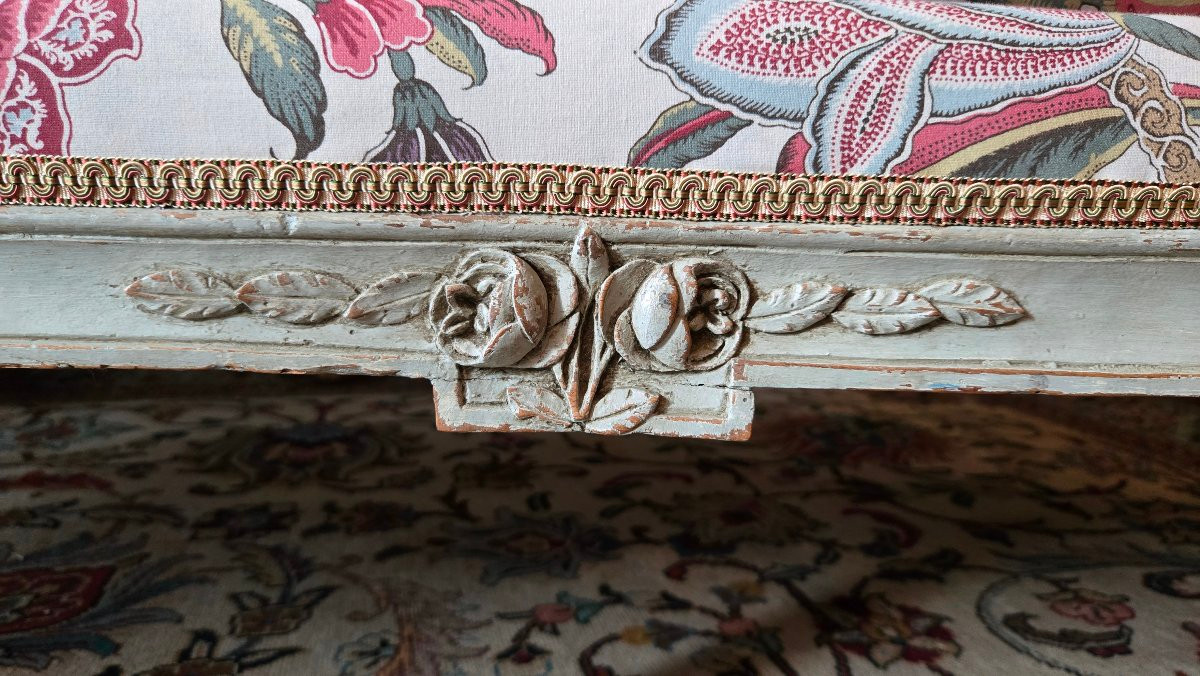
The molded and slightly undulating frieze features projections adorned with bouquets of two roses accompanied by leafy branches that extend onto the crossbeams. These projections are formed from pieces of walnut fitted together with a flat joint, each held in place by two wooden pegs, thus minimizing material waste during the cutting of the crossbeams. The carving continues seamlessly across the added pieces and the frieze.
The central projection of the front frieze has a distinctive feature: its outer face is hollowed out with a slight concave shape, softening the design of the façade.
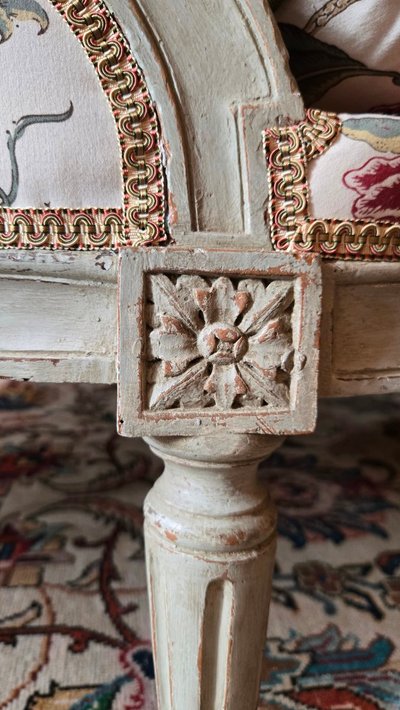
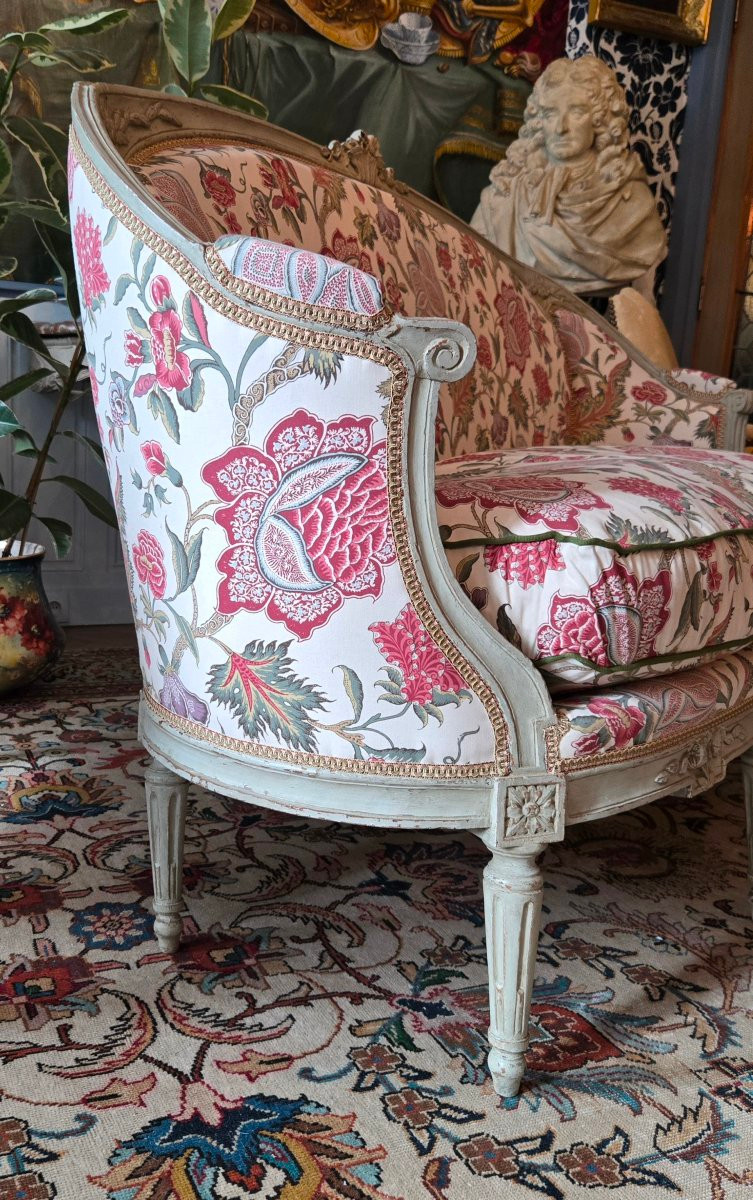
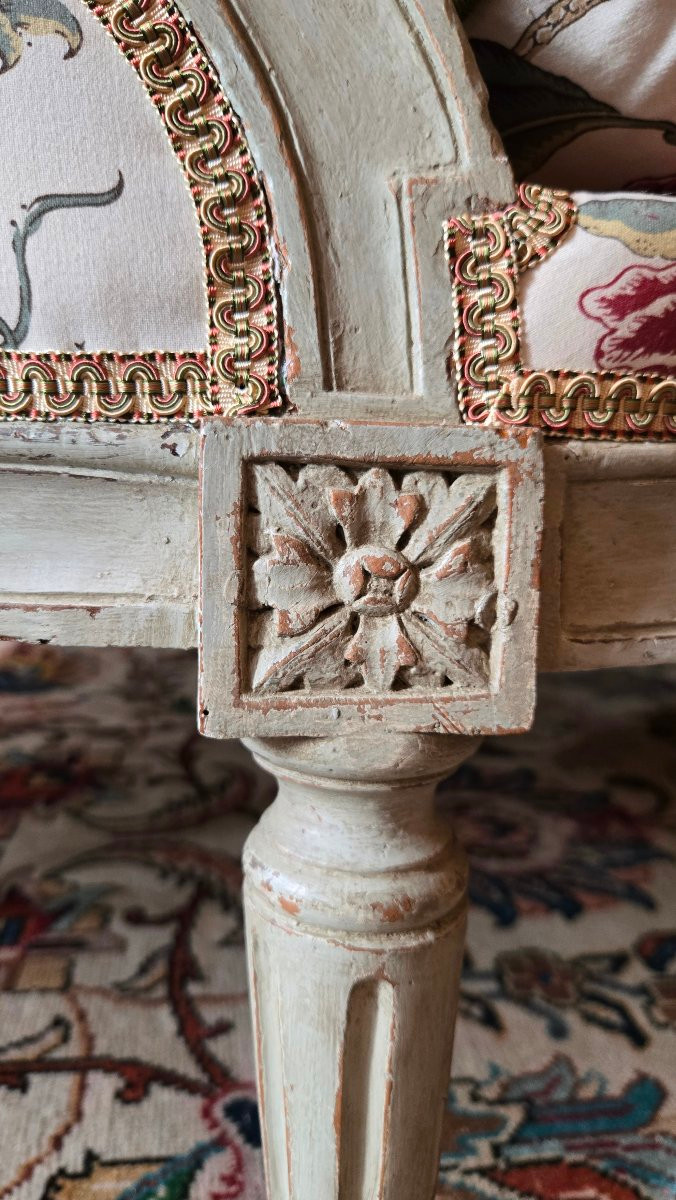
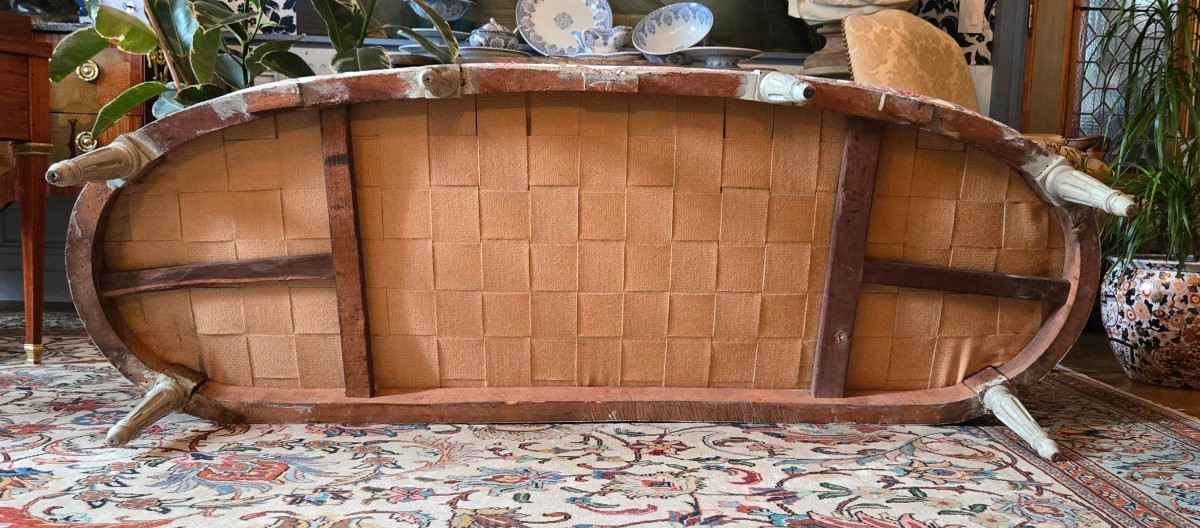
The sofa rests on six turned and tapered legs with fluted and upturned canes, highlighted by molded rings and finished with turned caps. The connecting blocks are carved with four-part foliate rosettes around a projecting central heart.
The slightly sinuous armrests with cuffs feature scrolled ends with upturned volutes. They rest on molded brackets with two longitudinal fluted and reeded canes, whose canes echo the decoration of the legs.
Stylistic and Historical Comparisons
With its enveloping shape and the continuity of its backrest with the side panels, this sofa corresponds to the typology of gondola sofas, also called ottomans, as defined by Nicole de Reyniès in *Mobilier domestique, Vocabulaire typologique* (Volume I, pp. 152-153). An architectural parallel can be drawn with the Louis XVI gondola sofa in the Cognacq-Jay Museum in Paris, reproduced in this volume as number 475.
The naturalistic treatment of the roses, the precise placement of the carvings, the projecting apron, and the fluted, reeded legs also allow us to connect our sofa with certain pieces by Mathieu de Bauve, a Parisian cabinetmaker who became a master in 1755, and by Pierre-Nicolas Pillot (1748-1822), who worked in Nîmes.
Trained in the workshop of Nicolas-Quinibert Foliot, Mathieu de Bauve produced both Louis XV chairs and Transitional and Louis XVI models. Some of his Neoclassical pieces retain a repertoire of blooming roses and carved foliage at the main joinery points.
An interesting point of comparison can be found in the salon furniture from the former collections of the Marquis d'Aligre, presented at Millon on June 17, 2016, lot 102. This set included a sofa stamped BAUVE, decorated with bouquets of roses and acanthus leaves, with a projecting apron and tapered legs with fluted and reeded edges. While its form differs, the ornamental principle bears similarities to our example.
The exclusive use of solid walnut also deserves to be highlighted. Although beech was widely preferred in Parisian workshops for painted or gilded chairs, walnut was also used, notably for its fine grain and its carving qualities. This wood is attested in some of Mathieu de Bauve's work, sometimes combined with beech.
Originally from Fontenay-sur-Seine in the Aube region, like Bauve, Pierre-Nicolas Pillot was his apprentice and then likely his journeyman before settling in Nîmes in 1776, where he earned his master craftsman's certificate in 1780. His work testifies to the spread of Parisian styles in the South of France. The existence of chairs bearing both the BAUVE and PILLOT stamps illustrates the professional relationship between these cabinetmakers.
These connections allow us to place our sofa within this style of joinery from the last third of the 18th century, combining neoclassical architecture with floral decoration still influenced by the Louis XV style, without allowing...
Ref: M3KHUXWV9Z

 English
 Français
 Italiano
 Deutsch
 Crow pouch
800 € EUR