This description has been translated and may not be completely accurate. Click here to see the original
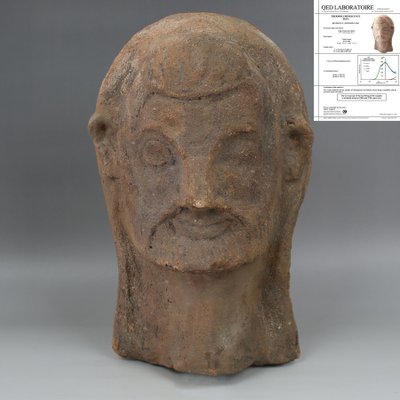
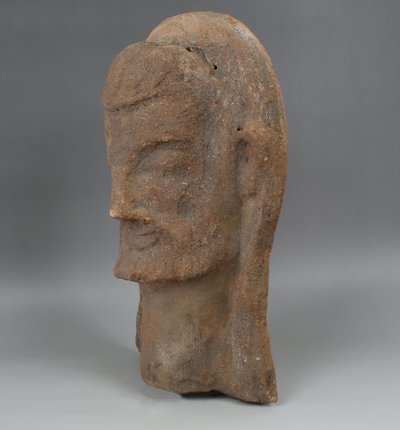
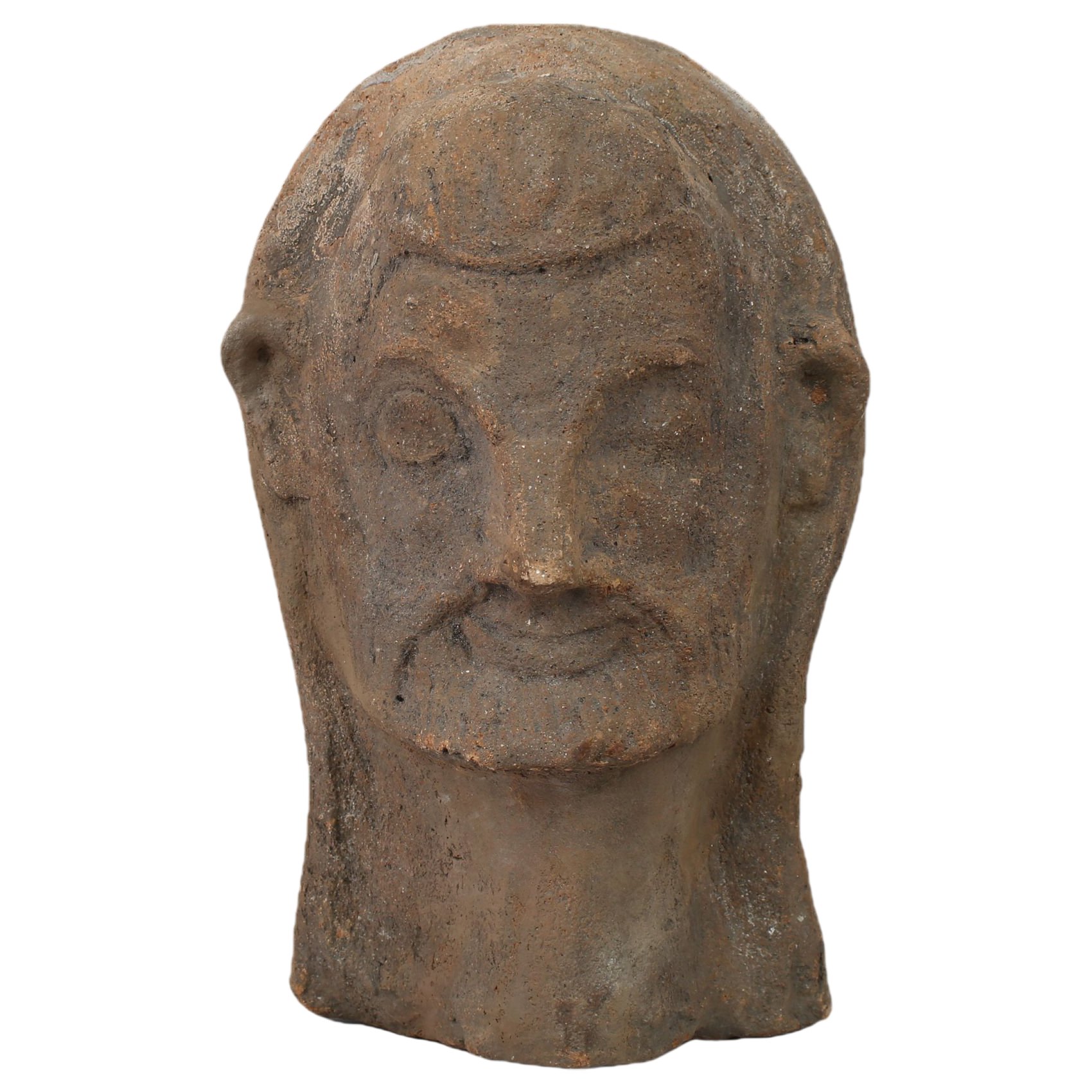
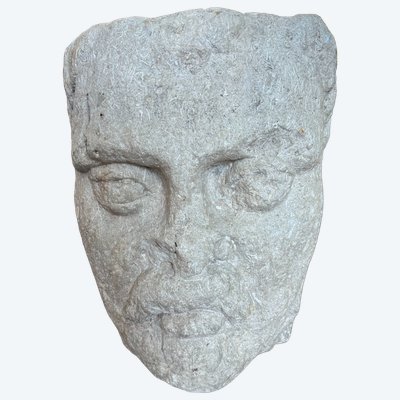
Imposing anatomical votive model of a male head in molded terracotta, hollow, with a flat back pierced by an air vent. This type of production, known as testa votiva, belonged to the Etruscan religious ritual and was intended for sanctuaries as an ex-voto offering. The piece stands out for its schematic yet expressive modeling, its balanced profile, and a homogeneous archaeological patina of brown hues punctuated with mineral inclusions. The facial features — brow ridges, straight nose, fine mouth, beard, and hair — evoke the sober and solemn craftsmanship of workshops from central Etruria.
Technical Data
Culture: Etruscan
Period: 5th–4th century BC
Material: Terracotta fired in an oxidizing atmosphere
Dimensions: 30 × 19 × 10 cm
Condition: Good condition, stable surface, homogeneous ancient patina
Provenance: Former Belgian private collection → Spanish antiquarian (2022) → Belgian private collection, Brussels
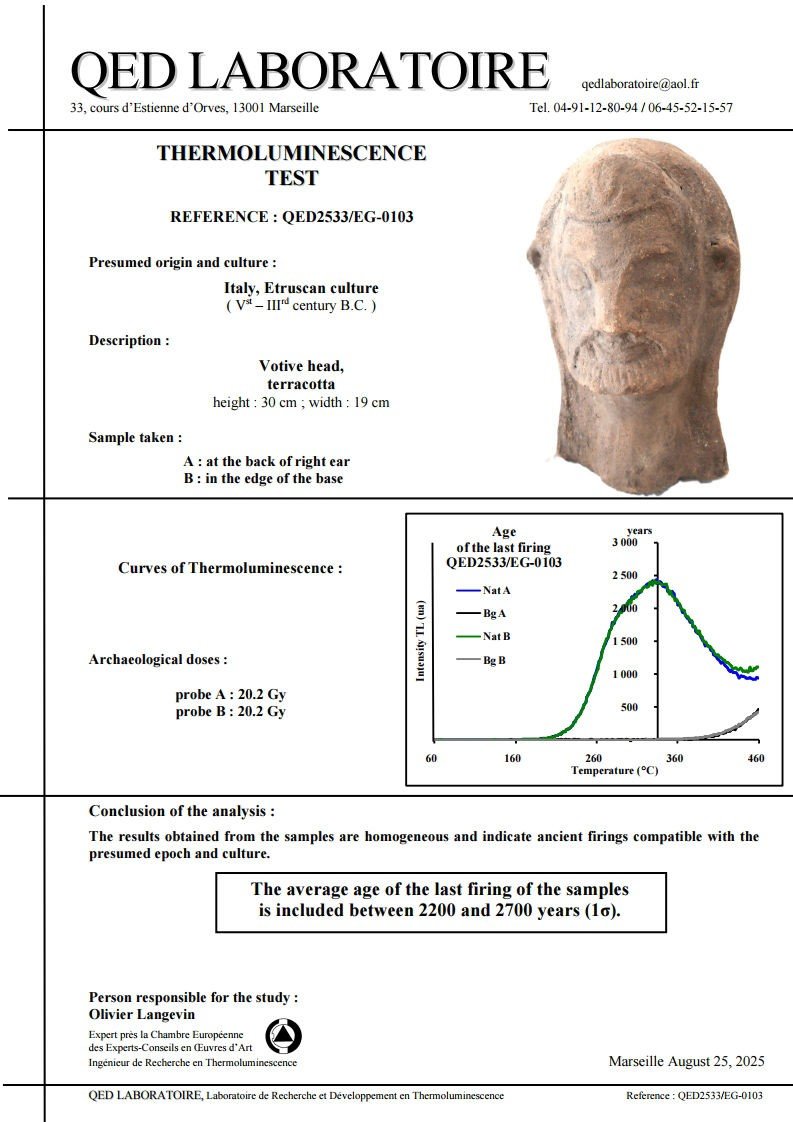
Authenticity: Certificate + thermoluminescence test QED (ref. QED2533/EG-0103, Marseille, 2025)
Sale: Specialized European auction under expert supervision
Archaeological and Museum Expertise
Official Type and Terminology
Classified as votive head or testa votiva, according to the nomenclature of the British Museum and the Metropolitan Museum of Art. These votive models symbolically represented either the devotee or the part of the body healed.
Dating and Scientific Confirmation
The thermoluminescence test carried out by the QED Laboratory (Marseille) establishes the last firing between 2,200 and 2,700 years ago (1σ), perfectly consistent with the 4th–3rd centuries BC — the period of maximum diffusion of Etruscan votive heads.
Morphology and Technique
Molding in two joined parts, manual finishing, hollow interior, dorsal opening for aeration. These features are typical of the productions from the sanctuaries of Cerveteri (Vignaccia), Veii, and Falerii.
Museum Comparanda
Head of a Woman with Earrings — Walters Art Museum, H. 29.5 cm
Terracotta Head of a Woman — Metropolitan Museum of Art, 4th century BC
Votive Head — British Museum, inv. 1843,0507.334, 4th–2nd century BC
Terracotta Votive Head — Bristol Museums, “mould-made, hollow inside”, 300–100 BC
Reference Bibliography
De Puma & Lightfoot, Etruscan Art in The Met (2013);
Comella & Mele, Depositi votivi e culti dell’Italia antica (2005);
Nagy, Votive Terracottas from the Vignaccia, Cerveteri (1988).
Cultural and Heritage Value
This Etruscan votive head embodies the fusion of art, faith, and sacred medicine: an offering deposited to obtain healing or divine protection, it reflects the symbolic realism and intimate piety of the Etruscans. Its hollow form, authentic patina, and certified dating make it a reference museum piece, a witness to the spirituality and ceramic mastery of the ancient world.
Expert Conclusion
Etruscan testa votiva in molded hollow terracotta, dated to the 5th–4th century BC, confirmed by QED TL analysis (2,200–2,700 years). A piece of great scientific and aesthetic interest, comparable to the examples in the British Museum and the Metropolitan Museum of Art.
An object for study, admiration, and collection — authenticated, certified, and fully documented.
Ref: WPDJRZ3KVE

 English
 Français
  Italiano
  Deutsch
  Royal Banner
1.500 € EUR
Royal Banner
1.500 € EUR