This description has been translated and may not be completely accurate. Click here to see the original
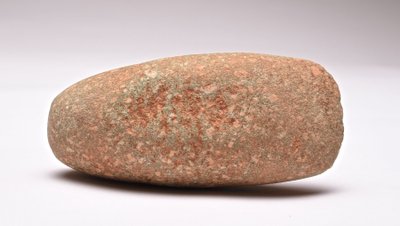
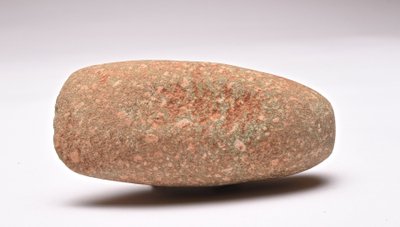
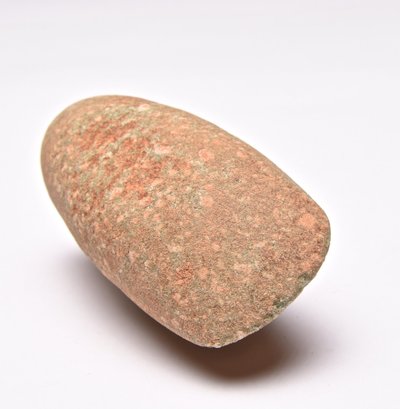
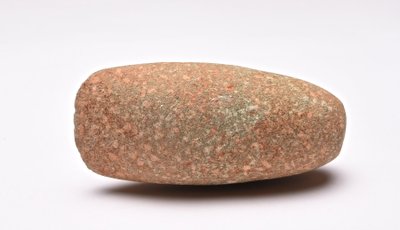
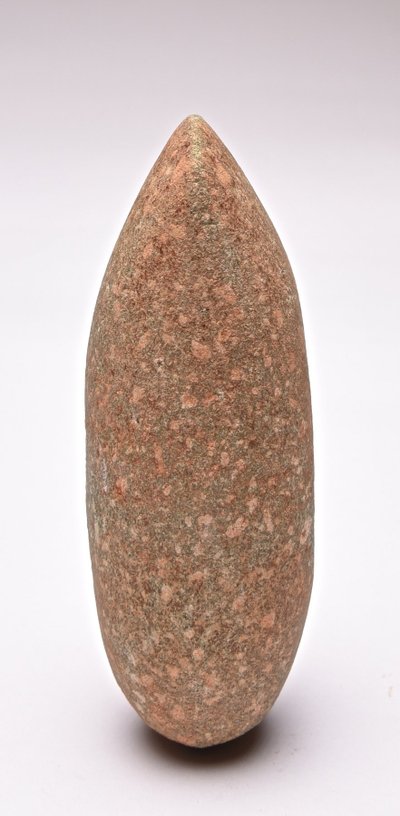
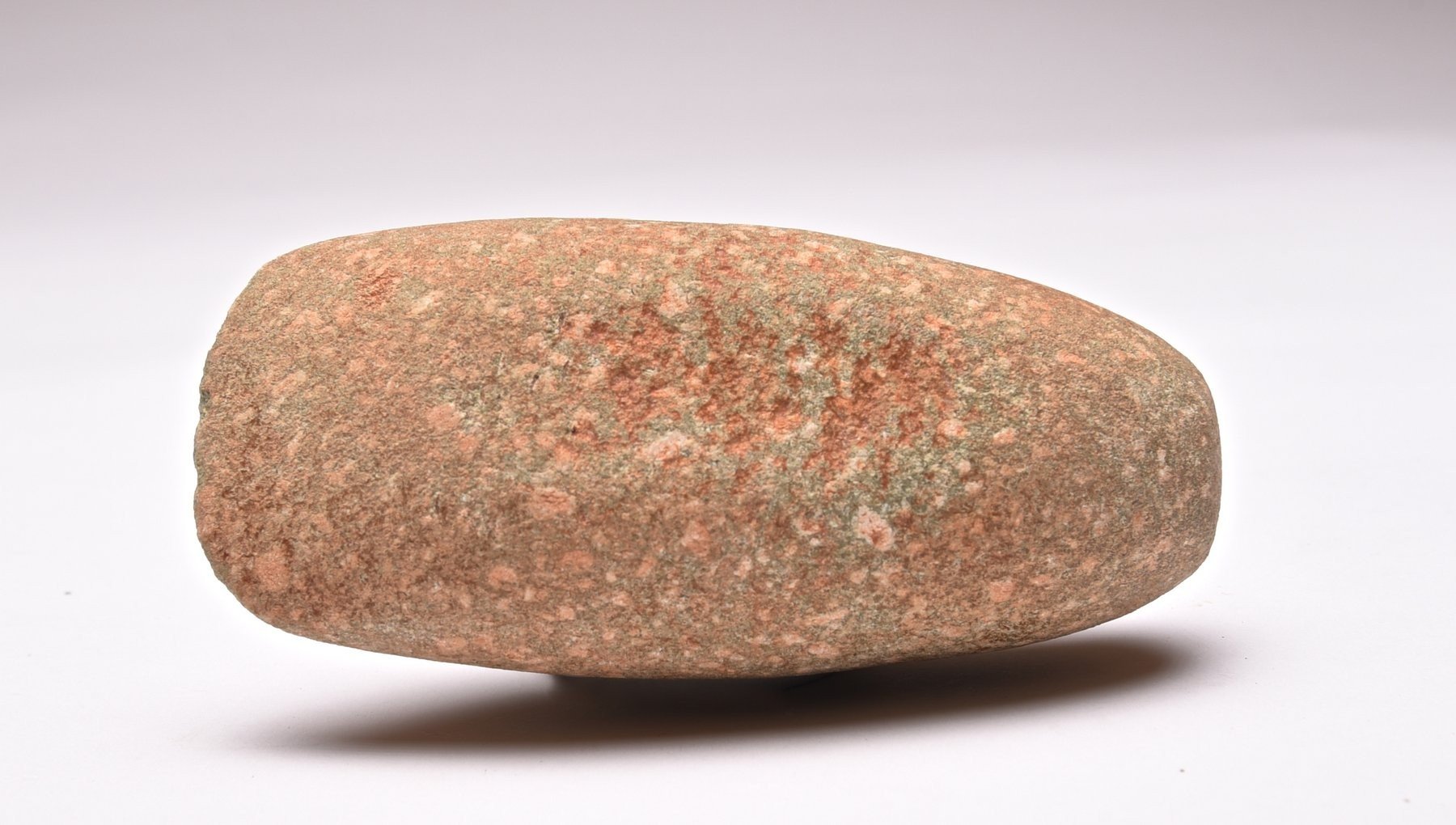
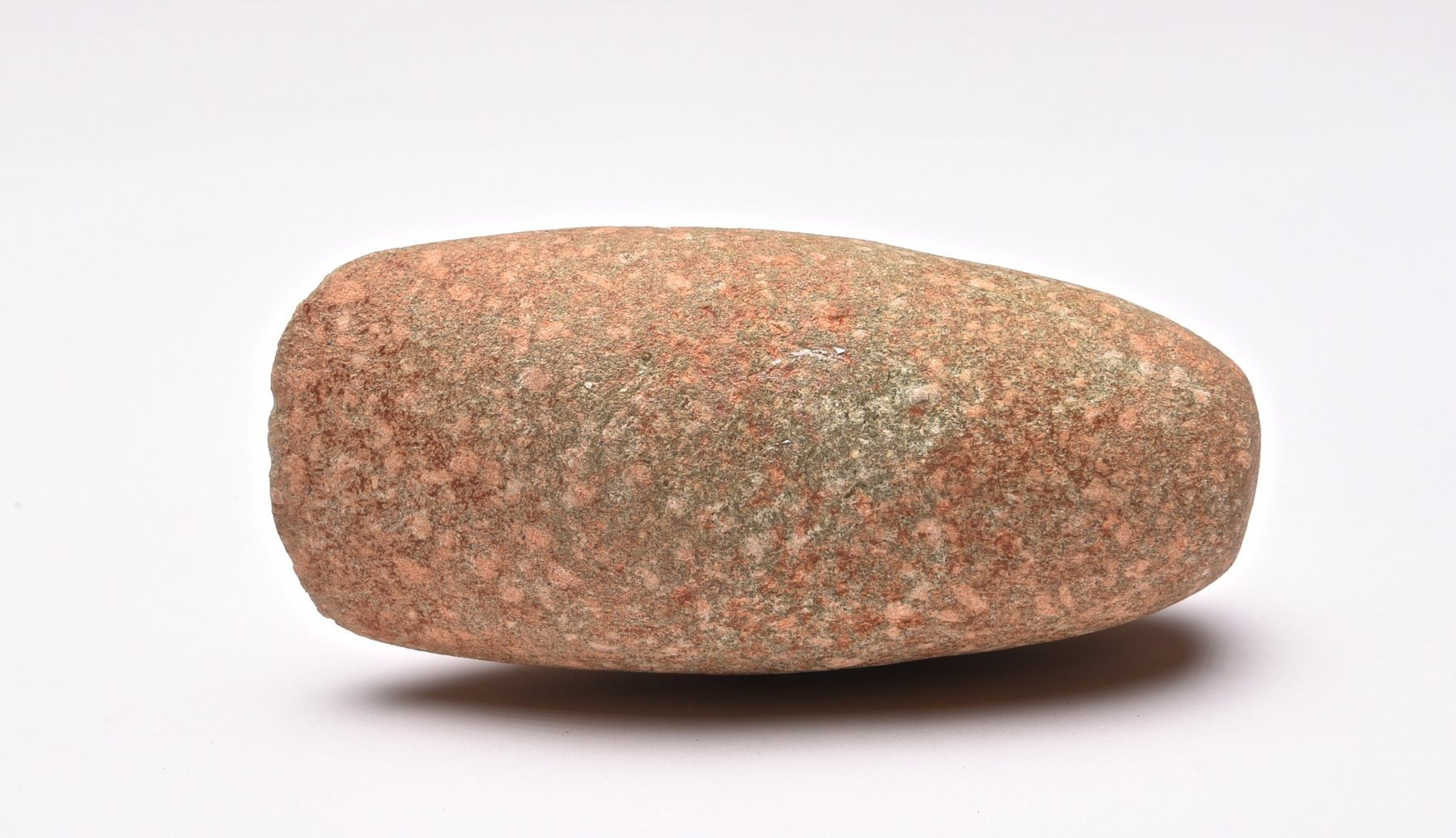
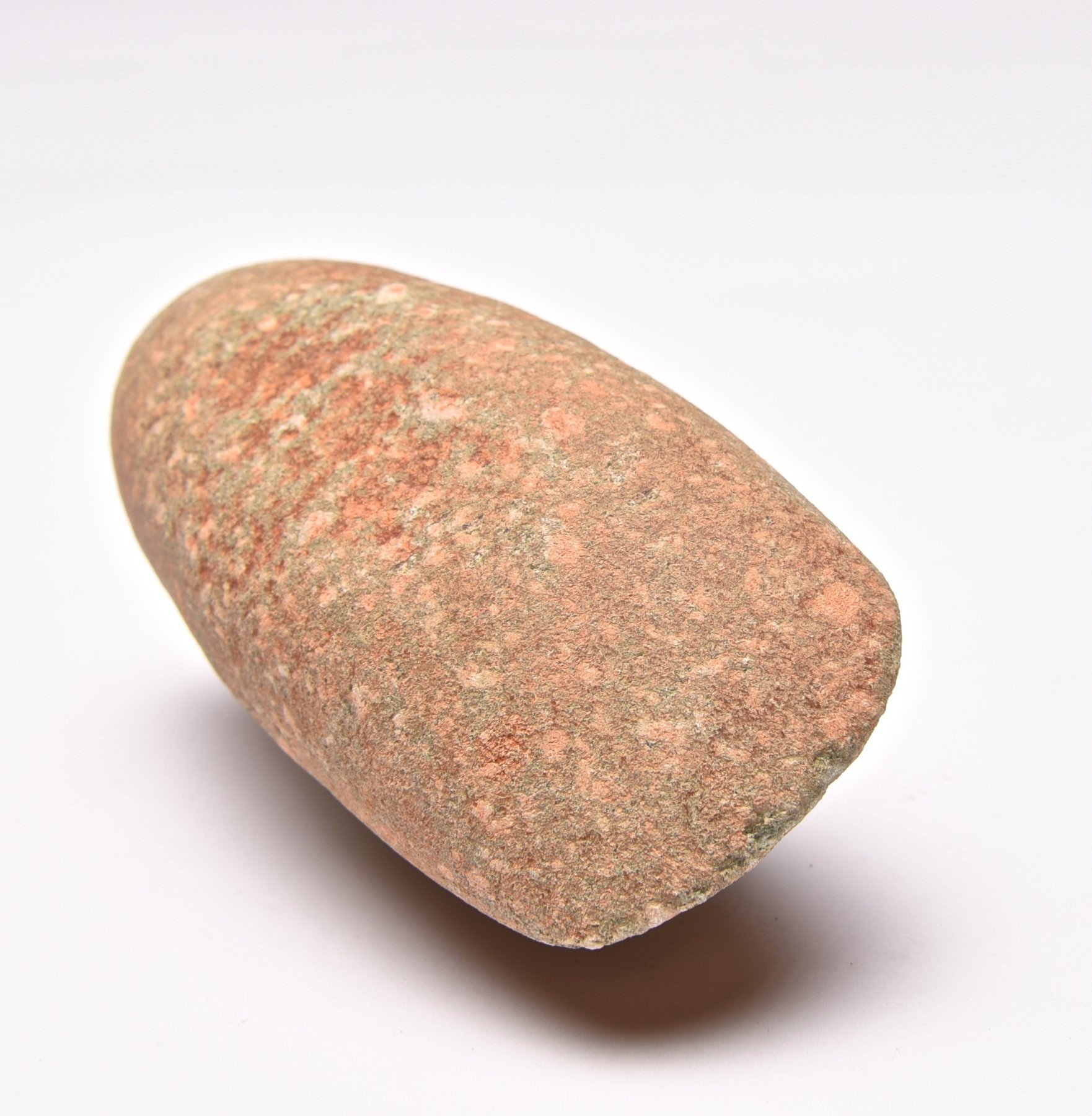
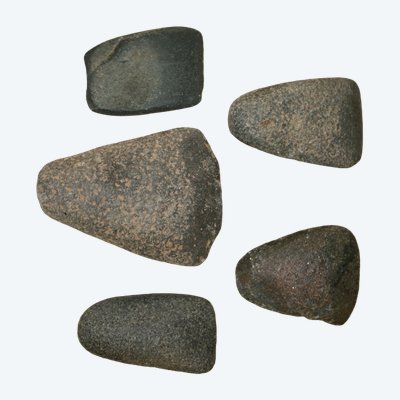
A superb polished axe in dolerite, heavy and dense, dated to the Neolithic period (approx. 4,500–6,000 years old). Its tapered and balanced shape reflects a refined technological process: initial rough-shaping by pecking, followed by careful polishing of the cutting edge, which attests to remarkable technical mastery.
The surface preserves fine traces of functional wear along the edge — evidence of actual use — while remaining entirely intact, an exceptional state of preservation for a piece of such antiquity.
Technical Characteristics
— Culture: Neolithic (full development phase)
— Period: approx. 4,500–6,000 years old
— Origin: West Africa
— Material: dolerite (hard, tenacious magmatic rock)
— Dimensions: 110 × 50 mm
— Condition: very good, with authentic traces of functional wear
— Provenance: old Belgian private collection
— Authenticity: certificate provided
— Sale: specialized European adjudication under expert supervision
Historical Context
A symbolic tool of the Neolithic revolution, the polished axe accompanied forest clearing, woodworking (construction, posts, carpentry), and agricultural expansion.
Polishing gave the edge superior resistance and cutting efficiency compared to rough-flaked stone — representing a major technological leap.
Beyond its utilitarian role, the axe also held symbolic significance (status, prestige, long-distance exchange) and was frequently found in hoards and funerary contexts.
Formal and Material Analysis (Direct Observation)
— Morphology: fusiform profile with lenticular section, softened butt, symmetrical bevel; volumetric balance favoring hafting and efficiency.
— Operational Sequence Readable:
• Pecking for initial shaping;
• Grinding/abrasion to regularize faces;
• Final polishing of the cutting edge for a durable, sharp blade.
— Surface: tight, matte mineral skin; microscopic tool marks and use-polish along the edge; no restoration.
— Performance: dolerite, a fine- to medium-grained rock rich in iron and magnesium, offers ideal toughness and resilience for high-performance Neolithic axes.
Expert Report — Typology & Comparisons
Official Designation: Polished axe (celt type) — complete, non-perforated blade, shaped and polished, as designated by major museums.
Chrono-cultural Framework: Mature Neolithic, ca. 4th–3rd millennium BC (approx. 4,500–6,000 years old). Dolerite workshops for shaping and polishing reveal advanced technical and social organization.
Material: compact dolerite — a preferred choice for “high-quality” axes, prized for its hardness, cohesion, and capacity to take a fine polish.
Reference Parallels (Selection):
— British Museum: Axe; polished stone celt (West Africa) — confirms the pan-African diffusion and morphological perfection of the type.
— Musée d’Archéologie nationale, Saint-Germain-en-Laye: major deposits of polished axes (late 5th millennium BC), demonstrating symbolic value and circulation of these objects.
— Musée de Bretagne / Armorique: dolerite series from Armorica, exemplary operational sequences (pecking → polishing).
— British Museum (Er Lannic / Carnac): dolerite axes studied by C.-T. Le Roux, reference for petrographic selection and polished surface quality.
— Metropolitan Museum of Art (transcultural comparisons, Jōmon): confirms the universality of lithic polishing as a technological refinement.
Use-Wear (Traceological) Analysis:
Fine abrasions and micro-polish on the bevel correspond to extended wood-working use (shaping, squaring), while maintaining a possible symbolic or status function.
Scientific, Historical, and Cultural Significance
— Testimony of Sedentarization: marks the shift from predation to production, mastery of wood, and landscape management.
— Masterpiece of Prehistoric Ergonomics: symmetry, regular bevel, dense polish → efficiency and durability.
— Reference Piece: material integrity, certified authenticity, canonical typology — suitable for museum display or academic study collection.
Classification Summary
— Object: Polished axe (celt type) in dense, homogeneous dolerite
— Dating: Neolithic, approx. 4,500–6,000 years old
— Dimensions: 110 × 50 mm
— Provenance: old Belgian private collection
— Condition: complete, unrestored, authentic wear traces
— Interest: high (technological & heritage), comparable to reference pieces in major institutions
Secure Shipping
All our objects are carefully packed in reinforced parcels, shipped by Colissimo or Chronopost with signature on delivery and full insurance coverage.
Each shipment benefits from precise tracking, optimal protection, and maximum security.
Note: The stands, frames, and display elements visible in the photographs are for presentation only and not included in the sale.
Ref: R9EMB3HINC

 English
 Français
  Italiano
  Deutsch
  Royal Banner
1.500 € EUR
Royal Banner
1.500 € EUR